Hundreds of MI5 officers prepare for Brexit violence in Northern Ireland
January 29, 2019 1 Comment
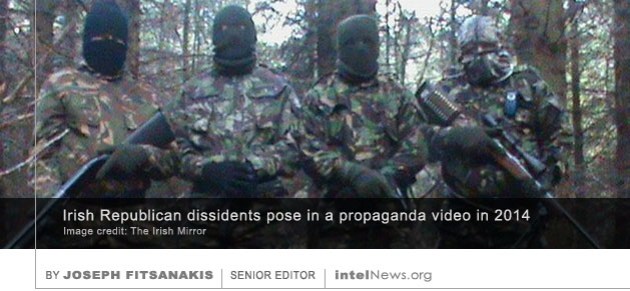 The British Security Service (MI5) has over 700 officers —more than 20 percent of its entire force— stationed in Northern Ireland, due to fears that the Brexit process might reignite the centuries-long sectarian conflict there. In 1922, nationalist rebels managed to dislodge Ireland from the British Empire. But six counties in Ireland’s north remained under British dominion, and today form the British territory of Northern Ireland. Irish nationalists have for decades engaged in an unsuccessful campaign —at times peaceful and at times violent— to unite these counties with the Republic of Ireland. Following the Good Friday Agreement of 1998, nationalist and British loyalist groups in Northern Ireland terminated their armed operations and entered the political arena, effectively sharing power in the British territory. The integration of Ireland and Britain into the European Union helped in that process by effectively bringing to an end border checks between the two countries. Thus, pro-British loyalists continued to live under British rule, while nationalists have been able to cross from Northern Ireland to the Irish Republic and back without restrictions, as if the two states were effectively unified.
But this open-border regime is about to change once Britain leaves the European Union in March. Many fear that the reinstated border will remind nationalist communities in the North that the island of Ireland remains partitioned and will thus reignite secessionist sentiments. A few days ago, the London-based newspaper The Daily Mail cited an unnamed “counterterrorism source” who said that MI5, Britain’s primary counterterrorism agency, had stationed a fifth of its force in Northern Ireland. The agency is allegedly monitoring a number of dissident republican groups —a term used to describe armed groups of Irish nationalists who continue to reject the nationalist community’s majority view to endorse the Good Friday Agreement back in 1998. One such group —which is commonly seen as the most formidable in existence today— is the self-described New Irish Republican Army. The New IRA was formed in 2012 when dissident republican cells joined another dissident nationalist group, known as the Real IRA. The new formation is particularly strong in Northern Ireland’s extreme northwest, which includes urban centers like Derry. British security officials believe that the New IRA consists of about 40 hardcore members who are committed to an armed campaign against British rule in the North.
Nearly 50 New IRA militants are currently serving sentences in the British and Irish prison systems, while several raids of New IRA members’ residences and other properties have unearthed weaponry —including fully automatic weapons— and explosives. But the group managed to detonate a car bomb in Derry on January 19 of this year. The bomb employed gas canisters and went off nearly 30 minutes after an unidentified man called a charity shop located nearby and issued a bomb warning. Police officers rushed to the scene and were there when the bomb exploded. There were no injuries, according to reports in local media.
► Author: Joseph Fitsanakis | Date: 29 January 2019 | Permalink
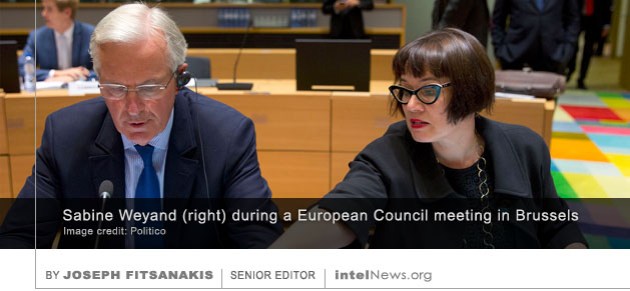 Relations between the European Union and the United Kingdom hit a new low on Thursday, as the European Council refused to comment on claims that British spy agencies have spied on Brexit negotiators in Brussels. Consultations between the two sides have progressed at an alarmingly slow pace ever since June 23, 2016, when voters in the island nation elected to leave the EU during a nationwide referendum. In March of 2017, London officially invoked Article 50 of the EU Treaty, which requires that Britain’s withdrawal from the multinational body be completed within two calendar years. But there are many who think that a mutual agreement will not be reached between the two sides.
 After Thursday’s Brexit vote, European and American security officials have tried to pacify concerns about major disruption of longstanding Western security cooperation arrangements. But experts stress that the international security landscape will be significantly impacted by Britain’s decision to leave the European Union (EU). As early as Thursday night, British defense, military and intelligence officials launched a marathon of phone calls in order to reassure their European and American counterparts that the United Kingdom was not going to retreat from its role in security pacts with Europe and the North Atlantic Treaty Organization (NATO).






 intelNews.org
London accused of hiding report about Russian meddling in Brexit referendum
November 4, 2019 by Ian Allen 1 Comment
The investigation was carried out by the British Parliament’s Intelligence and Security Committee and is largely based on closed-door testimony by senior officials from Britain’s intelligence community. It reportedly contains evidence from Russia experts in agencies such as the Security Service (MI5), the Secret Intelligence Service (MI6) and the Government Communications Headquarters (GCHQ).
According to media reports the probe was completed in March of this year and underwent a redaction process to safeguard intelligence methods and sources. On October 15 it was submitted to Downing Street and on October 17 it reportedly landed on the desk of British Prime Minister Boris Johnson. British opposition politicians allege that even sensitive reports are usually made public no later than 10 days after they are submitted to Downing Street, which means that the document should have been released prior to October 28.
Some fear that, with Parliament about to suspend operations on Tuesday, in anticipation for December’s general election, the report will effectively remain hidden from public view until the spring of 2020. On Friday, Labour Party leader Jeremy Corbyn publicly urged the government to release the report and claimed that the prime minster may have “something to hide”. But cabinet minister Andrea Leadsom argued that it is not unusual for parliamentary committee reports to remain in the government’s hands until they are properly evaluated. “The government has to respond properly, it cannot respond in haste”, said Leadsom.
► Author: Ian Allen | Date: 04 November 2019 | Permalink
Filed under Expert news and commentary on intelligence, espionage, spies and spying Tagged with Boris Johnson, Brexit, Intelligence and Security Committee (UK), News, Russia, UK