Saudi state spies on dissidents in Canada using software built by Israeli firm
October 2, 2018 1 Comment
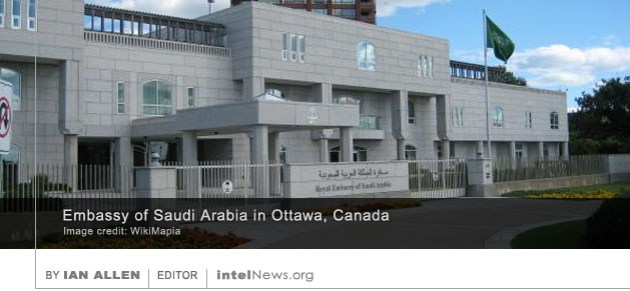 The government of Saudi Arabia is spying on expatriate dissidents in Canada using commercially available software designed by an Israeli company, according to researchers at the University of Toronto. This is alleged in a new report published on Monday by the Citizen Lab, a research unit of the University of Toronto’s Munk School of Global Affairs and Public Policy, which focuses on information technology, international security and human rights. The report’s authors say they have “high confidence” that intrusive surveillance software is being deployed to target the electronic communications of Saudi dissidents, including Omar Abdulaziz, a Saudi activist who has been living in Canada’s Quebec province for nearly 10 years.
Abdulaziz, 27, arrived in Canada on a student visa in 2009. In 2014, having publicly voiced criticisms of the Saudi royal family and Saudi Arabia’s repressive political system, and having been threatened by Saudi authorities, Abdulaziz successfully applied for political asylum in Canada. In 2017 he was granted permanent residency status. For the past eight years, Abdulaziz has become increasingly vocal in his criticism of the Saudi government, mostly through his satirical channel on YouTube. The channel, called Yakathah, has over 120,000 subscribers and its content has angered Saudi authorities. The latter have warned Abdulaziz’s parents and last summer arrested two of his brothers, in what he describes as attempts to silence him.
Researchers from Citizen Lab claim that the Saudi government has been targeting expatriate dissidents such as Abdulaziz using various techniques, such as sending them spyware-infested messages that express support for anti-government demonstrations in Saudi Arabia. The report also notes that these messages make use of Pegasus, a surveillance software system that has been previously implicated in surveillance activities against political dissidents from Gulf countries. The software was designed by NSO Group Technologies, an Israeli digital surveillance company based in Herzliya, a small coastal town located north of Tel Aviv.
The Citizen Lab report comes at a time of heightened tensions in relations between Canada and Saudi Arabia. In August, Canada’s Global Affairs Ministry issued sharp criticisms of the Saudi government’s human rights record, while Foreign Affairs Minister Chrystia Freeland said she was “gravely concerned” about the suppression of political speech in the Kingdom. She also urged the Saudi government to release a number of jailed political activists and stop censoring Saudi women activists seeking gender equality. But her comments enraged the Saudi royal family, which controls the Kingdom. Within days, the Saudi government expelled Canada’s ambassador from Riyadh and restricted its economic ties with Canada. The Kingdom also recalled several thousand Saudi students who were studying in Canadian universities on Saudi government scholarships.
► Author: Ian Allen | Date: 02 October 2018 | Permalink
 Two Canadian brothers, whose Russian-born parents fraudulently acquired Canadian citizenship before being arrested for spying on the United States for Moscow, are not entitled to Canadian citizenship, according to the government of Canada. Tim and Alex Vavilov are the sons of Donald Heathfield and Tracey Foley, a married couple arrested in 2010 under Operation GHOST STORIES, a counterintelligence program run by the US Federal Bureau of Investigation (FBI). Following the couple’s arrest, their sons, who allegedly grew up thinking their parents were Canadian,
  China’s influence in New Zealand is so extensive that it threatens the traditionally close intelligence contacts between New Zealand and its Western allies, according to a report written by the Canadian spy agency. Since World War II, New Zealand has been a member of what is sometimes referred to as the UK-USA Security Agreement. Known also as the UKUSA Agreement or the Five Eyes alliance, the pact, which was strengthened in 1955, provides a multilateral framework for intelligence cooperation between the United Kingdom, the United States, Canada, Australia, and New Zealand. But a new report produced by Canadian intelligence warns that Chinese political and economic influence in New Zealand is making it difficult for the Pacific Ocean island country to continue to operate within the framework of the agreement.
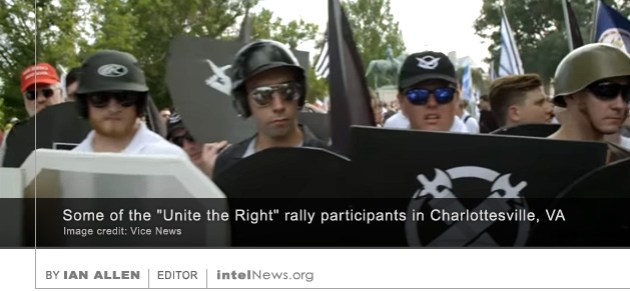 Canadian spy organizations are working with domestic and international agencies in response to reports that several Canadian far-right activists attended the “Unite the Right” rally in Charlottesville, Virginia, earlier this month. The rally drew the attention of the world’s media after violent clashes between protesters and counter-protesters left a woman dead. Two Virginia State Police officers were also killed when a helicopter used in crowd control in Charlottesville crashed near the site of the demonstrations. The rally, which took place on August 11 and 12, drew members of various white supremacist, white nationalist, neo-Nazi and neo-Confederate groups. There were also heavily armed members of a self-styled militia at Emancipation Park, where a soon-to-be-removed statue of the late Confederate General Robert E. Lee became the focal point of the far-right demonstrators.
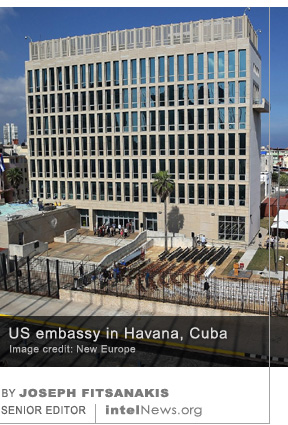 Authorities in Cuba, the United States and Canada are investigating reports that several foreign diplomats stationed in Havana have been experiencing severe hearing loss in recent months.
 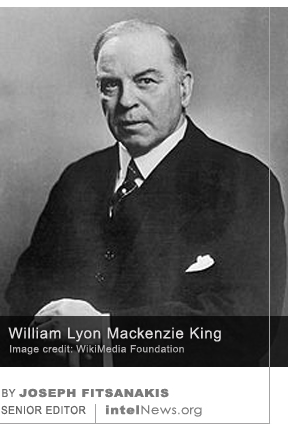 Canadian officials speculated that Soviet spies stole a missing volume from the private diary collection of William Lyon Mackenzie King, Canada’s longest-serving prime minister, who led the country in the run-up to the Cold War. A liberal anticommunist, Mackenzie King was Canada’s prime minister from 1925 to 1948, with a break from 1930 to 1935. He is known for having led the establishment of Canada’s welfare state along Western European standards.
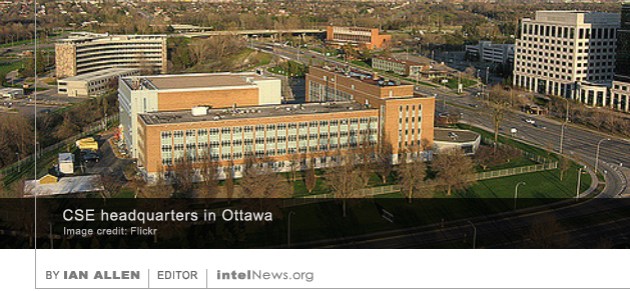 The volume of domestic communications that were intercepted by Canada’s spy agency increased 26 times between 2014 and 2015, according to a recently released report by a government watchdog. The same report states that intercepted information about Canadian citizens, which is given to Canada’s spy agency by the intelligence organizations of other Western countries, has increased so much that it now requires an elaborate mechanism to analyze it. When asked to explain the reasons for these increases, Canadian government officials said they could not do so without divulging secrets of national importance.
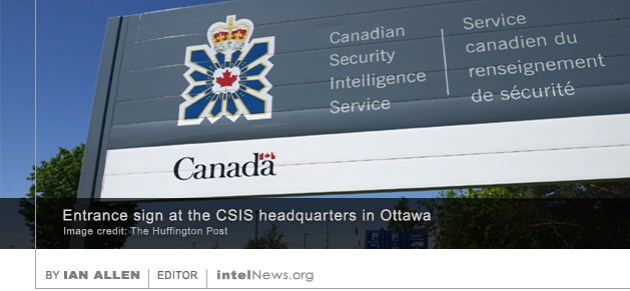 A report by Canada’s primary intelligence agency warns in stark language that Russia is “retooling its military for a fight” and appears to be “mobilizing for war”. The classified report was
 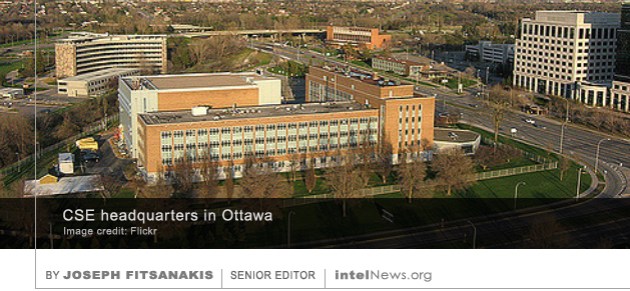 Canada says it will stop sharing certain types of intelligence with some of its closest international allies until it ensures that Canadian citizens’ information is not included in the data given to foreign spy agencies. The announcement follows an official admission, made earlier this week, that a Canadian intelligence agency failed to remove Canadian citizens’ data from information it shared with member-agencies of the so-called Five Eyes Agreement. The pact, which is sometimes referred to as the UK-USA Security Agreement, has been in existence since World War II. It provides a multilateral framework for cooperation in signals intelligence (SIGINT) between the United Kingdom, the United States, Canada, Australia, and New Zealand.
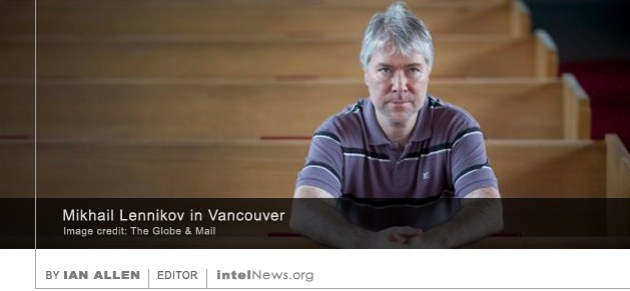 A Russian former officer in the Soviet KGB, who defied deportation orders issued against him by the Canadian government by taking refuge in a Vancouver church for six consecutive years, has voluntarily left the country. Mikhail Lennikov, who spent five years working for the KGB in the 1980s, had been living in Canada with his wife and son since 1992. But in 2009, Canada’s Public Safety Ministry rejected Lennikov’s refugee claim and
 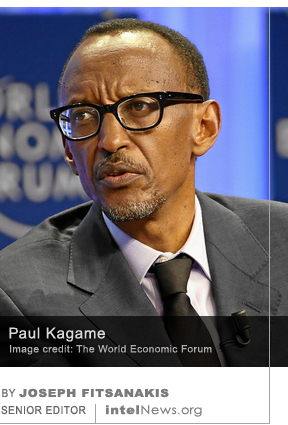 The government of Rwanda uses intelligence operatives to systematically spy on, harass, and even kill opposition figures living abroad, according to a report issued by a Canadian security agency. The report was written by the National Security Screening Division of the Canada Border Services Agency, and was partly based on information from the Canadian Security Intelligence Service (CSIS). It was released as part of a court case involving a Rwandan man living in Canada, who was accused of working as a spy for the government of Rwanda.
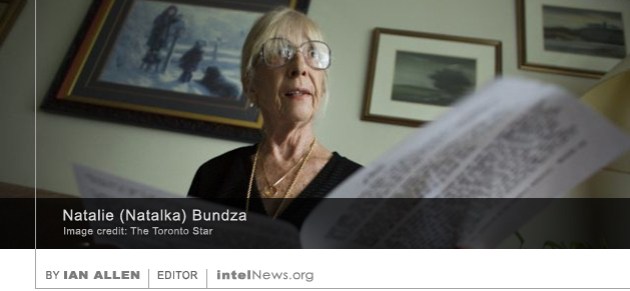 A set of declassified intelligence documents from the 1950s and 1960s offer a glimpse into the secret war fought in Canada between American and Soviet spy agencies at the height of the Cold War. The documents were authored by the United States Central Intelligence Agency and declassified following a Freedom of Information Act request filed on behalf of the Canadian newspaper The Toronto Star.







 intelNews.org
Canada arrests daughter of Chinese telecom giant’s founder at US request
December 6, 2018 by Joseph Fitsanakis 2 Comments
Few details of Meng’s arrest have been publicized. On Wednesday, Canada’s Department of Justice confirmed that the Huawei CFO was detained on December 1 in Vancouver as she was transferring between flights. The Justice Department also confirmed that the arrest occurred at the request of American law enforcement officials. In a carefully worded statement, the Canadian government said Meng is “sought for extradition by the United States” and that her bail hearing will be taking place this coming Friday. On Wednesday, the Canadian newspaper The Globe and Mail cited an unnamed “Canadian law enforcement source with knowledge of the arrest”, who said that US authorities had evidence that Meng “tried to evade the American embargo against Iran”. This statement appears to refer to reports in Western media in April of this year, according to which the US Departments of Commerce and Treasury were probing suspected violations of Washington’s sanctions against Iran and North Korea by Huawei.
The embassy of China in Canada immediately protested news of Meng’s arrest, saying that the Huawei CFO had been detained despite “not violating any American or Canadian law”. In a statement issued on Wednesday, the embassy added that it had “lodged stern representations” to the Canadian government and “urged them to immediately […] restore the personal freedom of Ms. Meng Wanzhou”. Meanwhile, a representative at Huawei’s corporate headquarters in the southern Chinese city of Shenzhen told the BBC that the company is certain “the Canadian and US legal systems will ultimately reach a just conclusion” in the case.
Several officials in the United States, United Kingdom, Australia and other Western countries, have repeatedly flagged Huawei as a company that is uncomfortably close to the Chinese government and its intelligence agencies. In 2011, the US Open Source Center, which acts as the open-source intelligence arm of the Office of the Director of National Intelligence, became the first US government agency to openly link Huawei with the Chinese intelligence establishment. In 2013, the British government launched an official review of Huawei’s involvement in the UK Cyber Security Evaluations Centre in Oxfordshire, England, following a British Parliament report that raised strong concerns about the Chinese company’s links with the government in Beijing. And in 2017 the Australian government expressed concern about Huawei’s plan to provide high-speed Internet to the Solomon Islands, a small Pacific island nation with which Australia shares Internet resources.
► Author: Joseph Fitsanakis | Date: 06 December 2018 | Permalink
Filed under Expert news and commentary on intelligence, espionage, spies and spying Tagged with Canada, China, Huawei Technologies, Meng Wanzhou, News, Ren Zhengfei, United States