Switzerland claims embassy worker was abducted by Sri Lankan security officers
December 4, 2019 Leave a comment
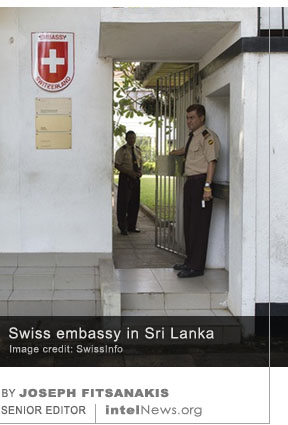 Switzerland has filed a formal complaint after an employee of the Swiss embassy in Sri Lanka was allegedly abducted by men who forced her to divulge sensitive information about the embassy and its activities. The Swiss Ministry of Foreign Affairs said on Tuesday that the embassy employee was kidnapped by four men while walking in the Sri Lankan capital Colombo, on November 25. The men took her to what appeared to be a safe house and interrogated her for several hours.
The men eventually forced the Swiss embassy employee, who is a Sri Lankan national, to unlock her personal cell phone. According to Swiss government officials, they appeared to be looking for information about a senior Sri Lankan police detective who recently fled to Switzerland with his family and was granted political asylum. Some Sri Lankan media identified the man as Nishantha Silva, a police detective who until recently headed the Sri Lankan Criminal Intelligence Division’s Organized Crime Investigation Unit.
Silva is one of hundreds of members of Sri Lanka’s public sector who have fled abroad following the election of President Gotabaya Rajapaksa last month. The Rajapaksa family is one of the most powerful in the country, and has a long history of influencing Sri Lankan politics. Hours after assuming power, the ultra-nationalist Rajapaksa pledged to “hunt down” the leadership of the police and security services who investigated his family after 2015, when the Rajapaksas were ousted from the government. Hundreds of police and security officers have since been arrested or summarily fired.
On Tuesday, a Swiss Foreign Ministry spokesman told The New York Times that the Swiss government had verified the details of the abduction of its embassy worker. The spokesman added that the employee was forced to disclose “embassy-related information” after she was “threatened at length” by the men. The latter released her after warning her that she would be killed if she spoke to anyone about her ordeal.
On Monday, a spokesman for President Rajapaksa told reporters in Colombo that the Sri Lankan government questioned the accuracy of the Swiss embassy worker’s account of her abduction. Later, however, the Sri Lankan government announced that it had launched an investigation into the allegations. It now appears that the Sri Lankan government is preventing the embassy worker from leaving the country while the investigation into her claims is underway.
► Author: Joseph Fitsanakis | Date: 04 December 2019 | Permalink
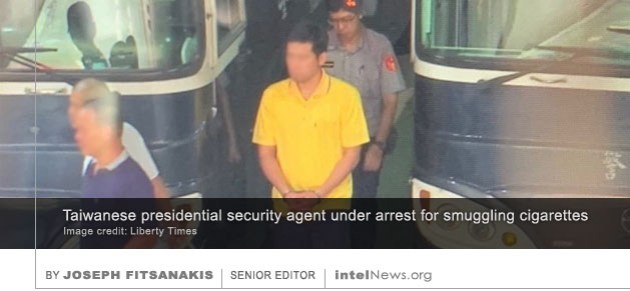 At least 70 members of Taiwan’s presidential security detail used the president’s official trips abroad to smuggle thousands of cigarettes into the country, it has been announced by Taiwan’s’s spy chief. According to
 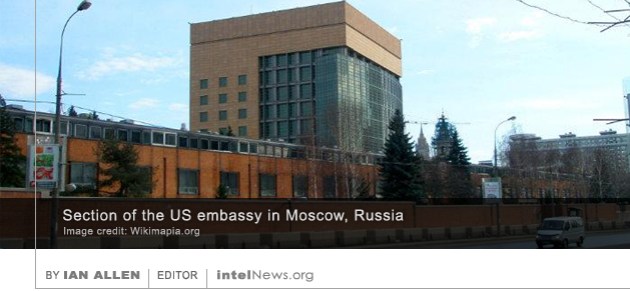 Several American diplomatic facilities in Russia, including the United States embassy in Moscow, as well as consulates in other major Russian cities, will be guarded by a firm with ties to a former senior KGB official. The New York Times






 intelNews.org
Russian hacker group using Internet service providers to spy on foreign embassies
August 2, 2025 by Joseph Fitsanakis 3 Comments
Turla began its attempt to compromise a host of Russian internet service providers in February, according to Microsoft’s report. The group’s apparent goal has been to gain access to the software that enables Russian security agencies to legally intercept internet traffic, following the issuance of warrants by judges. This software is governed by Russia’s System for Operative Investigative Activities (SORM), which became law in 1995, under the presidency of Boris Yeltsin. All local, state, and federal government agencies in Russia use the SORM system to facilitate court-authorized telecommunications surveillance.
According to Microsoft, targeted Internet users receive an error message prompting them to update their browser’s cryptographic certificate. Consent by the user results in the targeted computer downloading and installing a malware. Termed ApolloShadow by Microsoft, the malware is disguised as a security update from Kaspersky, Russia’s most widely known antivirus software provider. Once installed the malware gives the hackers access to the content of the targeted user’s secure communications.
The Microsoft report states that, although Turla has been involved in prior attacks against diplomatic targets in Russia and abroad, this is the first time that the hacker group has been confirmed to have the capability to attack its targets at the Internet Service Provider (ISP) level. In doing so, Turla has been able to incorporate Russia’s domestic telecommunications infrastructure into its attack tool-kit, the report states. The report does not name the diplomatic facilities or the countries whose diplomats have been targeted by Turla hackers. But it warns that all “diplomatic personnel using local [internet service providers] or telecommunications services in Russia are highly likely targets” of the group.
► Author: Joseph Fitsanakis | Date: 02 August 2025 | Permalink
Filed under Expert news and commentary on intelligence, espionage, spies and spying Tagged with ApolloShadow, computer hacking, cyberespionage, diplomatic security, Moscow, News, Russia, Secret Blizzard, Snake malware, SORM (Russia), System for Operative Investigative Activities (Russia), Turla