Year in review: The biggest spy-related stories of 2017, part II
January 2, 2018 Leave a comment
 Since 2008, when we launched intelNews, it has been our end-of-year tradition to take a look back and highlight what we see as the most important intelligence-related stories of the past 12 months. In anticipation of what 2018 may bring in this highly volatile field, we give you our selection of the top spy stories of 2017. They are listed below in reverse order of significance. This is part two in a three-part series. Part one is available here. Part three will be posted tomorrow.
07. 2017 was marked by high-profile assassinations and suspicious deaths. There was no shortage of assassinations, assassination attempts, and suspicious deaths in 2017. In January, Brazilian authorities launched an investigation into a suspicious plane crash that killed Supreme Court judge Teori Zavascki, who died while leading the largest corruption probe in the nation’s history, involving government officials and two giant companies. In February, Vladimir Kara-Murza, a leading member of Open Russia, a think tank founded by Russian oligarchs opposed to Russian president Vladimir Putin, nearly died  as a result of “acute poisoning from an undefined substance”, according to his doctors. Also in February, Kim Jong-nam, half-brother of North Korean Supreme Leader Kim Jong-un, was killed in an audacious attack in Malaysia by two female assassins, who used a poisonous substance to murder him. Some alleged that Kim, who was a critic of his brother’s policies in the DPRK, had made contact with US intelligence prior to his assassination. In March, the Israeli military alleged that Amine Badreddine, 55, an explosives expert and senior military commander in the military wing of Hezbollah, was murdered by his own people while fighting in Syria. Allegedly the Iranians wanted him killed because he disputed the authority of Major General Qasem Soleimani, commander of Iran’s Revolutionary Guard Corps, who is often credited with having saved the Syrian government from demise during the Syrian Civil War. In October, Malta’s best known investigative journalist, Daphne Caruana Galizia, whose reporting about offshore tax evasion revealed in the Panama papers prompted a major political crisis in Malta, was killed when the rented Peugeot 108 car she was driving exploded near her home in central Malta. Eyewitnesses said that the explosion was so powerful that it tore apart the vehicle and was heard from several miles away. Finally, in November, Zhang Yang, one of the highest-profile generals in the Chinese People’s Liberation Army, committed suicide according to Chinese state media. Zhang Yang had seen a meteoric rise to power, but unceremoniously fell from grace as a result of President Xi Jinping’s nationwide campaign against corruption.
06. CIA ends its support for opposition rebels in Syria. In February, the White House instructed the CIA to halt military support to armed groups that are associated with the Free Syrian Army (FSA), a group opposed to Syrian President Bashar al-Assad. The move ended a policy that begun under US President Donald Trump’s predecessor, Barack Obama. Some analysts warned that the decision by the White House to terminate US  support for the rebels could backfire by causing the suddenly unemployed fighters to join jihadist organizations. In August, there were reports that US troops exchanged fire with former FSA rebels in Manbij, a Syrian city located a few miles from the Turkish border.
05. Britain accused Russia of trying to kill Montenegro prime minister. In late 2016, authorities in the former Yugoslav Republic of Montenegro alleged that “nationalists from Russia and Serbia” were behind a failed plot to kill the country’s prime minister, Milo Dukanović, and spark a pro-Russian coup in the country. Remarkably, in March of 2017, British Foreign Secretary Boris Johnson said in an interview that Russian spies may have indeed orchestrated the failed attempt to kill Dukanović, as part of a broader plan to prevent the former Yugoslav republic from entering NATO. It is not every day that a senior cabinet official of a NATO member-state accuses the Kremlin of carrying out an assassination attempt against a European head of state.
This is part two in a three-part series. Part one is available here. Part three is available here.
► Authors: Joseph Fitsanakis and Ian Allen | Date: 02 January 2018 | Permalink
 Since 2008, when we launched intelNews, it has been our
 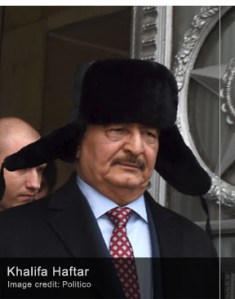 10.
10. 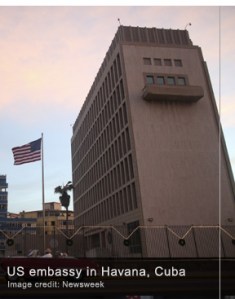 the alleged device may have been deployed by an intelligence service of a third country —possibly Russia— without the knowledge of the Cuban authorities. In October, the White House expelled 15 Cuban diplomats from the US in response to the incident. But the question of what harmed the health of at least 20 employees at the US embassy in Havana remains largely unanswered.
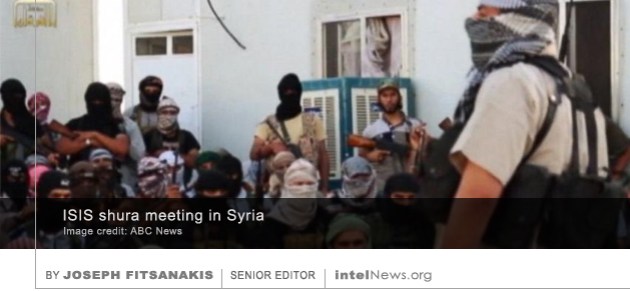 The Islamic State has set up a secretive intelligence agency whose task is to set up sleeper cells abroad and has already sent “hundreds of operatives” to Europe and Asia, according to information emerging from interrogations of suspects. According to The New York Times, the information about the intelligence agency comes from “thousands of pages” of intelligence files from American, French, Belgian, Austrian and German agencies. The documents include information from interviews with captured members or defectors from the Islamic State, which is otherwise known as the Islamic State in Iraq and Syria (ISIS).







 intelNews.org
Year in review: The biggest spy-related stories of 2017, part III
January 3, 2018 by intelNews 5 Comments
03. Extraordinary transformation of the intelligence landscape in South Korea. Developments in North Korea have been at the forefront of security reporting in recent months. But reports from the Korean Peninsula have largely ignored the dramatic changes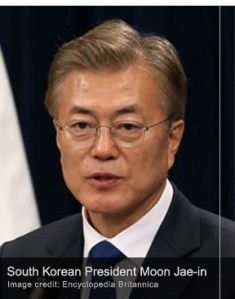 taking place in the intelligence infrastructure of South Korea, which are arguably as important as developments north of the 38th parallel. In June, the new center-left government of President Moon Jae-in banned the powerful National Intelligence Service (NIS) from engaging in domestic intelligence gathering. The move came after a lengthy investigation concluded that the NIS interfered in the 2012 presidential elections and tried to alter the outcome in favor of the conservative candidate, Park Geun-hye, using 30 dedicated teams of officers for that purpose. In November, three former NIS directors were charged with secretly diverting funds from the agency’s clandestine budget to aid Park, who has since been impeached and is now facing a lengthy prison sentence.
02. Turkey’s fallout with the West is affecting spy relations. Turkey has been a NATO member since 1952. However, rising tensions in the country’s domestic political scene are negatively affecting Ankara’s relations with its Western allies, particularly with Germany and the United States. Last month, Turkey issued an arrest warrant for Graham Fuller, an 80-year-old former analyst in the CIA, who Ankara says helped orchestrate the failed July 2016 military coup against the government of President Recep Tayyip Erdoğan. Washington flatly denies these allegations. In May, the Turkish Minister of Foreign Affairs Mevlüt Çavuşoğlu accused “the secret services of [Western] countries” of “using journalists and also bloggers [as spies] in Turkey”. Earlier in the year, a German report claimed that the Turkish state had asked its diplomats stationed all over Europe to spy on Turkish expatriate communities there, in order t to identify those opposed to the government of President Erdoğan. In some cases, Turkish spies have asked their Western European counterparts to help them monitor the activities Turkish expatriates, but such requests have been turned down. Nevertheless, there is increasing unease in Western Europe as Turkey intensifies its unilateral intelligence activities aimed at monitoring political dissent among Turkish communities abroad.
01. With America divided, Russian spies make dramatic post-Cold War comeback. The collapse of the Soviet Union was a traumatic experience for the once all-powerful Russian spy agencies. But, if CIA and FBI assessments are correct, the bitterly divisive state of American politics gave Russian spooks a chance for a dramatic comeback. Using a mixture of human and online intelligence operations, Russian spies helped drive a wedge between the White House and the US Intelligence Community. American intelligence agencies are tasked with providing information to assist policy-makers, including the president. So when the CIA and the FBI conclude that the Russian government launched an extensive and sophisticated campaign to undermine the 2016 US presidential election, one expects the president to take that advisement under serious consideration. However, the US leader has openly dismissed the conclusions of his own Intelligence Community and has publicly stated that he believes President Vladimir Putin’s assurances that his country did not meddle in the US election.
What we have here, therefore, is a US president who sees the Kremlin as more trustworthy than his own Intelligence Community. This is a remarkable, unprecedented state of affairs in Washington, so much so that some CIA officials have reportedly questioned whether it is safe for them to share information about Russia to President Trump. Throughout that time, the FBI has been conducting an extensive counterintelligence investigation into alleged ties between the president’s campaign team and the Kremlin. As intelNews has noted before, the FBI probe adds yet another layer of complexity in an already intricate affair, from which the country’s institutions will find it difficult to recover for years to come, regardless of the outcome of the investigation. The state of Russian politics may be uncertain, and the country’s economy in bad shape. But Russian spooks can look back to 2017 as the year in which they made an unexpected comeback, scoring a dramatic victory against their decades-old rival.
This is the last part in a three-part series. Part one is available here. Part two is available here.
► Authors: Joseph Fitsanakis and Ian Allen | Date: 03 January 2018 | Permalink
Filed under Expert news and commentary on intelligence, espionage, spies and spying Tagged with Analysis, espionage, intelligence, year in review