US-based Afghan man who planned election-day attack ‘worked as CIA guard’

CIAAN AFGHAN NATIONAL BASED in the United States, who was allegedly planning to carry out a terrorist attack during the upcoming Election Day, previously worked for the Central Intelligence Agency (CIA) as a guard, reports claim. According to the US Department of Justice, Nasir Ahmad Tawhedi, 27, was arrested by the Federal Bureau of Investigation (FBI) on October 7, alongside a number of co-conspirators who have so far not been named.

Tawhedi’s arrest occurred shortly after he purchased two AK-47 assault rifles, 10 magazines, and several rounds of ammunition from an FBI employee posing as a seller of the merchandise. The suspect allegedly told at least two FBI informants working on the case that he intended to use the weaponry to target “large gatherings of people” on Election Day. Tawhedi is also reported to have boasted that he expected to die in the attack. His indictment suggests that he planned to carry out the attack on behalf of the Islamic State of Iraq and al-Sham (ISIS).

Tawhedi has lived in the US for a little over three years, having arrived on US soil soon after Washington began withdrawing its forces from Afghanistan, following a two decades-long military campaign. Like thousands of other Afghans, Tawhedi was able to enter the US through an emergency entry privilege known as a “humanitarian parole”. He then applied for a Special Immigrant Visa, which is customarily offered by the US government as a form of protection to foreign nationals who have provided services to its military and security agencies. According to reports, Tawhedi’s Special Immigrant Visa application had been approved and was in the last stages of being officially issued.

Last week, the American television network NBC reported that Tawhedi had been employed as a guard by the CIA in Afghanistan. The network cited “two sources with knowledge of the matter”. Later on the same day, another American television network, CBS News, said it had been able to independently verify the earlier report by NBC. It is notable that, according to both NBC and CBS, Tawhedi worked as a guard for a CIA facility, rather than an informant or an asset for the intelligence agency.

The recent media reports about Tawhedi have yet to answer the question of whether he had been communicating with identifiable ISIS handlers, or whether he was independently radicalized through his online activity. It is also not known whether Tawhedi was a supporter or an affiliate of ISIS during his stint with the CIA, or whether he became radicalized after arriving in the US in September 2021.

Author: Joseph Fitsanakis | Date: 14 October 2024 | Permalink

Alleged Islamic State informant sues Danish spy services over prison sentence

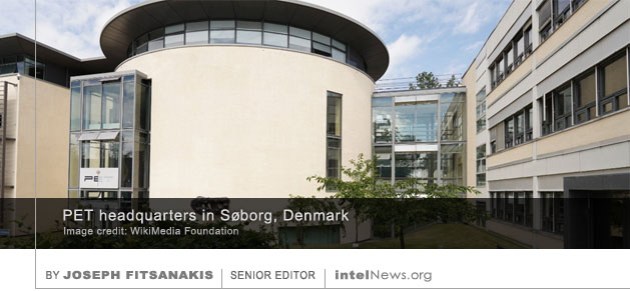
PET DenmarkA DANISH CITIZEN IS suing two Danish spy agencies, claiming that he was wrongly jailed for being a member of the Islamic State, when in fact he had been asked by his handlers to join the group as an undercover informant. The lawsuit has been brought in Copenhagen by Ahmed Samsam, a 34-year-old Danish citizen of Syrian origin. Samsam’s father, Jihad Samsam, fled to Denmark from Syria following the 1982 Hama massacre, when the Syrian military violently quelled an anti-government uprising by members of the Muslim Brotherhood.

Ahmed Samsam grew up in Copenhagen with his six siblings. He was involved in numerous criminal activities, including robbery and drugs possession. In September 2012, he traveled to from Denmark to Turkey. From there he entered Syria, intending to join the civil war on the side of the anti-government rebels. Upon returning to Denmark in December of that year, Samsam was imprisoned for a prior criminal offense. It was during his time in prison that members of the Danish Security and Intelligence Service (PET) allegedly approached him, asking him to work as an undercover informant abroad. Samsam claims that he undertook several trips to Syria as an informant between 2013 and 2015. While he was there, he claims that he spied on the Islamic State on behalf of the PET and the Danish Defense Intelligence Service (FE), which also recruited him as a spy.

Samsam eventually returned to Denmark, but in 2017 fled to Spain, allegedly to escape harassment by a rival criminal gang in Copenhagen. In June of that year, he was arrested by Spanish police near the coastal city of Malaga in southern Spain. Samsam was charged with terrorism, after police discovered several photos of himself posing with Islamic State symbols and flags on his mobile telephone. He was eventually convicted to eight years in prison, which were later reduced to six. Since 2020, Samsam has been serving his prison sentence in Denmark.

But, in a lawsuit he brought against the Danish state, Samsam claims he had engaged with Islamic State fighters in Syria at the behest of the PET and the FE, and argues that he should not be jailed for terrorism offenses. However, the Danish intelligence agencies have rejected calls to confirm or deny that Samsam had been recruited by them as an informant. Attorney Peter Biering, who represents the defendants in the case, told the court last week that forcing the intelligence agencies to identify their informants would “harm [the agencies’] ability to […] protect [their sources] and prevent terrorism”. Samsam’s attorney, Erbil Kaya, argues that the Danish state is morally obligated to admit to his client’s role as an undercover informant, even if this is formally prevented by the law of the land.

The trial is expected to conclude on September 8. Several witnesses, including government officials and investigative reporters, have been scheduled to testify in court, almost certainly behind closed doors.

Author: Joseph Fitsanakis | Date: 28 August 2023 | Permalink
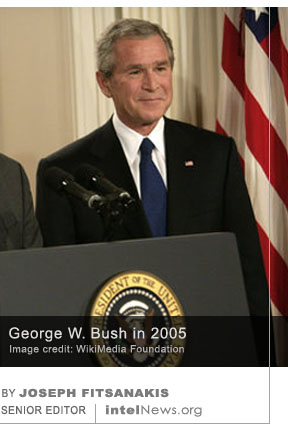
Tip by Belgian spy agency helped US foil Islamic State plot to kill George Bush

George W. BushA TIP BY BELGIAN intelligence helped the Federal Bureau of Investigation foil a plot by Iraqi nationals to kill former United States President George W. Bush. American news outlets reported in May of this year that the FBI had prevented a scheme by an Iraqi national to smuggle Islamic State operatives into the United States, with the aim of killing the former president. Soon afterwards, the Department of Justice announced that the FBI Joint Terrorism Task Force had arrested Ahmed Shihab, an Iraqi national, who was the alleged mastermind of the operation.

Shihab, 52, had applied for political asylum in the United States. However, he had reportedly joined the Islamic State in secret, and had devised a scheme to kill Bush during a speech that the former president had been scheduled to deliver in Dallas, Texas. For several weeks, Shihab had allegedly surveilled Bush’s Texas homes in Dallas and Crawford, capturing footage in cellphones and video cameras. Shihab had the support of thee other alleged Islamic State supporters, who had traveled to the United States from Iraq through Denmark, Egypt and Turkey.

In a report that aired late last week, Belgium’s Flemish-language state broadcaster VRT, said that the plan to kill Bush had been foiled thanks to a tip shared with the United States by Belgian intelligence. Specifically, the information was reportedly shared by the State Security Service (VSSE), Belgium’s counterintelligence and counterterrorism agency. According to the VRT, the VSSE gave actionable intelligence about Shihab to the United States Secret Service, which then worked with the FBI to foil the alleged plot. The VRT report suggests that the VSSE was able to collect the intelligence through its systematic monitoring of Belgian Islamists, who fought in the Middle East between 2014 and 2016, before eventually making their way back to Belgium.

Author: Joseph Fitsanakis | Date: 19 September 2022 | Permalink

Some US-trained Afghan elite soldiers and intelligence officers are joining ISIS

Armed guerillas Khost Afghanistan

SMALL BUT GROWING NUMBERS of American-trained members of Afghanistan’s elite special forces and intelligence agencies are joining the Islamic State in order to fight the Taliban, according to a new report. Some observers are expressing concerns that these new recruits are equipping the Islamic State’s Afghanistan affiliate with advanced skills and expertise that might make the group difficult to defeat in the coming months or even years.

In the weeks after the Taliban’s take-over of Afghanistan, a small group of fighters in the northern regions of the country vowed to engage in armed resistance against the group. They teamed up under Ahmad Massoud, son of anti-Soviet and anti-Taliban commander Ahmad Shah Massoud. They since seem to have been defeated, however, and most of them have now fled the country —a development that apparently marks the end of all armed resistance to the Taliban by former members of the American-supported Afghan government. Other Afghans with access to weapons, most of them members of the army and security forces, have not returned to work since the Taliban take-over, fearing that they will be killed.

For now, the only armed resistance to the Taliban comes from the Islamic State of Iraq and Syria-Khorasan Province, also known as ISIS-K. According to The Wall Street Journal, “relatively small, but growing” numbers of former members of Afghanistan’s security and intelligence agencies, are now joining ISIS-K. In making this claim, the paper cites “Taliban leaders, former Afghan republic security officials and people who know the defectors”. Some of those joining ISIS-K have been trained in unconventional warfare and intelligence-gathering by the United States, claims the paper.

According to the report, those joining ISIS-K appear to do so for two reasons: first, in order to secure a regular income, as they have been left without wages since the collapse of the Washington-supported government in Kabul. Second, because ISIS-K is currently the only armed group that is putting up resistance against the Taliban. Thus, in addition to fighting the Taliban, the former members of Afghanistan’s security and intelligence forces, are also receiving protection from ISIS-K fighters, says the paper.

Author: Joseph Fitsanakis | Date: 01 November 2021 | Permalink

Revealed: Turkey helped Iraqi intelligence capture senior Islamic State figure

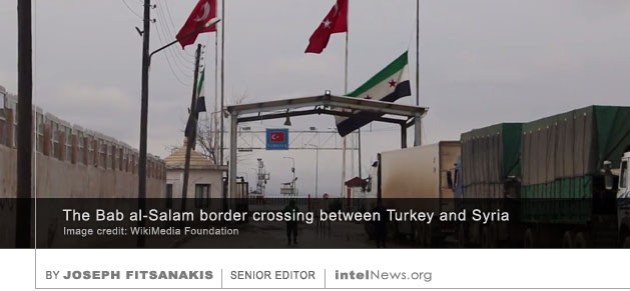
Syria–Turkey border

AN ELABORATE OPERATION WHICH, carried out jointly by Iraqi and Turkish intelligence, led to the arrest of one of the most senior officials of the Islamic State to be ever captured alive, according to sources. As intelNews reported on Monday, the Iraqi government announced the capture of Sami Jasim Muhammad al-Jaburi, who served as deputy to the Islamic State’s late spiritual leader, Abu Bakr al-Baghdadi.

Jasim, also known by the name Abu Asya, was the Islamic State’s treasurer during the group’s heyday, when it controlled territory equal to the size of Germany in Syria and Iraq. He survived the demise of the Islamic State’s territorial power, but continued serving in the organization’s financial arm under its current chief, Abu Ibrahim al-Hashemi al-Quraishi. The Iraqi government announced Jasim’s capture on Sunday with a brief statement, which said he had been seized in a “complex operation outside the borders” of Iraq. No further details were made available.

On Tuesday, however, the Reuters news agency reported that Jasim was arrested on Turkish soil in a joint Turkish-Iraqi intelligence operation. Citing “a senior regional security source and two Iraqi security sources”, Reuters said that Jasim had been under surveillance in northwestern Syria for several months by Iraqi and Turkish intelligence. He was reportedly arrested by Turkish intelligence shortly after crossing into Turkey, where he was lured in an operation that included participants from Iraqi intelligence and “local security forces”. Reuters notes that the phrase “local security forces” most likely refers to Turkish backed Syrian militias, who operate along the Turkish-Syrian border.

The Reuters report also points out that Jasim’s arrest may illustrates a deepening cooperation between Turkish and Iraqi intelligence against the remnants of the Islamic State that continue to operate in northwestern Syria, a region that is largely under the control of Turkey. Turkish, Iraqi and American officials who were approached by Reuters refused to comment on the report.

Author: Joseph Fitsanakis | Date: 13 October 2021 | Permalink

Iraqi intelligence claims capture of Islamic State’s finance chief in ‘complex’ operation

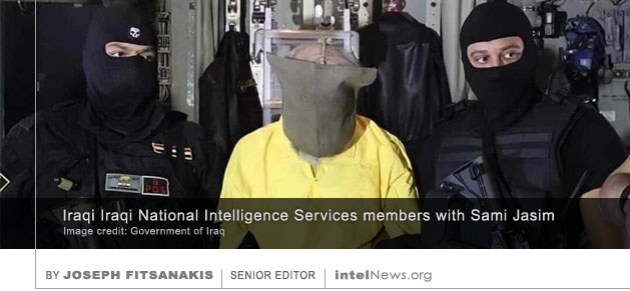
Sami Jasim al-Jaburi

ONE OF THE ISLAMIC State’s senior leaders, who has headed the group’s financial arm since at least 2015, was captured in a “complex operation” by Iraq’s intelligence agency, according to announcements from Baghdad. Sami Jasim Muhammad al-Jaburi, also known by the name Abu Asya, has been close to senior Sunni Islamist figures since before the Islamic State emerged as a major player in Iraq and Syria. He is believed to have first met the Islamic State’s spiritual leader, Abu Bakr al-Baghdadi, in the northern Iraqi city of Mosul in 2012.

Once the Islamic State began conquering large swathes of territory in the Middle East, and proclaimed itself the government of a self-styled emirate, Jasim was appointed treasurer. He also served as one of al-Baghdadi’s senior deputies until at least 2017. He survived the fall of the Islamic State’s proto-state, but continued serving in the organization’s financial arm under its current chief, Abdullah Qardash.

Jasim’s arrest was announced on Monday by Iraq’s Prime Minister, Mustafa al-Kadhimi, through his personal account on Twitter. According to the tweet, the Iraqi National Intelligence Services conducted “a complex external operation to capture Sami Jasim”. Notably, the Iraqi Armed Forces revealed in a follow-up tweet that Jasim had been captured outside of Iraq’s borders. But the tweet did not reveal the precise location where the Islamic State leader was captured, nor did it discuss any other aspects of the operation.

The United States government had offered a $5 million reward for information leading to Jasim’s capture. It is not known whether American intelligence agencies or troops played any role in Jasim’s capture.

Author: Joseph Fitsanakis | Date: 12 October 2021 | Permalink

Jordanian intelligence thwarted Islamic State plan to kill soldiers in Jordan, Israel

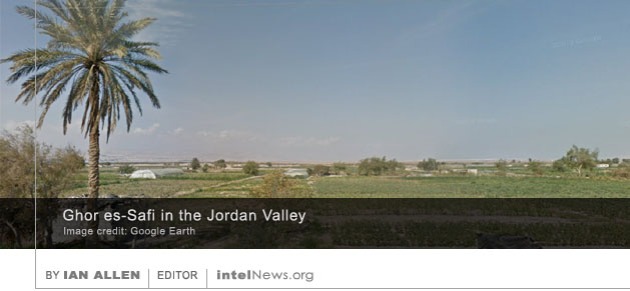
Ghor es-Safi Jordan

THE INTELLIGENCE SERVICES OF Jordan allegedly thwarted a plan by a cell of Islamic State fighters to carry out an armed attack across two countries, with the ultimate aim of killing Jordanian and Israeli troops. The state-owned Jordanian newspaper Al-Ra’I said on Tuesday that the attack was to be carried out in Gawr as-Safi, a sparsely inhabited area of the Jordan Valley, which is adjacent to the southern portion of Israel’s Dead Sea region.

The paper said that Jordan’s General Intelligence Department caught on to a suspected Islamist militant in December of 2020. The suspect led them to a larger cell of three other militants, who were arrested in February of this year. Their goal was reportedly to attack a Jordanian border post in Gawr as-Safi and kill the border guards there. They then planned to cross into Israel and open fire on Israeli soldiers, with the aim of killing them, in what appears to have been planned as a murder-suicide mission.

In the indictment of the four men, Jordanian authorities claim that they were found to be hoarding a cache of weapons, which they planned to use to carry out their attack in Jordan and Israel. They now face charges of conspiring to commit an act of terrorism and propagating the ideology of the Islamic State, which the Jordanian government designates as an international terrorist organization.

Meanwhile, a new assessment of the Islamic State by the Analytical Support and Sanctions Monitoring Team of the United Nations’ Security Council, warns that the militant organization remains strong in parts of the Middle East. The report, issued this week, recognizes that the Islamic State has suffered setbacks in recent years. But it cautions against dismissing the threat, noting that the militant group “has evolved into an entrenched insurgency” that is “exploiting weaknesses in local security to find safe havens and [is] targeting [government] forces” across the region.

Author: Ian Allen | Date: 28 July 2021 | Permalink

US designates two African armed groups as foreign terrorist organizations

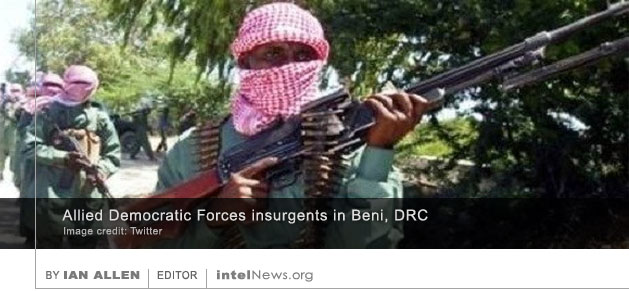
THE UNITED STATES DEPARTMENT of state has designated two armed groups, based in Mozambique and the Democratic Republic of the Congo, as foreign terrorist organizations. In a statement released last week, the US Department of State identified the groups as Mozambique’s Ahlu Sunnah Wa-Jama and Congo’s Allied Democratic Forces (ADF). In its statement, the US Department of State also said that the two groups have declared allegiance to the Islamic State of Iraq and Syria (ISIS).

Established in Uganda in 1996, the ADF has had a presence in the eastern regions of Congo for over two decades. The ADF insurgency is rooted in regional ethnic rivalries. However, the group’s rhetoric became increasingly Islamist-centered in the 2000s. In 2013, following an intense recruitment campaign in Uganda, the ADF launched a series of attacks in northeastern Congo. It is currently involved in an insurgency against the Congolese military, which launched a major offensive against the group in 2019. Mozambique Ahlu Sunnah Wa-Jama, known locally as Al-Shabab (no relation to the Somali group by the same name), first appeared in 2017. Two years later, its leader, Abu Yasir Hassan, declared the group’s allegiance to ISIS and proclaimed that its goal was to establish an Islamic emirate in Mozambique.

US officials regularly refer to the two groups as “ISIS-DRC” and “ISIS-Mozambique”. In the spring of 2019, ISIS declared that the two groups were the armed wings of the so-called Islamic State Central Africa Province (ISCAP). The militant group added that the mission of ISCAP was to build a caliphate in central, eastern, and eventually southern Africa. In addition to designating ISIS-DRC and ISIS-Mozambique as foreign terrorist organizations, the US Department of State named their leaders, Seka Musa Baluku and Abu Yasir Hassan, as “specially designated global terrorists”.

Author: Ian Allen | Date: 16 March 2021 | Permalink

US forces are secretly helping the Taliban fight the Islamic State in Afghanistan

Taliban

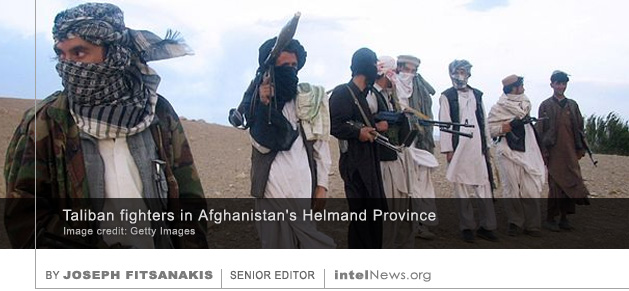
UNITED STATES TROOPS ARE secretly re-purposing weapons that were initially used to fight the Taliban, in order to help the Taliban defeat the Islamic State in northeastern Afghanistan, according to a new report. The American military’s newfound role in Afghanistan reportedly reflects the view of the White House that the Taliban have no aspirations outside of Afghanistan, while the Islamic State seeks to challenge America’s interests worldwide.

The rumors that the US Department of Defense has been providing assistance to the Taliban as they battle the Islamic State in Afghanistan are not new. In March of this year, General Frank McKenzie, Commander of US Central Command, admitted as much during Congressional testimony. He told the US House Armed Services Committee that the Taliban had received “very limited support from us”, but declined to elaborate during open-door testimony.

What did General McKenzie imply? According to veteran military affairs reporter Wesley Morgan, US Joint Special Operations Command (JSOC) forces in Afghanistan have been instructed to provide air cover to Taliban forces as they fight the Islamic State. Morgan said he spoke to members of a JSOC Task Force in Afghanistan’s northeastern Kunar Province, who confirmed General McKenzie’s comments from back in March.

Importantly, the JSOC’s air support to the Taliban is reportedly provided without direct communication between the US forces and the Taliban. Instead, the Americans simply “observe battle conditions” and “listen in on the [communications of the] group” in order to determine what kind of air support it needs. The resources used in that capacity consist of weaponry that was initially deployed against the Taliban, but is now being secretly repurposed to assist the Taliban in their fight against the Islamic State. According to Morgan, the JSOC team in Kunar, which provides air cover to the Taliban, jokingly refers to itself as the “Taliban air force”.

Miller adds it is unclear whether the Afghan government in Kabul is aware that US forces are providing assistance to the Taliban. It is also unclear whether al-Qaeda, which is a close ally of the Taliban, is benefiting from that assistance. Recently a United Nations report warned that al-Qaeda remains “heavily embedded” with the Taliban in Afghanistan, despite assurances by officials in the administration of US President Donald Trump that the two groups are in the process of parting ways.

Author: Joseph Fitsanakis | Date: 03 November 2020 | Permalink

News you may have missed #909 – Insurgency edition

Al-Hawl refugee campSouth African intelligence concerned about spread of insurgency in Mozambique. This is the first public expression of concern from the South African government that the violence in neighboring Mozambique could spread. Previously, the South African Parliament was informed the matter was only to be discussed behind closed doors. Earlier in June, the South African military reportedly participated in Operation COPPER, in support of the Mozambican Defense Force.

US intelligence says Russia offered Afghans Bounties to kill US troops. American intelligence officials have concluded that a Russian military intelligence unit secretly offered bounties to Taliban-linked militants for killing coalition forces in Afghanistan — including targeting American troops — amid the peace talks to end the long-running war there, according to officials briefed on the matter. The intelligence finding was briefed to President Trump, and the White House’s National Security Council discussed the problem at an interagency meeting in late March, the officials said.

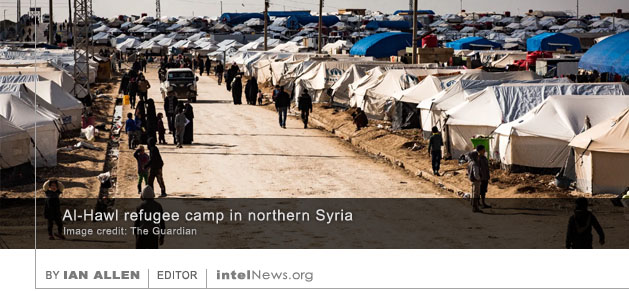
Analysis: The security risk posed by ISIS women smuggling their way out of camp Hol. While a debate rages in Europe over whether or not ISIS women and their children can be repatriated to their European home countries, some women have been taking things into their own hands and returning via illegal smuggling networks, creating new and serious security issues with which European officials must now grapple.

News you may have missed #905

Twitter IAFrench forces kill al-Qaeda head and capture ISIS leader in Mali. In the past few days, the French military successfully conducted two key operations in the Sahel, killing the emir of al-Qaeda in the Islamic Maghreb (AQMI), Abdelmalek Droukdal, and capturing Mohamed el Mrabat, a leader of the Islamic State in the Greater Sahara (EIGS) group. The US military assisted the French special operations forces by providing intelligence that helped locate the target.

Isis operations increase in Iraq as coalition withdraws. The Islamic State staged at least 566 attacks in Iraq in the first three months of the year and 1,669 during 2019, a 13 per cent increase from the previous year, according to security analysts who track the group’s activities. The jihadists have exploited a partial drawdown of the international anti-Isis coalition, analysts said, while tensions between the US and Iran, disruption caused by the coronavirus pandemic, and political paralysis in Baghdad, have also combined to provide an opportunity for the insurgents to regroup.

Twitter removes more than 170,000 pro-China accounts. Twitter has removed more than 170,000 accounts it says were tied to an operation to spread pro-China messages. Some of those posts were about the coronavirus outbreak, the social media platform has announced. The firm said the Chinese network, which was based in the People’s Republic of China, had links to an earlier state-backed operation it broke up alongside Facebook and YouTube last year.

Islamic State’s new leader issues video vowing ‘not a single day without bloodshed’

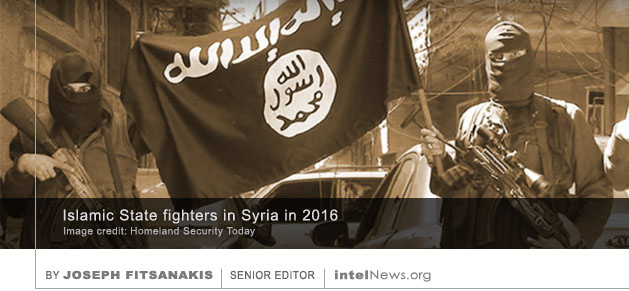
ISIS SyriaIn a recent video message, the new head of the Islamic State calls COVID-19 a “great torment” from God against unbelievers, and vows that “not a single day will pass without bloodshed” due to attacks by his forces. The 39-minute video is entitled “The Crusaders Will Know Who Will Win in the End”, and began to circulate on the popular messaging application Telegram last Thursday.
The message in the video is delivered by Abu Hamza al-Qurashi, who last year succeeded Abu Bakr al-Baghdadi in the leadership of the Islamic State. The Sunni militant group announced al-Qurashi’s ascension to the leadership on October 31, 2019, lust days after its founder and spiritual leader was killed by American troops in Syria. The United States is offering up to $5 million reward for information leading to al-Qurashi’s capture or death.

The video is the third message issued by the Islamic State’s new leader, and the second one this year. In it, al-Qurashi refers to the coronavirus pandemic, recent political changes in Iraq, and the ongoing negotiations between the US and the Taliban in Afghanistan. The video also admonishes al-Qaeda’s branches in Africa, several of which are engaged in an increasingly bloody battle with forces allied to the Islamic State.

The majority of the video focuses on the coronavirus pandemic, which al-Qurashi describes as “a great torment” sent by God to non-Muslims, and says that he and his leadership “rejoice” in seeing the virus’ effects on the West. He adds that the enemies of the Islamic State will continue to be “struck down” by the pandemic like Egypt’s pharaohs were struck by the 10 plagues described in the Bible.

But al-Qurashi also focuses on Iraq, speaking with visible satisfaction about the apparent withdrawal of US troops from the country in recent months. Since the assassination of Qasem Soleimani by the US in January, American troops have withdrawn from at least six military bases throughout Iraq, which are now under the control of the Shi’a-dominated Iraq Security Forces. They include critical installations in the outskirts of Baghdad, in Kirkuk near the country’s Kurdish-dominated northern region, in Mosul, in western Iraq, and along the Syrian border. Additionally, Iraq now has a new Prime Minister, Mustafa al-Kadhimi, who has vowed to crush the remnants of the Islamic State throughout his country.

Without substantial military presence by the US, the Islamic State does not see the Iraq Security Forces as capable of defending those regions —after all it has defeated them before. It therefore views the US military’s withdrawal as an unexpected opportunity to reignite its insurgency and even take back the lands that it controlled until a few years ago. In the latest video, al-Qurashi directly addresses the Iraqi government, which it describes as the “government of infidels in Iraq” and as “the American government”. He warns that “not a single day will pass without bloodshed”, as “jihadists will start to increase their attacks against the crusaders”. These attacks he says, will be “only the start of bigger attacks in Iraq and Syria”.

Author: Joseph Fitsanakis | Date: 03 June 2020 | Permalink

News you may have missed #900

Marco RubioChina may set up Hong Kong spy agency under new law. China’s new national security legislation may be used to establish a domestic intelligence agency in Hong Kong similar to the British colonial-era’s Special Branch, according the territory’s former leader Leung Chun Ying. Leung’s comments could give weight to concern among some Hong Kongers and Western governments that national security legislation will herald a new era of political surveillance and law enforcement controlled from the mainland.
Islamic State is back and this time the west is ill-prepared to take it on. Hassan Hassan, of the Center for Global Policy, and co-author of ISIS: Inside the Army of Terror, argues that “the current trends seem more favourable to the Islamic State than to local forces in Iraq”. Additionally, “tensions between the US and Iraqi forces also make it harder for the two partners to work in harmony as they did during the fight against Isis in places like Mosul”.
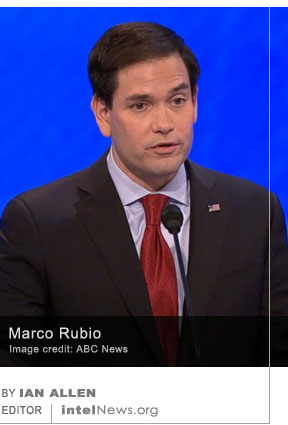
New Senate intelligence committee director warns against virus conspiracies. Senator Marco Rubio (pictured), the new Republican chairman of the Senate Intelligence Committee, has warned that foreign actors will seek to amplify conspiracy theories about the coronavirus and find new ways to interfere in the 2020 presidential election. The Florida Republican said in an interview with The Associated Press on Tuesday that one possibility could be an effort to convince people that a new vaccine against the virus, once created, would be more harmful than helpful.

As ISIS goes online due to COVID-19, it publishes a new cybersecurity magazine

Islamic StateAs the Islamic State continues to transfer its activities online due to the coronavirus pandemic, the group has published the first issue of a new cybersecurity magazine, aimed at helping its members evade surveillance. The Islamic State, known previously as the Islamic State of Iraq and Syria, has always been active online. But the COVID-19 pandemic has prompted it to augment the volume and intensity of its online work, for two reasons: first, to protect its members from the virus; second, to recruit young people who are spending more time online as a result of lockdowns taking place across the world.
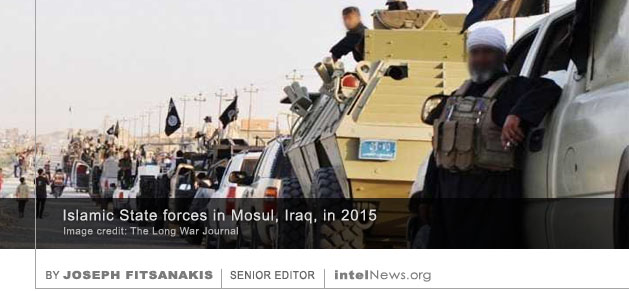
Amidst this shift to the online environment, the Islamic State has published the first issue of what appears to be a new cybersecurity magazine. Veteran reporter Bridget Johnson, currently the managing editor for Homeland Security Today, said earlier this week that the 24-page magazine is titled The Supporter’s Security and is published in two versions, one in the Arabic and one in the English language.

Johnson reports that the new magazine is produced by the Electronic Horizons Foundation (EHF), the Islamic State’s information technology wing. Since its appearance in 2016, the EHF has taken it upon itself to operate “as an IT help desk of sorts” to assist Islamic State supporters avoid online tracking and surveillance by state agencies, says Johnson. It its inaugural proclamation, the EHF called on Islamic State supporters to “face the electronic surveillance” and educate themselves about “the dangers of the Internet” so that “they don’t commit security mistakes that can lead to their bombardment and killing”. Read more of this post

COVID-struck Iraq sees ‘biggest ISIS resurgence’ since group’s defeat in 2017

ISIS IraqIraq is currently witnessing the largest resurgence of the Islamic State since December of 2017, when the Iraqi government declared it had defeated the group, according to local and international observers. The Sunni militant group, which became known as the Islamic State of Iraq and Syria (ISIS), is exploiting a moment of opportunity, as Iraqi security forces, Shia militias and American troops are essentially sheltering in place to avoid the effects of COVID-19.


Iraq has been on involuntary lockdown since March 22 in response to the outbreak of the coronavirus pandemic. The country’s security forces are busy providing humanitarian relief to communities under lockdown. Additionally, large numbers of soldiers and police officers are either sick or sheltering in place with their families and are not turning up for work. Furthermore, United States forces have significantly scaled back their presence in the country following the assassination of Iranian military commander Qasem Soleimani in January of this year, in an effort to avoid armed confrontations with Iraq’s pro-Iranian militias.

These conditions are allowing Islamic State fighters to emerge from hiding and conduct operations in nearly every province of Iraq. Last week the militant group launched a series of coordinated attacks in nearly 30 different locations across Iraq, which left dozens of Iraqi security forces and Shia militia members dead. Additionally, Islamic State saboteurs destroyed several power lines across northeastern Iraq, disrupting electricity supply to tens of thousands of homes in the region.

On Tuesday, Iraqi security forces teamed up with the Popular Mobilization Forces —a mostly Shia paramilitary group— to launch several operations against the Islamic State. The operations aimed to neutralize known Islamic State enclaves in mostly Sunni regions of northern and western Iraq. They also aimed to capture Islamic State regional commanders, most of whom operate along Iraq’s borders with Saudi Arabia, Turkey and Syria.

But nobody knows how this campaign will end up in light of the coronavirus. The pandemic is causing major disruption on the Iraqi economy, while the historic drop in oil prices is dramatically reducing the nation’s primary source of income. The Islamic State thrives in conditions of instability, which is precisely what many fear, as the effects of the pandemic are continuing to manifest in the Middle East.

► Author: Joseph Fitsanakis | Date: 11 May 2020 | Permalink