Analysis: Experts warn ISIS may be using COVID-19 crisis to stage global resurgence

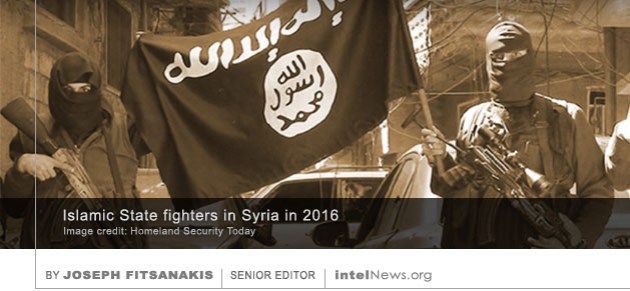
ISIS IraqTerrorism experts have issued warnings that the Islamic State may be exploiting the global instability caused by the novel coronavirus pandemic to stage a worldwide resurgence. Indeed, there are signs that Islamic State activity has been intensifying in Asia, Africa, the Middle East and even Europe, in recent days.

On April 28, the Islamic State said it was responsible for a suicide attack in the Iraqi city of Kirkuk, which injured four people. The attack targeted the Information Protection Agency, which is the de-facto intelligence agency of the local Kurdish-led government in northern Iraq. It is estimated that the Islamic State commands at least 20,000 armed fighters in Iraq and Syria. Between April 15 and 21 alone, the Islamic State carried out at over 30 operations across Iraq, according to reports.

On the same day, April 28, a motorist who appears to have deliberately rammed his vehicle into two police motorcyclists in Paris said he had pledged allegiance to the Islamic State. Earlier this month, police in the German city of Frankfurt arrested three alleged members of the Islamic State, who were in the process of planning a bomb attack aimed to kill large numbers of civilians. These attacks follow a reported “uptick in propaganda] by the Islamic State, aimed at a European audience.

On April 17, an Islamic State-linked group in the Philippines ambushed a military convoy and executed 11 soldiers after capturing them. The soldiers were attempting to arrest or kill a senior commander of the militant group. And on April 24, the government of Mozambique announced that the Islamic State is present and active there, after a group or armed militants killed 52 civilians in a village in Cabo Delgado, which is Mozambique’s oil-rich region.

Meanwhile, Islamic State publications and media messages describe the novel coronavirus as a divine form of retribution against atheist China, as well as against “polytheist” Iran, and the “crusaders” of Europe. Some Islamic State outlets have urged the group’s followers to refrain from venturing into heavily infected regions. But more recent messages have asked for an “insurrection” to coincide with the Ramadan, which will last for most of May.

Author: Joseph Fitsanakis | Date: 30 April 2020 | Permalink

Extremist groups see coronavirus pandemic as opportunity to spread chaos: report

Islamic StateExtremist groups around the world are capitalizing on the novel coronavirus pandemic to rally their members around a common cause and spread chaos and violence, according to a new report. In an article published on Tuesday, veteran reporter Bridget Johnson, currently the managing editor for Homeland Security Today, writes that the world’s most active militant groups have issued numerous edicts and proclamations about COVID-19.

Johnson explains that most militant groups “have shown some concern” about their members’ health and wellbeing amidst the pandemic. The Islamic State was arguably the first Islamist group to instruct its members to take precautions against COVID-19. Johnson writes that the group began highlighting the threat of the virus in January, when an article in Al-Naba­, the Islamic State’s weekly newsletter, expressed “growing concern about the spread of the infectious virus”. The militant group has since prescribed that “the healthy should not enter the land of the epidemic and the afflicted should not exit from it”, and has advised its members to wash their hands and “cover the mouth when yawning and sneezing”.

In the past month, the Afghan Taliban have been carrying a “COVID-19 awareness campaign” in areas under their control. The campaign centers on community events that feature the distribution of masks, soap and informational pamphlets to families, writes Johnson. Taliban commanders have also been issuing regular warnings and threats against those who are caught resorting to price gouging or hoarding food and supplies. In recent communiques, the Taliban have called the coronavirus “a decree of Allah” and have urged their followers to respond to it “in accordance with the teachings of the Holy Prophet”, including daily readings of the Quran, repenting and reciting prayers.

Al-Qaeda publications have described COVID-19’s spread in Muslim communities as “a consequence of our own sins and our distance from the divine methodology, [our widespread] obscenity and moral corruption”. The group has also instructed its followers to view the coronavirus as “a powerful tsunami” that has the potential to ruin the American economy. A recent article by al-Qaeda propagandists stressed that the group’s co-founder, Osama bin Laden, “would often inquire about the economic impact of the [September 11] attacks, unlike most others who would limit the discussion to casualties”, according to Johnson. She adds that al-Qaeda has called on its members to “turn this calamity into a cause for uniting our ranks, [because] now is the time to spread the correct Aqeedah [creed], call people to jihad in the Way of Allah, and revolt against oppression and oppressors”.

Meanwhile, Islamic State publications in countries such as India have been pointing out that, with soldiers and police officers “deployed in streets and alleys” during the coronavirus pandemic, jihadists have “easy targets”. Islamic State members are also being urged to “intensify the pressure” while national governments around the world are “preoccupied with protecting their countries”, something that will inevitably distract them in the coming weeks and months, writes Johnson.

In the United States the Department of Homeland Security, the Federal Bureau of Investigation and the National Counterterrorism Center have issued several warnings regarding threats made by racially motivated violent extremists (RMVEs) in connection with the pandemic. The warnings state that RMVEs have discussed weaponizing the virus and using it to infect members of racial or ethnic minorities. Some white supremacist theorists have utilized online forums to discuss their hope that the responses to the pandemic by governments around the world “could crash the global economy, hasten societal collapse, and lead to a race war”. Other RMVE groups have been promoting conspiracy theories blaming ethnic and religious minorities —primarily Jews— for the coronavirus pandemic, writes Johnson.

Author: Joseph Fitsanakis | Date: 16 April 2020 | Permalink
US-Taliban peace deal will empower ISIS in Afghanistan, say insiders

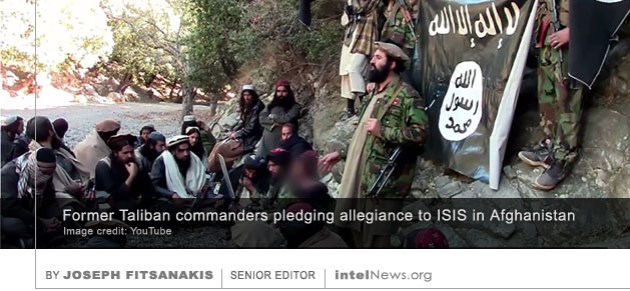
ISIS Islamic State AfghanistanAn imminent peace agreement between the United States government and the Taliban will inadvertently empower the Islamic State in Afghanistan, according to a number of insiders, who warn that the soon-to-be-announced deal may have grave unintended consequences for the war-ravaged country.
After nearly two decades or war, the United States is close to concluding a peace agreement with the Taliban, the Pashtun-based Sunni group that has waged an Islamist insurgency against the American-supported government of Afghanistan since 2001. The two sides have said that they will be signing a peace settlement on February 29, providing that an ongoing agreement for a week-long reduction in armed violence holds. If the current reduction in violence continues unabated, the United States has agreed to remove most of its troops from the country, while the Taliban have agreed to initiate peace negotiations with the Afghan government.

But a team of journalists with the American television program Frontline, who are working on the ground in Afghanistan, report that the impending peace deal may bear unintended consequences. They report that numerous sources in Afghanistan are warning that the peace deal will result in an increase in membership for the Islamic State forces in the country. This will happen, they say, because Taliban fighters who object to a peace treaty with Washington will abandon the Taliban and join the Islamic State. Some Frontline sources claim that the majority of the Taliban’s foot soldiers are preparing to join the Islamic State if a deal is struck between Washington and the Taliban.

The Frontline team quotes one Islamic State commander in Afghanistan, who claims that the peace deal will “make the caliphate rise”, as “Taliban fighters have promised to join us”. The United States is trying to pre-empt this expected trend, according to reports. The Pentagon expects that, as soon as the peace treaty with the Taliban is signed, it will need to redirect its remaining troops in the country to focus their attention to the forces of the Islamic State.

Author: Joseph Fitsanakis | Date: 27 February 2020 | Permalink

ISIS is tenacious, well-funded and quickly reasserting itself, new UN report warns

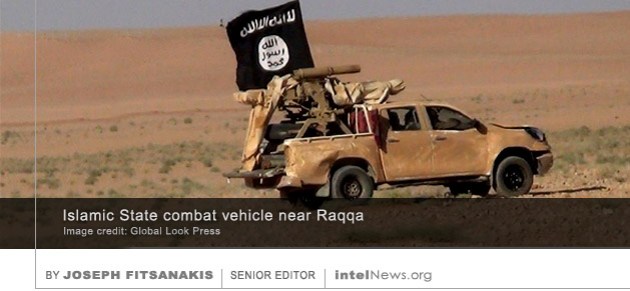
Islamic State ISISThe Islamic State remains committed to its goals and continues to utilize ample funding sources, according to a new report by the United Nations. The report warns that the militant Sunni group, which was previously known as the Islamic State of Iraq and Syria (ISIS), is quickly reasserting itself in the Middle East.
The report (.pdf) was authored by a committee of the UN’s Security Council that monitors the impact of UN-imposed international sanctions designed to weaken the Islamic State, al-Qaeda, and groups aligned with them. It was completed on January 20 and submitted to the UN Security Council last week. Its authors state that the information used to compile it came from intelligence shared with the UN by its member states.

The report recognizes that the Islamic State has suffered significant defeats in the field of battle, which have shattered its once formidable military and logistical power. Despite these setbacks, however, the militant group remains “tenacious and well-funded”, with much of its financial income stemming from sound investing practices in business opportunities throughout the Middle East, says the report. Meanwhile, its armed units in Syria continue to sell protection and carry out extortion, now even during daylight hours, it adds. The group’s steady funding even allows it to continue to provide monthly pensions to close family members of its dead fighters.

Additionally, says the report, the Islamic State has learned to take advantage of the deficiencies of Syrian and Iraqi security forces, and is now carrying out progressively brazen armed attacks against a variety of military and civilian targets. Although it is operationally weak, it continues to aspire to launch attacks in Europe in the future. Additionally, its leaders continue to seek ways of freeing thousands of the group’s supporters from detention camps in Syria and Iraq.

The report concludes that the death of the group’s leader, Abu Bark al-Baghdadi, and his replacement by Amir al-Salbi (also known as Abdullah Qardash) is not expected to signal drastic changes in the Islamic State’s strategic direction. However, Qardash is not an Arab and may not stay at the group’s helm for long, as an Arab Emir would be more likely to be met with acceptance by the group’s wilayats, or provinces, the report adds.

Author: Joseph Fitsanakis | Date: 03 February 2020 | Permalink

Western intelligence agencies see non-Arab as new head of ISIS

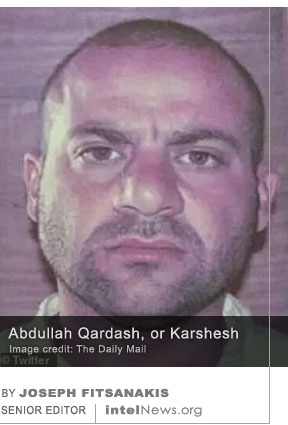
Abdullah QardashWestern intelligence agencies have reportedly confirmed that a non-Arab is now leading the Islamic State for the first time in the organization’s history. Rumors of a new leader of the group began to circulate just hours after American forces killed its self-styled Caliph, Abu Bakr al-Baghdadi. On October 27, 2019, Newsweek magazine reported that the militant group, which is also known as the Islamic State of Iraq and Syria (ISIS), had appointed a man known as Abdullah Qardash (pictured) at its helm. According to the magazine, Qardash’s name was sometimes spelled in English as Karshesh. Additionally, he was sometimes referred to by his ISIS moniker, Hajji Abdullah al-Afari.
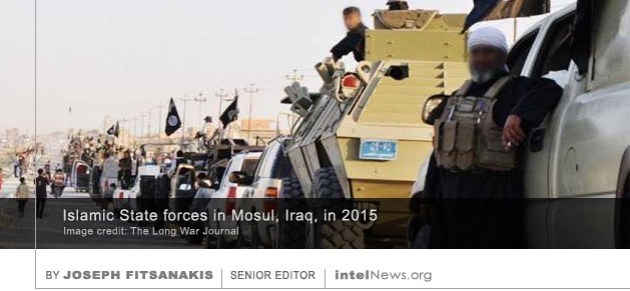
However, the names reported by Newsweek were not immediately recognizable to Western intelligence officials and other experts who monitor the Islamic State. But now British newspaper The Guardian reports that Western intelligence services have concluded that the man referred to as “Abdullah Qardash” in October is indeed the new leader of ISIS. The paper said on Monday that the new ISIS leader’s birth name is Amir Mohammed Abdul Rahman al-Mawli al-Salbi. He is allegedly not an Arab, but rather an Iraqi Turkman whose family comes from Tal Afar, a northwestern Iraqi city that is close to the borders of Syria and Turkey. In fact, al-Salbi is reported to have a brother in Turkey, who is a prominent member of an ethic political grouping called the Turkmen Iraqi Front.

Al-Salbi, who was allegedly appointed as leader of ISIS just hours after al-Baghdadi’s demise, is believed to be the first non-Arab to ever lead the militant group. Like most of ISIS’ original founders, al-Salbi is believed to have met Baghdadi in 2004 in Camp Bucca, an American-administered prison in Umm Qasr. Similarly to al-Baghadi, al-Salbi’s background is in Islamic education —something that enabled him to quickly rise in the ranks of ISIS ideologues and command significant influence. By 2018, al-Salbi had become a central decision-maker within the group, and was able to shape its activities and policies within its territory in the Middle East and beyond. The Guardian article concludes that al-Salbi is “a hardened veteran in the same vein as al-Baghdadi”, which implies that no major changes in the Islamic State’s strategy are expected to take place under his leadership.

Author: Joseph Fitsanakis | Date: 21 January 2020 | Permalink

ISIS forces now patrolling nearly all of northern Iraq, says intelligence official

ISIS IraqThe Islamic State has regrouped, rearmed and refinanced itself, and its forces are now actively patrolling nearly all of northern Iraq, according to a senior intelligence official in Iraq’s Kurdistan region. The Islamic State, which is also known as Islamic State of Iraq and Syria (ISIS), used to control territory in the Levant that equaled the size of Germany. But its forces were pushed back by an international coalition of state armies and militias, a development that prompted several heads of governments, including United States President Donald Trump, to announce that ISIS had been defeated.

However, senior military and intelligence officials been warning in recent years that ISIS is far from defeated. In an new article published on Sunday, the BBC reports that Kurdish intelligence officials see ISIS as a resurgent organization. The report relies heavily on the views of Lahur Talabany, the head of Iraqi Kurdistan’s Information Protection Agency, which serves as the primary security and counterterrorism organization of Iraq’s Kurdistan Regional Government.

Talabany told the BBC that ISIS is today “like al-Qaeda on steroids”. The group has “better techniques, better tactics and a lot more money at their disposal” than the al-Qaeda of old, he said. The abundance of financial resources allows ISIS to “buy vehicles, weapons, food supplies and equipment”, said Talabany, adding that he is not sure about the precise source of the funds.

In addition to utilizing its strong finances, ISIS has exploited an ongoing dispute between the Kurds of northern Iraq and the central government in Baghdad, which has left large regions of north-central Iraq without an effective government presence. The militant group’s forces are therefore able to carry out daily patrols over “a huge territory, from Diyala to Mosul, which encompasses nearly all of northern Iraq”, said Talabany.

A large portion of ISIS’s forces appear to be based in Iraq’s Hamrin Mountains, which are riddled with deep caves and ravines. But the group maintains nearly 10,000 fighters all over Iraq, said Talabany, of which 5,000 operate as members of sleeper cells and another 5,000 are armed and active members of ISIS.

Author: Joseph Fitsanakis | Date: 24 December 2019 | Permalink

Europol culls thousands of Islamic State online accounts in ‘day of action’

Telegram AppThe law enforcement agency of the European Union, in cooperation with the popular online messaging service Telegram, has culled thousands of Islamic State online accounts in what it described as “a day of action”. The operation was coordinated by the European Union Agency for Law Enforcement Cooperation, better known as Europol. The agency coordinated its activities with the popular instant-messaging service Telegram, which the Islamic State has used as its main platform of mass communication since 2014.
In a press release that appeared on its website on Friday, Europol said that it had managed to locate “a significant portion of key actors within the Islamic State network on Telegram” and “push [them] away from the platform”. The messaging app confirmed the joint “day of action” with Europol and said it took down over 5,000 “terrorist accounts and bots” from its network on November 22 and 23. The company said this was nearly 10 times higher than the usual number of user accounts taken down daily for violating its user agreement.

The BBC said that the removal of the accounts appeared to affect heavily the activities of the Nashir News Agency, an Islamic State propaganda outlet that uses the Telegram app to publicize press releases from the Islamic State. Dozens of online channels and community groups that were moderated by Nashir News Agency editors were also impacted, as their moderators had disappeared from the network. On Saturday, some Telegram users began posting information about replacement accounts for Nashir News Agency press releases, but these too were taken down within hours.

This was the second major “day of action” against online terrorist propaganda that Europol coordinated, with the first one being in April of last year. But critics argue that such efforts are unlikely to have a long-term impact on the ability of terrorist groups to spread online propaganda, unless they are constant and systematic. Meanwhile, Islamic State sympathizers criticized the Telegram service on other social media platforms and warned that moves to silence the group would result in its membership going deeper underground.

Author: Joseph Fitsanakis | Date: 26 September 2019 | Permalink

Iraqi spy chief warns of impeding ‘catastrophe’ as ISIS rebuilds Middle East network

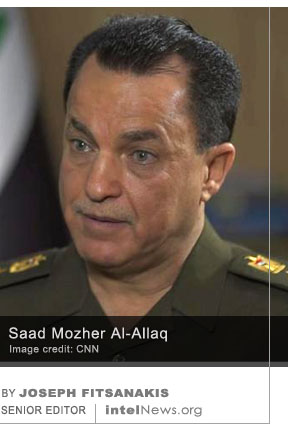
Saad Mozher Al-AllaqIn a rare interview, the head of Iraq’s military intelligence has warned of an impending “catastrophe” as the Islamic State continues to edge ever-closer to rebuilding its networks of fighters and supporters in the Middle East. Lieutenant General Saad Mozher Al-Allaq, head of Iraq’s Military Intelligence Directorate, gave a rare interview to the American news network CNN, which was aired on Monday.
In his interview, General Al-Allaq claimed that his agency was able to intercept recent communications from senior operatives of the Islamic State —also known as the Islamic State of Iraq and Syria, or ISIS. The communications allegedly refer to “Operation BREAK DOWN THE FENCES”, which he said is a plan by ISIS to storm numerous prisoner of war camps that are located across northwestern Iraq and Kurdish- or Turkish-controlled northern Syria. These camps hold as many as 10,000 men, many of whom are believed to be ISIS fighters. Other camps hold nearly 100,000 women and children who are connected to male ISIS fighters. According to General Al-Allaq, ISIS seeks to rebuild its powerbase in the region by freeing and re-arming these prisoners.

In addition to guarding against the possibility of a mass exodus of alleged ISIS prisoners and their families, the Iraqi spy chief said that his force has been working with Turkish authorities to neutralize networks of ISIS operatives in Turkey. Several senior ISIS “emirs” —senior members of the organization, with significant political influence and funding power— were able to bribe smugglers to take them to Turkey, where they are currently reorganizing the militant group’s illicit networks. The Iraqi government recently notified Ankara of the whereabouts of nine such ISIS “emirs”, said Al-Allaq.

The Iraqi spy chief concluded his interview by warning of an impending “catastrophe”, should ISIS be able to implement Operation BREAK DOWN THE FENCES and rebuild its support base in the region. Representatives of the Turkish government told CNN that Ankara was looking into the Iraqis’ allegations of ISIS “emirs” operating inside Turkey.

Author: Joseph Fitsanakis | Date: 19 November 2019 | Permalink

Al-Baghdadi’s ISIS hideout was equipped with frequently used internet connection

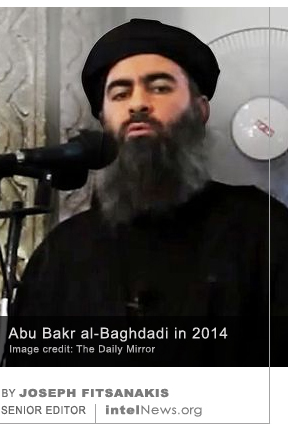
Abu Bakr al-BaghdadiThe Islamic State’s Syrian hideout that housed the group’s leader until his demise on October 26, was equipped with a frequently used internet connection, according to Arab media reports. Abu Bakr al-Baghdaid, the self-proclaimed caliph of the Islamic State, was killed by United States soldiers in Barisha,  a village in the Syrian province of Idlib, which is located just two miles from the Turkish border.
The region that surrounds Barisha is under the control of Turkey and can most accurately be described as a Turkish protectorate inside Syria. Moreover, it is heavily monitored by several intelligence agencies that have been looking for al-Baghdadi for years. It has therefore been generally assumed that the Islamic State leader’s hideout was kept isolated from the outside world and that no digital telecommunications means were used by its inhabitants, out of fear that they would be monitored by the Syrian authorities, Turkey, the United States, or others.

But a new report from the Dubai-based Al-Aan TV claims that the hideout was equipped with a frequently used internet connection and that it was active almost up to the moment US troops stormed the compound. The exclusive report, which aired on Thursday, alleges that the internet connection was set up in February of this year, and that it was used almost daily. The last time it was active was just 12 hours prior to the raid that killed al-Baghdadi and several members of his family.

The bill for the internet connection was approximately $8.00 a month and was paid by Abu Muhammad al-Halabi, a Syrian smuggler whose name also appears on tax records as the owner of the property, according to Al-Aan. The report provides no information about the type of online activity that the internet connection at the Barisha compound was used for.

Author: Joseph Fitsanakis | Date: 15 November 2019 | Permalink

Turkey’s arrest of al-Baghdadi’s sister is ‘intelligence goldmine’ says official

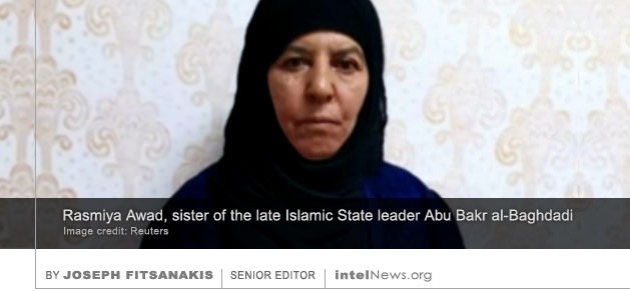
Rasmiya AwadA Turkish government official has described the arrest of the sister of the late Islamic State leader Abu Bakr Al-Baghdadi as “an intelligence goldmine”. The official was referring to the arrest of Rasmiya Awad, an Iraqi citizen, who was reportedly arrested on Monday. Little is known about al-Baghdadi’s sister. She is believed to have been born in 1954, which makes her 65 years old this year.
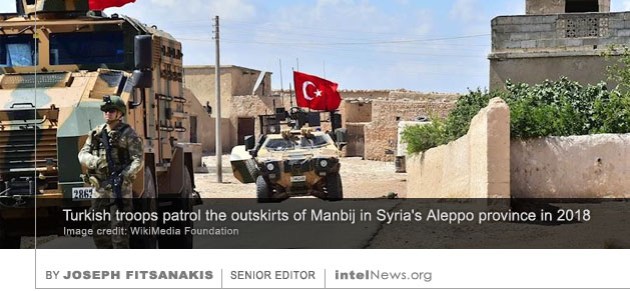
Awad was arrested during a raid by the Turkish-backed Free Syrian Army at a makeshift refugee camp in the suburbs of Azaz, a city of 30,000 located approximately 20 miles northwest of Aleppo. The Aleppo province in northwestern Syria has been under Turkish military control since 2016. Since then, the Turkish military command has relied on the Ankara-backed Free Syrian Army and a selection of smaller pro-Turkish militia to control the region.

The Associated Press reported that Awad was detained along with her family, including her husband, her daughter-in-law, and her five children. Five other adults were arrested in the vicinity of the refugee camp, all of them Iraqi citizens, but there is no word yet on whether they are in any way connected with the Islamic State. Turkish officials told the Associated Press yesterday that Awad, her husband and her daughter-in-law were being interrogated.

The news agency quoted one Turkish government official as saying that Awad’s capture was “an intelligence goldmine. What she knows about [the Islamic State] can significantly expand our understanding of the group and help us catch more bad guys”, the official is reported to have told the Associated Press.

Author: Joseph Fitsanakis | Date: 06 November 2019 | Permalink

Analysis: ISIS leader’s hideout in Turkish-controlled part of Syria raises questions

Turkey SyriaIn 2011, the discovery of Osama bin Laden’s hideout in Abbottabad raised questions about Pakistan’s knowledge of his whereabouts. Today it is hardly controversial to suggest that at least some elements in the Pakistani government must have been aware of bin Laden’s location. Last week’s discovery of Abu Bakr al-Baghdadi in a region of Syria controlled by Turkey inevitably raises similar questions about Ankara’s role in the Syrian conflict and its relationship with the Islamic State.
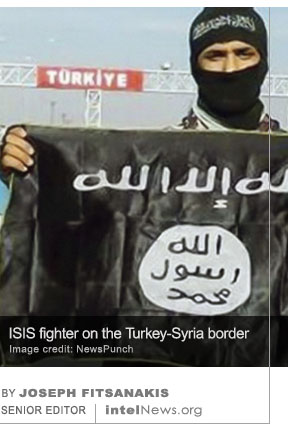
The self-proclaimed caliph of the Islamic State was found hiding in Barisha, a village in the Syrian province of Idlib, which is located just two miles from the Turkish border. The region that surrounds Barisha is under the control of Turkey and can most accurately be described as a Turkish protectorate inside Syria. The area north of Barisha has been under Turkish control since August of 2016, when Ankara launched Operation Euphrates Shield, a cross-border operation conducted by the Turkish Armed Forces in cooperation with Turkish-baked militias in Syria. In early 2018, Turkish and pro-Turkish forces extended their territorial control further south, capturing Barisha and all surrounding regions. They remain in control of the area to this day.

Turkish-occupied northern Syria is often described as a “proto-state”. It is governed by a collection of local councils of Turkmens and Arabs, with some Kurds and Yazidis also present. These councils elect representatives to the self-proclaimed Syrian Interim Government, which was formed in Turkey by Turkish-backed Syrian exiles and is currently headquartered in Azaz, an Arab-majority city of 30,000 that is under direct Turkish military control. Azaz is also the headquarters of the Turkish-backed “Free Police”, a gendarmerie-style militia that is funded, trained and equipped by the Turkish government.

In addition to the Turkish troops, the region is controlled by the Turkish-funded Syrian National Army. The 25,000 troops of the SNA —which is jokingly referred to by the locals as the “Turkish Syrian National Army”— operate completely under Turkish command. A substantial portion of the SNA’s force consists of former Islamic State fighters who switched their allegiance to the SNA once they saw the writing on the wall. Others are former members of the group that used to call itself Jabhat al-Nusra, an al-Qaeda affiliate that has become the most powerful Salafi-jihadist force in Syria after the demise of the Islamic State.

Turkish-occupied northern Syria is also the base of Ahrar al-Sham, a Salafi-jihadist group consisting of over 20,000 fighters, which is not officially aligned with al-Qaeda, but has similar goals. Since at least 2017, Ahrar al-Sham has effectively operated as a Turkish proxy militia and is in charge of dozens of check points and observation posts throughout the region. Lastly, the area is home to Hurras al-Din, yet another Salafi-jihadist group that is affiliated with al-Qaeda —though its leaders deny it. The group is able to operate in Turkish-controlled areas of Syria with suspicious ease. It was this group, Hurras al-Din, that sheltered al-Baghdadi in Barisha in return for cash.

Given Turkey’s military and political control of Idlib province, the question arises of how the world’s most high-profile terrorist leader was able to enter the region and receive protection from a militia that operates there under the watchful eye of the Turkish military. The New York Times reports that al-Baghdadi had been living in Barisha for several months before last week’s raid, and that Washington had been aware of his hideout location since the summer. Was Turkish intelligence also aware of the Islamic State leader’s whereabouts? If not, how could that be? If yes, why did it take a Kurdish spy, handled by Syrian Kurdish intelligence, to locate him and provide information to the Untited States? More importantly, what exactly is the relationship between Turkey and the al-Qaeda-linked Islamists who seem to operate freely in Idlib and provide protection to senior Islamic State officials in exchange for cash?

There are clearly more questions than answers here. If the United States is serious about combating Islamist extremism in the Middle East, it must press Ankara on these questions as a matter of urgency.

Author: Joseph Fitsanakis | Date: 31 October 2019 | Permalink

US spy agencies pore over intelligence acquired in raid that killed al-Baghdadi

Abu Bakr al-BaghdadiAmerican intelligence agencies are studying up to seven terabytes of data that were captured by Special Operations Forces during last week’s nighttime raid that killed Abu Bakr al-Baghdadi in Syria. Officials in Washington told The New York Times on Monday that Delta Force commandos confiscated “a large amount of material” from the raid that killed the Islamic State leader. The material allegedly includes several laptops and cellphones, which contain an estimated “four to seven terabytes of data”, according to one United States official who spoke anonymously to the paper.

It is believed that al-Baghdadi changed hideouts across northern Syria every few days, so it is unlikely that he and his entourage carried with them a large printed archive of Islamic State files. However, even a few hard drives or memory sticks could contain extensive information, said The Times. The commandos that carried out the nighttime raid reportedly spent two hours on the ground collecting intelligence from the site. All of it has now been delivered to experts in the Defense Intelligence Agency, the Central Intelligence Agency and other elements of the US Intelligence Community, who are currently “conducting a preliminary review of the confiscated documents and electronic records”, said the paper.

The information may shed light on questions such as if and how al-Baghdadi ran the Islamic State, how he communicated with the group’s military commanders across Iraq and Syria, and how he exchanged information with other senior Islamic State officials in the Middle East and beyond. There are also questions about al-Baghdadi’s links with the leaders of Islamic State affiliates around the world. Essentially, to what extent did the core leadership of the Islamic State under al-Baghdadi direct the operations of the group’s affiliates abroad? There may also be documents among the confiscated information material that discuss the Islamic State’s changing strategy following the collapse of its territorial base in the Middle East.

In addition to the confiscated information, American troops captured two of al-Baghdadi’s lieutenants who were guarding his compound during last weekend’s raid. The two men are currently being questioned by American interrogators and are eventually going to be handed over to the Iraqi government to face justice, according to The Times.

Author: Joseph Fitsanakis | Date: 29 October 2019 | Permalink

ISIS quickly replaces dead leader with former Saddam loyalist, say sources

Abdullah QardashBarely a day after the United States announced the killing of Islamic State leader Abu Bakr al-Baghdadi, the militant Sunni group has replaced him with an Iraqi former military officer, according to sources. US President Donald Trump said on Sunday that al-Baghdadi, the self-styled Caliph of the Islamic State of Iraq and Syria (ISIS), died by detonating an explosive vest. He reportedly did so after being cornered by American Special Operations Forces troops at his hideout in the northwestern village of Barisha, which is located in the Syrian province of Idlib near the border with Turkey.

Since Sunday’s announcement by the White House, ISIS has remained silent. But an intelligence source reportedly told Newsweek that the Sunni militant group had appointed a new leader just hours after al-Baghdadi’s killing. The American newsmagazine cited a “regional intelligence official” who asked “not to be identified by name or nation”. The official said that al-Baghdadi had been replaced with Abdullah Qardash (pictured), a former high-ranking officer in the Iraqi army, who served under the country’s late leader Saddam Hussein. Qardash’s name is often spelled Karshesh in English, and he is also referred to in some documents as Hajji Abdullah al-Afari —presumably his ISIS moniker.

In August of this year, al-Baghdadi reportedly nominated Qardash to lead ISIS’ religious affairs engagement office, known as “Muslim Affairs”. The nomination is believed to have been accepted, and was even announced in Amaq, the militant group’s semi-official news agency. But Qardash’s name has not been mentioned again in subsequent ISIS communiques. According to Newsweek, the former Iraqi Army officer had already “taken over a number of duties from al-Baghdadi” prior to the latter’s demise. The anonymous regional intelligence officer told the newsmagazine that al-Baghdadi’s role within ISIS was “largely symbolic” in recent months. He was “a figurehead [and] was not involved in operations day-to-day. All he did was say yes or no —no planning”, added the intelligence official.

Author: Joseph Fitsanakis | Date: 28 October 2019 | Permalink

Concerns about mass breakouts of jailed ISIS fighters if Turkey invades northern Syria

Turkey ISISOfficials in the United States, Europe and the Middle East have warned that thousands of jailed members of the Islamic State could escape from Kurdish-controlled prisons in northern Syria if Turkey invades the region. For more than two years, the area has been controlled by American-supported Kurdish militias, who were instrumental in helping Washington defeat the Islamic State —also known as Islamic State of Iraq and Syria, or ISIS. But the growing strength of the Kurdish forces has alarmed Turkey, which views Kurdish nationalism in the region as a bigger threat than Salafi jihadism. Ankara has repeatedly threatened to invade northern Syria and disarm the Kurdish groups, which it sees as terrorist.
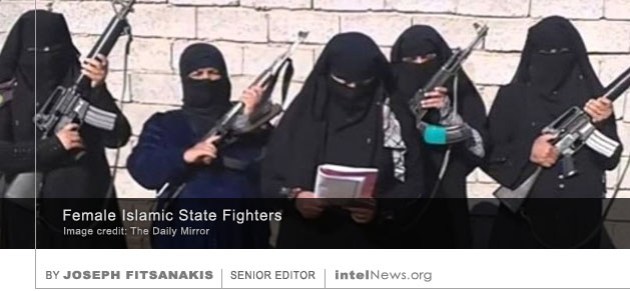
The continuous presence of American troops in northern Syria has served to dissuade Turkey from invading. Yesterday, however, the White House surprised observers by announcing its sudden decision to pull its troops from northern Syria. Washington’s unexpected move drew criticism from Kurdish commanders who spoke of betrayal, as well as by members of both political parties in Congress. Security officials also expressed fears that Turkey’s focus on the Kurds could allow ISIS to regroup in northern Syria. A statement issued by the White House on Monday said that Turkey would assume control of over 10,000 captured ISIS fighters who are currently being held in Kurdish-administered prison camps in northern Syria. But experts said that the wider Kurdish-controlled region of northern Syria, which Turkey intends to capture, is home to dozens of prisons with over 60,000 captured ISIS supporters in them. What will be the fate of these prisoners under Turkish control?

Security observers have repeatedly accused Turkey in the past of turning a blind eye to ISIS, whose members fought a prolonged and bloody war against Iraqi and Syrian Kurds from 2016 to 2018. There are no guarantees that the Turks will not utilize a resurgent ISIS to suppress Kurdish nationalism in the region. In fact, some experts, including retired American generals, warned on Monday that a Turkish invasion of northern Syria would give ISIS “a golden chance to regroup”. There are concerns of mass breakouts of ISIS members from Kurdish-controlled prisons in Syria, amidst the widespread chaos caused by a Turkish military onslaught. Such breakouts have been encouraged by ISIS leaders, including Abu Bakr al-Baghdadi himself. Escaped prisoners would most likely join the nearly 20,000 estimated ISIS fighters who are still at large in Iraq and Syria, thus contributing to a potentially catastrophic regeneration of the militant Sunni group, according to experts.

Author: Joseph Fitsanakis | Date: 08 October 2019 | Permalink

Tens of thousands of ISIS members are re-radicalizing inside Kurdish prison camps

Islamic State womenTens of thousands of supporters of the Islamic State, many of them women and children, are re-radicalizing inside vast Kurdish-run prison camps with inadequate security and almost no infrastructure or provisions. In a shocking report published last week, The Washington Post exposed the dire conditions at the al-Hawl prison camp in northern Syria, which the paper described as “a cauldron of radicalization” and “an academy” for captured supporters of the Islamic State (known also as the Islamic State of Iraq and Syria, or ISIS). Over 70,000 people are being held at the prison camp, of which 20,000 are believed to be women and 50,000 are children. Male members of the Islamic State are being held separately. Most of the 70,000 inmates in al-Hawl are Syrian and Iraqi citizens. An estimated 10,000 consist of Africans, Asians, Europeans and Arabs from countries other than Syria and Iraq. They are held in a separate annex of the prison camp and are believed to be the most radical of all the inmates.

The inmates of the al-Hawl prison camp are guarded and provided for by no more than 400 Kurdish fighters of the Western-supported Syrian Democratic Forces, according to The Post. The paper cited fourteen people, including inmates, Kurdish officials and aid workers, who claimed that the 400 guards are unable to enter the camp or provide even a semblance of law and order. Instead, law and order inside the prison is maintained by the women, who remain fully committed to the principles of the Islamic State, said the paper. They continue to follow the strict rules of the Islamic State and impose brutal punishment on those women and children who do not follow these rules. Women who speak to people from outside the prison camp, including journalists and lawyers, are later beaten and tortured; some have even been executed as a form of punishment, said The Post. Many of the Kurdish guards have also been attacked by the women and have been stabbed with makeshift weapons or had their arms and legs broken by them.

Islamic State paraphernalia, including black flags and pro-ISIS banners, are regularly confiscated from inmates. The latter have even managed to smuggle video messages to the outside world. In one such video message, a group of veiled al-Hawl inmates are seen holding the banner of the Islamic State and urging the group’s male members to “light the fire of jihad and free us [women] from these prisons”. The women in the video call themselves as “women of the mujahedeen” and issue a warning against “the enemies of Allah”: “you think you have imprisoned us in your rotten camp. But we are a ticking bomb. Just you wait and see”, they say. Responding to these messages, a Kurdish intelligence official told The Post that the Syrian Democratic Forces could “contain the women, but we can’t control their ideology”.

Author: Joseph Fitsanakis | Date: 12 September 2019 | Permalink