Analysis: Tension grows between Iraqi state and Shiite militias that helped fight ISIS

Popular Mobilization ForcesA powerful alliance of about 50 Shiite militias, who helped Iraq defeat the Islamic State, is resisting calls by the Iraqi government to surrender its weapons and join civilian life, according to observers on the ground. Much of the territory captured from the Islamic State (known also as the Islamic State of Iraq and Syria, or ISIS) in northern Iraq is currently controlled by the Popular Mobilization Forces (PMF), a collection of around 40 different Shiite militias consisting of over 150,000 armed fighters. The militias began to form in the summer of 2014, after Sayyid Ali al-Husseini al-Sistani, the spiritual leader of the Iraqi Shiite community, issued a fatwa (religious degree) that called or the destruction of ISIS. The Iranian-supported PMF proved instrumental in the territorial defeat of ISIS. However, the group’s leadership is ideologically aligned with Iran, and many of its members will not cooperate with the Iraqi Armed Forces, because of the latter’s proximity to the United States.

According to the German broadcaster Deutsche Welle, northern Iraqi cities like Mosul, Bashiqa and Nineveh are largely under the command of the PMF today, a full 18 months after they were recaptured from ISIS. All political and economic activity in the region is controlled by PMF fighters operating under the command of the 30th Brigade, which is one of the most hardline pro-Iranian militias in the PMF. It is alleged that the militias receive economic kickbacks from Shiite-owned Iraqi firms who are awarded multi-million dollar contracts to rebuild the city. Meanwhile, as The Washington Post and other news media have reported, PMF militia members are beginning to exhibit “mafia-like” behavior, establishing protection rackets and kidnapping motorists at night in order to release them for a fee paid by their families. There are also allegations, made by Deutsche Welle and other Western media, that the PMF has conducted mass executions of Iraqi Sunnis as part of its goal to rid Iraq of Sunni Islam.

Last month, Iraqi Armed Forces tried to dismantle PMF-controlled checkpoints into Mosul, but was confronted by armed PMF forces who refused to cede contro. Following the failed attempt to recapture the checkpoints, Iraq’s Prime Minister Adel Abdul-Mahdi warned the PMF that it had until July 31 to disband. Its members were called to join a newly established gendarmerie under the command of the Iraqi Ministry of Defense. Failure to do so would mean that the militias would be considered outlaws and would be treated as such by the Iraqi Armed Forces, the prime minister warned. But the PMF has requested more time to lay down its weapons, as some of its more moderate commanders are trying to convince the Iran-aligned militias to declare allegiance to a state army that they consider to be pro-American. The future will show how likely that is to happen.

Author: Joseph Fitsanakis | Date: 08 August 2019 | Permalink

ISIS will launch ‘complex international attacks’, warns UN intelligence report

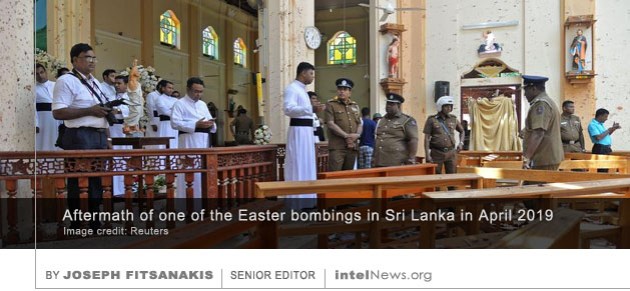
Sri Lanka Easter bombingsDespite its military defeat in the Middle East, the Islamic State retains the ability to launch “complex international attacks” and will likely do so this year, according to a new report by a United Nations monitoring team. These attacks will occur in “unexpected locations” around the world, says the report, which was authored by a committee of the UN’s Security Council that monitors the impact of UN-imposed international sanctions designed to weaken the Islamic State, al-Qaeda and groups aligned with them.

On April 21 of this year, the Islamic State (known also as the Islamic State of Iraq and Syria, or ISIS) claimed responsibility for nine suicide blasts that targeted Catholic churches and five-star hotels in Sri Lanka’s western and eastern coastal regions. The near-simultaneous bombings killed 258 people and injured over 500. They are believed to constitute the bloodiest terrorist attack in Sri Lanka’s history. But the United Nations report published on Wednesday claimed that the Sri Lanka attacks were the beginning of a worldwide campaign by ISIS, which will continue to occur throughout 2019. The absence of major ISIS attacks after April 21 is a temporary “abatement”, says the report, and will likely end before the this year concludes. Between now and then, “more Islamic State-inspired attacks will occur”, it notes. Since the fall of its self-styled caliphate in the Middle East, the militant Sunni group has maintained a sophisticated online media profile and propaganda campaign and continues to “aspire to have global relevance”, according to the report. To achieve this aim, the Islamic State’s leadership believes that the group must continue to carry out large-scale international attacks. In their effort, ISIS planners are assisted by the group’s substantial fortune, which is estimated to approach $450 million. These funds are being used to sponsor terrorist operations by ISIS affiliates in Asia, Africa and the Middle East, the report claims.

In an earlier intelligence report published in August of last year, the United Nations warned that the Islamic State had recovered from its recent defeats in the battlefield and retained as many as 30,000 committed members in Iraq and Syria alone. The report appeared to contradict earlier proclamations by the Iraqi government that the war against the group had been won. Similar proclamations were issued last year by United States President Donald Trump, who said that the war against the militant Sunni group was “98 percent” over.

Author: Joseph Fitsanakis | Date: 01 August 2019 | Permalink
Hundreds of ISIS fighters returning to Iraq to wage low-level insurgency

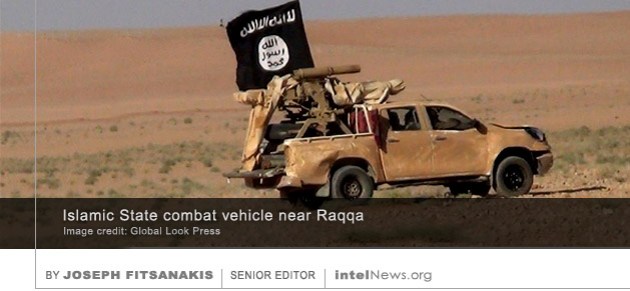
Islamic State ISISAbout 1,000 Islamic State fighters have returned to Iraq in recent months and are waging a low-level insurgency that threatens to destabilize rural areas and may be the forerunner of a new sectarian war, an expert has warned. Thousands of fighters belonging to the Islamic State —known also as the Islamic State of Iraq and Syria, or ISIS— crossed into Syria in late 2017. In December of that year, the Iraqi government of Prime Minister Haider al-Abadi declared victory in the war against the militant Sunni group. Since then, however, many of these fighters have been slipping back into Iraq from Syria and are now picking up arms again against the Iraqi state, which they see as being dominated by Iran-allied Shiites.
In an article published on Sunday, The Washington Post cites Hisham al-Hashimi, an Iraqi security advisor to the government in Baghdad, as well as several foreign aid groups, who warns that ISIS is regrouping in Iraq. Al-Hashimi told The Post that approximately 1,000 ISIS fighters are believed to have crossed into Iraq from Syria since December of 2018. Most of them are Iraqi nationals who are essentially returning to the Sunni-majority areas of the country that were considered ISIS strongholds before 2018. Upon their return, the fighters join small ISIS cells that operate mostly in rural areas in central and northern Iraq. They move at night and are intimately familiar with the local terrain, which allows them to utilize effectively a variety of hiding places. These cells can now be found in locations ranging from the city of Kirkuk in the north to the province of Diyala, east of Baghdad. They are responsible for scores of kidnappings, roadside bombings and sniper attacks that target local officials and security personnel. Local observers stress that the re-emerging ISIS cells are too weak to threaten the territorial control of the country by the Iraqi government. However, they are rapidly destabilizing rural areas in the country and appear to be preparing for a protracted insurgency that could potentially lead to another major sectarian war.

The Washington Post report comes a month after a group of researchers with the Institute for the Study of War warned that the Islamic State is capable of making a sudden comeback in the Middle East that could be “faster and even more devastating” than 2014, when the group quickly conquered territory the size of Britain. In a 76-page paper entitled ISIS’s Second Comeback: Assessing the Next ISIS Insurgency, the researchers said that the militant group had managed to subvert Iraqi and Syrian government efforts to reintroduce stability and safety in areas previously under ISIS domination. Not only were government forces finding it “increasingly difficult to establish durable and legitimate security and political structures” in those areas, but they should be worried about the possibility of ISIS actually reconquering territory in both Iraq and Syria, the report warned.

Author: Joseph Fitsanakis | Date: 24 July 2019 | Permalink

ISIS militant was first-ever Filipino suicide bomber, say police officials

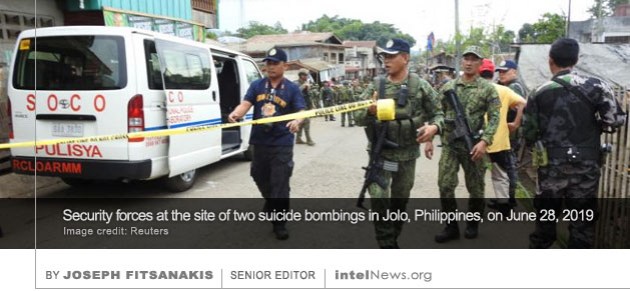
Jolo PhilippinesAn Islamic State militant who blew himself up in the Philippines last week was probably history’s first-ever Filipino suicide bomber, according to police officials. The man was one of two militants who detonated suicide vests in Indanan, a town in the southern Philippines island of Sulu, on Friday. The twin blasts killed six people, in addition to the two suicide bombers. The target of the attack was a military base that houses the 1st Brigade Combat team of the Philippine Army. The 1,500-strong brigade is leading the counterinsurgency campaign in the country’s heavily Muslim southern regions. Three of the victims were 1st Brigade Combat team soldiers, while three civilians who happened to be walking nearby were also killed.
The Islamic State —known also as the Islamic State of Iraq and Syria (ISIS)— claimed responsibility for the attack, leading many to speculate that the suicide bombers were not Filipinos, but other Arab nationals. That would fit the pattern of the two previous suicide bombings that have taken place in the history of the Philippines. In July of 2018, a Moroccan ISIS follower drove a van laden with explosives at an army checkpoint on the island of Basilan, killing ten people. And in January of this year, two Indonesian suicide bombers attacked a Roman Catholic congregation on Jolo Island, killing 23 and injuring over 100 churchgoers. All three suicide bombers were members of Abu Sayyaf, a Filipino Salafi jihadist group that pledged allegiance to ISIS in 2014. Moreover, none of the three suicide bombers were native Filipinos; rather they had traveled to the island country in order to carry out terrorist attacks.

This pattern may have changed as of last Friday, however. According to local military officials, a Filipino woman identified the remains of one of the two suicide bombers as belonging to her son. The woman reportedly told authorities that her son was named Norman Lasuca and was 23 years old. She also said that he, like his father, belonged to the Tausūg, a million-strong predominantly Muslim ethnic group that includes many recent converts to Islam.

On Tuesday, several Philippine Army commanders gave a press conference in Sulu, where they discussed the latest information regarding last week’s suicide attacks. One of the speakers, Brigadier-General Edgard Arevalo, said that the purported mother of the suicide bomber had provided DNA samples to the authorities, in order to help positively identify the body. If the DNA tests are positive “then […] we can say conclusively that the person is Filipino”, which will be a first, said Arevalo. A positive result would suggest that the ideology of ISIS may be more appealing to local Filipino youth than has generally been assumed by counterterrorism officials, Arevalo concluded.

Author: Joseph Fitsanakis | Date: 03 July 2019 | Permalink

ISIS could make bigger comeback than 2014 in Iraq and Syria, warns new report

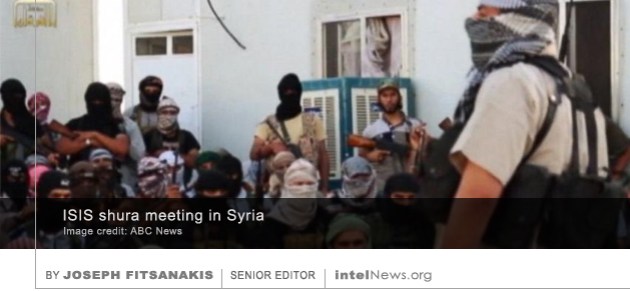
ISIS meetingThe Islamic State is capable of make a sudden comeback in the Middle East that could be “faster and even more devastating” than 2014, when the group quickly conquered territory the size of Britain, according to a new report from the Institute for the Study of War (ISW). The Washington-based think-tank’s report is based on the most recent data about the presence in the Middle East of the militant Islamist group, which is also known as the Islamic State of Iraq and Syria. The 76-page report (.pdf) is titled ISIS’s Second Comeback: Assessing the Next ISIS Insurgency, and is written by ISW’s researchers Jennifer Cafarella, Brandon Wallace and Jason Zhou.
The authors claim that the Islamic State moved its forces undercover during the multinational military campaign that eventually sacked its self-proclaimed caliphate. They go on to explain that by “deliberately withdrawing and relocating may of its fighters and their families”, the group managed to preserve a large part of its fighting forces, which are “now dispersed across [Iraq and Syria] and are waging a capable insurgency”. The latter is funded through ISIS’ global finance network and armed with weapons and other war materiel that the group managed to hide in tunnel systems and other hidden facilities. Islamic State insurgents have thus been engaged in a broad and largely successful campaign to assassinate village and town elders across Iraq, and have even reestablished a sharia-based taxation system in some of Iraq’s predominantly Sunni areas. The group also retains a significant presence in Syria, where it continues to battle the Syrian regime, US-supported Kurdish forces, and other Sunni militant groups, including al-Qaeda, according to the report.

Through its widening insurgency, the Islamic State has managed to subvert Iraqi and Syrian government efforts to reintroduce a semblance of stability and safety in areas previously conquered by the militant group. In fact, not only are government forces finding it “increasingly difficult to establish durable and legitimate security and political structures” in those areas, but they should be worried about the possibility of ISIS actually reconquering territory in both countries, the report warns. The report’s authors place much of the blame for ISIS’ resurgence at Washington’s door, describing America’s hasty military withdrawal from Iraq and Syria as “a critical mistake”. In its recommendations section, the report calls on the United States to develop and implement a long-term counter-terrorism strategy against ISIS, which will combine military and community-building measures. “Another limited [military] intervention will not be sufficient” to eliminate the threat, the report’s authors claim.

Author: Joseph Fitsanakis | Date: 27 June 2019 | Permalink

No evidence Islamic State had foreknowledge of Sri Lanka bombings, says official

Sri Lanka Easter bombingsIt is not at all clear that the Islamic State and its leader, Abu Bakr al-Baghdadi, who claimed responsibility of the Sri Lanka bombings in April, had foreknowledge of the attacks, according to a top official. The militant Sunni group claimed it was behind the nine suicide blasts that targeted Catholic churches and five-star hotels in Sri Lanka’s western and eastern coastal regions on April 21. The near-simultaneous bombings killed 258 people and injured over 500. They are believed to constitute the bloodiest terrorist attack in the country’s history. Interestingly, many questioned the authenticity of the Islamic State’s claim of responsibility, which came a full two days following the deadly blasts. The group typically issues statements immediately following attacks by its followers around the world. The 48-hour delay in the case of the Sri Lanka bombings, therefore, was deemed “uncharacteristic” by some experts.

Now The Hindu, India’s most-circulated English-language daily, has claimed that the Islamic State probably became aware of the Sri Lanka attacks after they happened. The Islamic State’s news agency, Amaq, issued a statement of responsibility, accompanied by a video showing the suicide bombers pledging allegiance to al-Baghdadi. But The Hindu has quoted “a senior official […] familiar with the probe” into the attacks, who claims that the militant group was contacted by its followers in Sri Lanka only after the attacks made international news headlines. A local Salafi jihadist communicated with the Islamic State on behalf of the National Thowheeth Jama’ath (NTJ), the local group that carried out the bombings. The Islamic State then secured the video of the suicide bombers “through a third party”, said the senior official. Sri Lankan Salafi jihadists eventually convinced the militant group to issue a statement endorsing the attacks in order to “honor those who sacrificed their lives” for the Islamic State’s cause, said the source. It follows, said the official, that the local suicide bombers “were all sympathizers of the Islamic State. But it remains unclear how they maintained links with the Islamic State, if in fact they did”, he added.

The deadly attacks continue to dominate the headlines in Sri Lanka, despite the passage of more than two months since they occurred. Three separate investigations have been launched by the government —one by former Supreme Court judges appointed by the president; one by the Sri Lankan parliament; and one by the country’s police and security services. None of these probes have uncovered evidence that the NTJ militants were in contact with the Islamic State before they launched their wave of suicide attacks on April 21, said The Hindu.

Author: Joseph Fitsanakis | Date: 24 June 2019 | Permalink

Indian officials admit for first time Islamic State militants are present in Kashmir

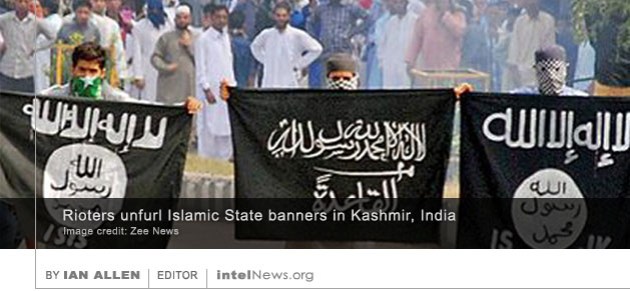
Islamic State India KashmirIndian counterterrorism officials have alleged in court that four members of the Islamic State in Indian-administered Kashmir were guided by a handler from Pakistan. The court case involves four young men from Jammu and Kashmir who were arrested last November on terrorism charges. Court documents filed recently identify the four as members of the Islamic State. This development is significant because Indian officials have until recently dismissed as overstated claims that the Islamic State is present in Kashmir. The unfurling of Islamic State banners by anti-government rioters is a regular phenomenon in Indian Kashmir. But government officials dismiss those who wave such banners as impressionable youth who have no access to weaponry or logistical support from the Islamic State. Last November’s arrests, however, highlighted the fact that the Islamic State does in fact have an armed presence on the ground in India.
The four young men have been named as Haris Mushtaq Khan, Tahir Ahmad Khan, Asif Suhail Nadaf and Asif Majid. They were apprehended in Srinagar, Jammu and Kashmir’s largest city, following the arrest in September of 2018 of two other men who were allegedly affiliated with a group calling itself the Islamic State in Jammu and Kashmir (ISJK). The group has since renamed itself to Islamic State – Khorasan Province, while recently it proclaimed an overseas province in the region, which it calls “wilayah al-Hind” (province of Hind). Three of the four men have been charged with attacking a tourist visitor center in the area with hand grenades. In their official indictment against the four men, officers of India’s National Investigation Agency accuse them of being “confirmed terrorists of the Islamic State”, which amounts to the first confirmation in Indian government documents of the presence of Islamic State militants in India. The 28-page indictment states that the four men were among several locals who “acted as ground workers and […] provided logistics to the ISJK cadres”.

Additionally, two of the men, Haris and Tahir, are accused of having been in contact online with a man identified as Abu Huzefa, an Islamic State recruiter based in Afghanistan. According to the court documents Huzefa is a Pakistani national and “an active cadre of the Islamic State based in Afghanistan”. He was allegedly in regular contact with the two Indian men and provided them with Islamic State literature and other propaganda material. In their indictment the NIA officers also admit that the arrests of the four men point to “a larger conspiracy of these terrorist elements propagating pan-Islamic ideology of IS by recruiting and radicalizing Kashmiri youth towards jihad and targeting security forces”.

Author: Ian Allen | Date: 20 June 2019 | Permalink

ISIS in Afghanistan is now more dangerous than the Taliban, say experts

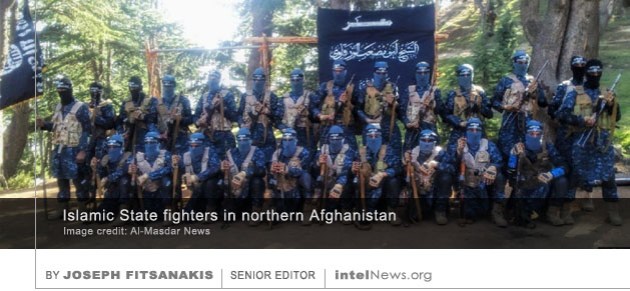
ISIS Islamic State AfghanistanThe Islamic State group in Afghanistan is now more threatening than the Taliban to both Afghan and Western interests, according to some experts, who warn that many of its fighters are moving there from the Middle East. It was in late 2014 when the Islamic State, known formerly as the Islamic State of Iraq and Syria (ISIS), made its initial appearance in Afghanistan. Soon an official Islamic State affiliate emerged in Afghanistan, calling itself Islamic State – Khorasan Province. Security observers estimated the group’s strength to below 150 armed fighters, most of them Pakistani Taliban who had sought refuge in Afghanistan, or small cadres of Afghan Taliban who pursued a more globalized Salafist agenda. Aided by the growing worldwide notoriety of its parent organization in Iraq and Syria, the Islamic State – Khorasan Province grew in size in 2015 and 2016. Its armed cadres were joined by Salafist-jihadists from Central Asia and the Indian subcontinent, as well as by radical Muslims from China’s northwestern Xinjiang Province. In 2016, as the Islamic State began retreating in the Middle East, fighters from there gradually began to make their way to Afghanistan, adding to the numerical strength of the organization’s Khorasan Province branch.
Today, the strength of the Islamic State in Afghanistan is concentrated in four northeastern Afghan provinces, Nuristan, Nangarhar, Kunar and Laghman. Nearly all of these provinces border Pakistan and none are far from the Afghan capital Kabul. According to the Associated Press’ Kathy Gannon, who wrote an extensive article about the current state of the Islamic State in Afghanistan, the primary military goal of the group’s Khorasan Province branch is to expand its territory. Some believe that the Islamic State aspires to one day conquer Jalalabad, a city of nearly 400,000 residents that serves as the administrative center of Nangarhar Province. This aspiration is not delusional; Gannon cites an unnamed US intelligence official who insists that the Islamic State is now a more deadly threat than the Taliban to Afghan and Western security. Islamic State fighters are acquiring increasingly sophisticated military hardware, which enables them to broaden their tactical capabilities. Additionally, unlike the Taliban, who largely follow a policy of limiting their attacks on government and military targets, the Islamic State appears to be deliberately targeting civilians. What is more, security experts see these attacks as “practice runs for even bigger attacks in Europe and the US”. In other words, the Islamic State – Khorasan Province is actively using its Afghan base to plan “external attacks in the US and Europe [and] it’s just a matter of time” before these occur, says a US intelligence official.

According to Gannon, the growth of the Islamic State in Afghanistan is so alarming that some security experts are beginning to see the Taliban as a potential partner of the West in containing the danger. One expert says that the Taliban remain bigger and stronger than the Islamic State, and their fighters “know the terrain [and] territory” of northeastern Afghanistan. Furthermore, the Islamic State has declared war on the Taliban and the two groups are active adversaries in the region. Gannon claims that Russia would not be opposed to the idea of utilizing the Taliban to fight off the Islamic State. As intelNews reported last month, Russia’s Federal Security Service warned that thousands of Islamic State fighters were operating in Afghanistan’s northern border regions and were attempting to destabilize former Soviet Republics with substantial Muslim populations.

Author: Joseph Fitsanakis | Date: 11 June 2019 | Permalink

Islamic State says it killed 20 Nigerian soldiers in shootout, executed 9 more

NigeriaThe West Africa province of the Islamic State has claimed responsibility for the killing 20 Nigerian soldiers and the execution of nine more soldiers that were captured in various operations, according to Reuters. The group behind the attacks emerged in 2002 under the name Boko Haram (“Western education is forbidden”), as part of a growing wave of anti-government sentiment in Nigeria’s Muslim-majority northern regions. In 2014, the group pledged allegiance to Abu Bakr al-Baghdadi, leader of the Islamic State of Iraq and Syria —otherwise known as Islamic State. Since that time, Boko Haram has rebranded itself as Islamic State – West Africa Province, while a smaller faction of the group has refused to align itself with the ISIS and continues to operate under the name Boko Haram.
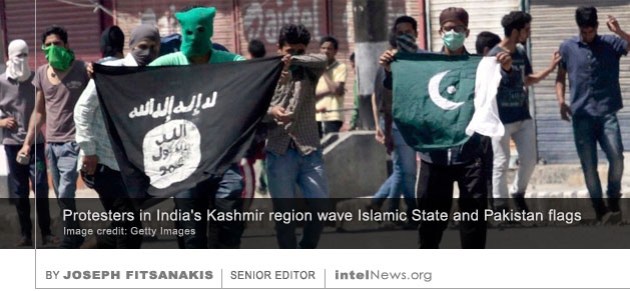
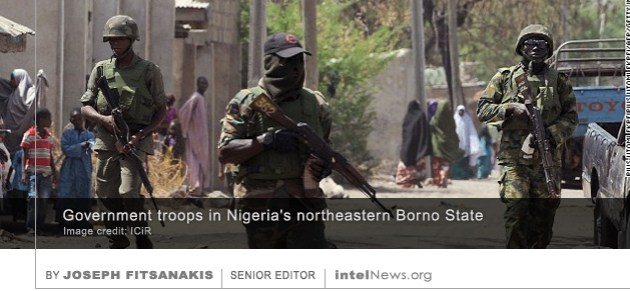
In an English-language statement posted online on Wednesday, the ISIS-affiliated faction of Boko Haram said that its fighters were responsible for the deaths of 20 Nigerian Army soldiers, who were killed on Monday in Gubio, a town located in Nigeria’s extreme northeastern Borno State. Reuters cited an unnamed “security source and a humanitarian worker”, who said that the insurgents attacked a military barracks on the outskirts of Gubio late on Monday evening. According to the report, the attackers used motorcycles and non-standard technical vehicles, or ‘technicals’ —open-backed pickup trucks mounting heavy weapons. The attack was followed by an hour-long shootout between the Nigerian Army forces and the insurgents, which resulted in the soldiers retreating, leaving behind the bodies of at least 15 troops, said Reuters. On Wednesday, the Islamic State released a separate video that claims to show the execution of nine captured Nigerian soldiers. According to Reuters, the soldiers in the video disclose their names, rank and unit, before they are executed by masked militants. At the end of the video, a group of Islamic State fighters is shown pledging allegiance to al-Baghdadi. The video concludes with footage of artillery, armored vehicles and tanks, and even boats, which the Islamic State claims to have captured from the Nigerian military.

This development is bound to increase skepticism about the Nigerian government’s repeated claims that it has been able to quell the Islamist insurgency that plagued the country’s northern regions for the past 15 years. In late 2015, the Nigerian government proclaimed the end of the Islamist insurgency after its troops destroyed all of Boko Haram’s camps in Borno State. However, the group appears to have reinvented itself and to have been able to use its new affiliation with the Islamic State to attract more funding and fighters during the past two years.

Author: Joseph Fitsanakis | Date: 23 May 2019 | Permalink

ISIS threatens stability of former Soviet Republics, says Russian spy chief

ISIS Afghanistan

Thousands of Islamic State fighters are operating in Afghanistan’s northern border regions and are attempting to destabilize former Soviet Republics with substantial Muslim populations, according to Russia’s domestic spy chief. This warning was issued by Alexander Bortnikov, director of Russia’s Federal Security Service (FSB), which functions as Russia’s primary counter-terrorism agency. Bortnikov made these remarks during a visit to the capital of Tajikistan, Dushanbe, for a meeting of the heads of intelligence agencies of the Commonwealth of Independent States (CIS), an intergovernmental organization comprised of former Soviet Republics in the Eurasian region. The meeting was reportedly held behind closed doors, but Russia’s government-owned news agency TASS carried a summary of Bortnikov’s remarks.

The Russian intelligence chief said that, with the aid of the intelligence services of CIS states like Uzbekistan, Azerbaijan, Tajikistan, Kyrgyzstan, and others, the FSB was able to uncover and suppress eight Islamic State cells in the past year, which operated in the Central Asian region. However, the reach of the CIS countries does not extend to Afghanistan, said Bortnikov, where as many as 5,000 Islamic State fighters are congregating along the country’s border with three CIS states, namely Turkmenistan, Uzbekistan and Tajikistan. Many of these fighters are Turkmens, Uzbeks, Tajiks, Russians, and other citizens of CIS states, who previously fought with the Islamic State in Syria and elsewhere, and now form integral components of the Islamic State’s fighting force in Afghanistan and Pakistan. It appears that the Islamic State is now attempting to exploit the mountainous and porous borders of northern Afghanistan in order to destabilize neighboring countries, he said. These fighters intend to exploit “migrant and refugee flows [in Central Asia] in order to operate covertly from the Afghan battle zones to neighboring countries” and from there possibly to Russia, according to Bortnikov.

These covert activities of Islamic State fighters have already caused an escalation of tensions in the region and can be expected to continue to do so, as these groups radicalize and co-opt Muslim communities in CIS countries, noted Bortnikov. He added that popular responses to Islamist radicalization are prompting increasing incidents of “anti-Islamic terrorism”, which further-fuel religious and ethnic tensions in the region. As a reminder, last week the Islamic State announced that its so-called Khorasan Province fighters would be amalgamated into a new armed group calling itself Islamic State – Pakistan Province. Earlier this month, the group also proclaimed the establishment of a new overseas province in India’s Jammu and Kashmir state, called “wilayah al-Hind” (province of Hind). In addition to these two forces, there are currently an estimated 3,000 to 4,000 Islamic State fighters in Afghanistan’s Pashtun regions.

Author: Joseph Fitsanakis | Date: 22 May 2019 | Permalink

After India province, Islamic State proclaims a new province in Pakistan

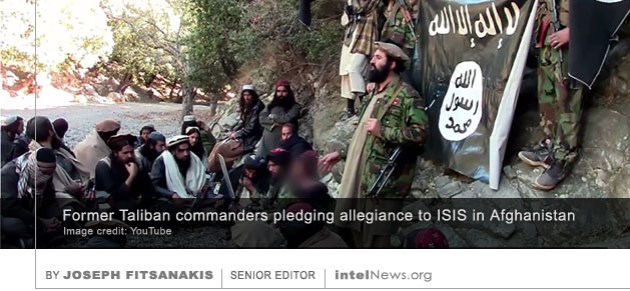
ISIS PakistanThe group calling itself the Islamic State has announced the establishment of a new overseas province in Pakistan, just days after proclaiming another new overseas province in northern India. Until recently, the Islamic State’s operations in Asia were conducted under the banner of the Islamic State – Khorasan Province, or IS-KP. The shadowy group was founded in early 2015 and was led by former Taliban warlords who pledged allegiance to Abu Bakr al-Baghdadi, the spiritual leader and self-proclaimed emir of the Islamic State. Since that time, at least two of IS-KP’s leaders have been killed by United States forces, while the group has been engaged in a war against rival militant groups in Afghanistan and Pakistan, notably the Taliban.
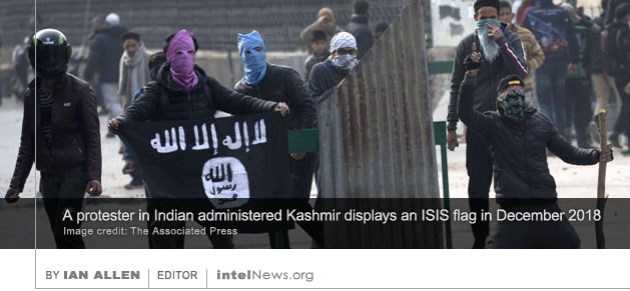
Last week, the Islamic State announced the establishment of a new overseas province in India’s Jammu and Kashmir state. The announcement was made by Amaq, which serves as the news agency of the Islamic State. According to the news release, the Islamic State named the new province “wilayah al-Hind” (province of Hind). It is based in the Muslim-majority Kashmir Valley, which is located in one of the three administrative divisions of the Indian administered state of Jammu and Kashmir. On Wednesday a new press release by Amaq proclaimed the establishment of the Islamic State – Pakistan Province. In the same press release, the Islamic State said that the new overseas province’s first action was the killing of a Pakistani police officer in Mastung, a mountainous town located in Pakistan’s Baluchistan Province. In addition to killing the police officer, the Islamic State claimed responsibility for an armed attack at a gathering of the Tehrik-i-Taliban Pakistan, the Pashtun-dominant Taliban group that operates on Pakistani soil. The attack took place last week in Quetta, the largest urban center and provincial capital of Baluchistan.
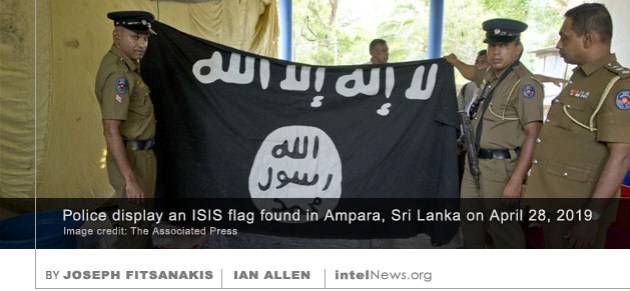
Last month, the Islamic State said it was behind a suicide attack at a Quetta outdoor marketplace, which killed 20 and injured over 50 people. The attack was targeted Pakistani Hazara Muslims, who are seen as heretical by several militant Islamist groups that operate in the region. The latest announcement of a new Islamic State overseas province may be seen as evidence that the Islamic State is gradually moving its center of operations to the eastern regions of Asia. In April the militant group said it was behind a barrage of synchronized suicide attacks in Sri Lanka, which killed over 250 people.

Author: Joseph Fitsanakis | Date: 16 May 2019 | Permalink

Islamic State announces new overseas province in India for the first time

ISIS IndiaThe group calling itself the Islamic State has announced the establishment of a new overseas province in India’s Jammu and Kashmir state. The announcement was made over the weekend by Amaq, which serves as the news agency of the Islamic State. According to the news release, the Islamic State (known also as the Islamic State of Iraq and Syria) has named the new province “wilayah al-Hind” (province of Hind), and said it is based in the Muslim-majority Kashmir Valley, which is located in one of the three administrative divisions of the Indian administered state of Jammu and Kashmir.

The Amaq report surfaced following an armed clash between a group of Islamist militants and Indian security forces in Amshipora, a village in the district of Shopian, which is in the foothills of the northern Himalayan Mountains. At least one Islamist militant was killed in the armed confrontation, which reportedly lasted two hours. Indian authorities identified the dead militant as Ishfaq Ahmad Sofi, and said he had pledged allegiance to the Islamic State. The Amaq statement alleged that the militants in Amshipora had “inflicted casualties” on the security forces, but the claim was denied by the Indian government. The Reuters news agency spoke with Rita Katz, an Israeli analyst who directs the SITE Intelligence Group in the United States. She said that the announcement of a new Islamic State province “should not be written off”, but added that “the establishment of a province in a region where [the Islamic State] has nothing resembling actual governance is absurd”.

Writing in the Hong-Kong-based Asia Times, Prakash Katoch, a retired lieutenant general in the Indian Army’s Special Forces, said that the announcement of a wilayah in India was a first for the Islamic State. He warned that after announcing a province in Indian Kashmir, the Islamic State “may also attempt to increase its presence in other Indian states” with a significant Muslim presence, such as Kerala or West Bengal. Katoch noted that “a number of young men and women from Kerala” had been identified as having joined the Islamic State in 2016 and 2017. Several of them even traveled to Syria to fight for the Sunni Islamist group, he added.

Author: Ian Allen | Date: 14 May 2019 | Permalink

Analysis: Sri Lanka attacks may indicate ISIS is moving east, say experts

Sri Lanka ISISThe April 21 suicide attacks in Sri Lanka, which were claimed by the Islamic State, may indicate that the militant group is moving east in search of fertile recruiting ground, according to some observers. In the words of The New York Times’ Rukmini Callimachi and Eric Schmitt, the attacks “reminded the world in dramatic fashion that [the Islamic State] does not need to control territory to be a major threat”. In fact, as the loss of its Middle Eastern territory has forced the Islamic State to decentralize, the group has begun to turn to its peripheral affiliates further afield. These “will become more dangerous” as the core of the Islamic State weakens, according to Callimachi and Schmitt.
But the Sri Lanka attacks may also demonstrate that the Islamic State is moving further east in search of either territory to conquer or new groups of committed fighters to incorporate into its ranks. It follows that Sri Lanka is one of several East Asian countries that face major threats by the group, as the latter tries “to ignite creating fear in societies already battling so much division”, says Ash Gallagher, an American war correspondent based in East Asia. Writing for the British newspaper The Independent, Gallagher notes that not only is the Islamic State already established in Afghanistan (where it has “swallowed whole units of Taliban fighters”, according to The Times), but it is becoming increasingly powerful in the Philippines. Experts have been warning for a while that the number of foreign Islamic State fighters entering the Philippines has been growing, and the momentum they generate among local Islamist groups may prompt them to declare a new caliphate in the near future. In fact, a caliphate was declared there in May 2017 by local Islamist leaders who had previously declared their allegiance to the Islamic State. By October, government forces had defeated the so-called “East Asia Wilayah”, a self-declared overseas province of the Islamic State, by retaking Marawi, the capital city of Mindanao’s Lanao del Sur province, from Islamic State rebels. The military operation became known as “the battle of Marawi” and is thought to have been the longest urban battle in the postwar history of the Philippines. More than 1,200 people died in the five-month battle, most of them civilians. Hundreds of thousands remain displaced to this day as a result of the fighting. Read more of this post
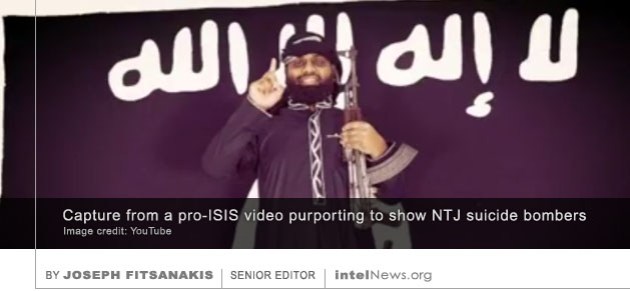
Video shows alleged Sri Lanka suicide bombers posing with ISIS flags

National Thowheeth Jama'ath NTJA video posted online by supporters of the Sunni militant group Islamic State appears to show the suicide bombers who carried out Sunday’s bloody attacks in Sri Lanka posing alongside Islamic State flags. Three Catholic churches and three five-star hotels were targeted on Easter Sunday by a total of nine separate blasts, which killed nearly 260 people and injured over 500. The near-simultaneous attacks struck locations in Sri Lanka’s western and eastern coasts and are believed to constitute the bloodiest terrorist attack in the country’s history.

All seven suicide bombers who carried out Sunday’s attacks have been identified as Sri Lankan nationals and members of the Sunni jihadist group National Thowheeth Jama’ath (NTJ). The Sri Lankan group has claimed responsibility for no more than a handful of mostly sabotage-themed operations in its three-year history. It is believed to have been established by hardline Islamists in 2016. It made its first public appearance in 2018, in response to a series of anti-Muslim pogroms that were led by Sinhalese Buddhists in the island country. There are reports suggesting that Sunday’s blasts were part of a much wider operation aimed at destabilizing Sri Lanka. Police said they found nearly 100 bomb detonators at the Central Colombo bus station on Monday, while an unexploded bomb was found inside a parked vehicle at another church in the Sri Lankan capital. An unexploded pipe bomb was also discovered in the vicinity of the Bandaranaike International Airport in Colombo on Sunday night.

Indian intelligence officials were the first to openly draw a connection between Sunday’s attacks and the Islamic State, the Sunni militant group that is also known as the Islamic State of Iraq and Syria (ISIS). One Indian official told the Hong Kong-based Asia Times newspaper that “the NTJ were only foot soldiers and the controllers were someone else”. On Monday, a video appeared on an online channel associated with supporters of ISIS, which contains a montage of the aftermath of Sunday’s attacks, interspersed with still images of masked men brandishing rifles in front of ISIS flags. The video names the men and implies they carried out the suicide blasts. The video claims to come from ISIS and issues threats against “Crusaders” —an anti-Western term often used by Sunni jihadists. The video also warns that the Islamic State’s “armies remain everywhere and [continue to] blast the fortresses of the infidels”.

Meanwhile, the Sri Lankan government declared a state of emergency on Monday night, which is expected to last several weeks. The announcement of the state of emergency was made by the country’s President, Maithripala Sirisena, following a meeting of the National Security Council, which he chaired.

Author: Joseph Fitsanakis | Date: 23 April 2019 | Permalink

Documents show ISIS plans sleeper cell attacks in Middle East, Europe

Islamic State - IADocuments acquired from retreating Islamic State fighters in Syria appear to show that the militant group is planning a series of high-profile attacks in Europe and the Middle East, using newly formed sleeper cell units. The information was revealed over the weekend by the British newspaper The Sunday Times. The London-based broadsheet said that the information was found last month in flash drive, which was left behind by retreating Islamic State forces in Syria, and acquired by Kurdish militia forces. The flash drive was found to contain dozens of internal documents belonging the militant group, which is also known as Islamic State of Iraq and Syria (ISIS).

Among them, said The Times, are several memoranda authored by an ISIS leader and operations planner known as Abu Taher al-Tajiki. In his memoranda, al-Tajiki informs the group’s senior leadership that he commands numerous fighters who are willing and able to carry out strikes “far away” from the Islamic State’s strongholds in the Middle East and Africa. He states that he is in regular communication with them and that they are awaiting instructions to “undertake the operations”. Al-Tajiki then calls for the creation of a Foreign Relations Office under the Islamic State’s Department of Operations, which would be tasked with launching attacks throughout Europe. He adds that the new Office can also count on the assistance of computer hackers and other technically literate Islamic State members. In another memorandum, al-Tajiki suggests the creation of what he calls “crocodile cells” in Syria and Iraq. These cells will “lurk beneath the surface” and “attack at the right moment to assassinate the enemies of Allah”, says al-Tajiki.

The Times report comes as experts warn that the Islamic State retains significant financial power, despite the loss of its territories in the Middle East. In a well-informed article in The Atlantic, David Kenner reports from Beirut that the Islamic State without its territories is a double-edged sword. On the one hand, the group cannot rely on taxation and oil revenues that used to enrich its coffers by $1 million per day during the height of its power. On the other hand, argues Kenner, the loss of its territory has freed the Islamic State from the costs associated with state-running and allows it to devote its financial resources “exclusively to terrorist activity”. These resources —cash and other assets— are formidable, says Kenner. In the words of Howard Shatz, senior economist at the Rand Corporation and an expert on ISIS’ finances, we “don’t know where it all went” after ISIS lost its territory. We do know that much of it has been invested in “legitimate commercial enterprises”, says Shatz, with the help of profit-oriented middlemen with access to markets that are as far away as Southeast Asia and the Caribbean. A lot of it is hidden in suitcases and boxes throughout Iraq, Syria and Turkey. All of it is intended to be used to fund terrorist attacks, warns Kenner.

Author: Ian Allen | Date: 25 March 2019 | Permalink