Analysis: Iraq’s revenge campaign against Sunnis fuels new pro-ISIS wave
December 18, 2018 1 Comment
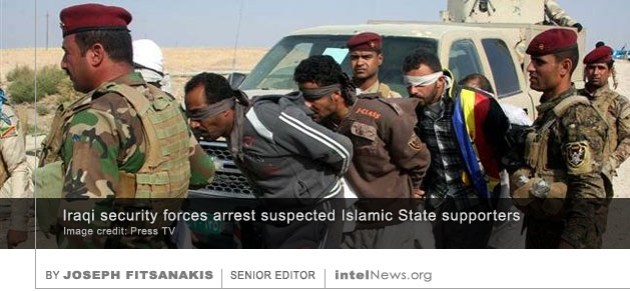 A campaign of revenge by Iraq’s Shiite-dominated government against Sunni Arabs in regions once controlled by the Islamic State is aiding Islamists and fueling another rebellion in the country, according to a new report. In 2014, the meteoric rise of the Islamic State of Iraq and Syria —ISIS, later renamed to Islamic State— was largely aided by the strong belief among Iraqi Sunnis that they were second-class citizens in a Shiite-dominated Iraq. In addition to its Sunni credentials, the Islamic State was also able to appeal to Iraqi Sunnis by portraying itself as pious, efficient and trustworthy. This image was in a sharp contrast to the widespread provincial view of politicians in Baghdad as corrupt, indifferent and ineffectual. Popular support for the Islamic State among Iraq’s Sunni Arab minority took the Iraqi government by surprise and almost enabled the militant group to conquer Baghdad in 2015.
Today, after the destruction of the Islamic State’s self-declared caliphate, Iraq’s Shiite-dominated security and intelligence services have returned to Sunni-majority regions that were once ruled by ISIS. But their systematic campaign of human-rights violations against Sunnis, whom they see as ISIS collaborators, is playing into Islamist propaganda and fueling a new wave of rebellion against Baghdad, according to a new report by the Washington-based Pulitzer Center on Crisis Reporting. The report, authored by The New Yorker staff writer Ben Taub, warns that the Iraqi government has no strategy on how to reach out to Iraq’s disaffected Sunni Arabs. Even worse, a state-sanctioned campaign of revenge and intimidation is taking place throughout western Iraq, in which “hundreds of thousands of civilians are suffering at the hands of their liberators”, says Taub.
In areas that until a few months ago were ruled by ISIS, anyone —regardless of age or sex— perceived as having previously supported ISIS is outright killed or sent to concentration camps. For Iraqi security forces, says Taub, civilians who did not flee ISIS are seen as inherently suspicious. Bearded men are often viewed as displaying evidence of ISIS support, even though the militant group had a policy of punishing any man who did not grow a beard in accordance with Quranic directives. Most of these people, says Taub, are fired from their jobs, sent to prison, or worse are executed by the dozens and even hundreds. A handful are tried in a court of law each month, but these are usually show trials with a conviction rate of 98 percent, he adds. Family members of the accused rarely show up in court, fearing immediate arrest and imprisonment, which appears to be a regular occurrence. It is “not uncommon for relatives [of accused ISIS supporters] to be rounded up by the security forces and sent to remote desert camps, where they are denied food, medical services, and access to documents”, reports Taub.
These arbitrary arrests are happening alongside an untold number of battlefield executions —many captured on video by jubilant Shiite soldiers and militia members— and killings of prisoners in detention centers. Taub quotes an anonymous senior official in the Iraqi intelligence services who says that “this is not just revenge on ISIS. It is revenge on Sunnis”. The widespread criminality and brutality of the Iraqi security and intelligence forces “plays directly into the jihadis’ narrative”, says Taub, by convincing Sunni Arabs that they “cannot live safely under a government dominated by Shiites”. Ultimately, what is at stake is “whether the Iraqi government can win over the segment of the population for whom ISIS seemed a viable alternative”, concludes Taub, and warns of the possibility of another armed rebellion against Baghdad by what is left of Iraq’s Sunni minority.
► Author: Joseph Fitsanakis | Date: 18 December 2018 | Permalink









 intelNews.org
Shiite militias ‘acting like mafia gangs’ in Iraq’s former ISIS-held areas
January 11, 2019 by Joseph Fitsanakis 2 Comments
But there signs that about 50 Shiite militias, which were supported by the Iraqi state throughout the war against ISIS, are now becoming highly autonomous armed gangs that are undermining the central government in Baghdad. These militias —many of which are politically aligned with Iran— are essentially armed wings of Shiite political parties that control more than a quarter of the seats in the Iraqi parliament. In 2014, the Shiite-dominated Iraqi government attempted to utilize the power of the militias by uniting them under the umbrella of the Popular Mobilization Forces (PMF). PMF troops participated in every major front of the war against ISIS and today are an officially recognized military force with rank and salary structures that are equivalent to those of the Iraqi military and police. Technically, the PMF operate under the command of the Iraqi prime minister. In reality, however, the militias that make up the PMF are led by their respective Shiite commanders, many of whom are ideologically allied to Tehran.
The PMF militias are today in control of much of Sunni-dominated Western Iraq, which they helped retake from ISIS. According to Washington Post correspondents Tamer el-Ghobashy and Mustafa Salim, the militias are now using their newfound territorial power to make large sums of money. Various PMF militias operate countless checkpoints across Western Iraq, on roads between cities or —increasingly— within cities such as Mosul, imposing toll fees on supply trucks and even on individual motorists. The two Washington Post correspondents warn that these militia members are beginning to exhibit “mafia-like” behavior, establishing protection rackets and kidnapping motorists at night in order to release them for a fee paid by their families.
Additionally, PMF commanders make arbitrary decisions about which of the nearly 2 million Iraqi Sunnis, who were displaced in refugee camps due to the war, are allowed to return to their homes. Many of these homes and land that used to belong to Iraqi Sunnis are now being expropriated by PMF commanders, who claim that their previous owners collaborated with ISIS, often without evidence. This practice, say el-Ghobashy and Salim, is rapidly altering the demographic balance between Sunnis and Shiites throughout Western Iraq. The two authors forewarn that these mafia-like practices by the PMF are “fostering local resentments […] and revive the kind of Sunni grievances that underpinned the Islamic State’s dramatic rise three years ago”.
► Author: Joseph Fitsanakis | Date: 11 January 2019 | Permalink
Filed under Expert news and commentary on intelligence, espionage, spies and spying Tagged with Analysis, corruption, Iraq, Islamic State, Islamist extremism, Popular Mobilization Forces