Britain sees Russian government hackers behind Islamic State cyber group
October 5, 2018 Leave a comment
 A new report by the British government alleges that the so-called ‘Cyber Caliphate’, the online hacker wing of the Islamic State, is one of several supposedly non-state groups that are in fact operated by the Russian state. The group calling itself Cyber Caliphate first appeared in early 2014, purporting to operate as the online wing of the Islamic State of Iraq and Syria (ISIS), which was later renamed Islamic State. Today the Cyber Caliphate boasts a virtual army of hackers from dozens of countries, who are ostensibly operating as the online arm of the Islamic State. Their known activities include a strong and often concentrated social media presence, as well as computer hacking, primarily in the form of cyber espionage and cyber sabotage.
But an increasing number of reports, primarily by Western government agencies, have claimed in recent years that the Cyber Caliphate is in fact part of a Russian state-sponsored operation, ingeniously conceived to permit Moscow to hack Western targets without retaliation. On Wednesday, a new report by Britain’s National Cyber Security Centre (NCSC) described the Cyber Caliphate and other similar hacker groups as “flags of convenience” for the Kremlin. The report was authored by the NCSC in association with several British and European intelligence agencies. American spy agencies, including the National Security Agency and the Federal Bureau of Investigation, also helped compile the report, according to the NCSC. The report names several hacker groups that have been implicated in high-profile attacks in recent years, including Sofacy, Pawnstorm, Sednit, Cyber Berkut, Voodoo Bear, BlackEnergy Actors, Strontium, Tsar Team, and Sandworm. Each of these, claims the NCSC report, is “an alias of the Main Directorate of the General Staff of Russia’s Armed Forces”, more commonly known as the GRU. The report concludes that Cyber Caliphate is the same hacker group as APT 28, Fancy Bear, and Pawn Storm, three cyber espionage outfits that are believed to be online arms of the GRU.
The NCSC report echoes the conclusion of a German government report that was leaked to the media in June of 2016, which argued that the Cyber Caliphate was a fictitious front group created by Russia. In 2015, a security report by the US State Department concluded that despite the Cyber Caliphate’s proclamations of connections to the Islamic State, there were “no indications —technical or otherwise— that the groups are tied”. In a statement issued alongside the NCSC report on Wednesday, Britain’s Secretary of State for Foreign and Commonwealth Affairs, Jeremy Hunt, described the GRU as Moscow’s “chosen clandestine weapon in pursuing its geopolitical goals”. The Russian government has denied these allegations.
► Author: Ian Allen | Date: 05 October 2018 | Permalink
 A new report authored by a consortium of government and private organizations in Britain has revealed the existence of a computer hacking operation, allegedly based in China, that is said to be “one of the largest ever” such campaigns globally. The operation is believed to have compromised sensitive information from an inestimable number of private companies in Southeast Asia, Europe and the United States. The






 intelNews.org
British SIGINT agency criticized for ‘vanity project’ that went 83% over budget
November 20, 2020 by Joseph Fitsanakis Leave a comment
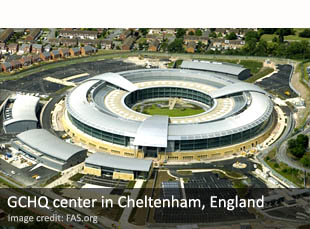
In 2015, the country’s Conservative government announced the establishment of the National Cyber Security Centre (NCSC), under the GCHQ, whose mission would be to protect Britain from cyber-espionage, cyber-terrorism and cyber-sabotage, among other cyber-security goals. Soon after the announcement was made, the then-Chancellor of the Exchequer, George Osborne, appointed a planning committee whose chief priority was to decide where to house the NCSC. The decision was made to house it in London, rather than the GCHQ’s Cheltenham base in southwestern England, so as to place it in close proximity to government and business centers.
But the planning committee rejected an initial plan to house the NCSC in Canary Wharf, one of London’s primary business districts, located on the Isle of Dogs. The reasons were that Canary Wharf is not close to the Palace of Westminster —Britain’s seat of government— and that Canary Wharf would be “very unpopular” with NCSC personnel. Instead, the committee chose Nova South, a luxury building situated near London’s Victoria station, which is one of the world’s most expensive urban areas. The government’s National Security Adviser, Mark Lyall Grant, rejected the Nova South option, arguing it would be too costly without adding any real benefits to the NCSC’s operations. But in May of 2016 Osborne overruled Grant’s decision and unilaterally decided to house the NCSC at Nova South.
Now a report (.pdf) from the British Parliament’s Intelligence and Security Committee has described Osborne’s role in the decision-making process as “highly unsatisfactory”, and his choice to house the NCSC at Nova South as “unacceptable”. According to the report, Osborne viewed the NCSC’s location as “a pet project” that prioritized image over cost and operational effectiveness. The result was that the NCSC housing project “considerably over-shot the funds originally allocated”, by over 80 percent. What is worse, according to the report, the money shortfall has been affecting the GCHQ’s operational budget by nearly £3 million ($4 million) a year since 2016.
► Author: Joseph Fitsanakis | Date: 20 November 2020 | Permalink
Filed under Expert news and commentary on intelligence, espionage, spies and spying Tagged with GCHQ, intelligence funding, National Cyber Security Centre (UK), News, UK