South Korean president fires nation’s spy chiefs in major intelligence shake-up
November 27, 2023 1 Comment
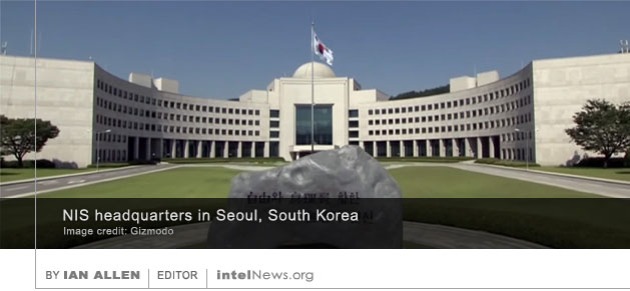 IN A SURPRISING MOVE that has stirred curiosity across Asia, South Korean President Yoon Suk Yeol has abruptly ousted the entire senior leadership of the National Intelligence Service (NIS), a powerful entity in the country. The announcement came through a statement released on Sunday by the Office of the President, stating that President Yoon had accepted the resignations of the NIS director and two deputy directors. However, it is widely understood that these resignations were not voluntary but rather a result of pressure exerted by the president.
Among those dismissed, Director Kim Kyou-huyn and First Deputy Director Kwon Chun-taek, both considered close to President Yoon, had lengthy backgrounds in South Korea’s diplomatic corps. Kim, a seasoned executive with deep insights into South Korea-United States relations, had served lengthy tours in the South Korean embassy in Washington. Kwon, with experience in the diplomatic corps and roles at the United Nations, also had a strong international background. Yoon had appointed both to lead the NIS soon after assuming the presidency in May 2022. The third ousted NIS executive was Second Deputy Director Kim Soo-youn, appointed by Yoon in June 2022. The second deputy traditionally oversees activities related to North Korea, while the first deputy is responsible for the agency’s global collection operations, counterterrorism, and counterintelligence.
Speculation in Seoul abounds regarding the reasons behind President Yoon’s swift decision to dismiss the NIS leadership. A firebrand politician who is seen as a representative of a new generation of South Korean conservatives, Yoon has pledged a robust security and defense policy in response to perceived North Korean provocations. Recent media reports have hinted at Yoon’s impatience with bureaucratic obstacles within the NIS, particularly regarding personnel management.
South Korean media reports indicate that another seasoned diplomat, Hong Jang-won, has assumed the NIS first deputy directorship, while the former North Korea area chief, Hwang Won-jin, has taken over as the second deputy director. Notably, the director position remains vacant, with Hong temporarily leading the agency until a new director is appointed in the coming weeks.
► Author: Ian Allen | Date: 27 November 2023 | Permalink
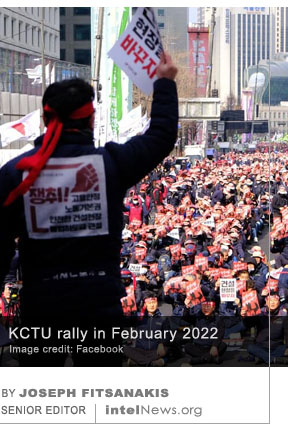 SOUTH KOREAN PROSECUTORS have charged four senior members of one of the country’s largest trade unions with espionage on behalf of North Korea. The move, which is seen as highly controversial by South Korea’s liberal opposition, has come a few months after the conservative administration of President Yoon Suk Yeol
 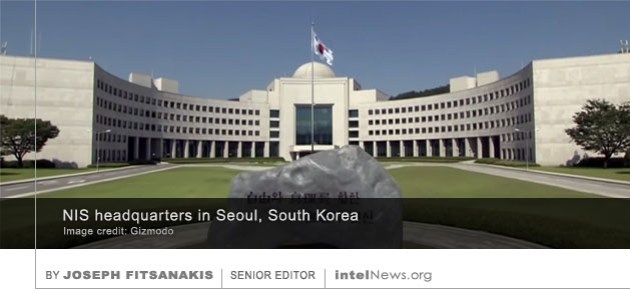 TENSION IS MOUNTING BETWEEN the government and opposition forces in South Korea, as the conservative administration of President Yoon Suk Yeol appears to be behind an effort to probe alleged links between senior liberal political figures and North Korean intelligence. The effort, which some commentators
  THE INTELLIGENCE CHIEFS OF the United States, Japan and South Korea are to meet behind closed doors this week. The meeting will take place nearly two years after a major diplomatic spat between Japan and South Korea threatened to significantly harm intelligence cooperation between them. In November of 2019, the South Korean government threatened to terminate the General Security of Military Information Agreement (GSOMIA). The agreement was initiated in 2016 under American tutelage, with the aim of facilitating the sharing of intelligence between South Korea and Japan about North Korea’s missile and nuclear programs.
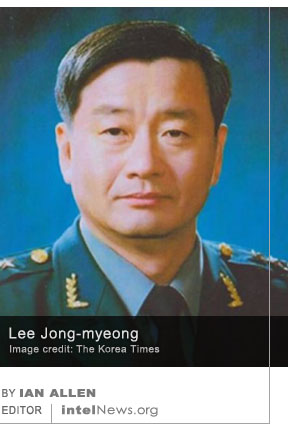 A former deputy director of South Korea’s spy agency has been given a prison sentence for diverting funds from the agency’s clandestine operations budget, in order to aid South Korea’s disgraced former President, Lee Myung-bak, who has himself been sentenced to 15 years in prison.
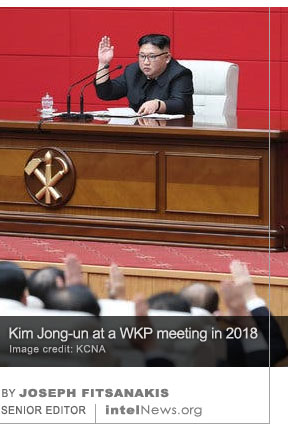 The spy agency of South Korea has dismissed media reports that North Korea had several of its top nuclear negotiators executed or sent to labor camps, but has not rejected rumors of a major reshuffle in Pyongyang. In early June, media reports in Seoul claimed that North Korea had executed at least five of its senior nuclear negotiators and imprisoned several others. Prior to these reports, rumors of executions of North Korean nuclear negotiators had circulated in international diplomatic circles since February, but no specific allegations had surfaced in the news media. That changed when Chosun Ilbo, South Korea’s highest-circulation newspaper, alleged that at least
 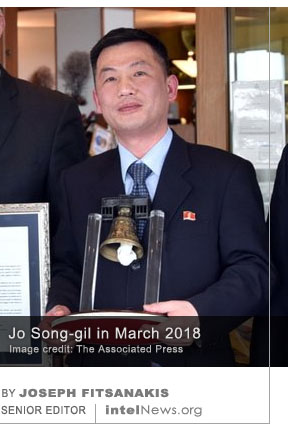 The acting ambassador of North Korea to Italy has been missing for two months and there are reports that he may be under the protection of a Western country. Jo Song-gil (pictured), 48, a career diplomat who is fluent in Italian, French and English, presented his diplomatic credentials to the Italian government in May of 2015. In October 2017, he became his country’s acting ambassador after Italian authorities expelled Ambassador Mun Jong-nam from the country. The expulsion came in response to North Korea’s nuclear test in September of that year, when Pyongyang announced the detonation of a hydrogen bomb that could be loaded onto an intercontinental ballistic missile.
 A group of 12 female North Korean restaurant workers and their male manager claim that their widely advertised defections in 2016 were fake, and that they were in fact abducted by South Korea’s spy services. The North Korean government maintains a chain of North Korea-themed restaurants throughout Asia, which operate as popular tourist attractions across Southeast Asia. The state-owned restaurants help provide the cash-strapped regime in Pyongyang with desperately needed foreign funds. The North Korean staff —almost all of them female— who work at these restaurants are carefully vetted and chosen to represent the reclusive regime abroad. Some observers
 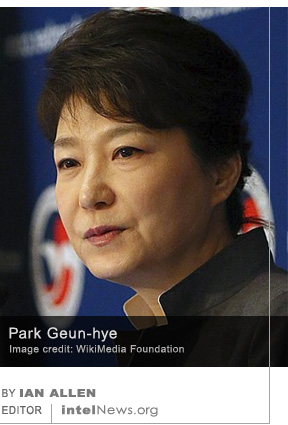 South Korea’s disgraced former president, Park Geun-hye, has been charged with accepting bribes amounting to millions of dollars from the country’s spy agency, according to reports. Park made history in 2013, by becoming the first woman president in South Korean history. However, almost as soon as she assumed office, her administration became embroiled in successive corruption scandals. By 2016, Park’s presidency had been brought to a standstill due to mass protests urging her removal from power, while increasing numbers of officials and administrators were refusing to work with her. She was eventually impeached in 2017, after the Constitutional Court of Korea found that she had violated the country’s laws by promoting the interests of personal friends and private corporations in return for cash and favors. She is currently in custody awaiting trial for 18 different charges, including abuse of power, coercion, blackmail and bribery.
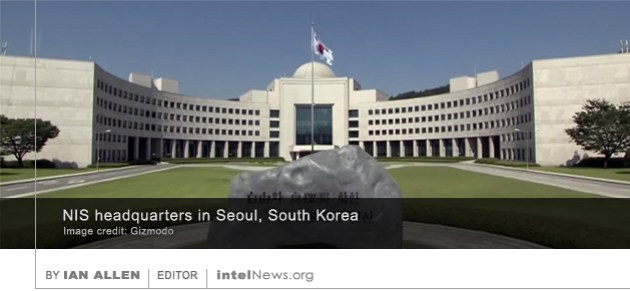 A South Korean prosecutor has charged three former directors of the country’s spy agency of secretly diverting funds from the agency’s clandestine budget to aid the country’s disgraced former President, Park Geun-hye. The three men, Nam Jae-joon, Lee Byung-kee and Lee Byung-ho, headed South Korea’s National Intelligence Service (NIS) between 2013 and 2016, when Mrs. Park was head of state. The conservative politician was impeached late last year, following accusations of corruption, bribing and extortion. In March this year, Mrs. Park’s government was brought down and she is currently in prison, awaiting trial. Her successor in the presidency, leftist politician Moon Jae-in, was elected after pledging to combat corruption in South Korea’s political inner circle.
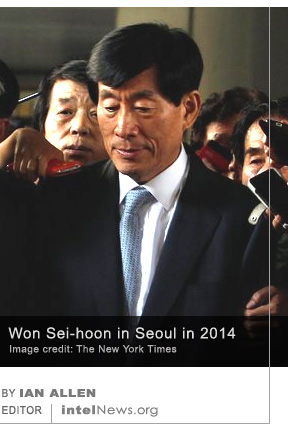 The former director of South Korea’s main intelligence agency has been sent to prison for organizing a large-scale illegal campaign to influence the result of the country’s 2012 presidential election. Won Sei-hoon headed the NIS from 2008 to 2013, during the administration of conservative President Lee Myung-bak. During the 2012 presidential election, Won ordered a group of NIS officers to “flood the Internet” with messages accusing liberal political candidates of being “North Korean sympathizers”. One of those candidates, Moon Jae-in, of the left-of-center Democratic Party of Korea, is now the country’s president. Mr. Moon succeeded his main right-wing rival, Park Geun-hye, who resigned in March of this year following a series of financial scandals. She is now facing charges of bribery, abuse of power, leaking government secrets, and corruption.
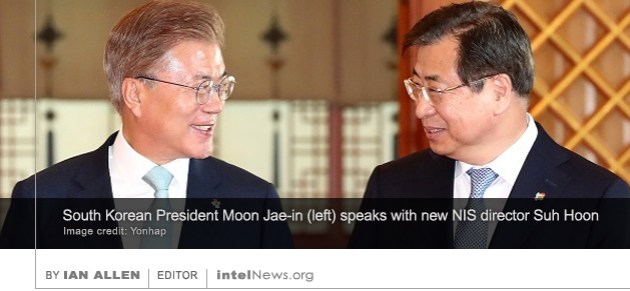 An internal investigation has found that the intelligence agency of South Korea tried to steer the result of the 2012 presidential election in favor of the conservative candidate, and placed liberal politicians under surveillance in the run-up to the election. South Korea’s intelligence agency, the National Intelligence Service (NIS) has fallen into disrepute in recent years, after it was found to have secretly sided with conservative political candidates for public office.
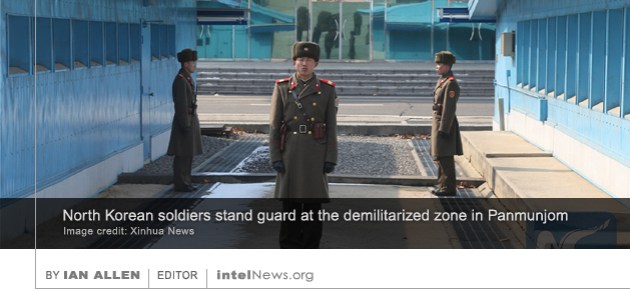 The director of the United States Central Intelligence Agency made an unannounced visit to South Korea over the weekend, to discuss the rising tensions in the Korean Peninsula with his South Korean counterpart and other senior officials. A spokesperson from the US embassy in Seoul made an official






 intelNews.org
Ex-CIA analyst accused of spying for South Korea had prior warnings from FBI, CIA
July 22, 2024 by Joseph Fitsanakis 3 Comments
Terry joined the CIA in 2001 but resigned in 2008, allegedly “in lieu of termination” because her employer “had ‘problems’ with her contact with” officers from South Korea’s National Intelligence Service (NIS). After leaving the CIA, Terry worked briefly for the National Security Council and the National Intelligence Council, before transitioning to academia. Her most recent post was that of a senior fellow at the Council on Foreign Relations, where she became known as an exert on East Asian affairs with a focus on the Korean Peninsula. For over a decade, Terry has made frequent appearances on television and radio, as well as on several podcasts. She is married to the Washington Post columnist Max Boot.
The Department of Justice accuses Terry of failing to register under the Foreign Agents Registration Act and deliberately conspiring to violate that law, thus effectively operating as an unregistered agent of a foreign power. The indictment claims that Terry was gradually recruited by the NIS, beginning in 2013, two years after she stopped working for the United States government. Terry allegedly continued to work for the NIS for a decade, during which she was handled by NIS intelligence officers posing as diplomats in South Korea’s Washington embassy and permanent mission to the United Nations in New York.
It is alleged that throughout that time Terry provided her NIS handlers with access to senior US officials, disclosed “nonpublic US government information” to the NIS, and promoted pro-South Korean policy positions in her writings and media appearances. In return, Terry is alleged to have received luxury goods, free dinners at expensive restaurants, and nearly $40,000 in “covert” funding, nominally to operate a public policy program on Korean affairs. It is worth noting that, according to the unsealed indictment, the Federal Bureau of Investigation warned Terry that she should be wary of being approached by NIS officers seeking to offer her funding. Read more of this post
Filed under Expert news and commentary on intelligence, espionage, spies and spying Tagged with CIA, espionage, Max Boot, National Intelligence Service (South Korea), News, South Korea, Sue Mi Terry, United States