Soviet KGB may have killed Albert Camus, claims paper
August 8, 2011 Leave a comment
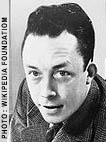
Albert Camus
By JOSEPH FITSANAKIS | intelNews.org |
Albert Camus, one of France’s most revered intellectuals, who died in a mysterious accident in 1960, may have been killed by Soviet intelligence, according to an article in one of Italy’s most reputable newspapers. Camus, a philosopher, novelist and journalist, who won the 1957 Nobel Prize for Literature, died on January 4, 1960, during a road trip from Provence to Paris. Camus had initially planned to accompany his wife and children on a train ride to Paris, but changed his mind at the last minute, after his trusted friend and publisher, Michel Gallimard, offered him a ride in his car to the French capital. That evening, as Gallimard and Camus were driving through the small town of Villeblevin, Gallimard’s Facel Vega FV3B rammed into a tree at high speed. Camus was killed instantly, while Gallimard died in hospital several days later. But an article published last week in one of Italy’s oldest newspapers, Corriere della Sera, claims that the two men may have been killed after Soviet intelligence agents sabotaged Gallimard’s car. The allegation is based on Italian literary scholar Giovanni Catelli, who reportedly unearthed a written testimony by Czechoslovakian author and translator Jan Zábrana. The testimony is included in the Czech-language edition of Zábrana’s personal diary, in which he claims that “a man who knew lots of things and had very informed sources” had told him that Camus’ assassination was “ordered personally” by Dmitri Shepilov, who was the Soviet Union’s Minister of Foreign Affairs from 1956 to 1957. Read more of this post







 intelNews.org
News you may have missed #673
January 27, 2012 by Ian Allen Leave a comment
►►Canada arrest shows spy times have changed in Russia. There are aspects of the spy case of Canadian Sub-Lt. Jeffery Delisle that differ substantially from spy cases dating back to Cold War espionage waged by the now-defunct Soviet system. As a sign of changing times, the Russian media has acknowledged Delisle was allegedly spying for them —something that would never be admitted in Soviet times when the KGB and GRU were in ascendency.
►►US court upholds S. Korean ex-spy’s asylum ruling. Kim Ki-sam, who left South Korea’s state spy agency in 2000, applied for asylum in the US in 2003, saying he would face persecution and prosecution if he was forced to return to South Korea because he had revealed information about secret operations to help then-President Kim Dae-jung win the Nobel Peace Prize. A US court has now upheld a 2008 ruling to grant him political asylum.
►►Kiriakou’s wife resigns from CIA. Heather Kiriakou, who has served as a top analyst at the Agency, resigned Tuesday amid accounts that she had been pressured to step down after her husband —John Kiriakou, a former agency employee— was charged with leaking classified information to the press. Two sources in direct contact with the Kiriakous told The Washington Post that Heather had submitted her resignation under pressure from superiors at the CIA.
Filed under Expert news and commentary on intelligence, espionage, spies and spying Tagged with 0 Canada arrest shows spy times have changed in Russia, 0 Kiriakou's wife resigns from CIA, 0 US court upholds S. Korean ex-spy's asylum ruling, Canada, CIA, defectors, espionage, Heather Kiriakou, Jeffrey Paul Delisle, John Kiriakou, Kim Dae-jung, Kim Ki-sam, News, news you may have missed, Nobel Award, political asylum, resignations, Russia, South Korea, United States