News you may have missed #680
February 16, 2012 Leave a comment
 By IAN ALLEN | intelNews.org |
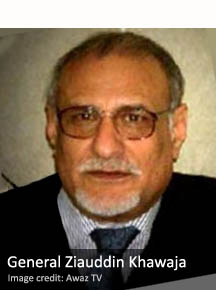
►►Did Pakistani ex-leader know bin Laden’s hideout? General Ziauddin Khawaja, who was head of Pakistan’s Inter Services Intelligence directorate (ISI) from 1997 to 1999, claims Pakistan’s former President, Pervez Musharraf, knew bin Laden was in Abbottabad.
►►Sweden expels Rwanda diplomat for spying. Sweden has expelled a Rwandan diplomat for allegedly spying on Rwandan exiles there, according to the Associated Press. The diplomat, Evode Mudaheranwa, was sent back to Rwanda last week, according to a sources close to the Swedish government. Mudaheranwa was the Rwandan embassy’s second-highest-ranking official. The Swedish action comes as amid charges that Rwandan President Paul Kagame’s government sends agents overseas to silence critics.
►►Mossad continues to use foreign passports. Agents of Israel’s Mossad intelligence agency are still using foreign passports to conduct undercover operations in other countries, according to a report in The Sunday Times of London. The paper says that new evidence shows that foreign nationals residing in Israel are willingly allowing the Mossad to use their passports. The Times interviewed several Israelis who revealed details of how they were approached by intelligence officials about the possibility of volunteering their passports for the Mossad.







 intelNews.org
India, Pakistan used terrorist groups to attack each other, says Pakistan ex-president
March 8, 2019 by Ian Allen Leave a comment
On Tuesday, Musharraf spoke on the flagship news program of Hum News, a 24-hour news channel headquartered in the Pakistani capital Islamabad. Speaking in Urdu on a phone line from Dubai, Musharraf praised the current Pakistani government of President Imran Khan for launching a crackdown on Jaish-e-Mohammed (JeM) the militant group that is believed to be responsible for killing more than 40 Indian soldiers in Indian-administered Kashmir. The attack sparked a tense standoff between India and Pakistan, as the two countries engaged in aggressive military maneuvers against each other. “This constitutes a step forward”, said Musharraf, referring to the JeM crackdown. “It is a terrorist organization and they tried to assassinate me with a suicide attack”, he added, referring to an attack on his presidential convoy in 2003, which has been blamed on JeM.
In early 2002, Musharraf officially banned the JeM and arrested some of its leaders, after the group participated in two high-profile attacks in Indian Kashmir. But all JeM leaders were eventually freed, after the courts decided that the government had failed to provide sufficient evidence of their participation in terrorism. Musharraf told Hum News that he eventually lost interest in cracking down on JeM. When asked by the reporter why his government did not take further action against the group, Musharraf said that “those were different times”. Instead of stopping groups like JeM, both Pakistan and India used them to carry out a “clandestine struggle” against each other, said Musharraf. Groups like JeM “carried out bombings in each other’s territory”, said the former president, adding that Pakistan’s “intelligence agencies were involved in it”. Both India and Pakistan thus used militant groups, including JeM to carry out “tit-for-tat” operations targeting each other, he concluded. The former Pakistani leader went on to say that he was “very pleased to see the [Pakistani] government adopting a strict policy” against JeM.
► Author: Ian Allen | Date: 08 March 2019 | Permalink
Filed under Expert news and commentary on intelligence, espionage, spies and spying Tagged with India, interviews, Jaish-e-Mohammed, News, Pakistan, Pervez Musharraf, terrorism