South African spy agency can’t account for over $100 million in expenses
September 18, 2017 2 Comments
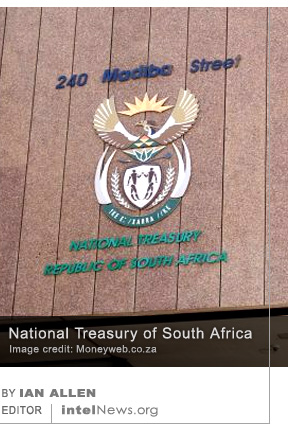 South Africa’s National Treasury threatened to terminate all funding for covert operations last year, after the country’s spy agency refused to account for tens of millions of dollars in expenses, saying the money had been put to “secret use”. An investigation by two leading South African news outlets, the Afrikaans-language weekly newspaper Rapport and the English-language online news portal News24, has revealed the existence of a major bureaucratic spat between the National Treasury and the State Security Agency (SSA), the country’s primary civilian intelligence organization.
The investigation cited “seven independent sources” with direct involvement and knowledge of the National Treasury and the South African intelligence services. According to the report, National Treasury officials contacted the SSA last year, demanding to know how it used 1.5 billion rand (approximately US $114 million) that it took from government coffers between 2012 and 2016. But the spy agency refused to provide a detailed answer, and said instead that most of the money had been used to fund unspecified “secret operations”, and that its use was therefore classified.
However, the SSA did not realize that National Treasury officials have the same level of security clearance as senior SSA officials, said sources. Consequently, a Treasury probe was launched by Treasury investigators with access to SSA’s activities. The probe uncovered several instances of irregular expenditures and serious mismanagement, said the report. There were repeated instances when funds assigned to non-covert operations were “inexplicably moved to the covert fund” and SSA officials were unable to explain why. There were also numerous cases of abuse of procurement procedures. One source told the News24/Rapport team that “Treasury officials kept asking [SSA officials] how they tender for goods and services, and they kept saying that they can’t tell us, because it is classified information”. At that point, the National Treasury threatened to terminate all funding for intelligence operations unless answers were provided by the SSA leadership. After a series of frantic and tense negotiations, the SSA agreed to change its procurement practices and “at least submit [to National Treasury] a list of suppliers so that there could be a degree of oversight”.
The SSA’s reputation has not emerged unscathed from the broader crisis that has been plaguing South African politics in recent years. In 2014, the Johannesburg-based newspaper City Press alleged that the SSA maintained a secret unit used to target domestic political opponents of South African President Jacob Zuma. The paper also said that senior SSA official Thulani Dhlomo, a close ally of President Zuma, had been placed at the head of the secret unit in 2012. Another leading Johannesburg-based newspaper, The Mail & Guardian, repeated these claims earlier this month.
► Author: Ian Allen | Date: 18 September 2017 | Permalink
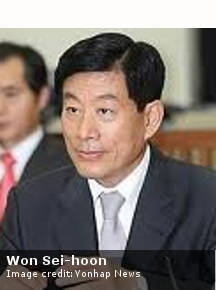
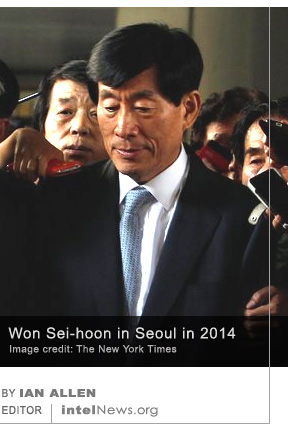 The former director of South Korea’s main intelligence agency has been sent to prison for organizing a large-scale illegal campaign to influence the result of the country’s 2012 presidential election. Won Sei-hoon headed the NIS from 2008 to 2013, during the administration of conservative President Lee Myung-bak. During the 2012 presidential election, Won ordered a group of NIS officers to “flood the Internet” with messages accusing liberal political candidates of being “North Korean sympathizers”. One of those candidates, Moon Jae-in, of the left-of-center Democratic Party of Korea, is now the country’s president. Mr. Moon succeeded his main right-wing rival, Park Geun-hye, who resigned in March of this year following a series of financial scandals. She is now facing charges of bribery, abuse of power, leaking government secrets, and corruption.
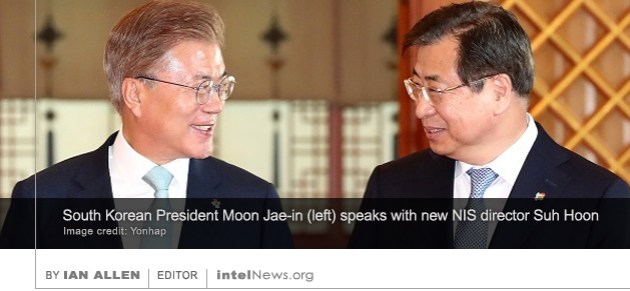 An internal investigation has found that the intelligence agency of South Korea tried to steer the result of the 2012 presidential election in favor of the conservative candidate, and placed liberal politicians under surveillance in the run-up to the election. South Korea’s intelligence agency, the National Intelligence Service (NIS) has fallen into disrepute in recent years, after it was found to have secretly sided with conservative political candidates for public office.
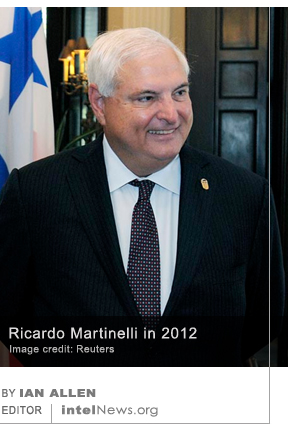 Police in the United States have arrested Panama’s former president Ricardo Martinelli, who is wanted in the Central American country on charges of using state resources to spy on his political opponents and business rivals. The center-right US-educated businessman won the 2009 presidential election in the country with a landslide, receiving over 60 percent of the national vote. His election prompted positive comments from Washington, because it marked a rare ascent to power of a conservative Latin American leader in a sea of socialist heads of state. But the euphoria did not last long. In 2014, Martinelli was succeeded in the presidency by his Vice President, Juan Carlos Varela. Varela promptly launched nearly 200 criminal investigations against his former political partner on issues ranging from embezzlement of state funds to political espionage.
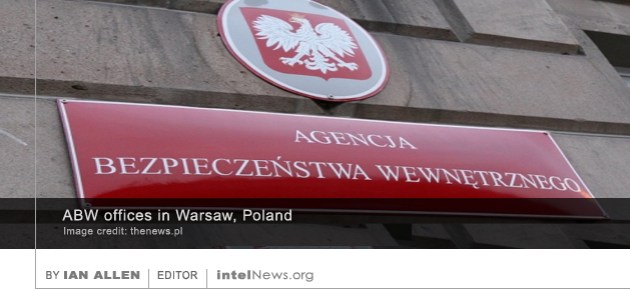 Over 50 journalists and their contacts were systematically spied on by the Polish intelligence services between 2007 and 2015, according to the former director of an anti-corruption watchdog. Until 2009, Mariusz Kamiński led the Central Anti-Corruption Bureau, which was set up by the office of the Polish Prime Minister in 2006 to address corruption in the country. The body is also responsible for monitoring the operations of Poland’s intelligence services, including the Internal Security Agency (ABW).
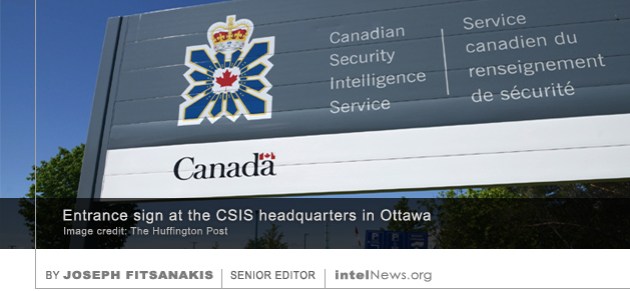 A government watchdog in Canada is preparing to hold a series of closed-door hearings to weigh accusations that the country’s intelligence services illegally spied on law-abiding activists opposing the construction of oil pipelines. The British Columbia Civil Liberties Association (BCCLA) sued the Royal Canadian Mounted Police (RCMP) and the Canadian Security Intelligence Service (CSIS) in February 2014,
 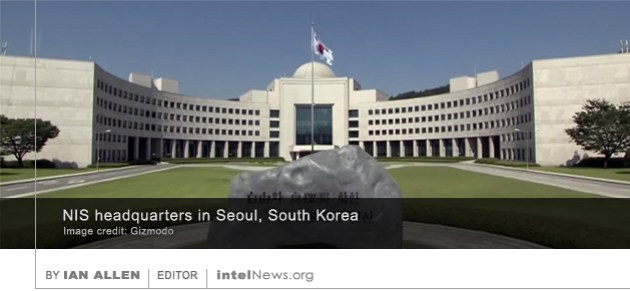 A suicide note found next to the body of a South Korean intelligence officer mentions a phone hacking scandal that has caused controversy in the country. The 45-year-old man, identified only as “Lim” by South Korean authorities, worked for the country’s primary intelligence organization, the National Intelligence Service (NIS). He was found dead late on Saturday morning inside his car, which had been parked on a deserted rural road on the outskirts of South Korean capital Seoul. According to local reports, authorities found a metal plate with burnt-out coal inside his car, which had been locked from the inside. Finding no apparent marks on his body, the police have ruled his death a suicide.







 intelNews.org
Presidential candidate accuses Mexican government of political policing
February 15, 2018 by Joseph Fitsanakis Leave a comment
Opposition candidates have long accused the PRI of using state intelligence agencies to spy on them. The accusations surfaced again this week, after Anaya claimed that he was illegally followed by a government intelligence officer during an election campaign trip in Veracruz. The rightist politician said the officer, who was not wearing a uniform, followed his campaign car in a black sports utility vehicle. On Tuesday, Anaya’s campaign team publicized a video showing the presidential candidate walking up to the intelligence officer and asking him who he was. In the video, the officer says he works for Mexico’s National Center for Security and Investigation (CISEN) and claims he is there to protect the candidate from security threats. The officer is then told by Anaya that he never requested a security detail, but responds that he is simply following orders issued by his superiors.
On Wednesday, Mexico’s Secretary of the Interior, Alfonso Navarrete, told reporters that the man in the video is indeed a longtime intelligence employee of CISEN. But he added that the officer’s mission had been to “report potential mishaps” and to protect Anaya from possible attacks by Mexico’s notorious drug cartels. When he was told by reporters that Anaya had not asked to be protected by CISEN, Navarrete claimed that he thought the candidate had been notified by the government about CISEN’s “discreet presence” in his campaign. The interior secretary then said that the incident had been a mistake, and that CISEN simply failed to notify Anaya of its activities. But Anaya dismissed Navarrete’s claims as lies and said he had been followed by other CISEN officers since the beginning of his campaign.
► Author: Joseph Fitsanakis | Date: 15 February 2018 | Permalink
Filed under Expert news and commentary on intelligence, espionage, spies and spying Tagged with 2018 Mexican general election, Alfonso Navarrete, CISEN (Mexico), Mexico, News, political policing, Ricardo Anaya