Ex-CIA analyst says North Korea will launch strikes against South
April 5, 2013 11 Comments
 By IAN ALLEN | intelNews.org |
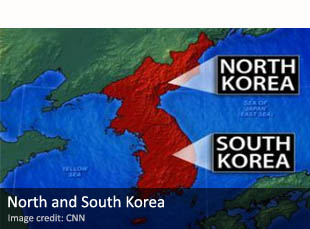
A former senior analyst on North Korea at the United States Central Intelligence Agency believes that the communist state will launch limited strikes against the South before moving to de-escalate the ongoing crisis in the Korean peninsula. On March 27, Pyongyang announced it was withdrawing from the Korean Armistice Agreement, which it signed along with the United Nations and China at the end of the Korean War, in 1953. Shortly afterwards, North Korea closed all border connections with the South and disconnected the direct telephone line linking it with Seoul. It subsequently declared that it would not hesitate to launch a preemptive nuclear strike against South Korea and the United States. Pyongyang heightened its rhetoric in response to Key Resolve/Foal Eagle, a two-month-long military exercise involving US and South Koran armed forces, which includes the deployment of nuclear-armed airplanes and ships. Although some expert observers are worried, few believe that the rhetorical boxing-match between the two Koreas will result in an outbreak of hostilities. But Columbia University Professor Sue Mi Terry, who headed the CIA’s North Korea analysis unit from 2001 to 2008, believes that Pyongyang will launch military strikes against Seoul before de-escalating the tension. Speaking to Wired magazine’s Danger Room blog, Terry noted that the attack will not be nuclear, nor will it involve mass use of military force. Instead, it will be “a relative small attack” that “won’t leave many people dead”, she said. Read more of this post







 intelNews.org
Ex-CIA analyst accused of spying for South Korea had prior warnings from FBI, CIA
July 22, 2024 by Joseph Fitsanakis 3 Comments
Terry joined the CIA in 2001 but resigned in 2008, allegedly “in lieu of termination” because her employer “had ‘problems’ with her contact with” officers from South Korea’s National Intelligence Service (NIS). After leaving the CIA, Terry worked briefly for the National Security Council and the National Intelligence Council, before transitioning to academia. Her most recent post was that of a senior fellow at the Council on Foreign Relations, where she became known as an exert on East Asian affairs with a focus on the Korean Peninsula. For over a decade, Terry has made frequent appearances on television and radio, as well as on several podcasts. She is married to the Washington Post columnist Max Boot.
The Department of Justice accuses Terry of failing to register under the Foreign Agents Registration Act and deliberately conspiring to violate that law, thus effectively operating as an unregistered agent of a foreign power. The indictment claims that Terry was gradually recruited by the NIS, beginning in 2013, two years after she stopped working for the United States government. Terry allegedly continued to work for the NIS for a decade, during which she was handled by NIS intelligence officers posing as diplomats in South Korea’s Washington embassy and permanent mission to the United Nations in New York.
It is alleged that throughout that time Terry provided her NIS handlers with access to senior US officials, disclosed “nonpublic US government information” to the NIS, and promoted pro-South Korean policy positions in her writings and media appearances. In return, Terry is alleged to have received luxury goods, free dinners at expensive restaurants, and nearly $40,000 in “covert” funding, nominally to operate a public policy program on Korean affairs. It is worth noting that, according to the unsealed indictment, the Federal Bureau of Investigation warned Terry that she should be wary of being approached by NIS officers seeking to offer her funding. Read more of this post
Filed under Expert news and commentary on intelligence, espionage, spies and spying Tagged with CIA, espionage, Max Boot, National Intelligence Service (South Korea), News, South Korea, Sue Mi Terry, United States