The story of a suspected KGB mole who shook the FBI in the 1960s
October 10, 2013
By JOSEPH FITSANAKIS | intelNews.org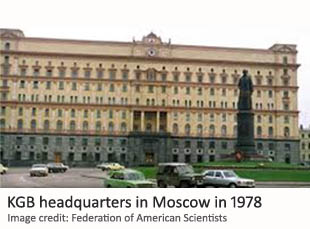
Readers of this blog will know about the infamous case of James Jesus Angleton, who headed the counterintelligence department of the Central Intelligence Agency from the 1950s to the 1970s, and led the biggest mole hunt in the Agency’s history. David Wise, author of several intelligence-related books, including the best-selling Spy, about FBI double agent Robert Hanssen, writes in a new article that the Federal Bureau of Investigation (FBI) was also shaken by a similar mole hunt, which never became public. In an article published in this month’s Smithsonian Magazine, Wise claims that the probe constituted “the first mole hunt in the history of the FBI” and that it was “one of the most sensitive investigations” in the history of the Bureau. Wise suggests that the mole hunt began in the spring of 1962, when Aleksei Kulak, a 39-year-old Soviet scientific consultant to the United Nations, who was in fact KGB operative, defected to the FBI. He was instructed by his American handlers to operate as an agent-in-place and supplied the FBI for a decade with secret information from the Soviet Union. The FBI gave him the codename FEDORA, also known in Bureau files as “Source 10”. In his article in The Smithsonian, which is based on interviews with no fewer than 30 current and former FBI agents, Wise describes FEDORA as “one of the most important sources the FBI had” at the time. Kulak and another KGB agent, Valentin Lysov, who defected to American intelligence in the mid-1960s, told the FBI that the Soviet Union kept a source inside the FBI, known as “Dick”. But neither defector knew whether Dick was the source’s real name, or whether it was simply a KGB operational codename. The FBI, says Wise, gave the alleged mole the code term UNSUB (“unknown subject”) Dick, and began a massive mole hunt. Read more of this post







 intelNews.org
German court sentences intelligence officer who spied for CIA
March 17, 2016 by Joseph Fitsanakis 1 Comment
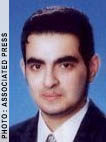
On Thursday, Markus R., identified in some German media as Markus Reichel, was sentenced for selling over 200 classified German government documents to the CIA between 2008 and 2012, for which he said he received €80,000 ($90,000). During his trial, Reichel also admitted giving German government documents to personnel at the consulate of the Russian Federation in Munich in the summer of 2014. Among the documents that the former BND clerks is said to have given the CIA was a list of thousands of German intelligence operatives —including agents— stationed abroad, which contained their operational cover names and real identities. But Reichel was caught when German counterintelligence officers intercepted correspondence between him and his handlers and then used the information to set up a successful sting operation.
During his trial, Reichel issued a formal apology for engaging in espionage against the German state. He told the court that he had been motivated by boredom and by “lust for adventure”, which he said he did not get working for the BND. He also said he was frustrated by the lack of confidence that his superiors and colleagues had in him. “At the BND, I had the impression that no one trusted me with anything”, said Reichel. “But the CIA was different. You had the opportunity to prove yourself”, he added. Reichel was found guilty of treason against the German state and sentenced to eight years in prison.
► Author: Joseph Fitsanakis | Date: 17 March 2016 | Permalink
Filed under Expert news and commentary on intelligence, espionage, spies and spying Tagged with BND, CIA, double agents, espionage, Germany, lawsuits, Markus R., Markus Reichel, News, Russian consulate in Munich, triple agents