News you may have missed #739
May 30, 2012 4 Comments
 By IAN ALLEN | intelNews.org |
►►US Supreme Court to consider case on secret wiretapping. The Supreme Court has agreed to consider blocking a constitutional challenge to the government’s secret wiretapping of international phone calls and emails. At issue is whether Americans who have regular dealings with overseas clients and co-workers can sue to challenge the sweep of this surveillance if they have a “reasonable fear” their calls will be monitored. The case, to be heard in the fall, will put a spotlight on a secret surveillance program that won congressional approval in the last year of President George W. Bush’s presidency.
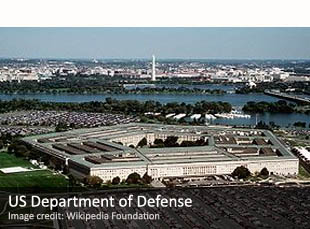
►►Analysis: Why is CIA applauding DoD’s intel grab? Last month, Director of National Intelligence James Clapper and Secretary of Defense Leon Panetta announced the creation of a new US espionage agency: the Defense Clandestine Service, or DCS. The new agency is expected to expand the Pentagon’s espionage personnel by several hundred over the next few years, while reportedly leaving budgets largely unchanged. The news nonetheless surprised some observers in Washington because the move appeared, at least initially, to be a direct challenge to the Central Intelligence Agency, whose National Clandestine Service leads the country’s spy work overseas. Then came a second surprise: former CIA officers and other intelligence experts started applauding. The question is why.
►►FBI forms secretive online surveillance unit. On May 22, CNet’s Declan McCullagh revealed that the FBI had quietly formed a new Domestic Communications Assistance Center (DCAC), tasked with developing new electronic surveillance technologies, including intercepting Internet, wireless, and VoIP communications. According to McCullagh, DCAC’s goal is “to invent technology that will […] more readily eavesdrop on Internet and wireless communications”. Read more of this post








 intelNews.org
US journalist facing jail term for refusing to testify in CIA officer’s trial
June 3, 2014 by Ian Allen 1 Comment
A leading American journalist is facing a possible jail term after the United States Supreme Court refused to consider his appeal against testifying at the trial of a former Central Intelligence Agency officer. Jeffrey Alexander Sterling, who worked for the CIA from 1993 until 2002, was arrested in early 2011 in St. Louis, Missouri. He was charged with leaking classified information about Operation MERLIN, a botched CIA covert operation targeting Iran’s nuclear weapons program. The operation was publicly revealed for the first time in New York Times reporter James Risen’s 2006 book State of War: The Secret History of the CIA and the Bush Administration. In chapter 9 of the book, Risen details a bungled operation by the CIA’s Iran Task Force to pass to the Iranians a series of faulty nuclear bomb design documents. Risen alleges that the CIA operation backlashed and may actually have helped the Iranian nuclear weapons program, as Iranian nuclear engineers would have been able to “extract valuable information from the blueprints while ignoring the flaws”. Risen was summoned to testify in Sterling’s trial, but refused, arguing that having to identify the source of his allegation about Operation MERLIN would infringe on press freedom. On the other side of the argument, the United States government claimed that the freedom of the press does not permit journalists “to refuse to provide direct evidence of criminal wrongdoing by confidential sources”. Risen filed a case in a Virginia court, arguing that he should not be forced to comply with the subpoena issued to him to testify at Sterling’s trial. After the court upheld the subpoena, Risen’s legal team filed an appeal with the Supreme Court. But the Court has now refused to hear the case, which means that Risen will have to testify in Sterling’s trial or face a possible jail sentence. Read more of this post
Filed under Expert news and commentary on intelligence, espionage, spies and spying Tagged with CIA, Iranian nuclear program, James Risen, Jeffrey Alexander Sterling, lawsuits, News, Operation MERLIN, press freedom, United States, US Supreme Court