US prosecutors drop case against ex-CIA analyst charged with spying for South Korea
October 19, 2026
by intelNews
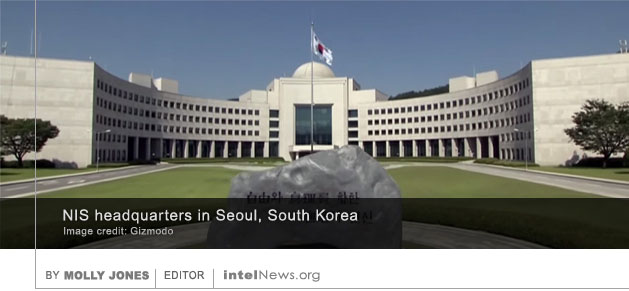 UNITED STATES FEDERAL PROSECUTORS have agreed to defer the prosecution of Sue Mi Terry a former Central Intelligence Agency (CIA) analyst and White House National Security Council (NSC) official, who is accused of secretly acting as an unregistered agent of South Korea’s National Intelligence Service (NIS). The deal could terminate the case against Terry in 12 months.
The deferred prosecution agreement was /filed on 13 October. Prior to the deferment, Terry was set to stand trial in a Manhattan federal court on two felony charges of conspiracy to violate the Foreign Agents Registration Act (FARA) and failure to register under FARA.
Born in Seoul and raised in the US state of Virginia, Terry served as a senior CIA analyst during 2001-2008, and as the Director for Korean, Japan, and Oceanic Affairs at the NSC during 2008-2009 under Presidents George W. Bush and Barack Obama. At the time of the indictment, Terry worked as a senior fellow for Korea Studies at the Washington, DC-based Council on Foreign Relations.
The espionage case against Terry dates to July 2024, when she was indicted on charges of acting as an unregistered agent working on behalf of South Korean intelligence. Prosectors alleged that over roughly a decade, Terry received luxury handbags and clothing, upscale meals, and tens of thousands of dollars in research funding from South Korea’s NIS.
In a September 28, 2026, filing opposing Terry’s motion to suppress evidence, prosectors alleged that the money came from the “highest levels” of NIS. They added that while Terry was aware of the support, “she sought to conceal the source of the NIS funds from the Woodrow Wilson Center, where she was then employed”. The prosecutors also publicly named three NIS case officers who purportedly had contact with Terry.
The two-page deferred prosecution agreement (DPA) allows for the prosecution to be suspended for 12 months, after which all charges will be dropped, provided that Terry complies to all terms set out in the DPA. In the DPA, Terry concedes to various charges, including accepting a Bottega Veneta handbag, a Louis Vuitton handbag, and a Dolce & Gabbana coat from South Korean officials, reportedly totaling $9,245. She also acknowledges raising approximately $37,000 for her research work, funded by checks that were issued directly from the South Korean embassy in Washington, DC.
The DPA also instructs Terry not to communicate with any NIS officers or employees and stipulates she must receive permission prior to any having contact with South Korean government officials, as well as report any unexpected encounters. Notably, although prosecutors alleged in the September 2026 filing that the funds came from the “highest levels” of NIS, the claim appears to be omitted from the DPA.
Maintaining her innocence throughout, Terry asserts her communications with Korean government officials were routine professional interactions in her role as a North Korea and Korean Peninsula policy expert. Lee Wolosky, Terry’s attorney, stated that his client “served her country loyally for many years” and that “we have consistently maintained that her interactions with South Korean officials were conducted in furtherance of US interest”.
The resolution of Terry’s case signals to broader concerns of US foreign relations with not just adversaries, but with international allies. Terry’s case alleges an ally’s spy agency cultivated an American expert through gifts and funding, thus raising important questions on the US approach to influence operations by allied governments. Historical parallels can be drawn from the 1976 ‘Korea Gate’ scandal, where the Korea Central Intelligence Agency (KCIA) attempted to influence U. politics through bribery and favors funneled by the agency to members of Congress.
► Author: Molly Jones | Date: 19 October 2026 | Permalink






US prosecutors drop case against ex-CIA analyst charged with spying for South Korea
October 19, 2026 by intelNews Leave a comment
The deferred prosecution agreement was /filed on 13 October. Prior to the deferment, Terry was set to stand trial in a Manhattan federal court on two felony charges of conspiracy to violate the Foreign Agents Registration Act (FARA) and failure to register under FARA.
Born in Seoul and raised in the US state of Virginia, Terry served as a senior CIA analyst during 2001-2008, and as the Director for Korean, Japan, and Oceanic Affairs at the NSC during 2008-2009 under Presidents George W. Bush and Barack Obama. At the time of the indictment, Terry worked as a senior fellow for Korea Studies at the Washington, DC-based Council on Foreign Relations.
The espionage case against Terry dates to July 2024, when she was indicted on charges of acting as an unregistered agent working on behalf of South Korean intelligence. Prosectors alleged that over roughly a decade, Terry received luxury handbags and clothing, upscale meals, and tens of thousands of dollars in research funding from South Korea’s NIS.
In a September 28, 2026, filing opposing Terry’s motion to suppress evidence, prosectors alleged that the money came from the “highest levels” of NIS. They added that while Terry was aware of the support, “she sought to conceal the source of the NIS funds from the Woodrow Wilson Center, where she was then employed”. The prosecutors also publicly named three NIS case officers who purportedly had contact with Terry.
The two-page deferred prosecution agreement (DPA) allows for the prosecution to be suspended for 12 months, after which all charges will be dropped, provided that Terry complies to all terms set out in the DPA. In the DPA, Terry concedes to various charges, including accepting a Bottega Veneta handbag, a Louis Vuitton handbag, and a Dolce & Gabbana coat from South Korean officials, reportedly totaling $9,245. She also acknowledges raising approximately $37,000 for her research work, funded by checks that were issued directly from the South Korean embassy in Washington, DC.
The DPA also instructs Terry not to communicate with any NIS officers or employees and stipulates she must receive permission prior to any having contact with South Korean government officials, as well as report any unexpected encounters. Notably, although prosecutors alleged in the September 2026 filing that the funds came from the “highest levels” of NIS, the claim appears to be omitted from the DPA.
Maintaining her innocence throughout, Terry asserts her communications with Korean government officials were routine professional interactions in her role as a North Korea and Korean Peninsula policy expert. Lee Wolosky, Terry’s attorney, stated that his client “served her country loyally for many years” and that “we have consistently maintained that her interactions with South Korean officials were conducted in furtherance of US interest”.
The resolution of Terry’s case signals to broader concerns of US foreign relations with not just adversaries, but with international allies. Terry’s case alleges an ally’s spy agency cultivated an American expert through gifts and funding, thus raising important questions on the US approach to influence operations by allied governments. Historical parallels can be drawn from the 1976 ‘Korea Gate’ scandal, where the Korea Central Intelligence Agency (KCIA) attempted to influence U. politics through bribery and favors funneled by the agency to members of Congress.
► Author: Molly Jones | Date: 19 October 2026 | Permalink
Related
Filed under Expert news and commentary on intelligence, espionage, spies and spying Tagged with espionage, National Intelligence Service (South Korea), News, South Korea, Sue Mi Terry, United States