OpenAI engineer accused of planting recording device remains in pre-trial detention
October 22, 2026 4 Comments
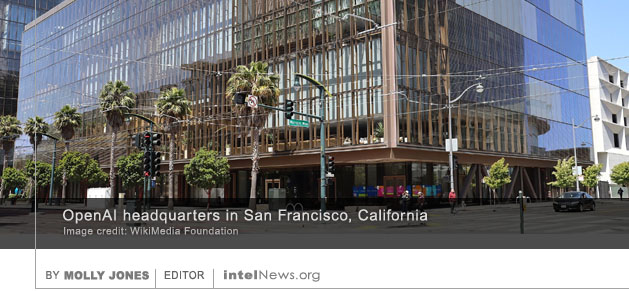 A COURT IN THE United States has granted a request by government prosecutors to prolong the pre-trial detention of Abdulrahman Alfozan, an OpenAI employee, who was arrested by the Federal Bureau of Investigation (FBI) on 9 October 2026. The 35-year-old Saudi national has been charged with attempting to use a recording device to intercept oral communications at the headquarters of OpenAI, where he worked. According to the FBI, Alfozan was attempting to “secretly capture sensitive communications about [OpenAI’s] super intelligence technology”.
Concerns about the engineer’s behavior reportedly started when OpenAI staff discovered a listening device wrapped in toilet paper on 30 September. This prompted an internal investigation, in which OpenAI analyzed the device using its own artificial intelligence (AI) models. The investigation concluded that the device had been installed on or around 28 September. It also determined that the device was highly sophisticated and included advanced encryption, audio monitoring capabilities, as well as a means of transferring intercepted data whilst evading monitoring. Following this discovery, the company referred the case to the FBI.
The affidavit states that Alfozan appears on footage captured on October 5 by a hidden close-circuit surveillance camera at the company’s San Francisco headquarters. The footage shows Alfozan entering a conference room, which he had no authority to access. He then appears to check a device plugged into a television inside the room. The affidavit adds that OpenAI executives frequently use the room for internal leadership meetings, often involving “highly confidential, technical, commercial and strategic information, including proprietary research, product plans, and business development opportunities”.
The complaint also alleges that, prior to installing the device’s, Alfozan used an AI productivity tool to inquire about OpenAI’s buildings, meeting rooms, calendars, and executive locations. It also alleges that a chatbot associated with Alfozan’s spouse—who has not been charged in connection with this case—submitted prompts about building and encrypting an audio recording device.
Alfozan had worked as an engineer at OpenAI for 15 months prior to his termination. According to Al Jazeera, Alfozan’s LinkedIn profile lists earlier roles at Meta and Microsoft. Court filings allege Alfozan had booked one-way flight tickets to Saudi Arabia for himself, his wife, and another relative, scheduled for 12 October. The Saudi national’s connections to the Gulf State’s ruling family are not explicitly known; however, he is allegedly listed as a partner at Raed Ventures, a venture capital firm based in Riyadh. Prince Khalid bin Bader al Saud, a member of the Saudi Royal family, is also a Raed Ventures partner.
Alfozan made his first appearance in a San Franscico federal court on 13 October. He did not enter a plea. If convicted on the charge of using or attempting to use a device to intercept oral communications, he could face a maximum sentence of five years in prison and a $250,000 fine. Notably, Alfozan has not been charged with espionage at this time. OpenAI released a statement saying the company had “no indication of this individual inappropriately accessing or exfiltrating model weights, source code, or customer data”.
This case underscores the increasing threat environment in AI laboratories. As the advent of the AI era raises the strategic value of the technology, so too does the incentive for state and non-state adversaries to target AI firms and tech companies for their trade secrets. Several cases echo Alfozan’s—such as in 2022, when Twitter employee Ahmad Abouammo was convicted of acting as an agent of Saudi Arabia and was sentenced to three and a half years in prison.
Instances of espionage targeting AI and technology companies date back further. In 2001, employees of Sun Microsystems and Transmeta were arrested at San Francisco airport with stolen chip blueprints in their luggage, as they were attempting to board a flight to China. Both pleaded guilty to foreign economic espionage charges.
There has also been an uptick in employees publicly voicing their fears about the lack of security measures and regulations within AI firms. Jacob Coxon, a former OpenAI and Anthropic researcher, resigned from his role in September 2026, and issued a viral statement warning about the safety risks in AI research. He later added that American AI companies had almost certainty been infiltrated by Chinese spies.
With reports that governments such as China and the United States plan to strengthen their AI proficiency, positioning it as a national priority, the global AI race has placed tech firms at the center of state-sponsored espionage. Despite recent attempts to curtail such threats, including training employees to spot espionage attempts, hiring insider risk investigators, and developing rigid security systems, officials at some AI companies have warned that protecting against sophisticated insiders and national state attackers “requires security investments beyond what we’ve currently achieved”.
► Author: Molly Jones | Date: 23 October 2026 | Permalink
 About intelNews







A mixed Saudi Government-Corporate intelligence alliance and possible PRC Chinese or Taiwanese involvement occurred to me.
The intelligence and security relationship between Saudi Arabia and China is primarily functional and economic, centered on quiet diplomatic coordination, defense technology exchanges, and mutual hedging against U.S. influence, rather than a formal intelligence alliance. [1, 2, 3, 4]
Saudi Arabia and Taiwan do not have official diplomatic or security intelligence ties, having ended formal relations in July 1990 when Riyadh recognized the People’s Republic of China (PRC). However, the two sides have a notable history of covert military cooperation and current un-official/economic engagements.
Google AI yields “Saudi Arabia has a rapidly growing and heavily state-backed artificial intelligence industry…The Saudi Data & Artificial Intelligence Authority (SDAIA) leads the Kingdom’s National Strategy for Data & AI, which aims to position Saudi Arabia among the top 15 nations globally in AI competitiveness and make AI a pillar of Saudi Vision 2030…Saudi Aramco uses machine learning for reservoir modeling, predictive maintenance, and operational efficiency.” Also see https://sdaia.gov.sa/en/MediaCenter/Pages/ai-year.aspx
The General Intelligence Presidency (GIP): [is Saudi Arabia’s] primary external intelligence and national security service, which covers broad strategic intelligence—including political and economic espionage or external threats impacting the state’s security.
https://en.wikipedia.org/wiki/China%E2%80%93Saudi_Arabia_relations
Here’s a new, interesting NYT commentary by M. Gessen “It’s Clear. Trump Is Siding With Russia” of October 29, 2026 at
https://www.nytimes.com/video/opinion/100000011228188/its-clear-trump-is-siding-with-russia.html
[Summary] “Trump’s new diesel deal with Russia is a dark sign of his new American agenda, argues the Opinion columnist M. Gessen. The agreement, along with Ukraine’s accusation that the United States withheld military intelligence, points to a new story in this war: “If Vladimir Putin’s plan is to starve Ukraine into submission this winter, then Donald Trump is going to help Putin do that.””
See Transcript at https://www.nytimes.com/video/opinion/100000011228188/its-clear-trump-is-siding-with-russia.html
Here’s an excellent Philip Thompson spy channel video dated October 17, 2026 about the Abdulrahman Alfozan, OpenAI, matter https://youtu.be/0ySqVtBd7_8?si=4ySzF5jh0y7CXVAo
Below Thompson’s video is the commentary:
“On 9 October 2026, the FBI arrested OpenAI engineer Abdulrahman Alfozan. He’s accused of hiding a home-made listening device in an executive conference room at OpenAI’s San Francisco headquarters.
It wasn’t a sophisticated operation. The bug was a $14 controller board wrapped in toilet paper and plugged into the back of a TV. OpenAI’s counter-surveillance team found it two days after it went in, and the trail of chatbot questions about how to build it led straight back to [Abdulrahman Alfozan]. Then [Abdulrahman Alfozan] returned to the room and was caught on camera checking behind the TV.
In this video I go through who Alfozan is, how the bug was built and found, and what the Saudi connections do and don’t tell us. I also compare it with how the professionals do it: the Soviets’ “Thing” hidden in the Great Seal, and the KGB’s bugged IBM typewriters at the US embassy in Moscow. Finally, I look at why he’s charged with wiretapping rather than espionage, and why AI labs have become such a big target for spies.
Alfozan has only been charged (of course, he’s presumed innocent unless proven guilty).”
Pete Comment: Saudi money and political influence over the US government MAY mean Abdulrahman Alfozan gets off with a minimal sentence.
Pete
https://gentleseas.blogspot.com/
Hi IntelNews
A surprising issue is the US’s assistance to Russia on a critical counter-terrorism threat under the US’s (new or existing?) “duty to warn” policy. AI reveals:
“[FSB] responded by taking immediate security measures and detaining a suspect. After the U.S. Embassy in Moscow issued a specific alert regarding a planned October 31 terrorist attack at the Tsaritsyno Museum Reserve, Russian authorities swiftly evacuated visitors and closed the complex. [1, 2, 3]
The actions taken by Russian authorities included:
Following the security operation, the Tsaritsyno Museum-Reserve safely reopened to the public the following day. [1]
If you want, I can provide more information on:
wea the threat Islamist terrorism
The threat was not connected to Islamist terrorism; the detained suspect was linked to neo-Nazism.
According to official statements released by Russia’s Federal Security Service (FSB), investigations into the detained minor revealed specific details about his ideology and motives:
While previous major security alerts in Moscow—such as the tragic March 2024 Crocus City Hall attack – were orchestrated by the Islamist terror group ISIS-K, intelligence and law enforcement confirmations indicate that this specific October 2026 plot was rooted in far-right, neo-Nazi extremism. [1, 2]
Russian authorities have not accused Ukraine of any involvement in this specific plot. [1, 2]
The official narrative from FSB differs significantly from past incidents like the Crocus City Hall attack: [1]
AI assembled by Pete
https://gentleseas.blogspot.com/