Analysis: Bandar’s return affirms hawkish turn in Saudi foreign policy

Prince Bandar bin SultanBy JOSEPH FITSANAKIS | intelNews.org |
For over two decades, America’s relations with its most important Arab ally were primarily mediated by just one man: Prince Bandar bin Sultan, Saudi Arabia’s Ambassador to the United States from 1983 to 2005. But on June 26, 2005, Bandar, a personal friend of the Bush family, submitted his diplomatic resignation, after being recalled to Riyadh by Saudi Arabia’s King Abdullah. Almost immediately, Bandar, known for years in Washington’s diplomatic circles as a flamboyant socialite, disappeared from public view. It is said that he faced serious health problems, going in and out of hospitals. Others claim that he fell out of favor with Saudi Arabia’s autocratic ruling elite, and in 2009 there were even unconfirmed reports that he was under house arrest after allegedly trying to organize a military coup against King Abdullah. Last week, however, Bandar returned to the limelight in spectacular fashion: in a plainly worded statement, Saudi authorities announced that the Prince had been appointed Director General of the Mukhabarat Al A’amah, the Kingdom’s main intelligence agency.

To those who remember Bandar from his Washington days, which were filled with drinking and partying, it may seem incredible that the “peasant prince”, whose mother was one of Sultan bin Abdulaziz Al Saud’s countless underage concubines, is now heading Saudi intelligence, in what is perhaps the most challenging period in the Kingdom’s history. Read more of this post

News you may have missed #767

Omar SuleimanBy IAN ALLEN | intelNews.org |
►►Aussie spy chief warns of ‘digital footprints’. For the first time in the 60-year history of the Australian Secret Intelligence Service (ASIS), Australia’s main external spy agency, its Director has spoken publicly. Nick Warner used this unprecedented opportunity to reflect on where ASIS has come in the last 60 years, and the challenges it faces into the future. Among them, he said, are “developments in the cyber-realm”, which “are a two-edged sword for an agency like ASIS; they offer new ways of collecting new information, but the digital fingerprints and footprints which we all now leave behind complicate the task of operating covertly”.
►►India arrests alleged Pakistani spy. Indian authorities have announced the arrest of Zubair Khan, 37, of Uttar Pradesh, who was allegedly caught with several Indian Army documents in his possession. He had been reportedly asked to gather information on Air India pilots, military bases in the country, journalists who frequently visit Pakistan, and relatives of officials working in the Indian High Commission in Pakistan. Maps of cantonment boards and details of many battalions have been recovered from him, according to Indian media reports. Investigators are also said to have identified one of Khan’s handlers, a man named “Talib”, who works at Pakistan’s High Commission in New Delhi.
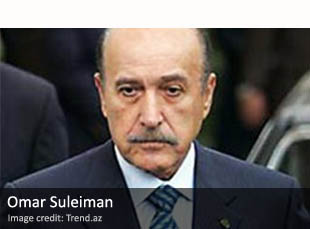
►►Egypt spies try to repair image as ex-Director dies. Egypt’s top spy agency, the General Intelligence Service —known as the “Mukhabarat” in Arabic— is taking a small but unprecedented step out of the shadows, in an apparent attempt to win the public’s support in the new Egypt. In an unusual move, the agency released a 41-minute-long documentary boasting of its achievements, presenting itself as the defender of the nation and vowing to continue to protect the country. The effort comes as the Mukhabarat’s former Director, the notorious Omar Suleiman, has died in the United States.

US spy agencies turn to Israel, Turkey, for help in Syria war

Regional map of SyriaBy JOSEPH FITSANAKIS | intelNews.org |
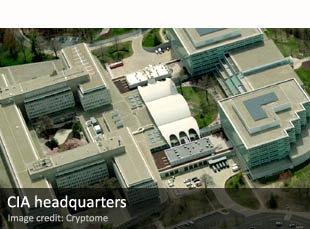
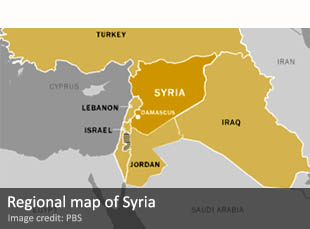
Just days after a senior United States defense official admitted Pentagon intelligence analysts missed early signs of the Arab Spring, a new report claims that Washington is still “struggling to understand” the Syrian situation, sixteen months into the uprising. Citing “interviews with US and foreign intelligence officials”, The Washington Post says that the US Intelligence Community has yet to develop a clear understanding of the intentions of the regime of Syrian President Bashar al-Assad. Nor have American analysts been able to draw a lucid picture of the fragmented opposition forces in the country. The paper says that, even though US spy agencies have intensified their intelligence-gathering efforts targeting all sides of the civil war, they have been unable to establish a physical presence inside Syria. This, according to The Post, is partly due to Washington’s decision, back in February of this year, to shut down the US embassy in Damascus, which has traditionally served as staging ground for Central Intelligence Agency operations inside Syria. This latest article confirms previous reports in The New York Times and elsewhere, of a small CIA team operating along the Syrian-Turkish border, with the task of overseeing a multinational effort to secretly deliver weapons, communications equipment and medical supplies to Syrian opposition forces. But this is about as close as the CIA has managed to get to Syria; for the most part, like its partner agencies in the US Intelligence Community, the Agency is “still largely confined to monitoring intercepted communications and observing the conflict from a distance”, says The Washington Post. As a result, US intelligence agencies are becoming increasingly dependent on their counterparts in Turkey, Jordan, and —most of all— Israel for reliable ground intelligence from inside Syria. Read more of this post

News you may have missed #766 (Arab world edition)

David SheddBy IAN ALLEN | intelNews.org |
►►Yemen busts alleged Iranian spy ring. Yemeni president Abd-Rabbu Mansour Hadi called on Tehran to stay out of Yemen’s internal affairs last week, after security officials in Sana’a, Yemen’s capital, announced they had uncovered an Iranian spy ring there. Yemen’s government-run SABA news agency said the spy cell, which was allegedly led by a former commander of Iran’s Islamic Revolutionary Guard corps, had operated in Yemen as well as in the Horn of Africa,  and that it had kept an operations center in Sana’a. An interior ministry official said all those detained were Yemenis.
►►CIA sued for killing US citizens in Yemen. Survivors of three Americans killed by targeted drone attacks in Yemen last year have sued top-ranking members of the United States government, alleging they illegally killed the three, including a 16 year-old boy, in violation of international human rights law and the US Constitution. The suit (.pdf), the first of its kind, alleges the United States was not engaged in an armed conflict with or within Yemen, prohibiting the use of lethal force unless “at the time it is applied, lethal force is a last resort to protect against a concrete, specific, and imminent threat of death or serious physical injury”. The case directly challenges the government’s decision to kill Americans without judicial scrutiny.
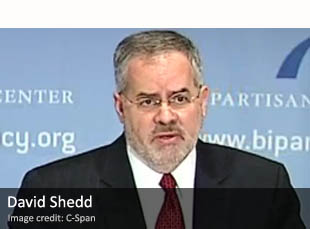
►►US intel official acknowledges missed Arab Spring signs. David Shedd, deputy director of the US Defense Intelligence Agency, the Pentagon’s intelligence arm, said analysts failed to note signs of the unrest across the Middle East and North Africa that exploded into the Arab Spring. Shedd’s comments were posted Thursday by the American Forces Press Service, a Pentagon information wire. They constitute a rare public acknowledgment of the US intelligence failure regarding the turmoil that has redrawn the Middle East’s political landscape, toppling autocratic rulers in Tunisia, Egypt, Yemen and Libya and now engulfing Syria.

Situation Report: Hacker convention brings out top NSA spy

DefConBy TIMOTHY W. COLEMAN | intelNews.org |
In less than a week, the 20th annual DefCon Hackers convention will take place in Las Vegas, Nevada. The yearly gathering brings out the good, the bad and the script kiddies alike. Computer security practitioners, cyber-criminals, grey and white hat hackers, law enforcement, and members of both the US intelligence community as well as probably foreign government representatives will be on hand to listen to presentations, see novel techniques, and view new innovative methods for cyber intrusion. DefCon has become a Mecca of sorts for those interested in groundbreaking developments and nefarious possibilities within the computer security and cyber realm. As organizers of the event explain in their call for presentations, “DefCon is all about thinking up cool and new ways to approach everything from the most complex modern technology to hacking grandma’s toaster […] what attack exploits, defensive techniques, or unique research [have] you have been working on”. The focus is often two-fold “how to break it”, followed by a segment on “how to fix it”. “Spot the Fed” is an ongoing and widely popular contest at the convention. The task of regular attendees is to properly identify plain-clothed members of law enforcement or the intelligence community. As DefCon explains, “if you see some shady MIB (Men in Black) earphone penny loafer sunglass wearing Clint Eastwood to live and die in LA type lurking about, point him out”.

Read more of this post

News you may have missed #765

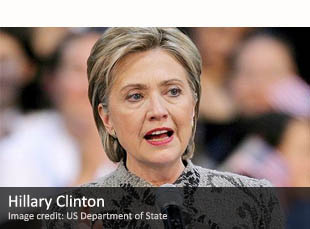
Hillary ClintonBy TIMOTHY W. COLEMAN | intelNews.org |
►►MI6 chief says Iran will get nukes in 2 years. Sir John Sawers, the head of Britain’s Secret Intelligence Service, has been quoted as publicly forecasting that Iranian nuclear weapons efforts will likely come to fruition by 2014. Sawers is quoted in The Daily Telegraph as saying: “The Iranians are determinedly going down a path to master all aspects of nuclear weapons; all the technologies they need”, adding “it’s equally clear that Israel and the United States would face huge dangers if Iran were to become a nuclear weapon state”. He went on to assert that Iran would have achieved nuclear statehood in 2008 had it not been for clandestine efforts to thwart such ends. He did not elaborate on what he meant by his comments, for which he was criticized in Parliament earlier this week.
►►MI6 chief claims US interrogators were ‘obsessed’. In the same Telegraph interview, Sir John claimed that British interrogators, following the attacks of September 11, 2001, came “close to the line” of illegality. He went on to say that US interrogators straddled the line between legal and illegal, insinuating that US personnel may have crossed the line during interrogations. Sir John is quoted as explaining: “They [US interrogators] got so obsessed with getting a right answer that they drifted into an area that kind of amounted to torture”. He went on to claim that British personnel involved in interrogations never crossed the line, observing: “We’ve never been there, we’ve never been involved in that, and I think our accountability, our disciplines, have helped us keep on the right side of these lines”.
►►Clinton says Israeli spy Pollard unlikely to be freed. US Secretary of State Hillary Clinton has reaffirmed Washington’s position that Jonathan Pollard was unlikely to receive clemency or see freedom anytime soon. During a press conference in Jerusalem on July 16, Secretary Clinton stated unequivocally: “He [Jonathan Pollard] was sentenced to life in prison, he is serving that sentence, and I do not have any expectations that that is going to change”. Pollard, a former US naval intelligence analyst, was suspected of trying to provide classified information to South Africa, Pakistan, and Australia. He was arrested and convicted of espionage for providing classified information to the State of Israel. He is serving a life sentence for his crimes.

News you may have missed #761

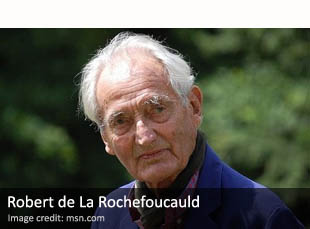
Robert de La RochefoucauldBy TIMOTHY W. COLEMAN | intelNews.org |
►►US aircraft company owner charged with supplying Venezuelan military. Kirk Drellich, owner and president of SkyHigh Accessories in Florida, has pleaded not guilty to charges that he illegally supplied Venezuelan military contacts with pressure switches and cooling turbines, as well as other airplane parts. Court documents indicate that the aircraft parts were to be used for Venezuelan F-16 jets, attack helicopters and other military crafts. Prosecutors in Florida have filed charges (.pdf), stemming from violations of the Arms Export Control Act, on three other individuals who are supposedly involved in the conspiracy to export arms to Venezuela. Other defendants in the case include Alberto Pichardo and Freddy Arguelles, both former members of Venezuela’s Air Force, as well as Victor Brown, a local businessman.
►►Trial delayed again in Delisle espionage case. As previously reported on this blog, the espionage case against Sub-Lt. Jeffrey Paul Delisle, the Canadian navy intelligence officer accused of spying for Russia, has again been delayed. The attorney for Delisle requested an adjournment based on the governments disclosure of new documents and evidence in the case. The adjournment is expected to last until July 17.
►►Legendary WWII spy de La Rochefoucauld dies. Robert de La Rochefoucauld, a French national who became a legendary British spy, helping direct and organize the Free French forces in England and underground movements in France during World War II, has died of natural causes at the age of 88. De La Rochefoucauld’s exploits as a spy have all the makings of a movie. As a little boy, he met Adolf Hitler, and as a spy he twice escaped execution by the Nazi’s. He was a knight in the French Legion of Honor, received the Medal of Resistance from France, was widely herald for his exceptional service by the British and he is believed to have been the last remaining French member of Winston Churchill’s Special Operations Executive.

News you may have missed #760

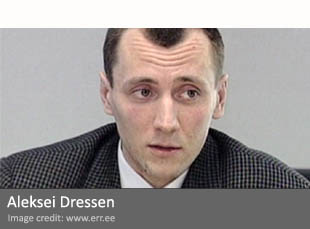
Aleksei DressenBy TIMOTHY W. COLEMAN | intelNews.org |
►►Turkey breaks up major military espionage ring. Turkish newspaper Hurriyet Daily News reported on July 9 that 51 active-duty soldiers from over twelve cities have been implicated in a major espionage ring involving Turkey’s military. Following a series of raids on July 7, at least 40 people were detained and four others were taken into custody. The raids were in response to an investigation launched in 2009, regarding warcraft radar locations in Turkey, illegal surveillance, as well as wiretapping of military officers.
►►Taiwan navy misplaces classified naval charts. During the decommissioning last June of Taiwan’s Hai Ou missile boats, classified naval charts were discovered to have gone missing during a final inventory check. The Taipei Times reports that the individual officer tasked with the responsibility of safeguarding the charts in question claimed to have burned one by accident, but was unable to account for the second chart. The classified charts contained information on Taiwanese naval activity including deployments in the Taiwan Strait.
►►Estonia security official and wife jailed for treason. Aleksei Dressen, a former security official at Estonia’s Interior Ministry, and his wife, Viktoria, were both convicted of treason, receiving 16 years and 6 years respectively. During a closed trial the proceedings did not provide direct evidence as to whom Dressen and his wife were working for. However, reports indicate that Dressen’s handlers were most likely representatives of Russia’s FSB.  The prosecution alleged that Dressen brought classified state secrets from the Estonian Interior Ministry to the airport in an envelope and then passed them along to his wife, who acted as a courier to Russian handlers. Heili Sepp, the Estonian prosecutor, indicated that the sentencing of the Dressens was part of a plea bargain effort, noting: “To our knowledge, this is the harshest punishment meted out in plea bargain proceedings in Estonia”.

News you may have missed #757

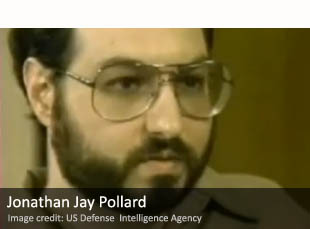
Jonathan Jay PollardBy TIMOTHY W. COLEMAN | intelNews.org |
►►US government Pollard video declassified. In response to a Freedom of Information Act request initiated by the Institute for Research: Middle Eastern Policy, the Defense Intelligence Agency has released a 14-minute instructional video, which cites the Jonathan Pollard spy case. Pollard was a US Naval intelligence officer who for over 18 months provided thousands of classified documents to the Israelis government. He is serving a life sentence. The DIA’s Office of Security and Counterintelligence produced the instructional video in 1987 to urge employees to be on the lookout for suspicious behavior of fellow employees and to encourage them to report known security violations immediately. The video interviews an actor portraying the government employee who first reported Pollard’s espionage activities.
►►Senior CIA officer accused of being Mafia hitman. Enrique “Ricky” Prado’s resume reads like the ultimate CIA officer: a candidate for the CIA’s most senior post in South Korea, a top spy in America’s espionage programs against China, and deputy to Cofer Black, a chief strategist in America’s war on terror. But he is also alleged to have started out a career as a hitman for a notorious Miami mobster, and kept working for the mob even after joining the CIA. Finally, he went on to serve as the head of the CIA’s secret assassination squad against Al-Qaida. That’s according to journalist Evan Wright’s blockbuster story How to Get Away With Murder in America, distributed by Byliner. In it, Wright compiles lengthy, years-long investigations by state and federal police and tracks the history of Prado’s alleged Miami patron and notorious cocaine trafficker, Alberto San Pedro, and suspicions that Prado moved from a secret death squad from the CIA to notorious mercenary firm Blackwater.
►►Colombian pleads guilty to spy charges in Nicaragua. As previously reported on this blog, Luis Felipe Rios, a 34-year-old Colombian national, was arrested for espionage in Nicaragua on June 15. The Inside Costa Rica news agency says Rios admitted he was indeed committing espionage on behalf o foreign nation, and he is providing Nicaraguan authorities with all the details. Rios will likely be sentenced on July 9 and he faces up to 16 years in prison for violating Nicaragua’s state secrets and state intrusion laws.

Situation Report: CIA venture group funds video recorder firm

In-Q-TelBy TIMOTHY W. COLEMAN | intelNews.org |
On June 27, In-Q-Tel, the venture arm of the Central Intelligence Agency and other members of the United States intelligence community, announced a strategic partnership with Looxcie, makers of the first ever “wear and share” videocam recorders. The financial terms of the deal were not disclosed. In-Q-Tel, created in 1999, is the foremost strategic investor on behalf of the US Intelligence Community. Originally called “Peleus”, In-Q-Tel was initially associated with the CIA’s Directorate of Science and Technology (DS&T).  Interestingly enough, the “Q” in In-Q-Tel’s branding is apparently derived from a fictional character in the James Bond movies referred to as “Q”.  As many movie fans will recall, “Q” was responsible for outfitting Bond and other 00s with the famed and awe-inspiring gadgetry and technical equipment needed for missions. Having evolved from the CIA’s DS&T, whose primary purpose is to “create, adapt, develop and operate technical collection systems and apply enabling technologies to the collection, processing and analysis of information”, In-Q-Tel’s strategic investments in dual-purpose technology firms is hardly surprising. In fact, In-Q-Tel has a notable track record, especially given the fact that it is a government-run venture capital fund. Successful as it may be, In-Q-Tel represents itself quite humbly, formally explaining that it is a “not-for-profit organization […] created to bridge the gap between the technology needs of the Intelligence Community and new advances in commercial technology”. Read more of this post

News you may have missed #755

Jeffrey Paul DelisleBy TIMOTHY W. COLEMAN | intelNews.org |
►►MI5 chief says al-Qaeda threatens UK from Arab Spring nations. Brittan’s domestic intelligence agency chief, Jonathan Evans, has stated that al-Qaeda is continuing to gather a foothold in nations that experienced the Arab Spring. In his speech, Evans, who directs the UK’s MI5, warned that al-Qaeda is attempting to reestablish itself in countries that had revolted, and that “a small number of British would-be jihadis [sic] are also making their way to Arab countries to seek training and opportunities for militant activity, as they do in Somalia and Yemen. Some will return to the UK and pose a threat here”. With a suspected 100-200 British born Islamist militants operating in the Middle East and Africa, the MI5 Director General warned that the coming summer Olympics in London made for an attractive target.
►►Russia to conduct airborne surveillance of Canada’s infrastructure. Canada’s National Post newspaper reports that Russian surveillance aircraft will conduct a flyover of Canada’s military and industrial infrastructure in what appears to be an annual Russian air reconnaissance mission. For the past ten years and under the Open Skies treaty, Russia is allowed to conduct flyovers of key Canadian sites. This will be the first flyover since the arrest last January of Jeffrey Paul Delisle (pictured), a Royal Canadian Navy officer, for allegedly spying on Canada on behalf of the Russians.
►►Japanese official who leaked DRPK missile info found dead. A Japanese Foreign Ministry official, who was largely thought to the source of leaked information regarding a Chinese missile technology transfer to North Korea in April, has been found dead. The official, previously under investigation for publicly disclosing national security information, was found hanged in his Chiba prefecture home on June 20. Additional details, including the individual’s name, were not made available, but Japanese government officials did indicate that the death did not appear to be suspicious.

Guest Comment: India’s corporate espionage boom

AssoCham IndiaBy BRITTANY MINDER | intelNews.org |
A survey conducted earlier this month by the Associated Chambers of Commerce and Industry of India (AssoCham) found that corporate espionage in India is surging. The June 14 survey found that 35 percent of Indian firms regularly and aggressively conduct research on competitors and employees, which goes far beyond the normative business intelligence realm. Secretary General of AssoCham, D.S. Rawat, maintained that “demand from certain industries, such as information technology, infrastructure, insurance, [and] banking and manufacturing is overwhelming”. With an increasing demand for espionage gadgetry, up nearly 30 percent from last year, the survey also noted that “almost all the company representatives in these domains acknowledged the prevalence of industrial espionage to gain access to information and steal trade secrets of their competitors through private deals with sleuths and spy agencies”. The appetite for corporate espionage and gadgets doesn’t stop at rival-on-rival activity; espionage is a pursuit while industrial espionage is a practice. Overall corporate vulnerabilities, a lack of appreciation for corporate security best practices, and the tangible motivation of revenue is, according to AssoCham, driving, “companies who have strong unions and are vulnerable to pilferage hire spy agencies and plant an under-cover agent, a mole in minor job profiles in rival companies to ascertain if union leaders are getting paid for creating trouble”. According to The New York Times, conservative acknowledgements of the boon of the corporate spy industry willingly concede that some companies even hire “mystery vendors” to gauge their own employees’ response to sifting from outsiders. Read more of this post

News you may have missed #750 (US edition)

NROL-38 reconnaissance spacecraftBy TIMOTHY W. COLEMAN | intelNews.org |
►►US spy agency launches new satellite. The US National Reconnaissance Office, the agency tasked with overseeing America’s intelligence satellites, successfully placed a new spy satellite into orbit. The Christian Science Monitor reports that the NROL-38 reconnaissance spacecraft was launched from Cape Canaveral Air Force Station in Florida. The satellite launch, sitting atop an Atlas 5 rocket, was streamed live via Webcast for several minutes before being terminated due to national security restrictions and the classified nature of the mission. Particulars regarding the capabilities or specific purpose of the spy satellite were not provided. However, just a few days before, the US Air Force’s highly classified space plane known as the  AX-37B returned to Vandenberg Air Force Base in California.
►►FBI takes on larger domestic intelligence role. The US Federal Bureau of Investigation, under a newly devised action plan, will be afforded a greater role in domestic intelligence efforts in the US, according to a recent Washington Post article.  Senior level field agents at the bureau are expected to serve as representatives for the Office of the Director of National Intelligence (ODNI), the agency created after 9/11 to oversee activities of all US intelligence efforts. The Post quotes CIA spokeswoman Jennifer Youngblood, who —remarkably, considering CIA/ODNI relations in recent years— said that the agency has not opposed the ODNI’s move to elevate FBI agents in the US, and that “the program is working well”.
►►CIA declassifies 9/11 documents. The CIA released this past week hundreds of pages of declassified documents related to the September 11, 2001, attacks, which detail the agency’s budgetary woes leading up to the deadly strikes and its attempts to track al-Qaeda leader Osama bin Laden. The National Security Archive at George Washington University says it obtained the documents through a Freedom of Information Act request. The documents are heavily redacted and offer little new information about what the US knew about the al-Qaeda plot before 2001.

News you may have missed #747

Israeli athletes at the 1972 Munich OlympicsBy TIMOTHY W. COLEMAN | intelNews.org |
►►Dutch media reportedly spied on China. Dutch media participated in a clandestine intelligence collection effort on behalf of the Netherlands General Intelligence and Security Service (AIVD) during the 2008 Summer Olympic Games in Beijing. According to Dutch sources, at least seven reporters attending the Olympics were coaxed into, and were paid for, collecting information and taking photos of targeted Chinese officials interested in speaking with Dutch company and industry representatives. The AIVD did not comment on the allegations but did remark that Dutch law allows them to contact anyone who could provide or has access to intelligence.
►►Nicaragua arrests Colombian national for espionage. According to the Spanish-language weekly newspaper Semana, General Julio Cesar Aviles, the head of Nicaragua’s Army, announced the arrest of Colombian national Luis Felipe Rios, for seeking to “obtain Nicaraguan state documents about defense and national security”. The 34-year old Rios was apparently captured in Managua on Tuesday after having been under the surveillance of Nicaraguan counterintelligence officials for over a year. Rios was in Nicaragua under the guise of being a Spanish national working for a media outlet. The lead prosecutor in Nicaragua, Armando Juarez, claimed that there was “sufficient proof” to prosecute Rios. Colombian officials, including President Juan Manuel Santos, have stated they are investigating the matter.
►►Neo-Nazi linked to 1972 Munich Olympic terrorists. Recently released files by Germany’s security service, the Federal Office for the Protection of the Constitution (BfV), links neo-Nazi Willi Pohl to forged passports provided to Black September terrorists who perpetrated the 1972 attack at the Munich Olympics. The attack resulted in the deaths of 11 Israeli athletes. According to German magazine Der Spiegel, over 2,000 documents were released in which the BfV asserts that Pohl assisted and even chauffeured one Black September member around Germany in the weeks leading up to the attack. German police arrested Pohl in 1972 for “unauthorized possession of firearms” and sentenced him to two years’ incarceration for possessing grenades and weapons. He was released only a few days after his conviction and he fled the country, ending up in Lebanon.

US judge denies release of CIA report on Bay of Pigs invasion

Court documentsBy JOSEPH FITSANAKIS | intelNews.org |
On April 17, 1961, a brigade of 1,300 CIA-funded and -trained anticommunist Cubans mounted a surprise assault on the Caribbean island. But prior intelligence collected by  spies working for Havana, and stiff resistance by pro-Castro troops, resulted in the CIA’s biggest known covert action failure. Approximately 1,200 surviving members of the CIA’s army were captured by pro-Castro forces, many of whom were severely interrogated or executed in subsequent years. The intelligence fiasco led to a five-volume CIA report, whose final volume was authored in the early 1980s by CIA resident historian Jack Pfeiffer. It essentially contains the CIA’s counterargument to a previous report, authored by the Agency’s Inspector General, which placed the blame for the failure on the invasion squarely on the shoulders of the CIA. Volume III of the report was voluntarily released by the CIA in 1998, but was not discovered by researchers until 2005, when an academic found it among the Kennedy Assassination Records Collection at the US National Archives. Following an unsuccessful Freedom of Information Act request, George Washington University’s National Security Archive sued the CIA in 2011, eventually forcing the Agency to declassify Volumes I, II and IV last April. This left Volume V, which is the subject of an ongoing dispute between historians and the CIA. But in a decision aired late last week, US District Court judge Gladys Kessler agreed with the Agency that the volume was not subject to US declassification rules because it had been “rejected for inclusion in the final publication” of the report. According to judge Kessler, the volume written by Dr. Pfeiffer, the CIA historian, was not a finished product, but rather a draft manuscript, and was therefore exempt from public disclosure under the Freedom of Information Act. Read more of this post