Obama administration denies UN access to Guantánamo, CIA prisons

Guantánamo

Guantánamo

By JOSEPH FITSANAKIS | intelNews.org |
The US government has turned down calls by United Nations human rights monitors for access to the US Pentagon’s Guantánamo Bay prison camp and to CIA prison sites around the world. It is the second time that Obama administration officials have declined this request by UN monitors, despite the administration’s rhetorical commitment to increasing its collaboration on human rights issues with the international agency. Commenting anonymously to The Washington Post, which is one of a handful of US news outlets that are running this story, US government officials said that the Obama administration “support[s] the work of the UN human rights researchers”, but is “constrained in releasing information on sensitive intelligence matters”. The news comes ten days after unconfirmed reports that the US Department of Justice is considering the appointment of a special prosecutor to investigate the use of torture by US intelligence agencies after September of 2001.

Bookmark and Share

Cambridge spy ring member’s memoir reveals motives behind actions

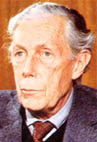
Anthony Blunt

Anthony Blunt

By IAN ALLEN | intelNews.org |
The British Library kept its promise and released yesterday the closely guarded, incomplete autobiographical manuscript of Anthony Blunt, fourth member of the Cambridge spy ring. The group of British spies, which worked secretly for the Soviet Union from the 1930s until the 1960s, included Guy Burgess, Donald Maclean and H.A.R. “Kim” Philby, all of whom eventually defected to the Soviet Union. In his 30,000-word memoir, Blunt, an art history professor who in 1945 became Surveyor of the King’s Pictures and was knighted in 1954, describes his recruitment to spy for the Soviets as “the most important decision of my life”. Read more of this post

News you may have missed #0039

  • Russians suspect sabotage behind ICBM test failure. The FSB is investigating the reasons behind the test failure earlier this month of a Russian Navy Bulava-30 (SS-NX-30) sea-based intercontinental ballistic missile, which disintegrated 28 seconds after launch. The Russian Navy developed the ICBM specifically to avoid future US ballistic missile defenses.
  • CIA kept bin Laden son’s death secret for months. US officials think that Saad bin Laden was killed in a Predator drone strike earlier this year in Pakistan, but CIA has tried to keep the news secret, allegedly in an attempt to confuse al-Qaeda. You may recall that some time ago intelNews reported that some in US intelligence believed Saad had been given government protection in Iran.
  • US DNI sees signs of North Korean succession. The Open Source Center of the US Directorate of National Intelligence adds its voice to widespread speculation that Kim Jong il may be preparing to hand power to his third son, Kim Jong Un.

Bookmark and Share

News you may have missed #0038

Bookmark and Share

Could Order 65 signify the end of communications privacy in Russia?

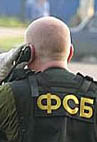
FSB agent

FSB agent

By IAN ALLEN | intelNews.org |
As of July 21, Russian postal services and Internet providers are required by law to provide Russian intelligence agents with on demand access to the dispatch information and content of private correspondence. This is stipulated in Order 65, which the Russian government and the Russian Ministry of Communications made public on July 6.  Apart from granting automatic communications inspection rights to officers of the Federal Security Service (FSB) and seven other intelligence and security organizations of the Russian state, the new law requires all Russian post office sorting facilities to set up “special rooms where security officers will be able to open and inspect private mail”. Additionally, all Internet service providers are now required to grant the FSB and other intelligence and security agencies complete access to their electronic databases. Read more of this post

News you may have missed #0037

  • Gambian Army chief accused of spying. A newspaper claims that the chief of Gambia’s armed forces, Lt. Colonel Sainey Bayo, who recently fled to the United States, did so while being “investigated for supplying sensitive state secrets to an unnamed Western country”.
  • US Secretary of State violates declassification statute. The latest historical records release of the Foreign Relations of the United States, which is the official record of US foreign policy, has failed once again to abide by a 1991 statute which requires the Secretary of State to publish records “not more than 30 years after the events recorded”.
  • Intelligence report says Canada is key cash source for Tamil Tigers. A Canadian intelligence report released under the country’s Access to Information Act claims that the Liberation Tigers of Tamil Eelam in Sri Lanka receive millions each year in backing from Canada’s Tamil diaspora.

Bookmark and Share

Spy services threaten South African democracy, warns researcher

Laurie Nathan

Laurie Nathan

By JOSEPH FITSANAKIS | intelNews.org |
A former member of South Africa’s ministerial Review Commission on Intelligence has warned that a steadily declining culture of accountability in South Africa’s spy services is threatening the country’s constitutional order. Laurie Nathan, who is currently a research fellow at the University of Cape Town and the London School of Economics, has written an article for Chatham House’s The World Today magazine, in which he summarizes the results of the Commission’s a study into the South African intelligence services. According to Nathan, the study found a “striking absence of executive policy on many critical intelligence issues” and “major weaknesses in control and oversight systems” of intelligence practices. Read more of this post

News you may have missed #0036

  • Hungary’s security head resigns in wake of spying scandal. Sandor Laborc has resigned as head of Hungary’s National Security Office (NBH) after NBH agents were caught spying on politicians.
  • Austria to try Kazakh spy for kidnap attempt. Austrian officials say they will put a suspected Kazakh spy, identified only “Ildar A.”, on trial for attempting to kidnap from Austria former Kazakh National Security Committee (KNB) chief Alnur Musaev last September. See previous intelNews reporting on the ongoing Austrian-Kazakh intelligence imbroglio.
  • Obama’s unwilling cyber czars. Barack Obama is expected to soon appoint a national cybersecurity adviser. But Andy Greenberg argues that the appointee’s name may not be as important as the names of those who have “politely declined” the role.

Bookmark and Share

US drone strikes inside Pakistan increasingly lethal, study finds [updated]

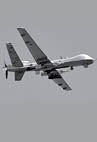
Predator drone

Predator drone

By IAN ALLEN | intelNews.org |
Strikes by CIA or Pentagon unmanned Predator drones in Pakistan have increased in frequency and lethality, according to a study published yesterday. Some may question the study, which was conducted on behalf of The Long War Journal, a news and analysis outlet edited by retired US Navy Intelligence Specialist D.J. Elliott, who maintains strong ties to the US Department of Defense [*] Bill Roggio, who also contributes to Bill Kristol’s neoconservative Weekly Standard. Despite its limitations, the report provides an almost unique public record of the frequency and tactical outcomes of the US airstrikes in Pakistan. Read more of this post

News you may have missed #0035

Bookmark and Share

Judge accuses CIA of fraud in 15-year court case

Judge Lamberth

Judge Lamberth

By JOSEPH FITSANAKIS | intelNews.org |
A 15-year old lawsuit against the CIA unexpectedly resurfaced yesterday, after a US federal judge accused the CIA attorneys of fraud and warned the former and current CIA leadership of serious legal sanctions. US District Judge Royce Lamberth said the CIA misled him on several occasions by falsely claiming that the “state secrets” clause applied to the case, which three consecutive US administrations have tried to bury. The case was filed in 1994 by retired Drug Enforcement Agency (DEA) officer Richard A. Horn, who claimed that CIA agents illegally wiretapped his conversations while he was stationed in Burma. It appears that, at the time, the US diplomatic representation in Burma and the CIA station in Rangoon were at loggerheads with the DEA. Read more of this post

Japanese intelligence history discussed in new books

By JOSEPH FITSANAKIS | intelNews.org |
In comparison to their Asian counterparts, Western intelligence organizations are oases of transparency and openness. In such Asian countries as Japan, governments have yet to recognize the existence –let alone operations– of their espionage agencies. This attitude is slowly changing in Japan, however, through a new trend of published books authored by former intelligence operatives. An article in Japan’s second-largest newspaper, Asahi Shimbun, available here in English, discusses this new trend, as well as some of the new information provided in several new memoirs by Japanese ex-intelligence professionals. One interesting aspect of postwar Japanese intelligence, revealed in such books, is its overwhelming concentration on Japan’s communist neighbors. Another is the substantial degree to which US intelligence agencies were involved in the day-to-day running of Japanese intelligence operations. Read more of this post

Wiretap whistleblower shunned by US Congress, media

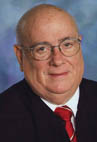
Mark Klein

Mark Klein

By IAN ALLEN | intelNews.org |
Those of you who have been following the ongoing revelations about STELLAR WIND, the National Security Agency (NSA) warrantless wiretapping scheme authorized by the Bush Administration in the wake of 9/11, will know about Thomas M. Tamm. Tamm was the Justice Department official who in 2005 first notified The New York Times about the existence of the project. But Tamm was not the only whistleblower in the case. He was joined soon afterwards by another insider, Mark Klein. Klein had just retired from AT&T as a communications technician when he read The New York Times revelations about STELLAR WIND. As soon as he read the paper’s vague description of the NSA project, Klein realized he had in his possession AT&T documents describing exactly how the company shared its customers’ telephone communications with the NSA, through a secret room at the AT&T Folsom Street facility in San Francisco. To this day, Klein remains the only AT&T employee to have come forward with information on STELLAR WIND. But, apparently, nobody cares. Read more of this post

News you may have missed #0034

Bookmark and Share

Post-9/11 torture sparked internal dissent, rift between FBI and CIA

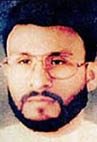
Abu Zubaida

Abu Zubaida

By IAN ALLEN | intelNews.org |
Citing interviews with almost “two dozen [anonymous] current and former US officials” The Washington Post has revealed crucial new background information on the CIA’s torture methodology after 9/11. The exposé, by reporters Joby Warrick and Peter Finn, helps piece together some of the complex puzzle of internal decisions that led US interrogators to resort to waterboarding and other forms of torture against “war on terrorism” detainees. The article focuses on Jim Mitchell and Bruce Jessen, two psychologists who were hired by the CIA to design an elaborate ten-stage harsh interrogation program (see previous intelNews report). According to The Washington Post, Mitchell, who was the program’s mastermind, told associates he had modeled it on the theory of “learned helplessness”, used by professional psychologists “to describe people or animals reduced to a state of complete helplessness by some form of coercion or pain, such as electric shock”. Read more of this post