Philippines summons US ambassador to protest negative intelligence report
February 28, 2018 1 Comment
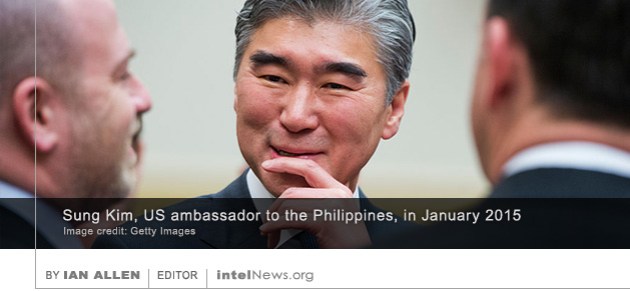 The United States ambassador to the Philippines has been summoned by Manila in response to the publication of an American intelligence report that described President Rodrigo Duterte as a threat to democracy. The report, published on February 13, represents a joint assessment of worldwide challenges to the interests of the United States. It is compiled annually by all 16 member agencies that make up the US Intelligence Community. This year’s report focused on the administration of President Duterte, who has led a self-styled “war on drugs, corruption and crime” in the Philippines since he assumed office in June 2016.
By the government’s own account, Duterte’s war has left more than 4,000 people dead in the past 18 months. But some human rights groups estimate the number of deaths at 11,000 or even higher. The US intelligence report notes that Duterte declared martial law in the Philippines’ southern region of Mindanao, which is expected to remain in place for most of 2018. It expresses concerns about rumors that the government may continue to impose martial law indefinitely and that it may extend it nationwide. It also expresses concern about Duterte’s prior statements that he intends to turn his government into a “revolutionary regime”.
At a press conference in Manila, President Duterte’s spokesman Harry Roque said that the US ambassador to the Philippines capital, Sung Kim, met with Salvador Medialdea on Tuesday. Medialdea is the president’s executive secretary, who is the highest-ranking official in Duterte’s office. According to Roque, Medialdea told the US ambassador that the Philippine embassy in Washington was prepared to “give US intelligence accurate information about the reality” of the political situation in the Philippines. He also informed Ambassador Kim that the Philippines president had respect for the rule of law. A statement issued by the US embassy in Manila said that Ambassador Kim informed Medialdea about “the nature of the […] report, which is based on widely available information”.
The meeting ended with the two officials reaffirming “the strength of the broad and deep bilateral relationship” between Washington and Manila. They also said that the US would continue to cooperate with the Philippines on political, economic and security issues. However, tensions between the two countries have been high all week. On Thursday, President Duterte accused the Central Intelligence Agency of funding Rappler.com, a very popular news and information website based in the Philippines and Indonesia, which he said was engaged in a systematic effort to undermine his administration.
► Author: Ian Allen | Date: 27 February 2018 | Permalink
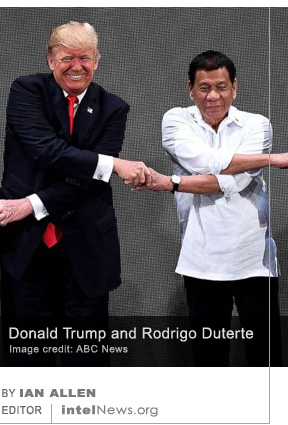 A wide-ranging assessment by the United States Intelligence Community views the President of the Philippines, Rodrigo Duterte, as a major threat to democracy and human rights in Southeast Asia. The report, published on February 13, represents a joint assessment of worldwide challenges to the interests of the United States. It is compiled annually by all 16 member agencies that make up the US Intelligence Community. This year’s report warns that democratic governance and human rights would continue to be “fragile” in 2018, because of the autocratic governing style of several national administrations. Many Southeast Asian governments were also corrupt and displayed nepotistic tendencies, says the report. It singles out the government of Myanmar, which has been widely criticized for its inhuman treatment of the country’s Muslim Rohingya minority. It also mentions the autocratic government of Thailand, which recently changed the country’s constitution, giving increased legislative powers to the country’s armed forces.
 ►►
►►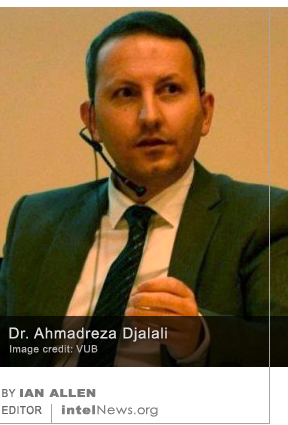 The government of Sweden has granted citizenship to an academic who is on death row in Iran for allegedly helping Israel kill Iranian nuclear scientists. Sweden’s Foreign Affairs Ministry confirmed on Saturday that Ahmadreza Djalali, who lives in Sweden and has lectured at Stockholm’s renowned Karolinska Institute, is now a Swedish citizen. IntelNews has
  Indian authorities have arrested an Indian Air Force officer for allegedly giving classified documents to two Pakistani spies on Facebook, who posed as women interested in him. The officer has been named as Arun Marwaha, a wing commander stationed at the Indian Air Force headquarters in Delhi. Marwaha, 51, is a para-jumping instructor who trains members of India’s Garud Commando Force —the Special Forces unit of the Indian Air Force. He was reportedly due to retire in 2019.
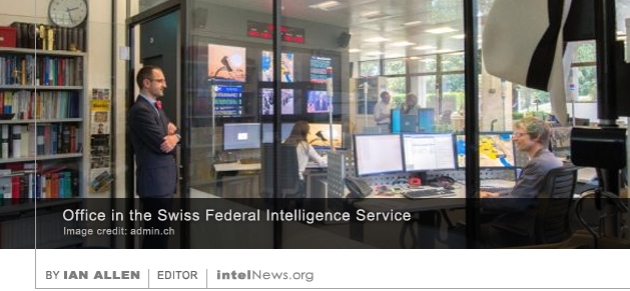 Officials in Switzerland say new laws enacted in recent months will help them change their country’s image as one of Europe’s most active spy venues. For decades, the small alpine country has been a destination of choice for intelligence officers from all over the world, who use it as a place to meet assets from third countries. For example, a case officer from Britain’s Secret Intelligence Service (MI6) will travel to Switzerland to meet her Algerian agent. She will exchange money and documents with him before she returns to Britain and he to Algeria, presumably after depositing his earnings into a Swiss bank account.
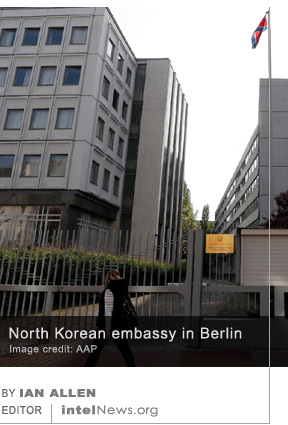 North Korea used its embassy in Berlin to acquire technologies that were almost certainly used to advance its missile and nuclear weapons programs, according to the head of Germany’s counterintelligence agency. For many decades, Pyongyang has used a sophisticated international system of procurement to acquire technologies and material for its conventional and nuclear weapons programs. These secret methods have enabled the country to evade sanctions placed on it by the international community, which wants to foil North Korea’s nuclear aspirations.
 ►►This website has
 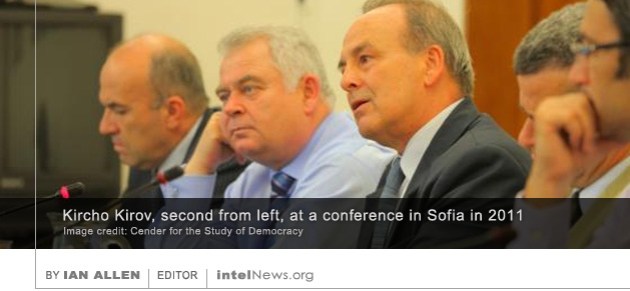 A former director of Bulgaria’s intelligence service, who headed the agency for nearly a decade, has been jailed for embezzling millions of dollars from public funds. General Kircho Kirov, 67, was director of the Bulgarian National Intelligence Service (NIS) from February 2003 until January 2012. After stepping down from his post he was appointed national security advisor to Bulgaria’s Prime Minister, Boiko Borissov. But he soon fell out with Borrisov and was fired after just two months on the job. Now Borissov’s administration has
 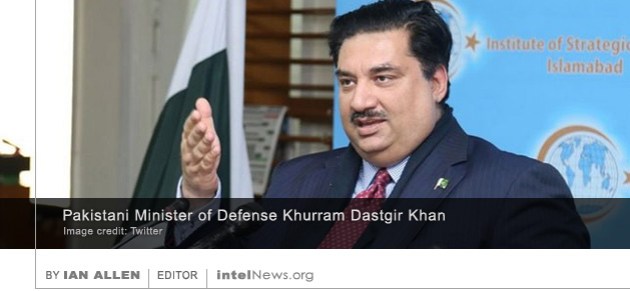 Pakistan said on Tuesday that it had suspended military and intelligence cooperation with the United States in the wake of Washington’s decision to stop security assistance to Pakistan. On Tuesday, Pakistan’s Minister of Defense, Khurram Dastgir Khan, said that his country had terminated all cooperation with the US in the areas of defense and intelligence. He said that the move was a response to the announcement by US President Donald Trump last week that Washington would stop providing security assistance to Pakistan. American officials stated that the change in policy took place because Pakistan had allegedly deceived America in the global war on terrorism. On Thursday last week, the President Trump
  A man who attended the “Unite the Right” rally in Charlottesville, Virginia, with members of a neo-Nazi organization, has been charged with terrorism offences after he tried to derail a passenger train. Taylor M. Wilson, of St. Charles, Missouri, was arrested by federal law enforcement officials on October 22, after he
 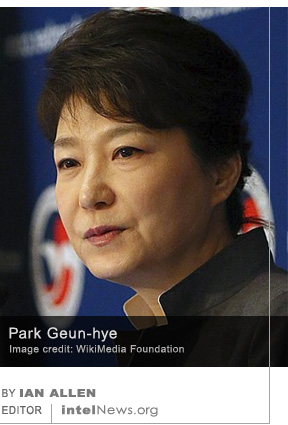 South Korea’s disgraced former president, Park Geun-hye, has been charged with accepting bribes amounting to millions of dollars from the country’s spy agency, according to reports. Park made history in 2013, by becoming the first woman president in South Korean history. However, almost as soon as she assumed office, her administration became embroiled in successive corruption scandals. By 2016, Park’s presidency had been brought to a standstill due to mass protests urging her removal from power, while increasing numbers of officials and administrators were refusing to work with her. She was eventually impeached in 2017, after the Constitutional Court of Korea found that she had violated the country’s laws by promoting the interests of personal friends and private corporations in return for cash and favors. She is currently in custody awaiting trial for 18 different charges, including abuse of power, coercion, blackmail and bribery.
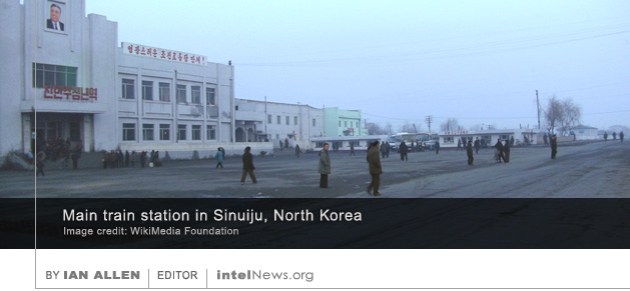 A North Korean nuclear scientist who defected to China but was involuntarily sent back to North Korea in November reportedly killed himself in his North Korean cell hours before he was due to be interrogated. Information about the scientist’s alleged suicide was issued on Thursday by Radio Free Asia (RFA), a multilingual news service based in Washington, DC, which is funded by the United States government. The service said its reporters spoke to an anonymous source in North Hamgyong province, North Korea’s northernmost region that borders China. The source identified the late scientist as Hyun Cheol Huh, but cautioned that this may not be his real name, because the North Korean security services are known to “use […] fake names when referring to important persons” in their custody.
 The Russian hacker group that targeted the United States presidential election in 2016 also attacked hundreds of reporters around the world, most of them Americans, an Associated Press investigation shows. The group is often referred to in cyber security circles as Fancy Bear, but is also known as Pawn Storm, Sednit, APT28, Sofacy, and STRONTIUM. It has been linked to a long-lasting series or coordinated attacks against at least 150 senior figures in the US Democratic Party. The attacks occurred in the run-up to last year’s presidential elections in the US, which resulted in a victory for Donald Trump. The hacker group’s targets included Democratic Party presidential candidate Hillary Clinton and her campaign chairman John Podesta. But its hackers also went after senior US diplomatic and intelligence officials, as well as foreign officials in countries like Canada and the Ukraine.






 intelNews.org
Argentina’s spy chief allegedly implicated in Brazil money-laundering scandal
March 2, 2018 Leave a comment
On Thursday, the car wash probe appeared to implicate for the first time a senior state official in Argentina. The figure at the center of the allegations is Gustavo Arribas (pictured), the Director General of the country’s Federal Intelligence Agency (AFI). A former sports tycoon, who made his fortune as a footballers’ representative, he surprised many in December 2015 when he was appointed spy director by Argentina’s President, Mauricio Macri. Arribas has financial dealings with Brazil, where he owns real estate. But these properties may become liabilities after Arribas was accused by Victor Ferreira, a federal police official and Lava Jato investigator, of having received nearly $1 million in a money-laundering scheme involving fraudulent invoices submitted for financial compensation to the Brazilian government by bogus companies. The money was allegedly sent to Arribas via a wire transfer that was routed to him through a bank in Hong King. The transfer had not been approved by the Central Bank of Brazil, which is supposed to supervise all overseas money transfers involving government contracts.
Brazilian prosecutors served several suspects across Brazil with search warrants on Thursday, in an attempt to uncover more information about the alleged illegal money transfer. Arribas, however, issued a statement later on the same day, in which he denied any connection with Lava Jato and said that allegations against him were motivated by malice. In 2016, Arribas was accused in Argentina of having received nearly $600,000 from corrupt officials of Brazilian construction company Odebrecht, which is implicated in operation car wash. However, he was cleared by a federal judge, who threw the case out of court. In his statement issued on Thursday, Arribas stressed that he had not been officially charged with any crime in Argentina or Brazil.
► Author: Ian Allen | Date: 02 March 2018 | Permalink
Filed under Expert news and commentary on intelligence, espionage, spies and spying Tagged with AFI (Argentina), Argentina, Brazil, corruption, Gustavo Arribas, News, Operation Carwash, Victor Ferreira