Two dozen US diplomats in Vienna show signs of ‘Havana syndrome’, report claims
July 19, 2021 3 Comments

ABOUT TWO DOZEN PERSONNEL of the United States embassy in the Austrian capital Vienna have been experiencing unexplained neurological symptoms that are similar to the so-called “Havana syndrome”, a mysterious medical condition that continues to puzzle brain scientists. The condition is believed to have afflicted at least 130 American and Canadian diplomats around the world in recent years.
The matter first came to light in 2017, when Washington recalled the majority of its personnel from its embassy in Havana, Cuba, and at least two more diplomats from its consulate in the Chinese city of Guangzhou. The evacuees reported experiencing “unusual acute auditory or sensory phenomena” and hearing “unusual sounds or piercing noises”. Subsequent tests showed that the diplomats suffered from sudden and unexplained loss of hearing, and possibly from various forms of brain injury.
Now a new report by The New Yorker’s Adam Entous claims that “about two dozen” personnel at the US embassy in Vienna have shown Havana syndrome symptoms “since Joe Biden took office” in January of this year. If accurate, this number of incidents would mean that the Austrian capital is now the largest Havana syndrome location in the world after Cuba. In his report, Entous cited a spokesman for the US Department of State, who said that department was “vigorously investigating” reports of “possible unexplained health incidents” among US diplomats and other embassy personnel in Vienna. The expression “unexplained health incidents” is the official term that the US government uses to refer to what is informally known as the Havana syndrome.
Meanwhile, the Reuters news agency reported a statement issued on Saturday by the Austrian Federal Ministry for European and International Affairs. It said the ministry was “working with the US authorities on jointly getting to the bottom of this”, adding that the Austrian government took “these reports very seriously”, as they potentially affected “the safety of the diplomats sent to Austria and their families”, which was a “top priority” for the Austrian government.
► Author: Joseph Fitsanakis | Date: 19 July 2021 | Permalink
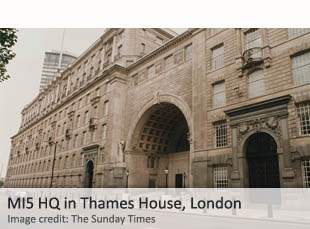 Nearly 20 years after the terrorist attacks of September 11, 2001, it is time for Western intelligence agencies to refocus on stopping covert operations by foreign state actors, according to the director of Britain’s domestic intelligence agency. General Ken McCallum is a 20-year career officer in the Security Service (MI5), Britain’s counter-terrorism and counter-intelligence agency. He assumed the position of director in April of 2020, amidst the coronavirus pandemic.
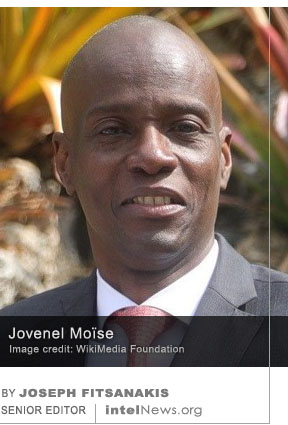 The United States Drug Enforcement Administration (DEA) has said that at least one of the assailants who killed Haiti’s president, Jovenel Moïse, last week, had been its confidential source in the past. It also appears that one of the middlemen of the operation is a Haitian-born pastor based in the US state of Florida. It was he, according to Haitian police, who hired the assassins through a Venezuelan security company headquartered in Florida. However, this is disputed by the alleged middleman himself, who claims he was “duped”.


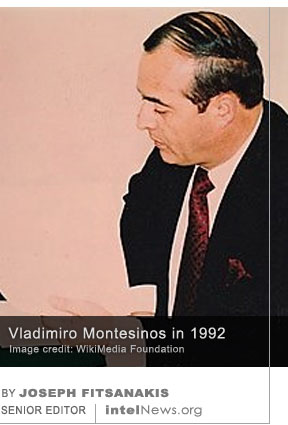 AUDIO RECORDINGS RELEASED LAST week appear to show Peru’s imprisoned former spy chief, Vladimiro Montesinos, trying to organize bribes for judges in an effort to alter the outcome of the recent presidential election. From 1990 to 2000, Montesinos headed Peru’s intelligence service, Servicio de Inteligencia Nacional (SIN). He worked in close cooperation with his political patron, Alberto Fujimori, who is currently serving a lengthy prison sentence for corruption and human-rights abuses. Like his boss, Montesinos is currently serving a 25-year prison sentence for setting up a sophisticated network of illegal activities during his SIN tenure. The crimes he committed include drug trafficking, bribing, extortion, as well as embezzlement.
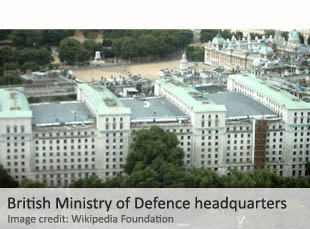 Sensitive documents belonging to the British Ministry of Defense were found by a member of the public behind a bus stop last week, in what the BBC described as “a major embarrassment” for the British government. The documents number 50 pages; most are marked “official sensitive”, which is a low level of classification, but it means they are still subject to security requirements.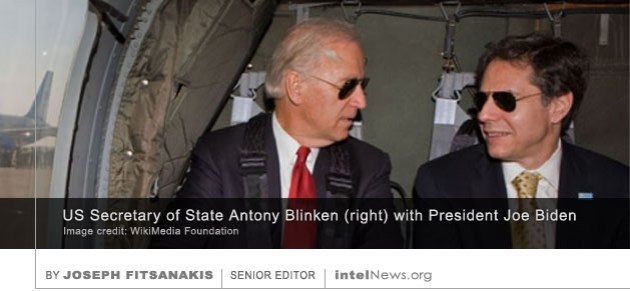









Israeli AG investigating claims that ex-Mossad chief had extra-marital relationship
July 20, 2021 Leave a comment
Cohen, 59, with four children, assumed the directorship of the Mossad in 2015. He is a 35-year veteran of Israel’s pre-eminent spy agency, which he left briefly in 2013 to chair Israel’s National Security Council and advise the prime minister. He is known as one of former Israeli Prime Minister Benjamin Netanyahu’s most trusted advisers. Cohen grew up in Jerusalem and became a fighter pilot before joining the Mossad. He gradually rose through the agency’s ranks to become its deputy director. Prior to that role, he led for several years the Mossad’s Department of Collections, which handles operations officers around the world. He then led the agency’s Political Action and Liaison Department, which is tasked with facilitating cooperation between the Mossad and foreign intelligence agencies.
According to Israel’s privately owned Channel 13 television, Israel’s Ministry of Justice is currently handling an official complaint, according to which Cohen has been having “a close relationship” for the past two years with a woman who is not his wife, and who is believed to be a flight attendant. Additionally, the complaint claims that Cohen shared classified information with his alleged mistress during the course of their affair. According to Channel 13, the complaint has been handed over to the Attorney General of Israel, Avichai Mandelblit, who is reviewing it.
The Channel 13 report said Cohen has strongly denied the allegations, saying that “there is no flight attendant [and] there is no close relationship”. The former Mossad chief added that he had not been contacted by Attorney General Mandelblit about the complaint, or for any other reason. The television station gave no further information about the alleged complaint, the identity of the flight attendant, or the state of the Attorney General Mandelblit’s investigation.
Earlier this month, it was announced that Cohen would head the Israel-based investment arm of SoftBank, a Japanese-headquartered multinational conglomerate holding company, which specializes in investing in firms in the financial, energy and technology sectors of the economy.
► Author: Joseph Fitsanakis | Date: 20 July 2021 | Permalink
Filed under Expert news and commentary on intelligence, espionage, spies and spying Tagged with counterintelligence, extramarital affairs, Israel, Mossad, News, Yossi Cohen