South Korea ends intelligence pact with Japan as bilateral relations enter crisis mode
August 23, 2019 Leave a comment
 South Korea has formally terminated an intelligence-sharing agreement with Japan, as relations between the two countries have reached their lowest point since they formally recognized each other in 1965. Seoul’s decision is the latest move in a tit-for-tad row sparked by the use of forced Korean labor by Japan in World War II. South Korea is demanding financial compensation for the use of slave labor, including sex slaves, by Japanese occupation troops during Korea’s annexation by Japan from 1910 until 1945. Last month, Tokyo responded to a mass boycott of Japanese goods by South Korean consumers by limiting the export of electronics to be used in South Korea’s ship-building industry. A few days ago, Tokyo also removed South Korea from the list of countries with the ability to fast-track their exports to Japan.
Earlier this week, the foreign ministers of South Korea and Japan met in China in an attempt to bridge the differences between the two countries. But the negotiations failed. This morning South Korea responded to Japan’s latest move by refusing to renew the General Security of Military Information Agreement (GSOMIA). This treaty between Japan and South Korea, which was due to be renewed today, facilitates the sharing of intelligence about North Korea’s missile and nuclear programs. But the South Korean government announced it would not renew the agreement, following a decision taken by the country’ National Security Council. The country’s President, Moon Jae-in, has agreed with the decision. A South Korean government spokesman said South Korea had determined that maintaining “an agreement we signed with the aim of exchanging military information which is sensitive to security […] would not serve our national interest”.
Japan called South Korea’s decision to scrap GSOMIA “extremely regrettable” and said that it “completely misreads the security situation” in the region. It added that it would continue to cooperate with South Korea “where cooperation is necessary”. Late last night, Tokyo summoned the South Korean ambassador to Japan to voice its disapproval of Seoul’s decision. Meanwhile there has been no response from the United States government, which was the architect of GSOMIA in 2016. Washington worked closely with the two countries for over 6 years to convince them to agree to exchange intelligence, despite their mutual animosity. American observers have warned that the termination of GSOMIA “threatens real-time information sharing between the United States, Japan and South Korea to monitor North Korean nuclear activity”.
► Author: Joseph Fitsanakis | Date: 23 August 2019 | Permalink
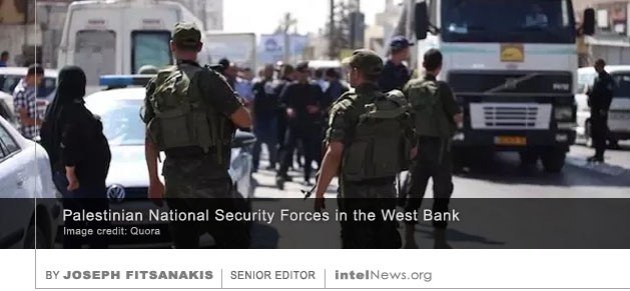 A leaked report authored by the Palestinian National Authority’s intelligence service warns that economic depression and lack of opportunity may soon spark a popular uprising in the occupied territories. The report was submitted to the PNA’s leadership in early August. It was accessed by Yedioth Ahronoth, Israel’s highest-selling newspaper, which is based in Tel Aviv. It
 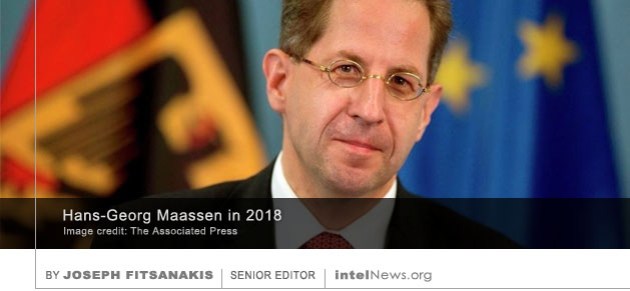 The successor to Angela Merkel in the leadership of Germany’s ruling Christian Democratic Union (CDU) urged the removal from the party of the country’s former spy chief for expressing far-right views. But she later appeared to retract her comments. Hans-Georg Maassen led Germany’s Federal Office for the Protection of the Constitution (BfV) from August 2012 until his removal last September. His BfV career was abruptly
 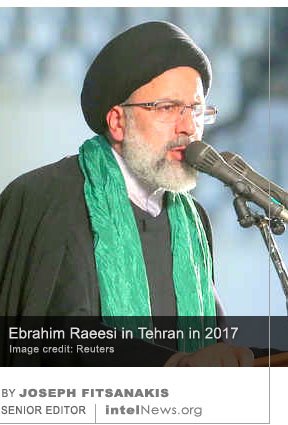 A senior Iranian intelligence official has confirmed widespread rumors that an unprecedented anti-corruption campaign is taking place at the top echelons of Iran’s all-powerful judiciary, with some senior figures already in prison. The Iranian judiciary is one of the most powerful and secretive institutions in the Islamic Republic. It is nominally supervised by the Iranian Justice Ministry, but its senior officials, including the chief justice (the head of the judiciary), are appointed directly by Iran’s Supreme Leader Ali Khamenei. It follows that the judiciary has been a deeply conservative institution throughout the country’s existence, and especially after the 1979 Islamic Revolution.
 Foreign spies are known to pose as journalists, which is why journalists should not be exempted from national security investigations, according to testimony by a senior Australian counterintelligence official. The testimony was given on Wednesday at a public hearing held in the Australian parliament to address a
  The state-owned energy sector of Iran, one of the world’s most lucrative, has become a major target of international espionage since the imposition of new sanctions by the United States this year. The purpose of Washington’s sanctions is to limit the Islamic Republic’s ability to export energy, and by doing so end the country’s reliance on its primary source of income. It is estimated that Tehran’s energy exports have fallen by about 80 percent during the past year, and may continue to fall if the US has its way. This means that American and Iranian intelligence agencies are currently engaged in an intense war of espionage that concentrates on what remains of Iran’s oil exports. Iran continues to entice international buyers by selling energy at below-market prices, while sales are facilitated through the use of throwaway bank accounts that are difficult to trace. Exports are then carefully smuggled into overseas destinations through a variety of means.
 France allowed Palestinian militants to operate freely on its soil in exchange for not carrying out terrorist attacks there, according to the former director of France’s domestic security service. The alleged deal was struck between the French government and a die-hard Palestinian militant group known as the Abu Nidal Organization, or ANO. The group’s official name was Fatah – The Revolutionary Council, but it was usually referred to by the name of its founder and leader, Abu Nidal. The group was formed in 1974 after a split in Fatah, the Palestinian armed group led by Yasser Arafat. Abu Nidal (real name Sabri Khalil al-Banna) accused Arafat and other senior officials of Fatah and the Palestine Liberation Organization (PLO) of being conciliatory toward Israel. Eventually Abu Nidal moved to Iraq and declared war on Fatah and the PLO, accusing them of betraying the Palestinian cause.
 The United States Central Intelligence Agency plans to retain a strong presence on the ground in Afghanistan, despite reports that American troops may soon be leaving the country following a deal with the Taliban. Several news outlets
 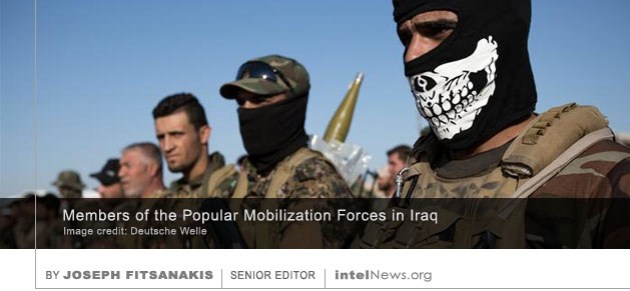 A powerful alliance of about 50 Shiite militias, who helped Iraq defeat the Islamic State, is resisting calls by the Iraqi government to surrender its weapons and join civilian life, according to observers on the ground. Much of the territory captured from the Islamic State (known also as the Islamic State of Iraq and Syria, or ISIS) in northern Iraq is currently controlled by the Popular Mobilization Forces (PMF), a collection of around 40 different Shiite militias consisting of over 150,000 armed fighters. The militias began to form in the summer of 2014, after Sayyid Ali al-Husseini al-Sistani, the spiritual leader of the Iraqi Shiite community, issued a fatwa (religious degree) that called or the destruction of ISIS. The Iranian-supported PMF proved instrumental in the territorial defeat of ISIS. However, the group’s leadership is ideologically aligned with Iran, and many of its members will not cooperate with the Iraqi Armed Forces, because of the latter’s proximity to the United States.
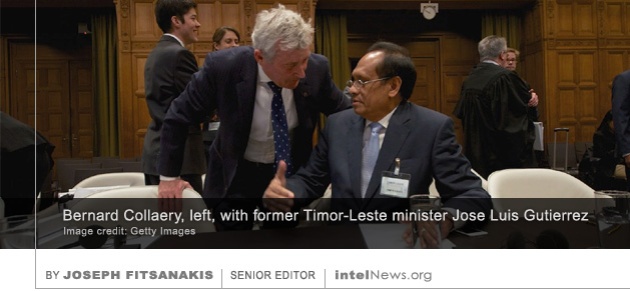 An Australian former intelligence officer will plead guilty to revealing an Australian spy operation against the impoverished nation of East Timor, which prompted international outcry and damaged Canberra’s reputation. IntelNews has covered the case of the former intelligence officer, known only as “Witness K.”
 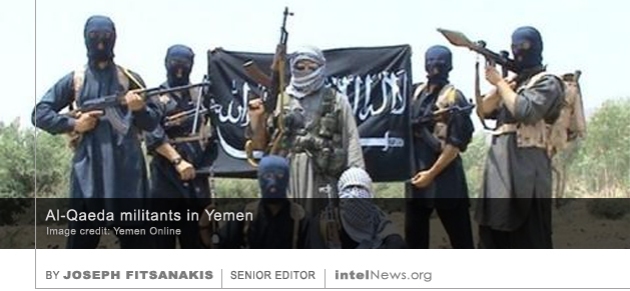 Al-Qaeda and its affiliate groups continue to be the most persistent transnational threats to the security of the West, according to experts who spoke after the alleged death of Osama bin Laden’s son, Hamza. Last week The New York Times
 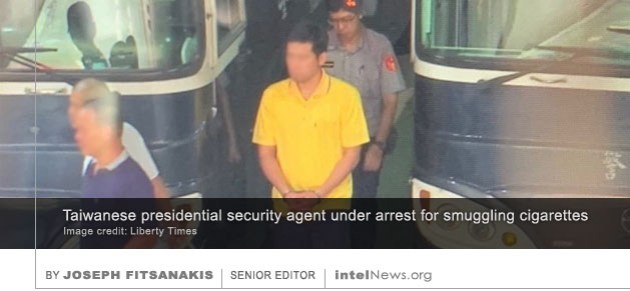 At least 70 members of Taiwan’s presidential security detail used the president’s official trips abroad to smuggle thousands of cigarettes into the country, it has been announced by Taiwan’s’s spy chief. According to
  Despite its military defeat in the Middle East, the Islamic State retains the ability to launch “complex international attacks” and will likely do so this year, according to a new report by a United Nations monitoring team. These attacks will occur in “unexpected locations” around the world, says the
  Several countries are behind organized efforts to influence electoral politics in the United States, with Russia being one among a growing list of culprits, according to experts.






 intelNews.org
Russian deep-cover spy speaks to Western media for first time
August 26, 2019 Leave a comment
Last week, Vavilova, who now works as a private consultant in Moscow, spoke to Shaun Walker, Russia correspondent for British newspaper The Guardian. It was the first face-to-face encounter between a Western news outlet and one of the 10 outed Russian ‘illegals’. The reason for the interview was Vavilova’s upcoming book, A Woman Who Can Keep Secrets (in Russian), which presents a fictionalized account of her career and marriage to Bezrukov. It offers rare insights into the longstanding Russian ‘illegals’ program, which dates back to Soviet times. The book’s two protagonists meet as students in Siberia, where they are eventually recruited by the KGB, and spend several years training in languages and tradecraft. Part of their training includes living in a KGB house modeled after suburban American homes, so that they can get used to domestic life in the West. This account is believed to include true elements of the lives and careers of Vavilova and Bezrukov. The two married in Russia but moved to Canada separately, using fake Canadian identities. They pretended to meet for the first time in Canada, where they ‘dated’ and eventually ‘married’ before moving to the US to begin their espionage work.
Vavilova told Walker that the popular view of the 10 Russian illegals as having achieved little of intelligence value during their time in the US is misguided. “Of course I can’t talk about it”, she said, “but I know what we were doing and it doesn’t matter what others say”. She also said that training for illegals involved learning how to handle guns and using martial arts. But she added that these skills were never used in the field and were mostly good for building self-confidence —especially for missions that took place under cover of night in America, where street crime was far more prevalent than in Russia during the Cold War. Walker said that Vavilova’s English remains perfect, as does her husband’s. Like Vavilova, Bezrukov now works as a consultant and also teaches at a university in Moscow. Vavilova refused to discuss current Russian politics in her interview.
► Author: Joseph Fitsanakis | Date: 26 August 2019 | Permalink
Filed under Expert news and commentary on intelligence, espionage, spies and spying Tagged with Andrei Bezrukov, book news and reviews, Elena Vavilova, human intelligence, HUMINT, Russia, Russian illegals program spy ring