EgyptAir Flight MS804: Was it a terrorist attack?
May 19, 2016 3 Comments
 In the early hours of Thursday, May 19, EgyptAir, Egypt’s national airline carrier, announced via Twitter that flight MS804 had vanished from the radar. The regularly scheduled flight had departed Paris, France, on time at 11:09 p.m. and had been scheduled to arrive in Egyptian capital Cairo at 3:05 local time. The airplane, an Airbus A320-232, was carrying 59 passengers and 10 crew. According to reports, the airplane disappeared over the eastern Mediterranean, southeast of the island of Crete.
Was this a terrorist attack? It will be several hours before this question can be conclusively answered. However, there are some early indicators that can help shed some light on the incident.
1. What has happened to the plane? The plane has almost certainly crashed into the sea. It has now been five hours since it disappeared from the radar. The eastern Mediterranean is not like the vast Indian Ocean, where Malaysia Airlines Flight 370 literally disappeared in March 2014, never to be found. In the case of EgyptAir MS804, if the plane had landed at a regional airport, the sighting would have been reported immediately —even if it was in rebel-held Syrian regions, or Islamic State-controlled territory in Iraq.
2. If the plane has indeed crashed, what brought it down? The possibility of a mechanical failure cannot be excluded. However, the plane is relatively new; it was built in France in 2003 and is less than 13 years old, which may mean that a serious mechanical failure is relatively unlikely. Additionally, weather conditions over the eastern Mediterranean were reportedly “clear and calm” at the time when the plane vanished from the radar. Last but not least, it must be stressed that there was reportedly no distress call made by the pilots or crew before the flight disappeared from radar screens. Which brings us to the next question, namely:
3. Was this a terrorist attack? American and European intelligence agencies, including France’s own DGSE, have warned repeatedly in previous weeks that the Islamic State was “planning new attacks […] and that France [was] clearly targeted”. The Islamic State is currently one of very few terrorist organizations that have the technical expertise and momentum to compromise security measures at a European airport. Moreover, the Islamic State has declared war on France, has attacked the country numerous times, and has stated repeatedly that it intends to continue and even intensify its efforts. The group has remained silent since early this morning, when EgyptAir announced the disappearance of flight MS804. However, it typically waits for several hours, and sometimes days, before assuming responsibility for high-profile attacks.
4. If it was a terrorist attack, how was the plane brought down? It is important to note that the plane is believed to have been flying at 37,000 feet when it vanished from radar screens. This means that, assuming that a non-state actor caused the aircraft’s disappearance, the attack must have been perpetrated from inside the plane. At least three of the 10-member crew are believed to be armed security guards. If that is the case, a team of hijackers would have to have been sizeable enough and sufficiently armed to overpower three armed security guards. What is more likely is that a bomb may have been planted on the plane, either in Paris or Cairo (the plane was returning to Cairo, having left from there for Paris earlier on Wednesday). The last time that the Islamic State assumed responsibility for downing an airliner, it did so by planting a bomb aboard the plane with the help of a ground worker in Egypt who had secretly joined the militant group.
5. If it was a terrorist attack, what does it mean? Should the Islamic State assume responsibility for this attack, it will make it increasingly difficult for France —and possibly other Western European nations— to resist putting boots on the ground in Iraq and Syria. Moreover, if a bomb was planted on the plane at Paris’ Charles De Gaulle airport, it will mean that the Islamic State, or possibly another militant group, has found a way to beat what are perhaps the most stringent airline travel security measures in all of Europe. It could be that the group behind this possible terrorist attack has found a unique and thus far unforeseen way to defeat the latest technological measures used to secure airline travel. Such a possibility could spell even more massive changes for the world’s airline industry, which is already reeling from all sorts of financial and administrative pressures in the post 9/11 era.
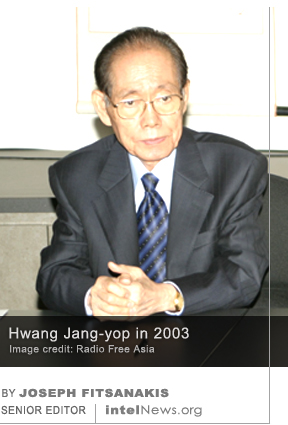 An appeals court in Seoul has upheld the conviction of a South Korean member of a spy cell that planned to assassinate the most senior North Korean defector to the South. The man, identified in media reports only by his last name, Park, is a South Korean citizen who allegedly helped a North Korean spy cell “based in China” plan the assassination of Hwang Jang-yop. In 1997, Hwang caused a sensation on both sides of the border when he defected to the South. A former secretary of the Korean Workers’ Party, Hwang was Pyongyang’s primary theorist and the ideological architect of juche, the philosophy of self-reliance, which is North Korea’s officially sanctioned state dogma. He was also believed to have ideologically mentored North Korean Supreme Leader Kim Jong-il, the father of the country’s current Supreme Leader, Kim Jong-un. Until his
  The new acting president of Brazil briefed American diplomats on sensitive political matters in 2006, according to cables published by the international whistleblower website WikiLeaks. Michel Temer is leader of the Brazilian Democratic Movement Party, known as PMDB. Although it is one of Brazil’s largest political parties, the PMDB has been unable to muster enough electoral support to govern the country on its own. As a result, under Temer’s leadership, the PMDB has been a partner of every governing coalition in Brazil since 1995. During the administration of leftwing President Dilma Rousseff, Temer held the post of Vice President.
 The arrest of Nelson Mandela in 1962, which led to his 28-year incarceration, came after a tip from the United States Central Intelligence Agency, according to an American diplomat who was in South Africa at the time. At the time of his arrest, Mandela was the head of uMkhonto we Sizwe (MK), an organization he founded in 1961 to operate as the armed wing of the anti-apartheid African National Congress (ANC). But the white minority government of South Africa accused Mandela of being a terrorist and an agent of the Soviet Union. The US-Soviet rivalry of that era meant that the ANC and its leader had few supporters in America during the early stages of the Cold War.
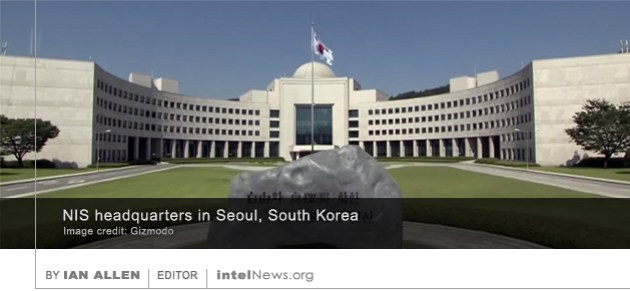 The intelligence agency of South Korea has admitted it made an error when it claimed earlier this year that North Korean authorities had executed one of the regime’s most prominent military figures. On February 10, South Korean newspapers printed a series of articles suggesting that Pyongyang had executed General Ri Yong-gil, who led the Korean People’s Army (KPA), holding post that was equivalent to the United States’ chairman of the Joint Chiefs of Staff. The articles said at the time that the information about General Ri’s execution came directly from the National Intelligence Service (NIS), South Korea’s primary external spy agency. The general had allegedly been executed after being found guilty of “factionalism, abuse of power and corruption”. The reports added that General Ri had turned into an alcoholic and was in poor health as a result. Speculation as to the reason for General Ri’s alleged execution brought up the possibility that he had led an opposition faction within the KPA. This, in turn, led some analysts to speculate that the administration of Kim Jong-un was close to collapse.
 Over 50 journalists and their contacts were systematically spied on by the Polish intelligence services between 2007 and 2015, according to the former director of an anti-corruption watchdog. Until 2009, Mariusz Kamiński led the Central Anti-Corruption Bureau, which was set up by the office of the Polish Prime Minister in 2006 to address corruption in the country. The body is also responsible for monitoring the operations of Poland’s intelligence services, including the Internal Security Agency (ABW).
 An expanding alliance between two of the most powerful armed groups in Afghanistan, the Taliban and the Haqqani Network, is reshaping regional power dynamics and possibly altering the course of the ongoing Afghan war. It was last summer when it was announced that Sirajuddin Haqqani, the leader of the notorious Haqqani Network based in southeastern Afghanistan, had been appointed deputy leader of the Taliban. The move, which brought together two groups that traditionally acted autonomously, was seen as largely symbolic at the time. But observers are now suggesting that the two groups are actively integrating more than ever before, and that their increasing cooperation is drastically changing the dynamics of the bloody Afghan war.
 tactical priorities.
 system, job centers, taxation offices and community militias. The administrative and military efficiency of the Haqqani Network only adds to the strength of the Taliban and places them in a renewed position of power vis-à-vis Kabul.
 The two sons of a Russian couple, who were among 10 deep-cover spies arrested in the United States, have given an interview about their experience for the first time. Tim and Alex Foley (now Vavilov) are the sons of Donald Heathfield and Tracey Foley, a married couple arrested in 2010 under Operation GHOST STORIES, a counterintelligence program run by the US Federal Bureau of Investigation. Following their arrest, their sons, who had grown up thinking their parents were Canadian, were told that they were in fact Russian citizens and that their real names were Andrei Bezrukov and Elena Vavilova. Their English-sounding names and Canadian passports had been
 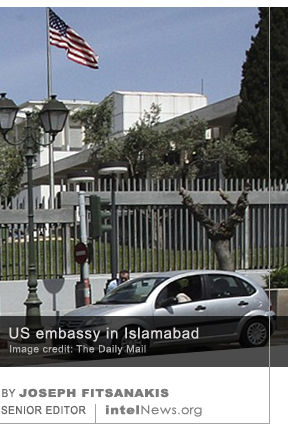 A leading article in The Washington Post suggests that the United States Central Intelligence Agency suspected that its most senior officer in Pakistan was poisoned by the host country’s intelligence services, in an attempt to kill him. The CIA pulled its station chief from Islamabad in the summer of 2011, two months after Operation NEPTUNE SPEAR, which saw the killing in Abbottabad of al-Qaeda founder Osama bin Laden. The CIA official, who has since been identified as Mark Kelton, acted as the senior US intelligence representative in the Asian country. He had assumed the post, which was supposed to last at least two years, only seven months earlier. His abrupt removal raised questions, which were informally answered by Langley. There were rumors that Kelton’s return to the US was health-related, but that the decision to replace him was also affected by his extremely poor relations with the Inter-Services Intelligence (ISI) directorate, Pakistan’s powerful spy service.
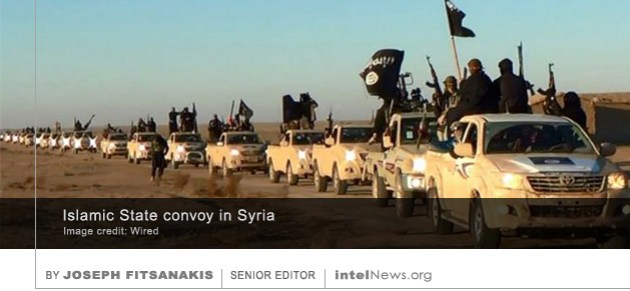 The two main warring parties in the Syrian Civil War, the government of Syria and the Islamic State, frequently contact one another in pursuit of commercial and military deals, according to internal Islamic State documents. British-based news agency Sky News said on Monday that it had acquired “secret Islamic State files”, which included handwritten orders to operatives sent directly from officials at the organization’s headquarters in Raqqa, Syria. The group said it received the documents from a regional branch of the Free Syrian Army (FSA), a largely secular armed opposition group that was formed in 2011 by defectors from the Syrian Armed Forces. The FSA unit in Raqqa left the Syrian city once it was occupied by the Islamic State, and is currently based in Turkey. One of the group’s core preoccupations is assisting Islamic State defectors in their efforts to escape from Raqqa and reach Turkey. It was through these defectors, according to Sky News, that the secret Islamic State documents were acquired.
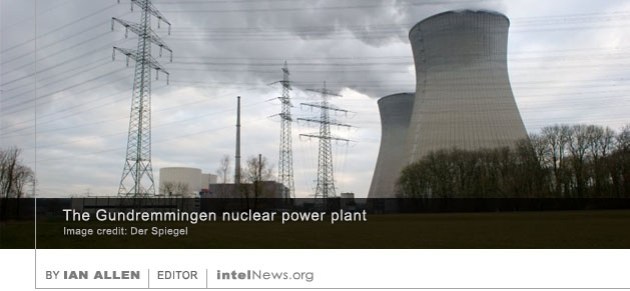 The computers of a nuclear power plant in southern Germany have been found to be infected with computer viruses that are designed to steal files and provide attackers with remote control of the system. The power plant, known as Gundremmingen, is located in Germany’s southern district of Günzburg, about 75 miles northwest of the city of Munich. The facility is owned and operated by RWE AG, Germany’s second-largest electricity producer, which is based in Essen, North Rhine-Westphalia. The company provides energy to over 30 million customers throughout Europe.
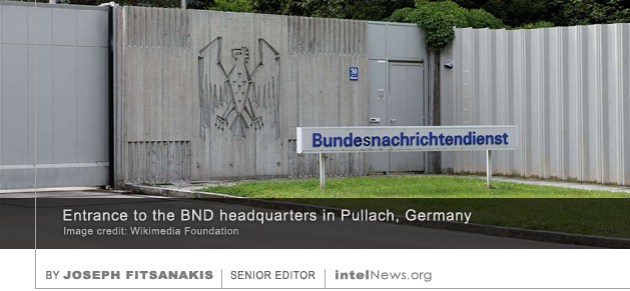 The head of Germany’s foreign intelligence agency has been removed from his post in a move described by observers as surprising. Gerhard Schindler, 63, had led Germany’s Federal Intelligence Service, known as Bundesnachrichtendienst, or BND, since 2012. Founded 60 years ago with direct input from the United States Central Intelligence Agency, the BND is today responsible for collecting intelligence abroad in the service of German national interests. Headquartered in the southern German city of Pullach, near Munich, the BND is directly subordinate to the office of German Chancellor Angela Merkel.
 An appeals court in Portugal has ruled that a former officer of the Central Intelligence Agency is to be extradited to Italy, where she faces charges of helping kidnap a man as part of a secret operation sponsored by the United States government. Sabrina De Sousa, 59, was an accredited diplomat stationed at the US consulate in Milan, Italy, in 2003, when a CIA team kidnapped Hassan Mustafa Osama Nasr from a Milan street in broad daylight. Nasr, who goes by the nickname Abu Omar, is a former member of Egyptian militant group al-Gama’a al-Islamiyya, and was believed by the CIA to have links to al-Qaeda. Soon after his abduction, Nasr was renditioned to Egypt, where he says he was brutally tortured, raped, and held illegally for years before being released without charge.
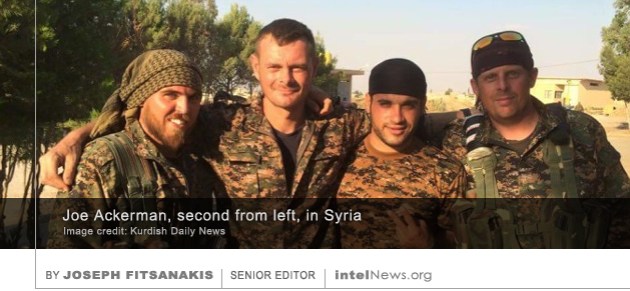 Two British and one Irish citizen, who fought with Kurdish units against the Islamic State in Iraq and Syria, but were imprisoned in Iraqi Kurdistan while they were trying to return to Europe, have been freed. The three men are Joshua Molloy, from County Laois in the Republic of Ireland, Jac Holmes from Bournemouth, England, and Joe Ackerman (pictured), from the West Yorkshire city of Halifax in England’s northern region. All three joined Kurdish militias and saw action in Syria and Iraq in recent months.






 intelNews.org
Terrorism most likely cause of EgyptAir disaster, despite no ‘smoking gun’
May 20, 2016 by Joseph Fitsanakis 5 Comments
On Thursday, Egypt’s Minster of Aviation, Sherif Fathi, told reporters that, when carefully weighing what is known about the plane’s disappearance, “the possibility of having a different action or a terror attack is higher than the possibility of having a technical failure”. He was soon joined by Alexander Bortnikov, Director of Russia’s Federal Security Service, the FSB, who said that Wednesday’s air disaster was “in all likelihood” caused by an act of terrorism. Asked by reporters if the FSB had evidence pointing to a terrorist attack on the plane, Bortnikov refused to comment.
Also on Thursday, the American network CBS cited an unnamed “US intelligence source” familiar with US investigations into EgyptAir MS804, who said that “all indicators” were that “a catastrophic event took down the airplane”. The network added that American investigators were leaning toward the possibility of an explosion onboard the aircraft because of its chaotic flight path in the moments before its disappearance from radar screens. Additionally, US government sources noted that the aircraft descended “like a rock”, at extremely high speed, which also pointed to a sudden, catastrophic event. In contrast, aircraft engine failure typically results in a much lower rate of descent. Citing “two US government officials” CNN network reported that Washington was operating on the assumption that the EgyptAir flight had been “taken down by a bomb”, despite the absence of a “smoking gun”. Conflicting reports indicated that US reconnaissance satellites did not register evidence of an explosion or flash in the eastern Mediterranean around the time that the jetliner disappeared. However, it was also noted that US satellites monitoring the region were “not calibrated to detect explosions”.
In France, the former director of the country’s Bureau of Investigation and Analysis for Aviation Security (BAE), Jean-Paul Troadec, said that the possibility of an accident was unlikely. “It’s a modern plane, the incident happened in mid-flight in extremely stable conditions. The quality of the maintenance and the quality of the plane are not in question in this incident”, he told Europe 1 Radio, adding that EgyptAir was authorized to operate out of European airports, so “it is not on any blacklist”. Another expert that weighed in on Thursday was CNN’s aviation correspondent Richard Quest. He told the network that, in today’s aviation environment, “planes just do not fall out of the sky for no reason, particularly at 37,000 feet”, adding that the EgyptAir jetliner disappeared while in cruising mode, which is typically the safest segment of any airborne journey.
Meanwhile, intelligence and security services in the Middle East, Europe and the US have been searching for evidence of a claim of responsibility issued by a group such as the Islamic State or al-Qaeda. There are also searches taking place to determine whether cellular or online ‘chatter’ from sources associated with terrorist groups has changed in volume or intensity, but so far no obvious signs of a change have been spotted, according to reports. The last time the Islamic State downed an airplane was when it targeted Metrojet Flight 9268, owned by Russian holiday tour operator Kogalymavia, over Egypt’s Sinai Peninsula. The militant group quickly assumed responsibility for the attack, then 20 days later revealed photographs of the bomb that caused the fatal blast.
► Author: Joseph Fitsanakis | Date: 20 May 2016 | Permalink
Filed under Expert news and commentary on intelligence, espionage, spies and spying Tagged with Alexander Bortnikov, Egypt, EgyptAir, EgyptAir Flight MS804, France, News, Sherif Fathi, terrorism