US military records 22 percent increase in COVID-19 cases in one week
July 20, 2020 Leave a comment
 United States military officials are raising concerns about the rate of increase of COVID-19 cases in the Armed Forces, which appears to be growing at twice the national rate. Last week, the Department of Defense said that the number of its personnel that contracted the virus rose by 22 percent compared to the week before. The spike is even bigger in the Marine Corps, which saw a 30 percent increase last week.
Nearly 30,000 Department of Defense affiliated personnel —which includes civilians, contractors and dependents of employees— have contracted the virus since the first case of a military service member with COVID-19 made news in February. It took just over six weeks for 10,000 COVID-19 cases to be recorded among Pentagon personnel. But the number has now doubled in half that time, according to The Military Times.
What concerns American military planners is that the rapid rise in positive coronavirus cases is occurring despite the implementation of strict guidelines for wearing face coverings, practicing social distancing and restricting the movement of military personnel outside bases. Part of the problem is that many of the southern states that are currently seeing a rapid rise in COVID-19 cases, such as Texas, Florida, Georgia and Arizona, are home to large military bases.
Meanwhile, Kris Alexander, who recently retired after serving as a COVID-19 crisis planner at NORTHCOM in Colorado Springs, warned on Sunday that the virus is likely to spread even faster in the ranks of the military and National Guard during the upcoming hurricane season. He writes that the coronavirus has incapacitated volunteer organizations, like the Red Cross, whose trained disaster responders are usually older in age. The lack of volunteers, says Alexander, would necessitate the use of the National Guard in case of a natural disaster, which would likely stretch the already stretched National Guard to the breaking point. The next step, he says, would require the mobilization of troops under the US Army’s Defense Support to Civil Authorities mission.
“But the real problems would come after their exposure to the virus in the disaster zone”, says Alexander. Active-duty forces would do their best to help in a possible disaster zone, but many of them would likely contract the virus and bring it back to their bases, including to the military doctors who cater to the needs of Department of Defense personnel. Such a scenario would cause major spikes of the virus among military and security personnel by the end of the year, according to Alexander.
► Author: Ian Allen | Date: 20 July 2020 | Permalink
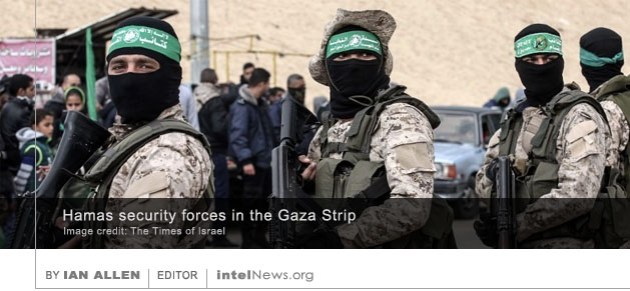 • Analysis: The outstanding issue of the Libyan intelligence services. The post of Chief of the Libyan Intelligence Service of Tripoli’s Government of National Accord (GNA) is still vacant. Therefore, this is an optimal situation for the Head of Tripoli’s government, who is currently pro tempore Director of the GNA agencies, while the struggle for the next Intelligence Service director is
  Belgium’s spy services were aware of financial rewards that Russia allegedly offered to the Taliban in exchange for killing American and other Western troops in Afghanistan, according to Belgium’s defense minister. Late last month, three leading American newspapers, The New York Times, The Washington Post and The Wall Street Journal
 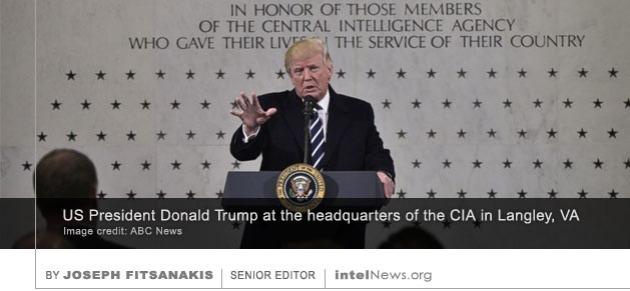 The United States Central Intelligence Agency was secretly authorized by the White House in 2018 to drastically expand its offensive cyber operation program —a development that some experts describe as a significant development for the secretive spy agency. However, the move has reportedly not pleased the Department of Defense, which sees itself as the primary conduit of American offensive operations in cyberspace.
 The personal smartphones of leading Catalan pro-independence politicians were hacked using a highly invasive software built by a controversial Israeli firm, according to an investigative report by two newspapers. The revelation is likely to reignite a tense row between Madrid and pro-independence activists in one of the country’s wealthiest regions, which led to a major political crisis in 2017.
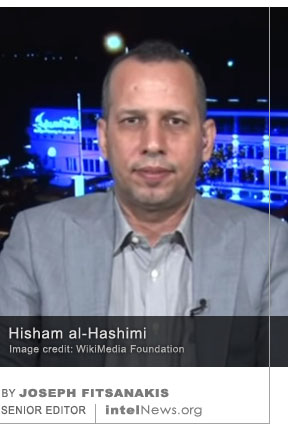 A leading Iraqi expert on paramilitary groups has been shot dead outside his home in Baghdad, raising concerns that the Iraqi government is unable to curtail the activities of militias in the country. Hisham al-Hashimi, 47, was a Baghdad University-educated historian, who rose to prominence in post-Ba’athist Iraq as an expert on paramilitary groups in the country. He was seen as a leading local authority on the Islamic State and advised the United States-led coalition on the group’s inner workings.
 A court in Paris has sentenced to prison two former employees of France’s external intelligence agency, who were accused of spying for the government of China. A third person, the wife of one of the accused, was also handed a jail sentence.
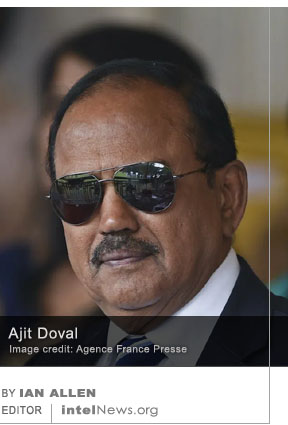 • In-fighting erupts between Syrian intelligence and army in Damascus. Violent clashes broke out between Syrian regime intelligence forces and local militias affiliated with the army’s 4th Division and national defense in Damascus’ countryside, local media sources reported. Sporadic fighting
  An employee of the German government’s press office has been charged with carrying out acts of espionage on behalf of Egyptian intelligence, according to a report by Germany’s Federal Ministry of the Interior. The report was publicized on Thursday by the German Minister of the Interior Horst Seehofer. It did not identify the alleged spy, but said he worked for the visitor’s bureau of the German Federal Press Office.
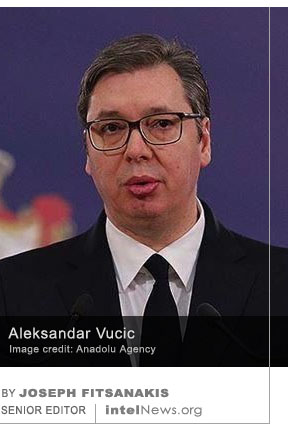 The president of Serbia has said that foreign intelligence services were partly behind a violent protest on Tuesday, which ended up with rioters storming the national parliament building in the capital Belgrade. The protest began in the afternoon, apparently prompted by the government’s decision to reintroduce lockdown measures following a resurgence of COVID-19 incidents in the country. But by the evening the rally had evolved into a full-scale riot led by far-right militants, as well as by some far-left groups.
 Russia’s security service has arrested the media advisor to the director of the country’s space agency, accusing him of supplying military secrets to a spy agency of an unnamed Western country. The Russian Federal Security Service (FSB)
 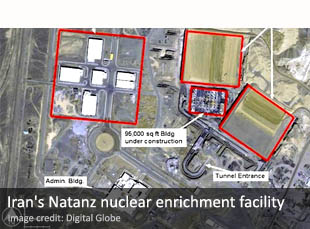 There is growing speculation that Israel’s intelligence services may be behind a spate of blasts that have damaged military and civilian industrial sites in Iran in recent days. Citing a “Middle Eastern intelligence official”, The New York Times
  The trial of two French former intelligence officers begins today in Paris, with the two men accused by French authorities of having spied for China in the 1990s and 2000s. French officials have remained largely silent on the two cases, but media reports have suggested that the two former intelligence officers were found to have carried out espionage tasks for the Chinese government.
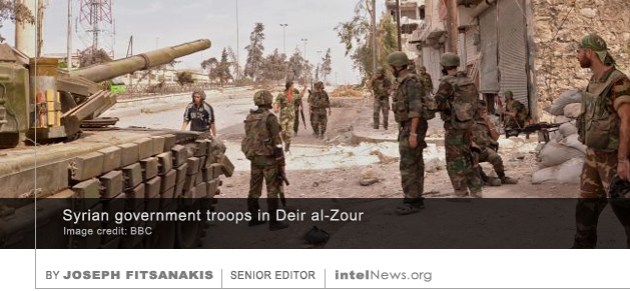 As an intense debate rages in the United States about Moscow’s alleged subversion of American military goals in Afghanistan, sources warn that Russia is increasingly challenging Washington’s troops in Syria. Recent






 intelNews.org
Austrian financier dubbed ‘world’s most wanted man’ hiding under Russian protection
July 21, 2020 by Joseph Fitsanakis 1 Comment
Wirecard (est. 1999) was a German provider of financial services, such as mobile phone payment processing and other electronic payment transaction systems. The company also issued physical and virtual credit and pre-paid cards. But on June 25, the company declared itself insolvent, after an audit revealed that nearly €2 billion ($2.3 billion) in cash deposits were missing from its accounts. Soon afterwards, the company’s share value lost over 70 percent of its value and its management team, including its chief executive officer, Markus Braun, stepped down.
On June 22, Braun was arrested, and a criminal investigation was launched following reports that the missing €2 billion probably never existed in the first place. Meanwhile, German police sought to arrest Marsalek, who had worked as Wirecard’s chief operating officer since 2010. Marsalek, 40, was also in charge of Winecard’s operations in Asia and specifically the Philippines, where the fictitious €2 billion was reportedly deposited.
On June 18, after getting fired from his job, Marsalek told colleagues that he was leaving immediately for Manilla, in order to track down the missing funds and clear his name. However, he never arrived there, as he seemed to disappear into thin air on the way. An investigative report by The Financial Times revealed that Marsalek never made use of his airline ticket to the Philippine capital, and that the immigration records that showed him entering the country and then flying from there to China had been forged. This was later confirmed by the Philippines government.
According to the investigative website Bellingcat, Marsalek never went to the Philippines, but instead fled to Belarus via Estonia. By the time he arrived in Minsk, the Austrian financier was reportedly “a person of interest” to at least three Western spy agencies, and is now believed to have links to Russian intelligence. Bellingcat said Marsalek has made over 60 trips to Russia since 2010, in some cases staying on Russian soil for just a few hours before flying back to Germany. He is also wanted by several European governments on charges of embezzlement and fraud.
On Sunday, German financial newspaper Handelsblatt said Marsalek had been located in Russia and was allegedly staying at a villa outside Moscow, under the protection of Russian military intelligence. The newspaper claimed that the Austrian financier was being protected by officers of the Main Directorate of the General Staff of the Russian Armed Forces, which is commonly known as GRU. According to Handelsblatt, the current tension in relations between Russia and Belarus made it “too risky” for the Kremlin to keep Marsalek in the Belarussian capital. The decision was therefore made to secretly transport him to Moscow.
The German newspaper said it found out about Marsalek’s whereabouts from sources including “financiers, judges and diplomats”. On Monday the Russian government said it had no information about Marsalek’s current whereabouts. It also denied that the Austrian financier has any ties to its intelligence services.
► Author: Joseph Fitsanakis | Date: 21 July 2020 | Permalink
Filed under Expert news and commentary on intelligence, espionage, spies and spying Tagged with Belarus, corruption, Germany, GRU, Jan Marsalek, News, Russia, Wirecard AG