Russians use front-company to access US federal employees’ contact info, says report

EFIS EstoniaRussian spy agencies use front companies to purchase directorates that contain the contact details of United States government employees, according to a new intelligence report. The contact details are contained in multi-page directories of Congressional staff members and employees of US federal agencies. They are published every January by a specialist vendor called Leadership Connect with the cooperation of a Washington, DC-based provider of publishing services. The directories contain the names, job titles, professional addresses and telephone numbers of US government employees.
But according to the Estonian Foreign Intelligence Service (EFIS), copies of the directorate are purchased every year by the Russian intelligence services, such as the Federal Security Service (FSB) and the Foreign Intelligence Service (SVR). The two Russian spy agencies allegedly use a front company in order to purchase copies of the directory. In reality, however, the purchases are made on behalf of Russian intelligence units, such as Military Unit 71330 of the FSB. This allegation is contained in the 2019 security environment assessment, which was published this week by the EFIS. Titled International Security and Estonia, the report is an overview of the main threats to Estonia’s internal security and a description of how these threats relate to international developments.

The directories, says EFIS, are not classified. On the contrary, they contain information that is publicly available in the US. However, the job descriptions and contact information of US federal employees are difficult to access in a collected format. The directories are therefore useful to Russian intelligence, which routinely tries to access large quantities of open-source information from foreign countries. Russian spy agencies are known to incorporate this open-source information into recruitment or surveillance plans that target specific individuals or foreign government agencies. They also use them to fill gaps in intelligence collection about specific agencies or parts of agencies, according to Robert Dannenberg, a former CIA officer who spoke to Yahoo News about the EFIS report.

Author: Ian Allen | Date: 14 March 2019 | Permalink

US to shut down its embassy in Venezuela as national blackout enters 6th day

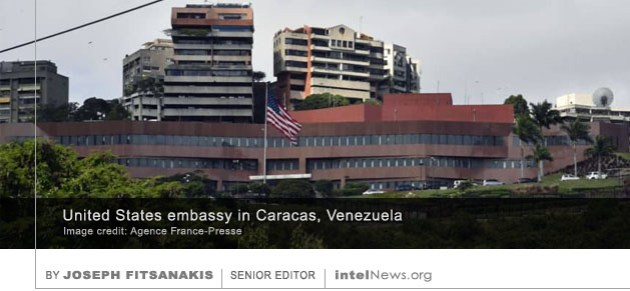
US embassy in Caracas VenezuelaThe United States said on Tuesday that it will evacuate its last few diplomats from its embassy in Caracas, as the electricity blackout in Venezuela enters its sixth day, making it the longest energy crisis in the nation’s history. Energy shortages are not new in Venezuela. The oil-rich Latin American country of 31 million people suffered two disastrous nationwide blackouts in 2009 and a third one in 2016. But the current blackout is quickly approaching the one-week mark and is believed to have caused a minimum of 20 deaths, mostly in hospitals around the country. The majority of the population currently lacks access to fuel and banking services, while there are disruptions in critical food and water supply lines. Several instances of mass looting have been reported across the nation since Monday.
The precise cause of the blackout remains unknown, though a number of experts point to a massive outage of the Simón Bolívar Hydroelectric Plant, located in northeastern Venezuela’s Necuima Canyon, as the root of the problem. Known also as the Guri dam, the facility generates more than four fifths of Venezuela’s electricity output, and may be responsible for the nationwide blackout. The continuing crisis has exacerbated the already adversarial relationship between Washington and Caracas, as the Venezuelan government blames the US and the local opposition leader Juan Guaidó for the blackout. The government said on Monday that it would investigate Guaidó in connection with rumors of sabotage of the Guri dam facility. The announcement prompted the White House to warn that “a lot of countries would react very quickly” if Guaidó was incarcerated. On Tuesday, Washington said that the remaining 20 members of staff of its embassy in the Venezuelan capital would be evacuated by Friday. Soon afterwards, the Venezuelan government said that it had ordered the American diplomats to leave the country, so that their presence there would not be used as a pretext by Washington to launch a military invasion of the country.

Meanwhile, the blackout continued as of Tuesday night, with experts warning that the aging infrastructure of Venezuela’s energy network, coupled with the lack of specialists on the ground, made it difficult to overcome the crisis. The US-based Wired magazine explained on Tuesday that restoring the integrity of the energy grid following a large-scale blackout —a process known as a “black start”— will depend on being able to identify the root of the problem. But the absence of spare equipment and up-to-date monitoring software and hardware means that the Venezuelan state operator lacks the ability to visualize the grid and “understand the state of the system in real time”. At the same time, supporters of the Venezuelan government accuse Washington of sabotaging its oil-export sector by refusing to buy Venezuelan oil and threatening to impose sanctions on foreign states that purchase oil from Venezuela. That, they say, has deprived the country of its main source of hard currency and is makes it exceedingly difficult for Caracas to sustain the nation’s energy and food-supply networks.

Author: Joseph Fitsanakis | Date: 13 March 2019 | Permalink

US warns Germany it will end intelligence sharing if Huawei is given 5G contract

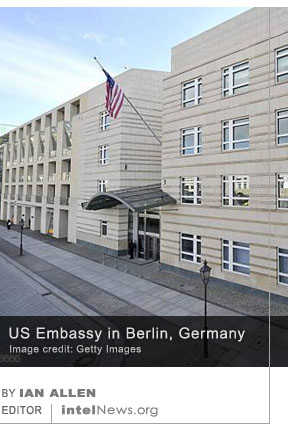
US embassy Berlin GermanyThe United States has warned Germany that intelligence sharing between the two countries will be threatened if the Chinese telecommunications giant Huawei is awarded a contract to build Germany’s 5G network. The company, Huawei Technologies, is a private Chinese venture and one of the world’s leading telecommunications hardware manufacturers. In recent years, however, it has come under scrutiny by some Western intelligence agencies, who view it as being too close to the Communist Party of China. More recently, Washington has intensified an international campaign to limit Huawei’s ability to build the infrastructure for 5G, the world’s next-generation wireless network. Along with Britain, Australia and Canada, the US is concerned that the Chinese telecommunications giant may facilitate global wiretapping on behalf of Beijing’s spy agencies.
But some American allies, including Spain, France and Germany, are not satisfied with Washington’s arguments and claim that the United States is eyeing the financial benefits that would arguably come from its domination of the global digital superhighway. German officials, in particular, have told their American counterparts that Berlin has not seen any evidence that Huawei’s telecommunications hardware come with hidden interception features. Moreover, Germany says that it plans to subject Huawei’s systems to rigorous security tests before using them. On Friday, Washington increased its pressure on Berlin by informing German officials that intelligence cooperation between the two allies would be severely impacted if Chinese telecommunications manufacturers are given the green light to build Germany’s 5G infrastructure.

According to The Wall Street Journal, the warning was included in a letter signed by Ambassador Richard Grenell, America’s top diplomat in Germany. It was allegedly sent to Peter Altmaier, Germany’s Minister of Economic Affairs and Energy. The paper says that Grenell suggests in his letter that Berlin should consider rival bids by companies belonging to American allies, such as the Swedish telecommunications equipment manufacturer Ericsson, Finland’s Nokia Corporation, or the South Korean Samsung Corporation, which is the world’s leading telecommunications hardware manufacturer. The Wall Street Journal did not reveal how it acquired Grenell’s letter, nor did it say whether the German government responded to it.

Author: Ian Allen | Date: 12 March 2019 | Permalink

India, Pakistan used terrorist groups to attack each other, says Pakistan ex-president

Jaish-e-MohammedThe government of Pakistan employed terrorist groups to attack India, according to Pakistan’s former president, Pervez Musharraf, who also accused India of doing the same. Musharraf, 75, took power in Pakistan in 1999 through a coup d’état supported by the country’s military leadership. The four-star Army general ruled as Pakistan’s 10th president until 2008, when he resigned from power to avoid being impeached. He currently lives in exile in the United Arab Emirates and is wanted in Pakistan for alleged crimes, including high treason. His critics accuse him of arresting several judges in 2007 and suspending the country’s constitution.
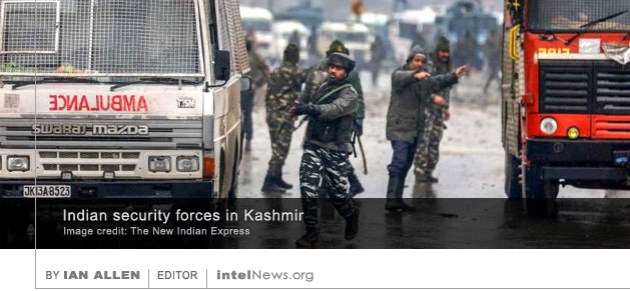
On Tuesday, Musharraf spoke on the flagship news program of Hum News, a 24-hour news channel headquartered in the Pakistani capital Islamabad. Speaking in Urdu on a phone line from Dubai, Musharraf praised the current Pakistani government of President Imran Khan for launching a crackdown on Jaish-e-Mohammed (JeM) the militant group that is believed to be responsible for killing more than 40 Indian soldiers in Indian-administered Kashmir. The attack sparked a tense standoff between India and Pakistan, as the two countries engaged in aggressive military maneuvers against each other. “This constitutes a step forward”, said Musharraf, referring to the JeM crackdown. “It is a terrorist organization and they tried to assassinate me with a suicide attack”, he added, referring to an attack on his presidential convoy in 2003, which has been blamed on JeM.

In early 2002, Musharraf officially banned the JeM and arrested some of its leaders, after the group participated in two high-profile attacks in Indian Kashmir. But all JeM leaders were eventually freed, after the courts decided that the government had failed to provide sufficient evidence of their participation in terrorism. Musharraf told Hum News that he eventually lost interest in cracking down on JeM. When asked by the reporter why his government did not take further action against the group, Musharraf said that “those were different times”. Instead of stopping groups like JeM, both Pakistan and India used them to carry out a “clandestine struggle” against each other, said Musharraf. Groups like JeM “carried out bombings in each other’s territory”, said the former president, adding that Pakistan’s “intelligence agencies were involved in it”. Both India and Pakistan thus used militant groups, including JeM to carry out “tit-for-tat” operations targeting each other, he concluded. The former Pakistani leader went on to say that he was “very pleased to see the [Pakistani] government adopting a strict policy” against JeM.

Author: Ian Allen | Date: 08 March 2019 | Permalink

Holland recalls Iran ambassador after Tehran expels Dutch diplomats

Holland embassy IranHolland said on Monday that it had recalled its ambassador from Tehran after Iran expelled two Dutch diplomats, in a deepening dispute involving the assassination of two Dutch citizens by alleged Iranian agents. In July of last year, Holland announced its decision to expel two Iranian diplomats from The Hague, but did not explain the reason for the expulsions. In January of this year, the Dutch Foreign Ministry confirmed that the diplomatic expulsions were in retaliation to the assassination of two Dutch nationals of Iranian background. One of the victims, Mohammad-Reza Kolahi, was shot dead in the head at point-blank range by two assailants in December 2015 in Almere, a coastal town 25 miles east of Amsterdam. Nearly two years later, in November 2017, another man, Ahmad Mola Nissi, was shot in the head in broad daylight in The Hague. Both men were members of Iranian militant anti-government groups that the Iranian state accuses of terrorism and crimes against the state.
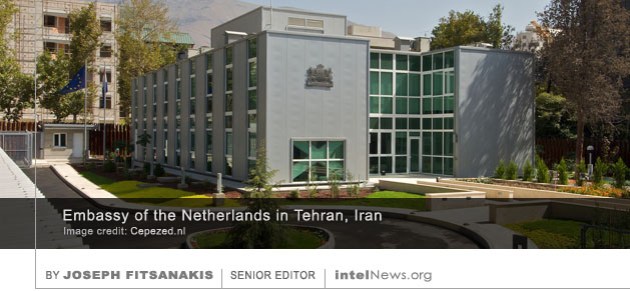
On Monday, the Dutch Minister of Foreign Affairs Stef Blok informed the Dutch House of Representatives in The Hague that Tehran had informed his Ministry on February 20 that two Dutch diplomats would be expelled from Holland’s embassy in the Iranian capital. The two diplomats, who have not been named, were ordered to leave the country by Monday, March 4. Later on Monday, Bahram Ghasemi, spokesman for the Iranian Ministry of Foreign Affairs, confirmed that “two of the diplomats of the Netherlands embassy in Tehran were considered undesirable elements in the framework of a retaliatory measure and were asked to leave the country”. The Iranian move was not made public until last Monday. Blok wrote to the House of Representatives that, in response to Tehran’s move, the Dutch government had decided to recall its ambassador to Iran “for consultations” on how to proceed. Blok noted in his letter that Iran’s decision to expel the Dutch diplomats was “unacceptable and damaging to the bilateral relations between the two countries”.

Late on Monday, the Dutch government also summoned the Iranian ambassador in order to protest the expulsions of its diplomats from Tehran. It was also reported in the Dutch media that a series of financial sanctions imposed on Iran by Holland and its European Union partners in June —presumably over the alleged assassinations that took place on Dutch soil— would remain in place. The sanctions are against two individuals associated with Iranian military intelligence.

Author: Joseph Fitsanakis | Date: 06 March 2019 | Permalink

North Korea-linked hackers growing in reach and sophistication, McAfee warns

Computer hackingA computer hacking group with links to the North Korean government has a wider reach and is more sophisticated than was initially believed, according to the computer security firm McAfee. The group, dubbed Lazarus by cybersecurity experts, is believed to be connected with Guardians of Peace, the hacker team that orchestrated the 2014 attacks on Sony Pictures Entertainment. The company drew the ire of the North Korean government for producing The Interview, a black comedy based on a fictional attempt by two Americans to assassinate North Korean leader Kim Jong-un. Known collectively as ‘the Sony Pictures hack’, the attacks included the compromise of internal documents and unreleased copies of films produced by Sony, as well as personal attacks on Sony executives and members of their families. There were also attempts to damage Sony’s digital infrastructure, which cost the company an undisclosed amount in damages, believed to be in the millions of dollars.


In February of last year, the computer security software company McAfee said that Lazarus was behind an ongoing campaign targeting global banks and bitcoin users. On Sunday, the California-based firm said that Lazarus was responsible for what its experts call Operation SHARPSHOOTER, a widespread effort to compromise key industries across several continents. Speaking at the RSA IT security conference in San Francisco, McAfee experts said that SHARPSHOOTER began as early as September of 2017, and that it was first detected in December of 2018. By that time, said McAfee, around 80 firms and organizations had been targeted by Lazarus. But in recent months, it has become clear that SHARPSHOOTER is “more extensive in complexity, scope and duration” than previously thought, according to McAfee experts. They added that they drew this conclusion based on “command-and-control serve code” data that was made available to them by an unnamed “government entity”. This is the type of forensic data that is customarily seized by government agencies and is rarely made available to cybersecurity researchers in the private sector, said the McAfee representatives. This “non-typical access” afforded McAfee technical experts “a rare opportunity” to examine “the inner workings [of Lazarus’] cyberattack infrastructure”, they added.

As a result, the company’s “confidence levels are now much higher” that Lazarus is targeting key agencies and industries, including government organizations involved with national defense, energy and critical infrastructure. Most of Lazarus’ targets are in the United States, Germany and Turkey. But smaller attacks have been detected in Asia and Africa, in countries such as the Philippines and Namibia. Many attacks begin with so-called ‘spearphishing’ attempts, which target particular employees of agencies or firms. These attacks center on emails that are “masked as extremely convincing job recruitments”. The emails contain links to Microsoft Word or Adobe PDF files on popular file-sharing platforms like DropBox, which are infected with malware, said McAfee.

Author: Joseph Fitsanakis | Date: 05 March 2019 | Permalink

Dutch counterterrorism report sees rise in Islamist recruitment in the West

NCTV HollandHolland’s chief counterterrorism agency has warned that, despite losing its territories in the Middle East, the Islamic State continues to recruit operatives and is ready to launch attacks in the West “at a moment’s notice”. The warning is contained in a report published last week by the Dutch National Coordinator of Counterterrorism and Security (NCTV). Established in 2005 as the Dutch National Coordinator for Counterterrorism, and renamed in 2012, the NCTV works under Holland’s Justice and Security Minister. It is responsible for analyzing terrorism threats and assessing the country’s domestic terrorism threat level.

In its most recent report (.pdf), entitled Terrorist Threat Assessment Netherlands, the NCTV warns that it is not only the Islamic State (known also as Islamic State of Iraq and Syria, or ISIS) that remains highly active, but also al-Qaeda. The two groups are riding a wave of Salafist Muslim extremism that appears to be on the rise throughout Europe, says the report. ISIS, in particular, continues to engage in extensive recruitment drives in the West, which take place mostly through the dissemination of propaganda material online. There is also a proliferation of an underground recruitment movement in conservative Muslim schools and mosques across the West, says the report (.pdf).

But the most serious short-term threat to European and North American security, according to the NCTV document, comes from so-called returnees, citizens of European countries who joined the Islamic State in Syria and Iraq and are now returning —or trying to return— to their home states in the West. The majority of these men and women remain faithful to the idea of the caliphate despite the failure of their efforts in the Middle East. There is a risk that, upon their return to the West, they will connect with existing —and growing— Salafist underground networks there, and remain active in radical circles. The report also notes that both ISIS and al-Qaeda are showing increasing interest in developing chemical and biological weapons for use against civilian and military targets.

Author: Joseph Fitsanakis | Date: 04 March 2019 | Permalink

Sweden confirms arrest of second person on spying charges

Säpo swedenThe Swedish public prosecutor’s office has confirmed media reports that a second espionage-related arrest took place in Stockholm this week. The latest arrest came just 24 hours after a man was arrested in the Swedish capital on Tuesday, allegedly for spying on behalf of Russia. As intelNews reported yesterday, a man was apprehended on Tuesday while meeting with a foreign diplomat in central Stockholm. The diplomat is allegedly a member of staff at the Russian embassy in Sweden. He is believed to be a Russian intelligence officer operating under official cover. A representative of the Swedish Security Service, known as SÄPO, later said that the man who was meeting with the Russian diplomat had been recruited by Russian intelligence in 2017 or earlier, and had been in regular contact with his Russian handlers. His name has not been revealed to the media, but he is believed to be working for an unnamed technology company in Sweden.

On Thursday, the Stockholm-based newspaper Dagens Nyheter said that it had seen court papers involving the arrest of a second individual on Wednesday, reportedly in connection with espionage for a foreign power. The paper said that the arrest took place in the Swedish capital and the individual in question remained in detention. It added that Hans-Jorgen Hanstrom, of the public prosecutor’s office, had confirmed the arrest and that the main suspect had been charged with spying against Swedish interests for a foreign power. Hanstrom added that the suspect had been found to engage in espionage from April 10 until September 30, 2018. But he did not disclose the person’s name or nationality. SÄPO spokesman Karl Melin also confirmed the espionage-related arrest, but did not comment on whether it was related to Tuesday’s arrest.

Earlier in the week, officials from SÄPO’s counterespionage directorate said that Tuesday’s arrest was the result of a lengthy operation that took “a substantial period of time” and involved “intensive intelligence and investigation work”. The alleged spy was scheduled to be placed in pre-trial detention on Thursday, but his hearing was postponed for Friday. The Russian embassy in Stockholm has not commented on the reports.

Author: Joseph Fitsanakis | Date: 01 March 2019 | Permalink

Sweden arrests man for spying for Russia; diplomatic expulsions expected soon

Russian Embassy SwedenAuthorities in Sweden have announced the arrest of a man who is accused of spying for Russia. The man was reportedly apprehended while meeting with a Russian diplomat in central Stockholm. The alleged spy, who has not been identified in media reports, is believed to be working for an unnamed technology company in Sweden. A report by Swedish police said that the man is working “in a field that is known to be of interest to the intelligence services of foreign powers”.

The unnamed man is suspected of having been recruited by intelligence officers of Russia in 2017 or earlier. He is believed to have met with his Russian handlers on a regular basis since his recruitment, and to have passed classified information to the Russian government. He was reportedly arrested on Tuesday evening as he was meeting his alleged Russian handler in a downtown area of the Swedish capital. Both he and his alleged handler were detained by officers of the Swedish Security Service, known as SÄPO. The alleged handler was a member of staff of the Russian embassy in Stockholm and has diplomatic immunity. SÄPO said that the Russian embassy officer is believed to be a Russian intelligence officer who works under diplomatic cover. Swedish media said on Tuesday that the diplomat’s expulsion from the country was imminent.

However, SÄPO declined to provide information on the identity of the alleged spy, who is not believed to have diplomatic immunity and is therefore liable to prosecution. Daniel Stenling, head of SÄPO’s counterespionage directorate, said that Tuesday’s arrest was the result of a prolonged probe that took “a substantial period of time” and involved “intensive intelligence and investigation work”. SÄPO spokesman Gabriel Wernstedt said on Wednesday that the agency did not believe that the alleged spy is a member of a ring involving other suspects. He warned, however, that espionage threats against Sweden “are now more far reaching than [they have] been for many years”.

The alleged spy is scheduled to be placed in pre-trial detention on Thursday or Friday at the latest. British newspaper The Daily Telegraph, which reported Tuesday’s arrest, said it reached out to the Russian embassy in Stockholm but received no response.

Author: Joseph Fitsanakis | Date: 28 February 2019 | Permalink

German far-right party wins lawsuit against domestic intelligence agency

BfV GermanyGermany’s largest far-right party, Alternative for Germany, has won a lawsuit against the country’s domestic intelligence agency, which is now barred from collecting intelligence on the group’s activities. Known by its German initials AfD, which stand for Alternative für Deutschland, the party was founded in 2013 on an anti-immigration, Eurosceptic, German-nationalist, and in some cases pro-Russian, platform. In 2017 it became the third-largest political party in the country after winning 94 seats in the Bundestag, Germany’s federal parliament. Since the two leading parties formed a governing alliance, the AfD is currently Germany’s official parliamentary opposition.

Last year, however, government officials warned that elements within the AfD were actively organizing to subvert the German constitution and expressed concern about the AfD’s political views. In January of this year, the Office for the Protection of the Constitution (BfV), Germany’s primary domestic security agency, publicly announced that it would designate the AfD as a “test case” organization. According to German law, a group or organization can be designated as a “test case” when it displays “extremist elements” in its behavior, which may indicate that it “poses a threat to the constitutional order”. Once a group or organization is designated as a “test case”, the BfV is legally permitted to monitor open-source information about it. It is not allowed to resort to other methods of intelligence collection, including conducting human intelligence operations, employing informants, etc.

Shortly after the BfV disclosed the AfD’s “test case” designation, the far-right party sued the security agency, claiming that its “test case” designation amounted to public defamation. On Tuesday, Cologne’s Administrative Court ruled that the BfV had unfairly designated the AfD as a “test case” by relying on little more than “fragments of suspicion”. The court also found that the public designation of the AfD as a “test case” had unfairly defamed the party and could have a serious negative effect on its electoral performance by giving “a negative public impression”. The court decision is seen as a major symbolic victory for the far-right party ahead of several regional elections this year, in which the AfD hopes to defeat Chancellor Angela Merkel’s center-right Christian Democratic Union.

Author: Joseph Fitsanakis | Date: 27 February 2019 | Permalink

Destabilization fears grow as hundreds of armed ISIS fighters enter Iraq from Syria

Islamic State ISISIntelligence officials warn that Iraq’s fragile stability may be at risk, following reports that as many as a thousand armed Islamic State fighters have entered Iraq from Syria in recent weeks. The organization calling itself the Islamic State (known also as the Islamic State of Iraq an Syria, or ISIS) is on its last legs in Baghouz, a Syrian village located on the banks of the Euphrates River near the Syrian-Iraqi border. Its fighters are report by a large number of American-backed forces led by Syrian Kurds, in what appears to be the Islamic State’s last territorial stronghold in the Middle East.

Many or the militant Sunni group’s fighters, however, have managed to slip past the American-led coalition’s offensive lines and are now making their way across the border into Iraq’s Sunni-majority northwestern provinces. To prevent this, the Shiite-led Iraqi army has reportedly deployed more than 20,000 soldiers across the 370-mile border with Syria. But the size of the border, as well as the region’s rugged and inhospitable terrain, are making it very difficult to police it. A major surrounded published by the Associated Press late last week claims that hundreds of Islamic State fighters are slipping across the border into Iraq at night, or using tunnels that were constructed by the Islamic State in 2013 and 2014. Others are making their way into Iraq disguised as women or local farmers. Most are armed, says the Associated Press, or know where to go to dig up weapons caches and money, which the Islamic State buried as it retreated into Syria last year under concerted attacks by the Iraqi army.

The Associated Press report quotes three Iraqi intelligence officials and a United States military official, who say that more than 1,000 ISIS fighters entered Iraq from Syria since last September. Iraqi intelligence sources allegedly estimate that between 5,000 and 7,000 armed ISIS fighters are now present in Iraq. Many of them remain in hiding, but others are engaged in systematic efforts to revitalize the group’s presence in Iraq’s Sunni-majority provinces. This was confirmed in a recent press briefing by a senior Iraqi Army spokesman, Brigadier General Yahya Rasoul, who warned that “ISIS is trying to assert itself in Iraq, because of the pressure it is under in Syria”. At least nine major ISIS attacks were recorded in Iraq in January, and several have taken place in February, including the recent killing of five fishermen in Najaf Province, which prompted officials to warn that ISIS may be making a comeback in the region. Iraqi intelligence officials told the Associated Press that the attacks are aimed at warning locals not to share intelligence with the Iraqi military, and to “restore the extortion rackets that financed the group’s rise to power six years ago”.

Author: Joseph Fitsanakis | Date: 26 February 2019 | Permalink

Pakistan’s ex-spy chief stripped of army pension for writing controversial book

Asad DurraniThe former director of Pakistan’s powerful intelligence agency has been stripped of his military pension and associated benefits for co-authoring a controversial book about intelligence with his Indian counterpart. Lieutenant General Asad Durrani (ret.) served as director-general of Pakistan’s Directorate for Military Intelligence between 1988 and 1989. From 1990 to 1992 he was director of the Inter-Services Intelligence Directorate, which is arguably Pakistan’s most powerful government institution. Durrani, 78, has been severely criticized in some Pakistani nationalist circles for co-authoring a book entitled The Spy Chronicles: RAW, ISI and the Illusion of Peace, with his Indian counterpart, A.S. Daulat. Daulat, 79, headed India’s Research and Analysis Wing from 1999 to 2000.

The book was edited by the widely respected Indian journalist Aditya Sinha. It contains details about Pakistan’s systematic efforts to foment armed unrest in the heavily Muslim Indian state of Kashmir, for instance by funding and training a host of Islamist paramilitary organizations that operate in the disputed region. The book also claims that the Pakistani government was aware of the whereabouts of Osama bin Laden in 2011, and that it worked closely with the United States to kill the co-founder of al-Qaeda. Islamabad has consistently denied allegations that it knew of bin Laden’s hideout in the city of Abbottabad, and that it gave permission to US Special Forces troops to raid his compound.

Last Friday, Pakistan Army spokesman Major General Asif Ghafoor announced that a military court had found Durrani guilty of having violated the military code of conduct of the Pakistan Armed Forces. Consequently, he said, the retired general would be stripped of his Army pension and all associated benefits. The military court had conferred behind closed doors, said Ghafoor, adding that he was unable to provide further details on the case. Meanwhile, the Islamabad High Court announced on Thursday that it rejected a plea by Durrani’s lawyers to have his name removed from Pakistan’s Exit Control List. The list contains names of individuals who are prohibited from leaving Pakistan for reasons relating to corruption, economic crime, as well as terrorism and drug-related activity, among other violations. Durrani was placed on that list in March of last year, shortly after his controversial book was published in India.

During the same press briefing on Friday, Ghafoor also said that two Pakistani military officers had been placed in custody facing espionage charges. The Pakistan Army spokesman gave no information about the officers’ names or the countries for which they allegedly spied for.

Author: Joseph Fitsanakis | Date: 25 February 2019 | Permalink

Analysis: Women becoming growing force inside Islamic State, says expert

Islamic State womenThe role of women inside the Islamic State is growing, as the Sunni militant group is transmuting into an underground organization, according to a Harvard University terrorism expert. Since its meteoric rise in Iraq and Syria, the Islamic State has been known for advocating for strict segregation between men and women. In the early stages of the group’s emergence, combat roles were exclusively performed by men, while women’s roles were limited to childbearing and housework. But according to Vera Mironova, Visiting Scholar in the Economics Department at Harvard University, and former Associate of the International Security Program at Harvard’s Belfer Center, the Islamic State’s policy on gender roles is shifting rapidly.

Mironova, who has carried out research in Iraq while embedded with the country’s Special Operations Forces, argues that the Islamic State has been “quietly shifting its insistence of strict gender hierarchy” and is now “allowing, even celebrating, female participation in military roles”. In an article published earlier this week in The New York Times, Mironova states that early indications of this shift were visible as early as 2017. In October of that year, ISIS publications issued calls for “women to prepare for battle”. Within a year, the group was publicly praising its women fighters and even published a video showing veiled Islamic State female fighters firing AK-47 assault rifles. The video praised women fighters for “seeking revenge for [their] religion and for the honor of [their] sisters”.

In her article, the Harvard terrorism expert says that it is not possible to estimate with accuracy the number of women who have picked up arms on behalf of the Islamic State. But she adds that interviews with Iraqi military and police officials suggest that female Islamic State fighters are now “a regular presence that no longer surprises, as it did a few years ago”. There is a tradition of fervent women supporters of the militant group that dates from its very beginning, claims Mironova. She gives the example of female radicals who insisted that their husbands or sons join the Islamic State, or who sought to marry Islamic State combatants in order to be part of “mujahedeen families”. Recently, however, the relative scarcity of male fighters in the ranks of the militant group has led to calls for females to take their place in the front lines. As the Islamic State is transmuting into an underground organization, women are also becoming more useful as covert operatives because they attract less attention by Iraqi or Syrian government troops.

In many cases, women supporters of the Islamic State who lost male family members in the ongoing war pick up arms or put on suicide vests in order to extract revenge. In other cases they do in order to secure protection, favors or money for their families from the insurgents. The fact is, says Mironova, that women fighters are becoming more prominent in the Islamic State’s combat lines and are even participating in the group’s suicide bombing campaign. The latter continues unabated in Iraq and Syria, despite the near-complete loss of the Islamic State’s territorial control, says Mironova.

Author: Joseph Fitsanakis | Date: 22 February 2019 | Permalink

Libya gave French ex-president Sarkozy $8 million, says Gaddafi’s spy chief

Abdullah al-SenussiA senior intelligence advisor to Libya’s late ruler Muammar al-Gaddafi has reportedly told French investigators that the Libyan government gave $8 million to the election campaign of France’s ex-President Nicolas Sarkozy. Sarkozy’s 30-year political legacy has been marred by a series of financial scandals, for which he is currently under investigation. In March of last year, the former French president issued strong denials of accusations that he accepted an illicit multi-million monetary donation from Gaddafi during his 2007 campaign for the presidency. During a 20-minute television interview, Sarkozy described the investigation into the allegations that he acted as an agent of influence for Libya as “a waste of time”, arguing that it was over an alleged donation of less than $45,000, which represented a tiny fraction of his campaign budget.

But according to the French investigative news website Mediapart, a team of French judges was told by Gaddafi’s former spy chief that Sarkozy was given millions of dollars in secret by the Libyan state. Abdullah al-Senussi, who oversaw the Libyan intelligence agencies under Gaddafi, reportedly told the French investigators that the funding was part of a secret deal between the two parties. In 1979, Senussi married the sister of Gaddafi’s wife and remained a trusted confidante of the Libyan leader until his violent death in 2011. According to Mediapart, he told the French judges that he personally supervised the transfer of funds to Sarkozy’s election campaign. He said that the payments entered the campaign’s coffers via a French government minister who received the funds from Libyan agents in two separate installments in 2006. In return, Sarkozy promised to help reinstate Gaddafi’s international image if he was elected president. He also promised to impede attempts by Western countries to arrest Gaddafi and some of his senior government aides —including Senussi— for terrorist crimes. Senussi allegedly said that Sarkozy himself promised him that his international arrest warrants would be quelled with the help of the French president’s personal lawyers. Sarkozy later hosted Gaddafi in Paris in a lavish setting in 2007.

Mediapart said that it accessed Senussi’s testimony before the French judges after getting hold of extracts from his formal statements during his interviews. It added that the information provided by Senussi appears to confirm similar claims made by other witnesses in the investigation about Sarkozy’s alleged illegal campaign funding. The former French president is currently involved in a separate legal dispute concerning alleged illegal spending during his failed campaign for the presidency in 2012.

Author: Ian Allen | Date: 21 February 2019 | Permalink

Lithuania widens espionage probe, several now in custody for spying for Russia

Algirdas PaleckisA growing number of individuals are in custody in Lithuania, as the Baltic state continues a probe into an alleged Russian espionage ring whose members reportedly included a former diplomat and member of one of the country’s most revered political families. On Tuesday, government prosecutors asked for an eight-year prison sentence for Roman Sheshel, who stands accused for giving Moscow classified information on Lithuania’s naval forces. Sheshel, a Russian-born Lithuanian citizen, is also believed to have given his Russian handlers intelligence regarding warships belonging to the North Atlantic Treaty Organization, of which Lithuania is a member. He is accused of having worked for the Russians from early 2015 until his capture by Lithuanian authorities in December of 2017. His trial has been taking place behind closed doors in order to protect state secrets.

Government prosecutors allege that Sheshel was part of a sizeable spy network of Lithuanians who were recruited by Russia in the past five years and whose “activities threatened Lithuanian national security”. Among them is allegedly Alģirds Paleckis, a former parliamentarian and diplomat, Paleckis was born in 1971 in Switzerland, where his father, Justas Vincas, served as a Soviet diplomat. His grandfather, Justas Paleckis, was a towering figure in the Communist Party of Lithuania, which in 1940 spearheaded Lithuania’s amalgamation into the Soviet Union. But his son, Paleckis’ father, broke ranks with the family’s communist past and became a leading nationalist parliamentarian in 1990, when the country seceded from the USSR. Paleckis followed in his father’s footsteps and joined the diplomatic service before entering parliament. But in 2008, after a successful career as a pro-Western reformist politician, Paleckis began to veer to the left, eventually founding the Lithuanian Socialist People’s Front, a small leftist party that is often accused of being too close to Moscow. The party is a vocal opponent of Lithuania’s membership in the European Union and NATO. Paleckis’ critics also note that he is married to a Russian woman whose father is reportedly a Russian intelligence officer.

The German news agency Deutsche Welle reported last week that Paleckis attracted the attention of Lithuanian counterintelligence investigators after he “fully paid back the mortgage on a house too quickly”. He is now accused of giving his Russian handlers information about a Lithuanian government investigation into Soviet-era informant networks in the small Baltic country. He has been in custody since last October, along with an undisclosed number of other alleged members of a purported Russian spy ring. Earlier this week, Lithuanian authorities said that evidence collected from the unnamed detainees are helping them broaden their probe into alleged Russian espionage.

Author: Joseph Fitsanakis | Date: 20 February 2019 | Permalink