Dozens of senior Afghan officials, including spy chief, smuggled to Turkey

Kabul Airport Afghanistan

APPROXIMATELY 40 SENIOR OFFICIALS in the government of deposed Afghan President Ashraf Ghani have been secretly smuggled to Turkey in recent days. They include Afghanistan’s intelligence chief, according to reports in Turkish media. They claim that the Afghan officials were smuggled out of Taliban-controlled Afghanistan by Turkish military and intelligence operatives. The latter reportedly hid the officials among crowds of Turkish citizens who were evacuated from Kabul in recent days, as the Taliban were entering the Afghan capital.

Turkish media said the Turkish embassy in Kabul had developed evacuation plans earlier this summer, as the Taliban were conquering large swathes of territory throughout the countryside, including a number of provincial capitals. These plans were put in place for the benefit of Turkish expatriates who lived and worked in Afghanistan. However, according to reports, Turkish embassy officials also reached out to “Afghan officials, who have close ties with Turkey” and informed them of the evacuation plans.

As Taliban forces began to enter Kabul, Turkish embassy officials put the evacuation plans into action, and invited selected Afghan officials to make use of them. Within hours, a Turkish Airlines passenger plane appeared on the tarmac of the Hamid Karzai International Airport in Kabul. Due to a previously agreed-to arrangement between Ankara and Washington, some parts of the airport were being guarded by Turkish troops. These troops reportedly helped guide the evacuees onto the aircraft, while keeping at bay “a large crowd” of people seeking to leave Kabul, who “started to run towards the plane”.

The aircraft eventually left Kabul with 324 passengers on board, including around 40 senior Afghan officials. Among them were Afghanistan’s Minister of Foreign Affairs, Mohammad Hanif Atmar, the country’s Second Vice President, Sarwar Danish, as well as Ahmad Zia Sraj, who headed the National Directorate of Security (NDS). Formed in 2002, the NDS was the national intelligence and security service of Afghanistan until it was dissolved by the Taliban earlier this month. It is reported that most of its 30,000-strong force is now dispersed into refugee camps in India, Uzbekistan and Tajikistan.

Author: Joseph Fitsanakis | Date: 24 August 2021 | Permalink

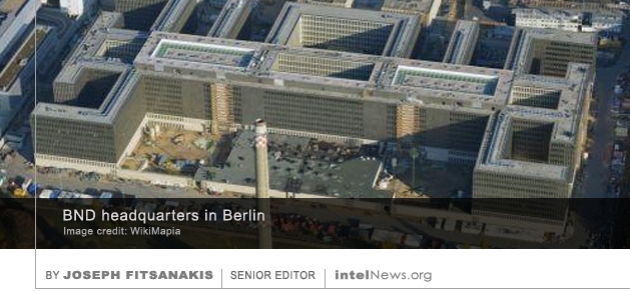
German spy services face criticism for failing to anticipate swift Taliban victory

BND Germany

THE PRINCIPAL EXTERNAL INTELLIGENCE service of Germany, known as the Federal Intelligence Service, or BND, is facing growing criticism for allegedly failing to anticipate the swift ascendance of the Taliban in Afghanistan. Critics from every political faction have described the situation in Afghanistan as an “impending disaster” for German interests, and have questioned the BND’s effectiveness and competence.

In a statement to the Bundestag this past June, Germany’s Minister of Foreign Affairs, Heiko Maas, insisted that it was “inconceivable” that the Taliban “would, within just a few weeks, be able to seize power” in Afghanistan. In subsequent weeks, other leader members of Chancellor Angela Merkel’s cabinet echoed Maas’s statement. It now appears that, as German diplomats and intelligence officers were forced to leave hastily the Central Asian country, they left behind numerous “people employed in Germany’s interests”, analysis to the German national broadcaster, Deutsche Welle (DW).

In his according of the BND’s performance in the Afghan situation, DW journalist Marcel Fürstenau quotes former BND intelligence officer Gerhard Conrad, who claims that the spy agency lacked sources on the ground. Others, including University of London researcher Jan Koehler, tell Fürstenau that the German intelligence services failed to grasp the broader dynamics of Afghan society, which are permeated by “a lack of trust among the Afghan security forces in their own government”, and led them to surrender to the Taliban en masse.

The possibility of an official parliamentary investigation into the performance of the BND is now a strong prospect in the coming weeks, says Fürstenau. He adds that that several senior members of Chancellor Merkel’s government would have to testify behind closed doors during a probe. The soon-to-retire ‘iron lady’ of German politics may even have to testify after she leaves office, he concludes.

Author: Joseph Fitsanakis | Date: 20 August 2021 | Permalink
US spy agencies warned Kabul would fall, but did not give precise timeline, says report

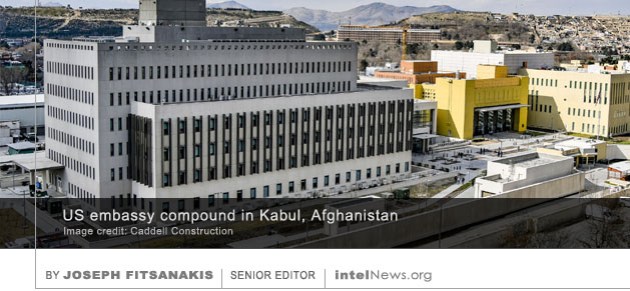
US embassy in Afghanistan

ANALYSES BY UNITED STATES INTELLIGENCE agencies about the dynamics of the Taliban insurgency in Afghanistan became progressively grim over the summer, but did not provide precise timelines of the impending disaster, according to a new report. In his television address on Monday, US President Joe Biden admitted that his administration had rested on inaccurate estimates about the ability of the Taliban to overrun Afghan government defenses. Some —including many in the US intelligence community— have interpreted that statement to mean that the assessments given to the White House by the intelligence agencies were faulty or otherwise inaccurate.

On Tuesday, The New York Times reported that the intelligence community continuously revised its assessments of the Afghan civil war in the past year. Earlier this year, the consensus among intelligence agencies was allegedly that the Afghan government could potentially remain in power for as long as two years after a US military withdrawal. But that consensus had been shattered by mid-summer, according to The Times. By July, intelligence reports, led by those produced by the Central Intelligence Agency (CIA), “had grown more pessimistic” and explicitly “laid out the growing risks to Kabul”, according to the paper. These reports also warned that the Afghan government, including its intelligence and military components, would not be able to withstand an assault on the capital and other major urban centers by the Taliban.

At the same time, however, these assessments were typically “not given a high confidence judgment” or a particularly high level of certainty by the agencies, according to the report. One source told the paper that “it was often hard to get [CIA] analysts to clearly predict how quickly [a Taliban victory] would occur”. Instead, its assessments “could often be interpreted in a number of ways, including concluding that Afghanistan could fall quickly or possibly over time”.

The Times report seems to indicate that the White House rested much of its decision-making on earlier assessments by the intelligence community, which projected a less radical pace of change in Afghanistan. For instance, one report from April of this year suggested that the Taliban were at least 18 months away from being able to conquer Kabul. The article also points out the possibility that different agencies may have had differing views on the speed with which the Taliban would conquer Afghanistan, with the CIA being on the more pessimistic end of the scale.

Author: Joseph Fitsanakis | Date: 18 August 2021 | Permalink

Opinion: The Taliban’s takeover of Afghanistan was neither unexpected nor sudden

Taliban

THE COMPLETE TAKEOVER OF Afghanistan by the Taliban was “sudden” and “unexpected” only for those who have not been paying attention to the implosion of the country in recent months. There were certainly outliers, among them an assortment of Foreign Policy columnists, who, as late as July 28, were urging readers to stop “assuming the Taliban will win”. But ever since October of 2020, when United States President Donald Trump announced that American troops would leave the country (a policy that the Biden Administration eagerly adopted), the vast majority of reports about the future of Afghanistan have been unanimous: following an American military withdrawal, the Taliban would take over the entire country with little delay, and almost certainly without facing significant resistance.

This was certainly the view on the ground in Afghanistan, where desperate families have been leaving the country for many months now. The recent shocking images of Afghan men clinging on to American transport aircraft, were not the beginning of a desperate exodus from the country. Rather, these were the last groups of people who, for a variety of reasons, did not abandon the capital earlier. The impending reality of the Taliban takeover has been recognized especially by women in urban centers. They have been preparing for months for the change in the nation’s leadership, by burning their Western attire and throwing away their make-up kits.

Meanwhile, countries like Russia and the United Kingdom have been actively preparing to deal with the Taliban as the government of Afghanistan. It was nearly five weeks ago when Ben Wallace, Minister of Defense of Britain, arguably the United States’ closest international partner, announced that London was prepared to “work with the Taliban, should they come to power”. Soon afterwards, Russia’s longtime Foreign Minister, Sergei Lavrov, called the Taliban “rational actors” and warned the Afghan government that it risked losing control of the entire country by not entering into a negotiated settlement with the militants. Read more of this post

Afghans who spied for CIA say they fear retaliation once US forces withdraw

Antony Blinken

AFGHAN CIVILIANS WHO WERE recruited by the United States Central Intelligence Agency as local assets say they fear retaliation by a resurgent Taliban once American forces withdraw from Afghanistan in September. Last April, US President Joe Biden announced that American troops would leave Afghanistan by September 11. The date will mark the 20th anniversary of the terrorist attacks of September 11, 2001, which caused Washington to send troops to Afghanistan in response.

The CIA has been a major component of America’s presence in Afghanistan over the past two decades. When operating in the Central Asian country, CIA officers have routinely relied on local people to collect intelligence, provide translation services, and guard its facilities and personnel. These local assets were typically paid in cash for their services, which were secret in nature and often life-threatening.

Now many of these local assets —possibly thousands— are apprehensive of the pending withdrawal of their American protectors from Afghanistan, and fear retaliation from a resurgent Taliban. According to The Wall Street Journal, these local CIA assets say that “their lives are now at risk”. A large number of them have submitted applications for a US Special Immigrant Visa. This is a State Department program that aims to offer protection to local people who have carried out “sensitive and trusted activities” on behalf of American government personnel abroad.

But the Special Immigrant Visa process is complicated and expensive, and is currently plagued by major delays. The Wall Street Journal reports that, even though the law stipulates Special Immigrant Visa requests must be processed within nine months, applications are currently taking between three to five years to be adjudicated. The Department of State says it is currently working through a backlog of 18,000 applications from around the world. The situation is particularly dire for Afghan CIA assets, says the paper, because many find it difficult to prove they ever worked for the CIA. The spy agency’s record-keeping was minimal throughout its time in Afghanistan, especially in the opening years of the conflict, according to the report. Furthermore, some local assets may not even be named in CIA documentation, so as to protect their identity.

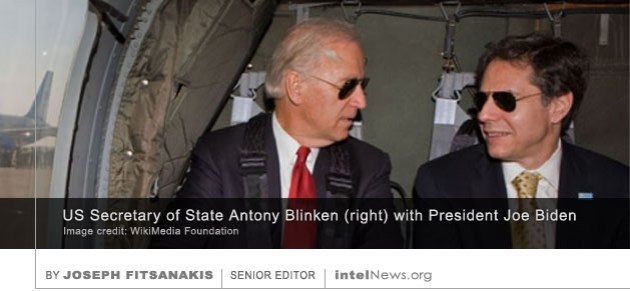
In response to calls for faster processing of Special Immigrant Visa requests, US Secretary of State Antony Blinken (pictured) said earlier this month: “We’re determined to make good on our obligation to those who helped us, who put their lives on the line, put their families’ lives on the line working with our military, working with our diplomats”.

Author: Joseph Fitsanakis | Date: 23 June 2021 | Permalink

Afghans expel 10 Chinese spies who allegedly made contact with pro-Taliban group

The Afghan government reportedly expelled from the country 10 Chinese intelligence officers on Saturday, after they were found to have contacts with pro-Taliban groups. Meanwhile the White House was recently briefed about claims that Beijing offered Afghan militants bounties for killing American soldiers.
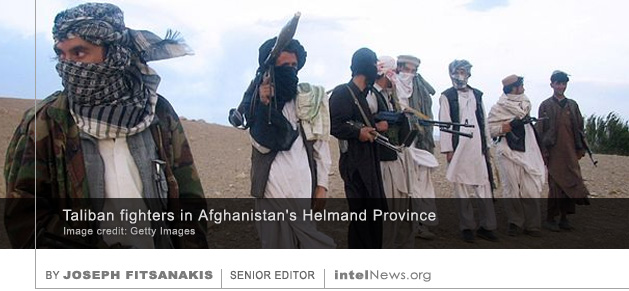
Several Indian news agencies reported last month that Afghanistan’s National Directorate of Security (NDS) arrested 10 Chinese nationals in Kabul on December 10, on suspicion of espionage. The 10 Chinese included at least one woman, and were believed to work for the Ministry of State Security (MSS), China’s primary intelligence agency.

According to reports in the Indian press, the Chinese nationals had used Kabul as a base to buld a fictitious chapter of the East Turkestan Islamic Movement (ETIM). Based in China’s heavily Muslim Xinjiang Province, ETIM is a sepratist armed group, which seeks to create an Islamic breakaway state for ethnic Uighurs. The purpose of the ruse was reportedly to entrap ETIM supporters and members who were operating in Afghanistan.

It is also alleged that at least two of the Chinese spies had contacts with the Haqqani network, a militant group that has pledged allegiance to the leadership of the Taliban, but maintains an independent command structure. Indian news networks named the two Chinese alleged spies with Haqqani Network contacts as Li Yangyang and Sha Hung. Interestingly, the arrests of the 10 Chinese nationals took place shortly before United States President Donald Trump was reportedly briefed about contacts between the MSS and pro-Taliban groups in Afghanistan. According to Axios, US intelligence agencies told the president that Chinese spies had offered Afghan militants bounty in exchange for killing American troops.

Citing “diplomats and security officials in Kabul” who are “familiar with the matter”, The Hindustan Times reported on Monday that the ten Chinese nationals had been released after 23 days in detention. They boarded a chartered airplane heading for China on Saturday, said the paper. None were formally charged. Their release was reportedly ordered by Afghan President Ashraf Ghani, following direct negotiations with Beijing.

Author: Joseph Fitsanakis | Date: 05 January 2021 | Permalink

Afghan spy chief warns drone warfare is Taliban’s new fighting method

TalibanTHE DIRECTOR OF AFGHANISTAN’S main intelligence agency warned on Monday that the Taliban are for the first time resorting to using drones in order to carry out attacks against the Afghan government. Groups such as the Islamic State in Syria, and Houthi rebels in Yemen, have been using modified drones to drop makeshift bombs on enemy targets since at least 2016. But the Taliban have not previously been known to make use of such weapons.

The information was shared by Ahmad Zia Shiraj, director of Afghanistan’s National Directorate of Security (NDS), during an address to the Afghan parliament. Headquartered in Kabul, the NDS is Afghanistan’s primary domestic and foreign intelligence agency. It forms part of Afghanistan’s National Defense and Security Forces, along with the branches of the Armed Forces and the police. Its director reports directly to the Office of the President of Afghanistan.

Speaking during a parliament session on Monday, Shiraj said that the Taliban have begun to use drones to drop explosives on targets. These are commercially available hobby drones, which are equipped with video cameras and designed for filming. The Taliban purchase these drones and modify them so that they can carry and release explosives, said Shiraj. He added that Taliban forces had used drones to carry out attacks in the northern Afghan province of Kunduz, as well as in Paktia, on the Afghan-Pakistani border.

Media reports in October claimed that the Taliban used a drone to drop a bomb on the headquarters of the Kunduz governorate, killing at least four people. The New York Times noted at the time that, if true, the use of a drone to carry out an attack could be the first in the 19-year war between the Taliban and the American-supported Afghan government, and called it “a worrisome shift” in tactics. On Monday, Shiraj did not mention specific attacks, but he did say that there had been more than one such incidents. He said that the NDS would pressure the Afghan government to stop the importation of commercial drones.

Author: Joseph Fitsanakis | Date: 24 November 2020 | Permalink

US forces are secretly helping the Taliban fight the Islamic State in Afghanistan

Taliban

UNITED STATES TROOPS ARE secretly re-purposing weapons that were initially used to fight the Taliban, in order to help the Taliban defeat the Islamic State in northeastern Afghanistan, according to a new report. The American military’s newfound role in Afghanistan reportedly reflects the view of the White House that the Taliban have no aspirations outside of Afghanistan, while the Islamic State seeks to challenge America’s interests worldwide.

The rumors that the US Department of Defense has been providing assistance to the Taliban as they battle the Islamic State in Afghanistan are not new. In March of this year, General Frank McKenzie, Commander of US Central Command, admitted as much during Congressional testimony. He told the US House Armed Services Committee that the Taliban had received “very limited support from us”, but declined to elaborate during open-door testimony.

What did General McKenzie imply? According to veteran military affairs reporter Wesley Morgan, US Joint Special Operations Command (JSOC) forces in Afghanistan have been instructed to provide air cover to Taliban forces as they fight the Islamic State. Morgan said he spoke to members of a JSOC Task Force in Afghanistan’s northeastern Kunar Province, who confirmed General McKenzie’s comments from back in March.

Importantly, the JSOC’s air support to the Taliban is reportedly provided without direct communication between the US forces and the Taliban. Instead, the Americans simply “observe battle conditions” and “listen in on the [communications of the] group” in order to determine what kind of air support it needs. The resources used in that capacity consist of weaponry that was initially deployed against the Taliban, but is now being secretly repurposed to assist the Taliban in their fight against the Islamic State. According to Morgan, the JSOC team in Kunar, which provides air cover to the Taliban, jokingly refers to itself as the “Taliban air force”.

Miller adds it is unclear whether the Afghan government in Kabul is aware that US forces are providing assistance to the Taliban. It is also unclear whether al-Qaeda, which is a close ally of the Taliban, is benefiting from that assistance. Recently a United Nations report warned that al-Qaeda remains “heavily embedded” with the Taliban in Afghanistan, despite assurances by officials in the administration of US President Donald Trump that the two groups are in the process of parting ways.

Author: Joseph Fitsanakis | Date: 03 November 2020 | Permalink

Belgium knew about Russian bounty offered to Taliban, defense minister says

Belgian German AfghanistanBelgium’s spy services were aware of financial rewards that Russia allegedly offered to the Taliban in exchange for killing American and other Western troops in Afghanistan, according to Belgium’s defense minister. Late last month, three leading American newspapers, The New York Times, The Washington Post and The Wall Street Journal alleged that the White House had been briefed about an alleged Russian bounty program that was in existence in Afghanistan. According to the allegations, the Main Directorate of the General Staff of the Russian Armed Forces, known as GRU, had offered Taliban fighters financial rewards in exchange for killing American and other North Atlantic Treaty Organization (NATO) troops. Both the White House and the Kremlin denied the allegations, with US President Donald Trump dismissing them as “fake news” and “a hoax”.

On Wednesday, Philippe Goffin, who serves as Belgium’s Minister of Foreign Affairs and Minister of Defense, told the Belgian Federal Parliament that his office was aware of the Russian bounty program. The minister was speaking before the parliament’s Committee on National Defense, where he responded to questions from committee members. According to Goffin, he had been briefed on the matter by the General Intelligence and Security Service (SGRS), Belgium’s military intelligence organization. He said the SGRS was “aware of Russian support for the Taliban in Afghanistan” and offered evidence that “confirmed Russian interference there”. He added that the Belgian intelligence services had linked “only one incident” to the Russian bounty program. It had occurred in April of 2019, and had resulted in the deaths of three American soldiers, he said.

Belgium is a founding member of NATO and hosts the alliance’s headquarters in its capital, Brussels. The country until recently participated in the NATO joint force in Afghanistan, but recalled its troops home in May due to the coronavirus pandemic.

Author: Joseph Fitsanakis | Date: 17 July 2020 | Permalink

As debate centers on Afghanistan, Russian forces challenge US troops in Syria

Deir al-Zour SyriaAs an intense debate rages in the United States about Moscow’s alleged subversion of American military goals in Afghanistan, sources warn that Russia is increasingly challenging Washington’s troops in Syria. Recent reports have alleged that the Kremlin has been offering financial rewards to Taliban fighters encouraging them to kill US troops in Afghanistan. The Russian government has denied these allegations, while the White House claims it was never briefed about this by the Intelligence Community.
Some experts suggest, however, that Russia’s growing involvement in Afghanistan may be part of a wider effort by Moscow to test the limits of American military presence in Asia. This can be seen as a predictable response by the Russians, given that US President Donald Trump has repeatedly indicated he is not a fan of substantial American military involvement abroad. According to a new report by Politico, Russia’s challenge can be observed, not only in Afghanistan, but also in Syria, where American and Russian troops have been present in the same battlespace for over five years now.

In the past, the two militaries have kept open lines of communication to ensure that they stay clear from each other, thus avoiding a major escalation between the two nuclear-armed nations. Consequently, despite supporting opposing sides in the war, Russian and American troops have not directly challenged each other, with very few exceptions. Presently Russian forces continue to support of the Syrian President, Bashar al-Assad, while several hundred US forces are working closely with Kurdish fighters, who control territory in eastern Syria.

Despite the pullout of most American troops from the region in the past two years, the US maintains a force of nearly 1,000 soldiers in the Deir al-Zour region of eastern Syria. These are closely coordinating with Kurdish peshmerga, whose primary tasks include guarding the region’s lucrative oil fields, thus starving the government of President al-Assad of a major source of revenue. In the past, Russian troops have rarely ventured in the Kurdish-controlled region, in full knowledge of the US military presence there. Lately, however, brushes between American and Russian troops in Deir al-Zour have been “increasingly frequent”, according to Politico, which cited “two current US officials and one former US official” in its report. Read more of this post

News you may have missed #909 – Insurgency edition

Al-Hawl refugee campSouth African intelligence concerned about spread of insurgency in Mozambique. This is the first public expression of concern from the South African government that the violence in neighboring Mozambique could spread. Previously, the South African Parliament was informed the matter was only to be discussed behind closed doors. Earlier in June, the South African military reportedly participated in Operation COPPER, in support of the Mozambican Defense Force.

US intelligence says Russia offered Afghans Bounties to kill US troops. American intelligence officials have concluded that a Russian military intelligence unit secretly offered bounties to Taliban-linked militants for killing coalition forces in Afghanistan — including targeting American troops — amid the peace talks to end the long-running war there, according to officials briefed on the matter. The intelligence finding was briefed to President Trump, and the White House’s National Security Council discussed the problem at an interagency meeting in late March, the officials said.

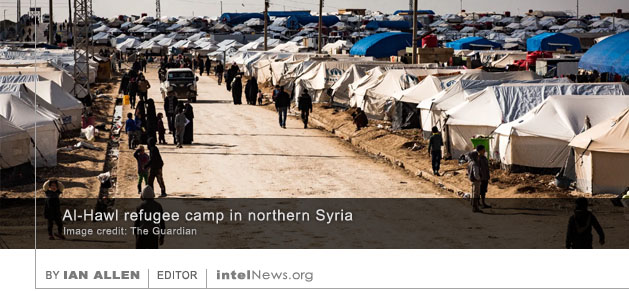
Analysis: The security risk posed by ISIS women smuggling their way out of camp Hol. While a debate rages in Europe over whether or not ISIS women and their children can be repatriated to their European home countries, some women have been taking things into their own hands and returning via illegal smuggling networks, creating new and serious security issues with which European officials must now grapple.

News you may have missed #904

Al-Qaeda AfghanistanUN report says Afghan Taliban still maintain ties with al-Qaida. The Taliban in Afghanistan still maintain close ties with the al-Qaida terror network, despite signing a peace deal with the United States in which they committed to fight militant groups, a UN report said. The U.N. committee behind the report said several significant al-Qaida figures were killed over the past months but a number of prominent leaders of the group, once led by Osama bin Laden, remain in Afghanistan. The report said they maintain links with the feared Haqqani network, an ally of the Taliban, and still play a significant role in Taliban operations.

Britain’s SIGINT agency sees workload spike amid COVID-19 vaccine hunt. Britain is one of the leading countries developing a COVID-19 vaccine with Oxford University and Imperial College London at the forefront, along with Sinovac in China. Whoever develops it first will reap billions from global sales, making research information highly valuable. This is having a major impact on the workload of the Government Communications Headquarters (GCHQ), its director, Jeremy Fleming, said last week.

Indian IT firm spied on politicians and Investors around the world. New Delhi-based BellTroX InfoTech offered its hacking services to help clients spy on more than 10,000 email accounts over a period of seven years. During that time, the firm targeted government officials in Europe, gambling tycoons in the Bahamas, and well-known investors in the United States including private equity giant KKR and short seller Muddy Waters, according to three former employees, outside researchers, and a trail of online evidence.

News you may have missed #898

Félicien KabugaMajor suspect in Rwanda genocide arrested in France using fake identity. Félicien Kabuga (pictured), one of the most wanted suspects of the Rwandan genocide, was arrested last week in a dawn raid in Asnières-sur-Seine, near Paris, where he had been living under a false identity. The International Criminal Tribunal for Rwanda accuses him of having been the main financier of the ethnic Hutu extremists who slaughtered 800,000 people in 1994. The United States had offered a $5 million reward for information leading to his arrest.
US and Afghan officials disagree over whether Taliban or ISIS was behind hospital massacre. Afghan officials on Friday blamed the Taliban for a bloody attack on a maternity hospital in the capital, Kabul, this week, rejecting a US assertion that it was carried out by ISIS militants. The Taliban, who struck a deal with the United States in February clearing the way for the withdrawal of U.S. troops and the end of America’s longest war, denied responsibility.
Thousands defer plans to leave the US military during coronavirus crisis. Across the US military, uncertainty about future jobs or college opportunities is driving more service members to re-enlist or at least postpone their scheduled departures. As unemployment, layoffs and a historic economic downturn grip the nation, the military —with its job security, steady paycheck and benefits— is looking much more appealing. The influx of people re-enlisting will offset any shortfalls in recruiting, which has been hampered by the outbreak. And that will help the services meet their total required troop levels for the end of the year.

Author: Ian Allen | Date: 23 May 2020 | Permalink

US considers pulling CIA from Afghan front lines to help salvage Taliban peace deal

US embassy in AfghanistanThe White House is considering a plan to pull back Central Intelligence Agency officers from stations across Afghanistan, in a last-ditch effort to boost prospects for a peace deal with the Taliban. Plans for the peace deal were announced in February by representatives of the US and the Pashtun-based Sunni group, which has waged an Islamist insurgency against the US-supported government in Kabul since 2001.

But armed violence between the two sides has since peaked, prompting many to question the viability of planned peace deal. In response to this development, the White House is now reported to be considering a plan to limit the CIA’s presence in the Central Asian country. This was demanded by the Taliban early on in the negotiations, alongside the planned withdrawal of American troops from the country. In return the Taliban had pledged no break all ties with international terrorist groups, including al-Qaeda.

The US had previously agreed to withdraw its troops from the country, but had ruled out pulling back CIA personnel —which are believed to number in the several hundreds in Afghanistan. A major reason for rejecting the Taliban demand is that the CIA supports, arms and trains several proxy forces throughout the country. These include the Khost Protection Force (KPF), a 6,500-strong unit of elite Afghan soldiers, which has a strong presence in Taliban strongholds like Ghazni, Paktia and Khost. These forces do not operate under the command of the Afghan government, but are instead directly controlled by the CIA.

Reports in August of 2019 claimed that the CIA would retain “a strong presence on the ground in Afghanistan”, even if American troops were to leave the country following a peace deal with the Taliban. But this is now under review, according to US officials who spoke anonymously to The New York Times. The paper said on Sunday that “the deliberations over the CIA presence” were now “part of larger discussions about pulling back international forces” from the country. One possible course of action revolves around a plan to limit the presence of the CIA to the grounds of the US embassy in Kabul, said The Times.

Author: Joseph Fitsanakis | Date: 20 April 2020 | Permalink

US-Taliban peace deal will empower ISIS in Afghanistan, say insiders

ISIS Islamic State AfghanistanAn imminent peace agreement between the United States government and the Taliban will inadvertently empower the Islamic State in Afghanistan, according to a number of insiders, who warn that the soon-to-be-announced deal may have grave unintended consequences for the war-ravaged country.


After nearly two decades or war, the United States is close to concluding a peace agreement with the Taliban, the Pashtun-based Sunni group that has waged an Islamist insurgency against the American-supported government of Afghanistan since 2001. The two sides have said that they will be signing a peace settlement on February 29, providing that an ongoing agreement for a week-long reduction in armed violence holds. If the current reduction in violence continues unabated, the United States has agreed to remove most of its troops from the country, while the Taliban have agreed to initiate peace negotiations with the Afghan government.

But a team of journalists with the American television program Frontline, who are working on the ground in Afghanistan, report that the impending peace deal may bear unintended consequences. They report that numerous sources in Afghanistan are warning that the peace deal will result in an increase in membership for the Islamic State forces in the country. This will happen, they say, because Taliban fighters who object to a peace treaty with Washington will abandon the Taliban and join the Islamic State. Some Frontline sources claim that the majority of the Taliban’s foot soldiers are preparing to join the Islamic State if a deal is struck between Washington and the Taliban.

The Frontline team quotes one Islamic State commander in Afghanistan, who claims that the peace deal will “make the caliphate rise”, as “Taliban fighters have promised to join us”. The United States is trying to pre-empt this expected trend, according to reports. The Pentagon expects that, as soon as the peace treaty with the Taliban is signed, it will need to redirect its remaining troops in the country to focus their attention to the forces of the Islamic State.

Author: Joseph Fitsanakis | Date: 27 February 2020 | Permalink