Russian ex-spy sees link between Skripal and GCHQ officer found dead in 2010
April 16, 2018 3 Comments
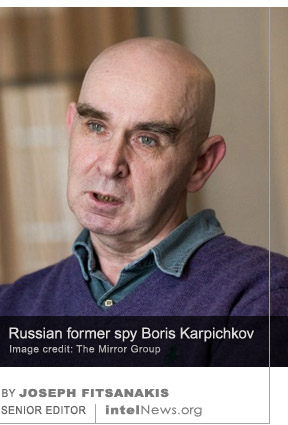 A former officer in the Soviet KGB, who now lives in the United Kingdom, is to be questioned by British police after alleging that there is a link between the recent poisoning of Sergei Skripal and the mysterious death of a British intelligence officer in 2010. There has been extensive media coverage in the past month of the poisoning of Sergei Skripal, a Russian former military intelligence officer who spied for Britain in the early 2000s and has been living in England since 2010. Nearly every European country, as well as Canada, Australia and the United States, expelled Russian diplomats in response to the attack on the Russian former spy, which has been widely blamed on the Kremlin.
But eight years ago, another mysterious attack on a spy in Britain drew the attention of the world’s media. Gareth Williams, a mathematician in the employment of Britain’s signals intelligence agency, GCHQ, had been seconded to the Secret Intelligence Service (MI6), Britain’s external intelligence agency, to help automate intelligence collection. He had also worked with United States agencies, including the Federal Bureau of Investigation and the National Security Agency. But his career came to an abrupt end in August 2010, when he was found dead inside a padlocked sports bag at his home in Pimlico, London. It remains unknown whether his death resulted from an attack by assailants.
Last weekend, however, Boris Karpichkov, a former intelligence officer in the Soviet KGB and its post-Soviet successor, the FSB, said that Williams was killed by the Russian state. Karpichkov, 59, joined the KGB in 1984, but became a defector-in-place for Latvian intelligence in 1991, when the Soviet Union disintegrated. He claims to have also spied on Russia for French and American intelligence. In 1998, carrying two suitcases filled with top-secret Russian government documents, and using forged passports, he arrived with his family in Britain, where he has lived ever since. In an interview with the British tabloid newspaper The Sunday People, Karpichkov said that Williams was killed by Russian intelligence operatives with an untraceable poison substance, because he had discovered the identity of a Russian agent within his agency, the GCHQ. According to Karpichkov, Williams had befriended the mole, codenamed ORION by the Russians, and had realized that he was working for the Russians. The mole then allegedly told his Russian handler, a non-official-cover officer with an Eastern European passport, codenamed LUKAS, that Williams had grown suspicious. Read more of this post
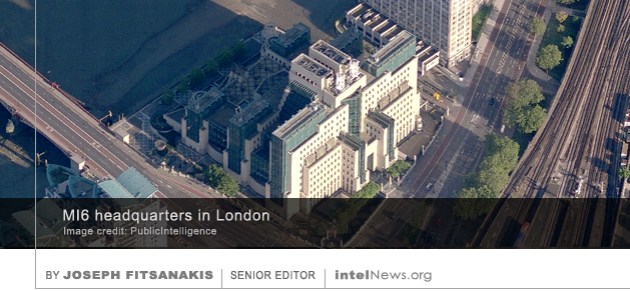 The British secret services have begun tightening the physical security of dozens of Russian defectors living in Britain, a week after the attempted murder of former KGB Colonel Sergei Skripal in southern England. The 66-year-old double spy and his daughter, Yulia, were found in a catatonic state in the town of Salisbury on March 4. It was later determined that they had been attacked with a nerve agent. Russian officials have vehemently denied that the Kremlin had any involvement with the brazen attempt to kill Skripal. But,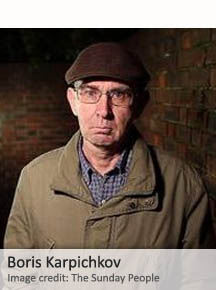








 intelNews.org
Ex-Russian spy can sue British government for revealing his identity, court rules
October 30, 2023 by Joseph Fitsanakis 2 Comments
He then allegedly spied on Latvia for one of the KGB’s successor agencies, the Federal Security Service, before switching sides again and spying on Russia for the Latvians. He also claims to have spied on Russia for French and American intelligence. In 1998, carrying two suitcases filled with top-secret Russian government documents, and using forged passports, he arrived with his family in Britain, where he has lived ever since. Shortly after he was granted asylum, the British government issued Karpichkov with a new identity to protect him from the Russian security services. In 2018, Karpichkov claimed that, despite the British government’s efforts to protect him, Russian intelligence had tried to kill him three times since 2006.
Since Karpichkov’s relocation to the United Kingdom, Latvian authorities have twice attempted to have him extradited there. A High Court judge rejected the first extradition request, ruling that Karpichkov’s life would be in danger if he were to be handed over to Latvia. But in 2018 the Latvian authorities issued a follow-up request for Karpichkov’s extradition. At that time the United Kingdom’s National Crime Agency (NCA), which manages the UK Protected Persons Service, shared information about Karpichkov’s protected identity with the Latvians. A judge later quashed that extradition request too, warning that the former KGB intelligence officer had “an abundance of dangerous enemies in both Latvia and Russia”.
Karpichkov claims that the information that the NCA shared with the Latvians during the extradition negotiations, resulted in him receiving death threats from his enemies abroad. The NCA claims it was under a European Arrest Warrant legislation mandate to disclose Karpichkov’s protected identity to the Latvian authorities. On Friday, however, a High Court judge ruled that Karpichkov had the right to sue the NCA for unlawfully disclosing Karpichkov’s details in violation of data protection rules. This means Karpichkov is now entitled to file a lawsuit against the British government for allegedly misusing his private information.
► Author: Joseph Fitsanakis | Date: 30 October 2023 | Permalink
Filed under Expert news and commentary on intelligence, espionage, spies and spying Tagged with Boris Karpichkov, defectors, KGB, Latvia, National Crime Agency, News, Russia, UK