Half of all IRA leaders were government spies, report claims
December 26, 2011 1 Comment
 By JOSEPH FITSANAKIS | intelNews.org |
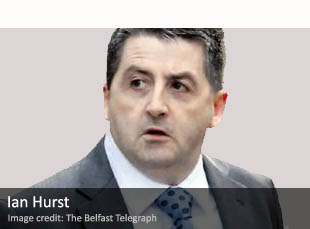
A report to be presented before an Irish government inquiry states that nearly half of the leadership of the Provisional Irish Republican Army (PIRA) during the ‘Troubles’ of the 1960s and 1970s consisted of informants working for British or Irish intelligence services. The 24-page report is part of a larger dossier of evidence that is soon to be presented before the Smithwick Tribunal, a judicial inquiry into the 1989 killing by the Provisional IRA of two police officers of the Royal Ulster Constabulary (see previous intelNews coverage here). The evidence dossier has reportedly been prepared by Ian Hurst, former member of the Force Research Unit (FRU), a secretive body within the British Army’s Intelligence Corps, tasked with running agents inside militant groups. Hurst, who worked in the Intelligence Corps from 1981 to 1990, was responsible for handling informants and agents inside Irish paramilitary groups, including the Provisional IRA. He is believed to be the first-ever member of the FRU to have spoken publicly about his experience. In the report, which was leaked to The Belfast Telegraph, Hurst suggests that approximately one in every four volunteers of the Provisional IRA was an agent of an intelligence organization, and that among leading members this number increased to one in two. Among them was allegedly the British agent codenamed STAKEKNIFE, identified by some as Freddie Scappaticci, a senior member of the Provisional IRA Northern Command’s Internal Security Unit (ISU), tasked with counterintelligence operations (Scappaticci denies these claims). Read more of this post







 intelNews.org
British soldier who spied for Iran found guilty of espionage and terrorism
December 2, 2024 by intelNews 4 Comments
Prior to his arrest, Khalife was reportedly seen by his fellow soldiers and superiors as a promising soldier. Having joined the British Army at 16, he was quickly promoted to lance corporal (the lowest ranking of a non-commissioned officer) and cleared to work in the area of signals intelligence. He had also expressed a strong interest in joining the Special Air Service (SAS), which are the British Army’s special forces.
However, on November 9, 2021, Khalife voluntarily called the national security concerns hotline of the British Security Service (MI5). He told the operator on the other end of the line that he was a British soldier who had been spying for Iran for “more than two years”, but had now decided to become a double agent by cooperating with the British government. Khalife called again, and although he did not identify himself during the telephone conversations, MI5 was able to track him.
It has since become known that Khalife began spying for Iran when he was just 17 years old, shortly after joining the British Army. Over the next two years, Khalife provided his Iranian handlers with information about the identities of SAS personnel, military computer systems, as well as government surveillance programs and hardware, including unmanned aerial vehicles. Throughout that time, he communicated with his Iranian handlers via the Telegram instant messaging service, or via dead drops in Britain, as well as during trips abroad.
Shockingly, Khalife was temporarily able to escape justice twice following his arrest. In January 2023, he disappeared while on bail. He was found after nearly a month, living in a stolen van, which he had converted into a rudimentary camper. In September of that year, Khalife escaped from Wandsworth prison (pictured) in southwest London, by hiding beneath a delivery vehicle. He was captured three days later and eventually taken to court, where he was convicted and is now awaiting sentencing.
According to reports, British authorities are still unable to piece together the entirety of the information that Khalife shared with the Iranians. Consequently, the full extent of the damage he caused to British national security remains unknown. What is clear is that the Khalife case has exposed serious vulnerabilities in the security clearance-vetting process, which is “lacking in a lot of ways” —not least in the fact that it relies largely on self-reporting, as one expert told The Guardian newspaper on Saturday.
► Author: Joseph Fitsanakis | Date: 02 December 2024 | Permalink
Filed under Expert news and commentary on intelligence, espionage, spies and spying Tagged with British Army, counterintelligence, Daniel Khalife, Iran, Official Secrets Act (UK), Terrorism Act (UK), UK