Revealed: British government minister spied for Czechoslovakia
June 29, 2012 2 Comments
 By JOSEPH FITSANAKIS | intelNews.org |
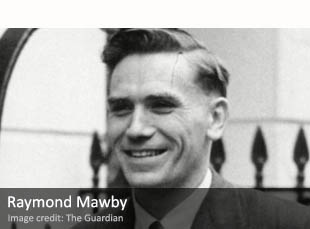
The BBC has uncovered evidence that a Conservative Party minister was a longtime paid informant for Czechoslovakia’s Cold-War-era secret intelligence service. The discovery was made earlier this month by the BBC’s security correspondent, Gordon Corera, while visiting the declassified archives of the Czechoslovakian ŠtB to investigate an alleged attempt to blackmail British Conservative politician Edward Heath in the 1970s. Corera’s discovery shows that Raymond Mawby, who was a Tory Member of Parliament from 1955 until 1983, spied for the ŠtB in return for money for nearly a decade, starting in 1961. The BBC describes Mawby, who served as assistant Postmaster General from 1963 to 1964, and rose to the rank of junior minister in 1963, as “an unusual Tory”, since he was “a working class trade unionist” from Devon. Indeed, his extensive ŠtB file, uncovered by the BBC, shows that he was not as loyal to conservative values as one might think. Mawby was first approached by Czechoslovakian intelligence in November 1960, while attending a cocktail reception at the Czechoslovakian embassy in London. His contacts with his ŠtB handlers became more frequent during the following year when, operating under the codename Laval, he began providing them with political information from the British Houses of Commons, in exchange for regular payments of £100. By 1964, he was on a £400 monthly retainer by the ŠtB, in return for supplying the Czechoslovaks with documents from Parliament, details about the personal lives of his colleagues, and lists of Parliamentary committee members. In one instance, Mawby even supplied his foreign handlers with a hand-drawn floor plan of the office of the Prime Minister at 10 Downing Street. Read more of this post







 intelNews.org
UK to pardon genius wartime cryptanalyst convicted of ‘indecency’
July 24, 2013 by Ian Allen 4 Comments
One of the greatest mathematical minds of modern times, who is widely considered the father of computer science and is credited with helping the Allies win World War II, is to receive a posthumous pardon by the British government, who in 1952 convicted him of homosexuality. Alan Turing, a mathematician and logician, with careers at the universities of Cambridge and Princeton, worked as a cryptanalyst for the British government during World War II. His work for Britain’s Government Code and Cypher School (GC&CS) at Bletchley Park, the British Armed Forces’ wartime joint codebreaking center, was instrumental in helping the British crack German military ciphers. Turing is personally credited with devising a complex method for compromising the Enigma machine, a highly secretive message-encoding device used by the German military and intelligence services. In 1952, while working for the Department of Mathematics at the University of Manchester, Turing was charged with “gross indecency” under Section 11 of the Criminal Law Amendment Act of 1885, which criminalized homosexuality. After pleading guilty to having a sexual relationship with a 19-year-old unemployed man, Turing was convicted and given a choice of imprisonment or undergoing “chemical castration”. The latter was a hormonal treatment based on injections of synthetic estrogen, aimed at reducing a person’s sexual drive. Turing chose the latter option, which rendered him impotent and caused massive chemical imbalance in his brain. Read more of this post
Filed under Expert news and commentary on intelligence, espionage, spies and spying Tagged with Alan Turing, British Houses of Parliament, cryptanalysis, GCHQ, homosexuality, News, UK