News you may have missed #542
July 19, 2011 Leave a comment

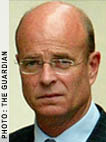
Sir John Chilcot
By IAN ALLEN | intelNews.org |
►►Ex-spy says MI6 cut corners to back Blair’s Iraq war case. Britain’s ongoing Iraq Inquiry headed by Sir John Chilcot, heard last week from a former spy, identified in documents only as “SIS2”. The witness said that MI6 was “probably too eager to please” the government and was guilty of “flying a bit too close to the sun”. He was referring to the intelligence support provided by MI6 in support of the case for entering the Iraq War, made by the Labour government of Prime Minister Tony blair in 2003. He also told the committee that “the pressure to generate results, I fear, did lead to the cutting of corners”. ►►Medical group criticizes CIA’s vaccination scheme. A whimiscal tone prevails in most articles on the recent revelation that the CIA tried to collect DNA evidence on Osama bin Laden by running a phony vaccination program in Abbottabad, Pakistan. But medical groups engaged in organizing vaccination schemes are not amused. French-based international medical aid charity Médecins Sans Frontières has lashed out at the CIA because, it said, by using a medical cover for its assassination scheme, the Agency endangered those who conduct life-saving immunization work around the world. Read more of this post








 intelNews.org
Ex-MI6 head ‘might air memoirs’ to set Iraq War record straight
July 26, 2013 by Joseph Fitsanakis 4 Comments
The former director of Britain’s external spy service has hinted he might publish his personal account of the decisions that led to Britain’s entry in the Iraq War, if he is criticized in a public inquiry on the subject. Sir Richard Dearlove led the UK’s Secret Intelligence Service, known as SIS or MI6, from 1999 until his retirement in 2004. He is currently on sabbatical from his post as Master of Cambridge University’s Pembroke College, in order to research and author his autobiography. The memoir is believed to be largely preoccupied with the intelligence that led to the British government’s decision to enter the United States-led 2003 war in Iraq. Sir Richard had previously indicated that he intended to make his memoirs posthumously available as a resource to academic researchers. But in an email to British tabloid The Mail on Sunday, he hinted he would consider publishing his personal account if he finds himself criticized by the Iraq Inquiry. Known in Britain as the Chilcot Inquiry, after its Chairman, Sir John Chilcot, the Iraq Inquiry was commissioned by the British government in 2009 to investigate the executive decisions that led the country to participate in the invasion of Iraq. One of the inquiry’s many goals was to evaluate the intelligence provided by MI6 to the government of Prime Minister Tony Blair. There have been rumors that the inquiry’s declassified findings, which are scheduled for publication soon, are critical of MI6’s performance and place particular blame on Sir Richard’s role in the debacle. Read more of this post
Filed under Expert news and commentary on intelligence, espionage, spies and spying Tagged with Chilcot Inquiry (UK), Iraq War, MI6, News, Sir Richard Dearlove, Tony Blair, UK