Leaked counterintelligence document reveals Russian concerns about Chinese spying

FSB RussiaA LEAKED REPORT AUTHORED by Russia’s primary counterintelligence agency reveals deep concern in national security circles about the intensity of Chinese spying against Russian interests, according to The New York Times. The paper said last week that the leaked report, which was produced by Russia’s Federal Security Service (FSB) between 2023 and 2024, offers “the most detailed behind-the-scenes view” of Russia’s counterintelligence concerns about China.

Following the death of Soviet Premier Joseph Stalin, the two communist countries became sworn enemies and nearly went to all-out war against each other. But in recent years Moscow and Beijing put aside their differences, prompted by their mutual desire to challenge the geopolitical supremacy of the United States and bring about a multipolar world. Since 2022, when Moscow resumed its military invasion of Ukraine, Beijing has stood firmly by the Kremlin. China has become the largest importer of Russian energy and has provided the Russian military with much-needed advanced technology. The relationship between the two neighboring nations appears to be deeper than ever before.

But according to a recently leaked report, Russia’s national security establishment is deeply concerned about Chinese efforts to dominate its ally by spying against it. The eight-page report outlines “ENTENTE-4”, a counterintelligence program run by the 7th Service of the FSB’s Department for Counterintelligence Operations. The department is known by its Russian acronym, DKRO. The DKRO’s 7th Service is tasked with counterintelligence planning and operations against Asian countries, with China being its primary target.

According to The Times, the DKRO produced the report sometime between 2023 and 2024. The document appears to have been intended for distribution to the FSB’s field offices across Russia. It was acquired by ARES Leaks, a cyber criminal syndicate, which posted images of the document on the Telegram messenger application. The paper said it shared the leaked document with “six Western intelligence agencies”, all of which assessed it to be genuine. Read more of this post
Taiwan jails soldiers guarding president’s office for spying for China

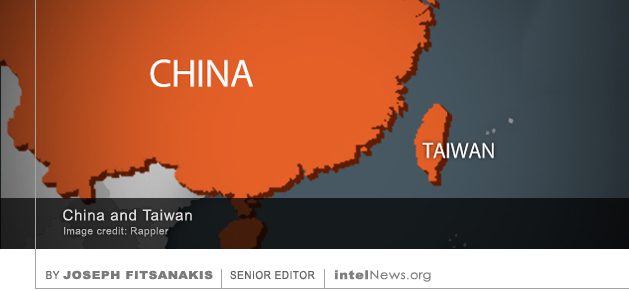
China and TaiwanFOUR TAIWANESE SOLDIERS WITH access to “extremely sensitive” secrets have received jail sentences for spying for Chinese intelligence, as Taiwanese authorities have warned of a sharp rise in Chinese espionage cases. Three of the soldiers had been detailed to the security of the Office of the President, while the fourth soldier was a member of staff at the Taiwanese Ministry of National Defense’s Information and Telecommunications Command.
According to the prosecution, the soldiers made use of their personal mobile phones to photograph “internal military information” they had access to. They then shared the photographs with their Chinese intelligence handlers. In return for their services, their handlers compensated the soldiers by paying them between $7,000 and $20,000 each. The espionage arrangement between the soldiers and their handlers lasted between 2002 to 2024, the court heard.

No information was shared during the open-door portion of the court case about the type of information that the four soldiers were accused of having shared with their Chinese handlers. But the prosecution alleged that the digital photographs given to the Chinese contained information that the four alleged spies had acquired while working in “extremely sensitive and important units” of the Taiwanese military. At the conclusion of the court case, the court sentenced the soldiers to between 70 and 84 months in prison for violating Taiwan’s national security law. In sentencing the accused, the judge said they had engaged in acts that “betrayed the country and endangered national security”.

Meanwhile, the Taiwanese National Security Bureau announced late last week that the number of people who were prosecuted for involvement in Chinese espionage in 2024 broke all recent records for the second year in a row. Specifically, there were 10 prosecutions for Chinese espionage in 2022, 48 in 2023, and 64 in 2024. Many of those caught spying for China were either active or former members of the Taiwanese military. These individuals were deliberately targeted by Chinese intelligence officers because they had knowledge of Taiwanese military secrets, the National Security Bureau said.

Author: Joseph Fitsanakis | Date: 31 March 2025 | Permalink

Review of “Chinese Espionage Operations and Tactics” (Second Edition)

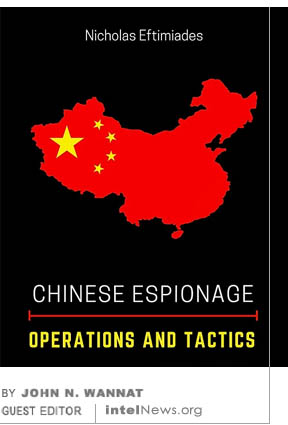
Chinese Espionage Operations and TacticsMUCH HAS HAPPENED IN the West and in China since Nick Eftimiades first published Chinese Espionage Operations in 1994. It was the first in-depth study of Chinese espionage operations, which for decades had been overshadowed by Soviet intelligence and their espionage operations.

Throughout much of the latter part of the 20th  century, United States and other Western security services viewed Chinese intelligence and security services as being focused on their own internal security matters. They were not nearly as well-known or recognized as other adversarial intelligence and security services.  Nick was one of first experts to shine a light on Chinese intelligence operations. Since that time, he has dedicated his career and untold time and efforts to better understand Chinese intelligence tactics and techniques.

In the second edition of the book, Nick provides a comprehensive analysis and assessment on how the espionage and intelligence threat from China has grown significantly over the past three decades. He explains this in very clear and unambiguous terms to anyone who seeks a better understanding of these threats. This book is a culmination of more 30 years of dedicated research and the analysis of hundreds of cases that involve China. It focuses, not only on traditional espionage cases and operations, but examines motives, techniques and tactics relating to economic espionage, the theft of trade secrets and the theft of academic research and development.

There are a number of detailed case studies and real-life examples in the book, which show it is not only Chinese government organizations that pose a significant threat to United States and Western interests, but also a multitude of actors —e.g., academia, business people and researchers, with access to universities, commercial entities and think tanks. Chinese intelligence operatives conduct activities in all these areas in order to help China fulfill its strategic information and technology requirements and objectives. Nick examines China’s Whole of Society approach to a number of recent traditional and non-traditional collection efforts.

Chinese Espionage Operations and Tactics is an absolute must-read for individuals who handle national security matters; for state and local officials who are engaged in discussions with Chinese officials; for American and other Western businesses who are, or who will be, doing business with Chinese counterparts; for those in academia and research institutes involved with technology research and development, and finally for those who seek a better understanding of the threats posed by China’s growing and expanding worldwide presence and intelligence apparatus.

Author: John N. Wanat* | Date: 19 February 2025 | Permalink

  • John N. Wanat retired as Assistant Director for Investigations, Office of Export Enforcement, Bureau of Industry and Security, Department of Commerce.

White House holds emergency meeting with telecoms over ‘massive’ Chinese breach

VerizonTHE WHITE HOUSE HELD an emergency meeting on Friday with senior telecommunications industry officials to discuss the fallout from a Chinese cyber espionage operation described as “massive” by experts. The existence of the operation was revealed last month by Microsoft engineers, who claimed that it was orchestrated by Salt Typhoon, a Chinese government-linked hacker group.

On Thursday, following a briefing provided by intelligence officials, Senator Mark Warner (D-VA), who chairs the United States Senate’s Select Committee on Intelligence, referred to the Chinese breach as “far and away the most serious telecom hack in [American] history”. Warner added that the volume of data the Chinese hackers were able to collect on “important American officials” was alarming, but that the extent of the intrusion was significantly broader than initially thought and compromised the privacy of telephone users across the United States.

According to reports, the breach affected a host of American telecommunications service providers (TSPs), including the three largest —T-Mobile, Verizon, and AT&T. The initial breach compromised the system employed by the TSPs to facilitate communications interception requests by government agencies following the issuance of court warrants. Eventually, however, the hackers were eventually able to exploit antiquated software and hardware in the United States’ national telecommunications network in order to target a wide array of users.

The extent of the damage caused by the breach remains unknown, as very little about it has been shared by the White House or the telecommunications industry. Nevertheless, it appears that the hackers selected telephone service users with senior current or former posts in government, including President-Elect Donald Trump. The hackers were reportedly able to access the metadata, and even content, of all unencrypted telephone calls and text messages to and from these users.

Friday’s meeting at the White House was reportedly convened by National Security Adviser Jake Sullivan and co-led by Anne Neuberger, who is serving as Deputy National Security Adviser for Cyber and Emerging Technology. The names of telecommunications industry executives that attended the closed-door meeting were not provided to the media.

Author: Joseph Fitsanakis | Date: 25 November 2024 | Permalink

US government wants to ban Chinese-made smart cars over espionage, sabotage fears

Chinese car industryTHE UNITED STATES DEPARTMENT of Commerce is proposing new regulations that seek to ban the sale of Chinese-made cars in the United States, over concerns that they could be used for espionage or sabotage. Several reports on the proposal noted that it was hurriedly introduced last week as a “national security action,” rather than a trade-related dispute between the US and China.
American government officials said that the new proposals come out of lengthy investigations into the software and technical specifications of Chinese cars. The investigations raised concern about “[c]ertain technologies originating from the [People’s Republic of China] or Russia” that are often found in Chinese-made cars. Such technologies include vehicle cameras, microphones, tracking devices, and several software packages that connect the cars to the world wide web.

Washington is concerned that these devices, and the software that runs them, could be used to collect the personal data of users, or to facilitate espionage activities on a large scale. Concerns have also been raised by US officials that Chinese-made smart cars could be remotely manipulated and used for sabotage during wartime. According to the US Department of Commerce, a central source could potentially “take control of all [the Chinese-made] vehicles operating in the US all at the same time, causing crashes, block[ed] roads, etc.”

When asked by reporters to justify the proposed regulations, Jake Sullivan, White House national security adviser, replied that the US had “already seen ample evidence of the [People’s Republic of China] pre-positioning malware on our critical infrastructure for the purpose of disruption and sabotage. And with potentially millions of vehicles on the road, each with 10- to 15-year lifespans, the risk of disruption and sabotage increases dramatically”.

Author: Ian Allen | Date: 23 September 2024 | Permalink

Profile of Tang Yuanjun, alleged asset for Chinese intelligence 2018-2023

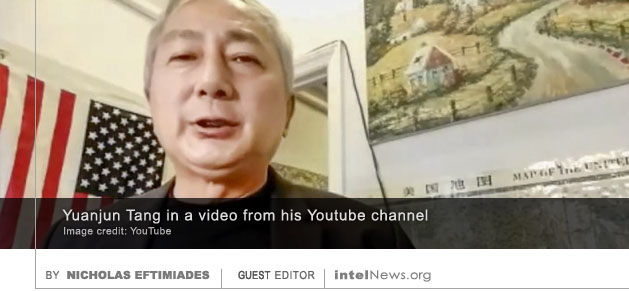
Yuanjun TangTANG YUANJUN WAS ARRESTED by the United States Federal Bureau of Investigation (FBI) in August 2024. He allegedly worked as a Chinese Ministry of State Security (MSS) asset between 2018 and 2023. He reported on the following categories of information that were of interest to the MSS:

  • Prominent U.S.-based Chinese democracy activists and dissidents.
  • US Chinese-American Member of Congress Xiong Yan, from New York.
  • Immigration claims from dissidents wanting to leave China for the US.

According to the US Department of Justice (DoJ), Tang expressed his desire to see his aging family in China. A prominent dissident such as Tang would not be able to travel to China without being arrested, unless his travel had been approved by authorities. An acquaintance helped him establish secure online contact with the MSS. After being recruited, Tang reported to the MSS using an email account, encrypted chats, text messages and audio and video calls. Tang helped the MSS infiltrate a group chat on WhatsApp; used by numerous People’s Republic of China (PRC) dissidents and pro-democracy activists to communicate about pro-democracy issues and express criticism of the PRC government. In fact, this was what users called a “super group”. It is a group that consists of many other groups. Members could not even identify who was the sponsor of the group chats [1].

In addition, Tang reportedly video-recorded a June 2020 Zoom discussion commemorating the anniversary of the Tiananmen Square massacre in the PRC. The Zoom online discussion was led by Zhou Fengsuo, Director of the June 4th Memorial Museum in New York City and a leading advocate for democracy in China. The Ministry of Public Security also infiltrated these discussions with the assistance of Zoom China and US based employees [2].

Tang was Secretary General of the overseas headquarters of the China Democratic Party United Headquarters in New York City. This non-profit organization assists mainland Chinese dissidents in immigration and asylum applications for the US. Tang allegedly provided information on these individuals to the MSS [3]. Tang also allegedly identified ten immigration attorneys to support MSS efforts to place assets in the US. Other dissident organizations in New York and Los Angeles provide similar visa application services to generate income.

In 2022, reportedly Tang met with the MSS in Changchun City, Jilin Province, China, where an officer installed a software on Tang’s phone which Tang believed to be a “bug” that caused all photographs and videos captured on the phone to be transmitted to the MSS. In his role as leading democracy advocate Tang encouraged dissidents to attend protests in Manhattan and Washington DC. He used the compromised phone to take photographs of the events. The Chinese Communist Party (CCP) then used the photographs as evidence against overseas dissidents. Read more of this post

U.S. Pentagon ran secret COVID-19 anti-vaccination campaign to undermine China

Coronavirus COVID-19THE UNITED STATES DEPARTMENT of Defense ran a secret psychological operation on multiple social media platforms, aimed at undermining Chinese-manufactured vaccines against COVID-19. The controversial campaign was met with objections by several U.S. government officials, but continued for over a year, spanning both the Trump and Biden administrations.

According to the Reuters news agency, which uncovered the alleged plot, the psychological operation initially targeted the Philippines in the spring of 2020. During that time, the Southeast Asian nation relied heavily on the CoronaVac, also known as the Sinovac COVID-19 vaccine, which was manufactured by the Chinese biopharmaceutical firm Sinovac Biotech. The CoronaVac vaccine was approved for human consumption by the World Health Organization.

An investigation by Reuters determined that the U.S. Pentagon attempted to undermine the efficacy of the Chinese-manufactured vaccine, in order to sabotage the relations between China and the Philippines. Over time, the Pentagon project morphed into an anti-vax campaign that questioned the quality of Chinese-produced coronavirus test kits and Chinese-supplied face masks. There was also an attempt to stigmatize Chinese-produced medical supplies relating to COVID-19. The campaign argued that the coronavirus had originated in China, which made Chinese-manufactured medical supplies suspect.

The psychological operation utilized hundreds of fake social media accounts on multiple platforms, which were unified under the hashtag #Chinaangvirus —Tagalog for “China is the virus.” By early 2021, the campaign had expanded to the Middle East and Central Asia. Some social media posts claimed that Muslims should not be using the Sinovac COVID-19 vaccine because it contained pork gelatin and should thus be considered forbidden under Islamic law. These tactics raised objections by some U.S. government officials, notably from the State Department, who expressed them in meetings with Pentagon personnel. The secret campaign was terminated in June of 2021.

The Reuters news agency spoke to Greg Treverton, former chairman of the U.S. National Intelligence Council, which ensures that the work of the nation’s intelligence agencies reflect the government’s policy priorities. Treverton told the news agency that getting “as much vaccine in people’s arms as possible” would have been in the national interest of the U.S., adding that the Pentagon’s secret operation “crosses a line”. Reuters said that a senior Pentagon official acknowledged a secret psychological operation was indeed launched, in order to “disparage China’s vaccine in the developing world.” However, the official “declined to provide details” of the operation.

Author: Ian Allen | Date: 17 June 2024 | Permalink

China accuses married couple of spying for Britain’s MI6

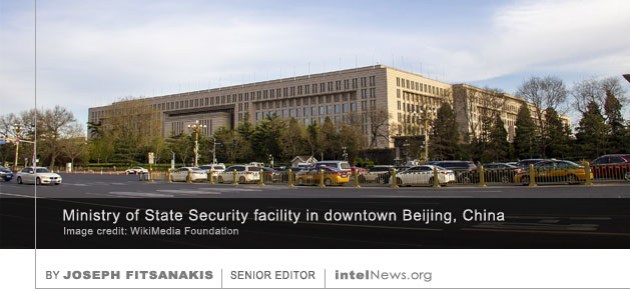
MSS China - IATHE SPY CONFLICT BETWEEN China and the United Kingdom escalated last week, as the Chinese government accused a married couple of carrying out espionage missions on behalf of British intelligence. In a rare statement to the press, China’s Ministry of State Security (MSS) said it was investigating the activities of a husband-and-wife team, whom it accused of working as assets for Britain’s Secret Intelligence Service, better known as MI6.

According to the MSS statement, the husband, whose last name is Wang, participated in a student exchange program in the United Kingdom in 2015. While there, he was surreptitiously accosted by MI6 and was invited to dinners and other outings. Eventually Wang was offered part-time employment as a consultant for a British firm that operated as a front for MI6. He was eventually approached by MI6 directly and was recruited as a spy in exchange for substantial monetary rewards.

Wang was allegedly trained in espionage tradecraft and returned to China to collect intelligence on the Chinese government on behalf of MI6. The MSS claims that Wang’s MI6 handlers asked him to recruit his wife, whose last name is Zhou, as a spy. Eventually both Wang and Zhou spied for MI6 in return for money. It is not known whether the alleged spies worked for the MSS or another intelligence-related government agency.

The MSS press statement was issued a few days after the agency unveiled a seemingly unconnected case of espionage involving “a former government employee who was lured by a foreign intelligence agency through the internet” and “stole secrets for money”. The MSS also said that the man’s handler, named Xiao Jing, had been arrested and charged with operating as “a spy working for a foreign intelligence agency”.

Author: Ian Allen | Date: 03 June 2024 | Permalink

Tradecraft observations on the Reichenbach/Fischer espionage case

Germany ReichstagSEVERAL CASES OF CHINESE espionage have been announced recently in Europe. Thomas Reichenbach and Herwig and Ina Fischer —a married couple— were arrested on April 22, 2024, for illegal exports of dual use technology with military (naval) applications.
Reichenbach lists himself as a contract marketing manager for the Hong Kong Trade Development Council. He studied at Peking University in the mid-1980s. He worked in China, speaks Mandarin, and has a Chinese wife.

Herwig and Ina Fischer own a small engineering consulting company named Innovative Dragon in Duesseldorf. Both have travelled extensively in China. Innovative Dragon contracts for technical research with universities. Herwig studied mechanical engineering and aircraft and spacecraft construction at the Rhine-Westphalia Higher Technical School, focusing on guidance technology and composite fiber materials. The company headquarters are in London and there are offices in Duesseldorf and Shanghai (Donghua University Science and Technology Park). The London office does not appear to have a functioning telephone number.

Reichenbach is suspected of having been recruited by the Ministry of State Security (MSS) in China. The German government has accused the trio of having illegally exported dual use technology since at least 2022. At the time of the arrests, the suspects were in negotiations on additional research projects useful for expanding the combat strength of the Chinese People’s Liberation Army Navy.

Status: Alleged

Tradecraft observations:

  1. Use of a potential front company in London to facilitate allegedly illegal exports.
  2. Use of third countries to facilitate allegedly illegal exports.
  3. Reichenbach allegedly recruited Herwig and Ina Fischer and handled them as in-country assets.
  4. It is alleged that the MSS probably recruited Reichenbach in China.
  5. An MSS officer allegedly handled Reichenbach from China (linear control).
  6. The MSS allegedly funded the operation through front companies.

Author: Nicholas Eftimiades* | Date: 03 May 2024 | Permalink

* Nicholas Eftimiades is a Senior Fellow at the Atlantic Council. He retired from a 34-year government career that included employment in the United States Central Intelligence Agency, the Department of State, and the Defense Intelligence Agency. He held appointments on the Department of Defense’s Defense Science Board and the Economic Security Subcommittee of the Department of Homeland Security’s Homeland Security Advisory Council. He is an advisor to the United States Intelligence Community. Eftimiades authored numerous works on China’s espionage methods. His books, Chinese Intelligence Operations (1994) and Chinese Espionage: Operations and Tactics (2020) are examinations of the structure, operations, and methodology of China’s intelligence services. They are widely regarded as seminal works in the field.

Germany arrests sixth alleged spy in less than a month

MSS ChinaAUTHORITIES IN GERMANY HAVE arrested a sixth person in less than a month, in connection with three separate cases of espionage orchestrated by Russian or Chinese intelligence. Last Tuesday, police in the east German city of Dresden arrested an assistant to a leading politician of the far-right Alternative für Deutschland party (AfD). The assistant, who is a dual German-Chinese citizen, is accused of spying for Chinese intelligence, while the far-right politician who employed him is also being investigated, according to reports.
German news reports have identified the alleged spy as Jian Guo, 43, who lives in Dresden with his wife and children. Guo reportedly entered Germany as a student and stayed there after completing his studies, eventually becoming a naturalized German citizen. In 2019 he joined the staff of the office of Maximilian Krah, a senior AfD politician, who had recently been elected to the European Parliament.

According to the German prosecutor’s office, Guo had begun working for Chinese intelligence prior to joining Krah’s office as an assistant. At least some of his alleged espionage activities involved posing as a critic of the Chinese government and joining dissident groups of Chinese expatriates in Germany. He would then provide information about the activities of these groups to Chinese intelligence, according to his indictment. The latter described Guo’s intelligence activity as “an especially severe case” of espionage.

Meanwhile, German authorities are also reportedly investigating Krah himself over payments he allegedly received from pro-Chinese and pro-Russian individuals or groups. In a statement issued late last week, the AfD politician said he had been informed about Guo’s arrest from media reports and that he had no information about this case. Shortly after Krah’s statement, the AfD described Guo’s arrest as “highly disturbing” and added that party authorities would do “everything possible to aid the investigation”.

During the month of April alone, Germany has arrested no fewer than six individuals in a series of apparently unconnected cases of espionage, connected with Russia or China. Two of these individuals are German citizens of Russian origin, who were allegedly assisting Russian intelligence plan acts of sabotage against military installations located on German soil. Three other German citizens were allegedly planning to provide designs of advanced aircraft engines to Chinese intelligence officials.

Author: Joseph Fitsanakis | Date: 29 April 2024 | Permalink

Veteran Belgian politician was a spy for Chinese intelligence, report alleges

MSS ChinaA LONGTIME BELGIAN POLITICIAN worked as a spy for Chinese intelligence for at least three years, according to a joint investigation by a consortium of European news media. Until last week, the politician, Frank Creyelman, 62, was a leading member of Vlaams Belang, a far-right separatist party that draws nearly the entirety of its support from northern Belgium’s Dutch-speaking Flemish regions. In addition to seeking to separate Flanders from Belgium, Vlaams Belang opposes immigration and multiculturalism, with much of its criticism directed at Islam.

From 1995 until 2014, Creyelman served as a member of the Flemish Parliament or the Belgian Senate, representing the Antwerp Province. During that time, he became known for his pro-Russian views, which he continued to propagate in retirement. In 2021, he voiced strong skepticism against the Belgian government’s efforts to provide diplomatic, financial, and military support to Ukraine. Following his retirement from frontline politics, Creyelman became an honorary member of the Flemish Parliament. He also remained chairman of Vlaams Belang in his home city of Mechelen, a Dutch-speaking stronghold.

Last week, however, a joint investigation by the British newspaper The Financial Times, French newspaper Le Monde and German newsmagazine Der Spiegel, claimed that Creyelman worked as a spy for China for at least three years. Citing unnamed “intelligence officials from four Western countries”, the investigation claimed that Creyelman had been recruited by Daniel Woo, a case officer for China’s Ministry of State Security. Woo is believed to work out of the MSS branch in China’s far-eastern province of Zhejiang, though he has also served tours in Europe under diplomatic cover, including in Romania and Poland.

It is not known how the MSS recruited Creyelman. It appears that most of his communication with his alleged MSS handler took place via text messages. However, it is claimed that in 2019 Creyelman traveled to Sanya, a popular tourist resort in China’s Hainan Island, where he allegedly met Woo and possibly other MSS operatives. Notably, the journalists behind the investigation into Creyelman claim that they have accessed incriminating messages exchanged between Creyelman and Woo. The text messages span the period between early 2019 and late 2022.

In the text messages, Woo asks Creyelman to try to influence senior-level discussions in Belgium and elsewhere concerning China’s treatment of its ethnic Muslim populations in the Xinjiang Province. The far-right politician was also instructed to find ways to vilify and discredit European researchers and academics who were documenting China’s treatment of ethnic Muslims in Xinjiang. Woo also asked Creyelman to try to quell criticism of China’s crackdown of the pro-democracy movement in Hong Kong. In one message, Woo explained that China’s purpose was “to divide the US-European relationship”.

Last Friday, just hours after the allegations about Creyelman’s alleged espionage emerged, Vlaams Belang announced that it had expelled him from its ranks. In a social media post, the party’s leader, Tom Van Grieken, denounced Creyelman’s espionage as going “against the purpose and essence, even the name, of our party”. He added: “The only loyalty for nationalists can only be to their own nation”.

Author: Joseph Fitsanakis | Date: 18 December 2023 | Permalink

China accuses ‘foreign governments’ of installing fake weather stations to collect data

Chinese Ministry of State SecurityBEIJING HAS ACCUSED “FOREIGN governments” of collecting data on China through hundreds of fake meteorological stations that have been illegally installed throughout Chinese territory. The announcement appears to form part of a broader “people’s anti-espionage war” that the Communist Party of China launched in 2015 in order to create a “positive atmosphere of national security” across the nation.

On Tuesday of last week, China’s civilian spy agency, the Ministry of State Security (MSS), shared information about the alleged fake meteorological stations on its WeChat social media account. The agency said it had discovered hundreds of fake stations in over 20 Chinese provinces. The discovery resulted from an investigation of 10 firms that specialize in installing meteorological stations, which was broadened to include a probe of over 3,000 “foreign-linked” meteorological stations across China.

The MSS claims that some of the foreign companies involved in installing meteorological stations had not obtained the required administrative licenses. Furthermore, some of the stations had been placed in the vicinity of food-production hubs or defense-related installations, allegedly in order to record geolocational data. The latter were transmitted abroad in real time, the MSS said.

According to the spy agency, some of the fake meteorological stations were “directly funded by foreign governments”. However, there was no mention in the statement of the specific governments that allegedly funded these stations. Instead, the statement noted that “the illegal collection and cross-border transmission of meteorological data endangers China’s sovereignty, security, and development interests”.

It is rare for the reclusive and secrecy-prone MSS to make any public announcements relating to counter-espionage. In the past year, however, it has announced the arrests of several Chinese officials who allegedly spied on China for the United States Central Intelligence Agency. There is no information about whether the alleged fake meteorological stations are connected to prior arrests of Chinese officials for espionage.

Author: Joseph Fitsanakis | Date: 06 November 2023 | Permalink

Two arrested in Britain for spying for China, report reveals

House of Commons Parliament Britain United KingdomAUTHORITIES IN BRITAIN HAVE arrested two individuals on charges of espionage, among them a researcher for the British parliament who is being investigated for spying for China. According to the British newspaper The Sunday Times, the two individuals were arrested on March 13 of this year in two different addresses. One of the suspects, reportedly in their 30s, was arrested in or around the city of Oxford. The other, reportedly an individual in their mid-20s, was apprehended in the Scottish capital Edinburgh.

A third address, located in an eastern borough or London, was also searched by the Counter-Terrorism Command of the Metropolitan Police, which is leading the investigation into the two suspects. Notably, the parliamentary researcher had worked for prominent members of the Conservative Party, including members of parliament. These reportedly included Alicia Kearns, who chairs the Foreign Affairs Select Committee of the British House of Commons. The Times reported that the suspect had also worked for the Minister of State for Security Tom Tugendhat. The Guardian newspaper reported that Tugendhat said he had not been in touch with the suspect since he assumed his current ministerial role in September of 2022. Kearns did not comment on the case.

The last time a British newspaper reported claims of Chinese espionage was in February of 2021, when The Telegraph reported on the expulsion of three Chinese citizens, who were working as journalists. The paper claimed that the three had been “quietly expelled” after they were caught carrying out espionage. Citing an anonymous “government source”, The Telegraph said that, according to Britain’s Security Service (MI5), the three Chinese journalists were in reality employees of China’s Ministry of State Security. The report did not provide details about when the three Chinese citizens had been expelled, saying only that the expulsions had occurred at different times in the previous year.

According to The Times, the two suspects who were arrested in last March were initially transferred to a south London police station, where they were arraigned. They were then released on bail and are expected to appear in court in October.

Author: Ian Allen | Date: 11 September 2023 | Permalink

Leading German university suspends Chinese state-funded researchers

FAU UniversityONE OF GERMANY’S LEADING universities has suspended researchers funded by the Chinese government, citing concerns about academic freedom and industrial espionage. The Friedrich Alexander University of Erlangen-Nuremberg (FAU) announced the suspension of Chinese government-funded researchers in June of this year. In announcing the measure, the university stated that the move was designed to protect academic freedom and freedom of expression among its faculty and staff. Earlier this week, however, German media reported the contents of an internal FAU email, which expressed concerns that the Chinese state could be utilizing government-funded researches as spies.


Founded in Bavaria in 1743, FAU is among Germany’s leading universities. On June 1, it became the first university in Germany to suspend researchers funded by the China Scholarship Council (CSC). The CSC is an outreach unit of the Chinese Ministry of Education, which funds the work of Chinese researchers in foreign universities, while also providing scholarships to foreign citizens who apply to study in China. In January 2023, Swedish daily Dagens Nyheter reported that, in order to become recipients of CSC scholarships, Chinese citizens were required to pledge “support [to] the leadership of the Chinese Communist Party […] and to have a correct world view, outlook on life, and values system”.

On June 1, the FAU leadership announced that the CSC funding methods conflicted with Germany’s Basic Law (the country’s Constitution). Furthermore, according to the FAU leadership, the CSC funding methods violated the principles of academic freedom and freedom of expression for its faculty, as practiced in Germany. On Saturday it was reported that, according to an internal FAU email, university officials also expressed concerns that the Chinese state could use CSC researchers to spy on FAU scientific and industrial research, and to compromise FAU’s data security and intellectual property practices.

FAU’s decision was reportedly met with support by Germany’s Minister for Education, Bettina Stark-Watzinger, who said that German universities and research establishments have “a responsibility to safeguard themselves against espionage activities conduced by students receiving scholarships from the Chinese government”. It is also reported that other universities in Germany and elsewhere in Western Europe are considering following FAU in suspending CSC-funded Chinese researchers.

Author: Joseph Fitsanakis | Date: 31 August 2023 | Permalink

Chinese government arrests second alleged CIA spy in 10 days

Chinese Ministry of State SecurityFOR THE SECOND TIME in 10 days, the government of China has announced the arrest of a Chinese government employee on suspicion of spying for the United States Central Intelligence Agency (CIA). In a statement issued on Monday, China’s civilian intelligence agency, the Ministry of State Security (MSS), said it had launched an investigation into an official of a government ministry, who was allegedly caught conducting espionage on behalf of the CIA.

The MSS statement did not name the government ministry where the alleged spy works. But it identified the accused by his surname, Hao, describing him as a 39-year-old Chinese national. According to the MSS statement, Hao spent a number of years as a graduate student in Japan. While he was studying in Japan, he allegedly visited the United States embassy in Tokyo, in order to apply for a travel visa. During his visit to the embassy, he met a United States embassy official, who befriended him.

Over time, Hao allegedly formed a close relationship with the unnamed American embassy official. The latter treated him to meals, sent him gifts in the mail, and secured funds for him to conduct research. Eventually, the embassy official introduced Hao to another American official, who, according to the MSS, was a CIA case officer. The CIA case officer allegedly recruited Hao to spy for the United States and instructed him to seek employment at “a core and critical department” of the government upon his return to China.

After completing his studies in Japan, Hao returned to China and secured employment in a government agency. He continued to meet regularly with his alleged CIA handler and other CIA officers, who to whom he “provided intelligence” in return for “espionage funds”, according to the MSS statement. The statement said that Hao’s case remains under investigation and that no official charges have yet been filed.

The MSS statement about Hao’s case came exactly 10 days after the spy agency posted on its WeChat social media account that it had caught another government official spying for the CIA. On August 11, the MSS said it had detained an alleged CIA spy named Zeng, whom it described as a 52-year-old “staff member of a Chinese military industrial group and an important confidential employee” of the Chinese state. Zeng had reportedly been sent to Italy by his employer, presumably in order to pursue graduate studies or receive technical training. While in there, he was allegedly accosted and eventually recruited by an employee of the United States embassy in Rome.

It is not known if the two cases are in any way connected. Government officials in Washington and at the United States embassy in Beijing have not commented on the story.

Author: Joseph Fitsanakis | Date: 23 August 2023 | Permalink