Germany lets captured Mossad spy suspect return to Israel
August 16, 2010 1 Comment
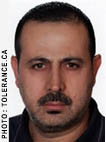
Al-Mabhouh
By JOSEPH FITSANAKIS | intelNews.org |
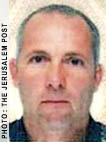
German authorities have allowed an Israeli intelligence operative suspected of links to an assassination of a Palestinian official to return to Israel, despite outstanding passport forgery charges against him. The operative, whose travel documents identify him as Uri Brodsky, was arrested upon arriving in Poland on June 4, 2010. An Interpol arrest warrant for Brodsky had been previously issued by German prosecutors, who accuse Brodsky of helping procure a forged German passport for use by a member of an assassination squad operating under Israeli intelligence agency Mossad. The user of the forged passport is believed to have used the travel document to enter Dubai, United Arab Emirates, in mid-January of this year, where he participated in the killing of Palestinian Mahmoud al-Mabhouh, a Hamas weapons procurer, who was found dead in his luxury Dubai hotel room on January 20. Polish authorities decided to extradite Brodsky to Germany despite intense diplomatic pressure from Israel, who pressed Warsaw and Berlin to allow the operative to return home to Israel without facing charges. But intelligence observers, who were initially impressed with Poland and Germany’s strong stance on the issue, soon realized that Brodsky’s extradition was part of a Polish-German-Israeli deal, under which Brodsky would avoid jail sentence and get away with a minor fine for forging an official German travel document. This is precisely what happened. Read more of this post







 intelNews.org
Germany arrests Tunisian man for producing biological weapon in his apartment
June 18, 2018 by Joseph Fitsanakis Leave a comment
According to reports, German intelligence services received a tip-off last month that the man had made online purchases of a coffee grinder and 1,000 castor seeds. Processing castor seeds creates a ricin byproduct, which can then be weaponized in the form of a powder, a fine mist, or solid pellets of various sizes. The end product is more powerful than many other toxic substances, such as cyanide. Upon entering the human body, ricin can cause multiple organ failure in less than two days. It has no known antidote.
After receiving the tip-off, German authorities began monitoring the suspect’s movements in the western German city of Cologne, near the Belgian and Dutch borders. By June, German police discovered that he had produced enough ricin to dispense as many as 1,000 lethal doses.
German media reported that “Sief Allah H.” is a sympathizer of the Islamic State. However, investigators have found no direct link between him and any militant organizations in Germany or abroad. Additionally, no evidence has yet been presented that he had planned an actual attack —in Germany or elsewhere— at a specific time. However, officials from Germany’s Federal Office for the Protection of the Constitution said it was “very likely” that the arrest of “Sief Allah H.” had averted a terrorist attack. Late last week, German newsmagazine Der Spiegel said that the suspect had made ricin by following instructions posted online by the Islamic State.
Throughout the weekend, several other apartments in Cologne were searched by German authorities. Search parties consisted of members of the local police, intelligence officers and scientists from the Robert Koch Institute, the German government agency tasked with monitoring hazards to public health.
► Author: Joseph Fitsanakis | Date: 18 June 2018 | Research Credit: S.F. | Permalink
Filed under Expert news and commentary on intelligence, espionage, spies and spying Tagged with biological weapons, Cologne (Germany), counterterrorism, Germany, News, ricin, Sief Allah H.