Panel to present findings on mysterious death of UN secretary general
June 22, 2015 Leave a comment
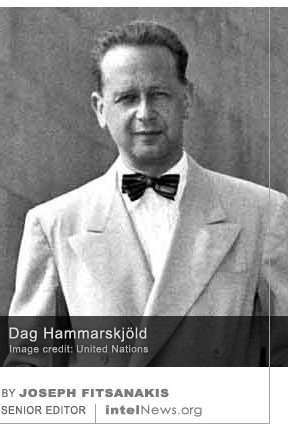 A panel of experts commissioned by the United Nations is about to unveil fresh evidence on the mysterious death in 1961 of UN secretary general Dag Hammarskjöld, who some claim was murdered for supporting African decolonization. The evidence could spark a new official probe into the incident, which has been called “one of the enduring mysteries of the 20th century”.
On September 17, 1961, a Douglas DC-6 transport aircraft carrying United Nations Secretary General Dag Hammarskjöld crashed in the British-administered territory of Northern Rhodesia (now Zambia). The crash killed everyone onboard. Three successive investigations into the crash, conducted by the Rhodesian Board of Investigation, the Rhodesian Commission of Inquiry, and the United Nations Commission of Investigation, viewed “pilot error” as the most likely cause of the tragedy. However, the latter probe, which was closed in 1962, opined that deliberate sabotage could not be ruled out as a likely cause of the tragedy.
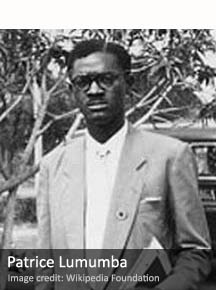
Since that time, numerous scholars and independent investigators, such as Swedish development expert Göran Björkdahl and British academic Susan Williams, have raised the possibility that the plane carrying Secretary General Hammarskjöld may have been “shot down by an unidentified second plane”. Several commentators have also pointed to what seemed like eagerness by British colonial administrators in Northern Rhodesia to obscure the details of the incident. One argument is that Hammarskjöld, described as the most independent-minded secretary general in the history of the UN, had angered many world powers due to this fierce support for anti-colonial movements that were sweeping the African continent. Indeed, at the time of his death, Hammarskjöld was flying to the Congo’s mineral-rich Katanga region to meet European-supported chieftains who in 1960 had seceded from the nationalist government of Congolese Prime Minister Patrice Lumumba. Ironically, Lumumba had been assassinated in a Western-backed coup exactly eight months before Hammarskjöld’s own death.
In 2012, the independently funded Hammarskjöld Inquiry Trust appointed an international team of jurists to study all available evidence on the plane crash. The team, called the Hammarskjöld Commission, was composed of a diplomat and three judges from the Netherlands, the United Kingdom, South Africa, and Sweden. The Commission reported in 2013 that “significant new evidence” had emerged, which suggested that American intelligence agencies, notably the National Security Agency and the Central Intelligence Agency, held “crucial evidence” that could help clarify the causes of the crash.
The report by the Hammarskjöld Commission prompted the UN’s current Secretary General, Ban Ki-moon, to appoint a UN-sponsored panel of experts to examine the new evidence and present it before the UN General Assembly. The three-member panel traveled to several countries, including Zambia, the US, Britain and Belgium, to access government, as well as private archives. Its report is expected to be delivered to the UN General Assembly this week. It is said to include written testimony by a Belgian pilot who says he shot down the plane carrying Hammarskjöld by error, while trying to divert it on orders by a government entity. Another witness, a former intelligence officer with the US National Security Agency, is believed to have told the UN experts that he listened to a recording of a pilot who said he shot down the UN Secretary General’s plane.
Once this new evidence is presented, the UN General Assembly will have to vote on whether the UN should hold an official probe into the plane crash. It would mark the first such inquiry since 1962.
► Author: Joseph Fitsanakis | Date: 22 June 2015 | Permalink: https://intelnews.org/2015/06/21/01-1719/








 intelNews.org
French ex-spy accused of plot to assassinate Congolese politician found dead in Alps
March 28, 2019 by Joseph Fitsanakis Leave a comment
Last September, however, a judge placed Forestier under a pre-trial investigation for allegedly participating in a plot to kill General Ferdinand Mbahou. From 1992 to 1997 Mbahou (a.k.a. Mbaou) served as Director of Presidential Security in the Republic of the Congo. In 1997, Mbahou fled the country along with his employer, President Pascal Lissouba, who was ousted in a brutal civil war by militias loyal to Colonel Denis Sassou Nguesso of the Congolese Labor Party. From his new home in Val d’Oise, just outside of Paris, Mbahou has continued to criticize Colonel Sassou Nguesso, who is the current president of the Republic of the Congo. Forestier and another former DGSE officer, Bruno Susini, were accused of having hatched a plan to kill Mbahou. Their indictment mentioned “participation in a criminal organization” and “possession of explosives”. Forestier reportedly told the magistrate that he was a member of a group that planned to assassinate Mbahou, but that he abandoned the effort after conducting reconnaissance and realizing that the plan was “impractical”.
Forestier’s body was discovered on Wednesday “in a pool of blood” in a parking lot in Haute-Savoie, an alpine resort area on the shores of Lake Geneva. According to a police report, he had been shot five times in the chest and head in what public prosecutor Philippe Toccanier described as “a professional job”. He added that Forestier’s killing was “almost undoubtedly […] a settling of scores”.
► Author: Joseph Fitsanakis | Date: 28 March 2019 | Permalink
Filed under Expert news and commentary on intelligence, espionage, spies and spying Tagged with assassinations, Bruno Susini, Congo, Congo-Brazzaville, Daniel Forestier, Ferdinand Mbahou, France, News, suspicious deaths