China has 5,000 spies in Taiwan, says official amidst espionage arrests
March 20, 2017 1 Comment
 A Taiwanese government official has alleged that China maintains an army of more than 5,000 spies in Taiwan, many of whom have infiltrated the highest levels of government and industry. The allegation came after two sensational arrests were made in Taiwan last week, of people accused of spying for Beijing. Taiwanese counterintelligence officers reportedly arrested a bodyguard of Annette Lu, Taiwan’s former vice president. The bodyguard, who has been identified in Taiwanese media as Wang Hong-ju, has been charged with receiving payments from his Chinese intelligence handler in return for providing information about Mrs. Lu. This incident followed another arrest, made earlier in the week, this time of a Chinese man who is believed to have initially come to Taiwan as a student. Zhou Hong-xu is accused of trying to recruit officials in the Taiwanese government by offering them money.
Following reports of the arrests, Taiwanese media quoted an official, who spoke on condition of anonymity, as saying that Beijing maintains “about 5,000 individuals” who spy in Taiwan. These agents are allegedly tasked with “collecting state secrets” in the island country, over which China claims ownership. The anonymous Taiwanese official said that authorities in Taipei had uncovered no fewer than 60 espionage plots linked to China since 2002. Less than a third of those were uncovered before 2009, said the official. The year is important, because it marks the time when communications and transportation systems between the two nations were reestablished after decades of mutual isolation. The ease with which people from the two countries can travel in each other’s territory has increased exponentially since 2009. But so have instances of espionage by China, said the Taiwanese official.
Asked about the alleged targets of Chinese espionage in Taiwan, the official said that nearly 80 percent of identified cases of espionage by Beijing’s agents were aimed at military targets, with only 20 percent focusing on the civilian sector. However, the apparent disparity in numbers does not mean that China shows more interest in Taiwanese military secrets. Rather, the Taiwanese military has better counterintelligence defenses and thus a higher detection rate than the country’s civilian sector, said the anonymous source.
► Author: Joseph Fitsanakis | Date: 20 March 2017 | Permalink
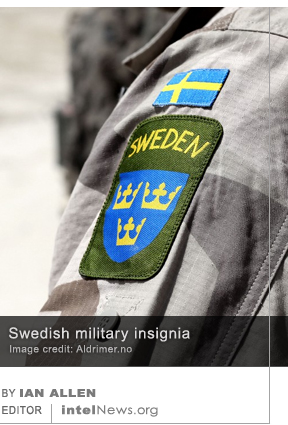 The military intelligence service of Sweden warned last week that there were increasing incidents of espionage perpetrated against Sweden by operatives identified “beyond doubt” as agents of foreign powers. In its
 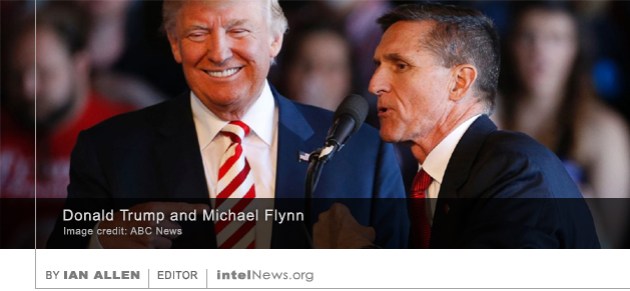 A senior aide to Michael Flynn, National Security Adviser to United States President Donald Trump, will have to step down from his post because his application for a security clearance was rejected, say sources. Flynn had chosen Robin Townley, a former intelligence officer in the US Marine Corps, to serve as Senior Director for Africa on the National Security Council, a forum chaired by the president, which makes key decisions on domestic and foreign issues. Townley, who is described as “one of Flynn’s closest deputies”, held a top-secret security clearance for many years during his government career. But joining the National Security Council requires a so-called “sensitive compartmented information” clearance. This elite-status clearance allows designated individuals to access government programs and operations that are deemed highly sensitive.
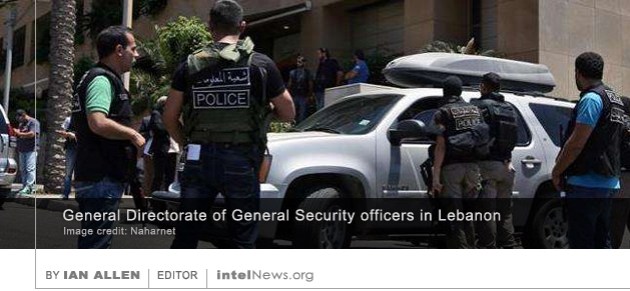 The security services of Lebanon announced on Wednesday that they had arrested five foreign nationals who were allegedly spying of Israel. A brief statement issued by Lebanon’s General Directorate of General Security (GDGS, also known as the General Security Directorate) said the five individuals were members of a “spy ring” set up by the Mossad, Israel’s external intelligence agency. The five —three men and two women— are accused of contacting Israeli embassies in countries in the Middle East, Europe and Asia, with the aim of passing information about domestic Lebanese affairs.
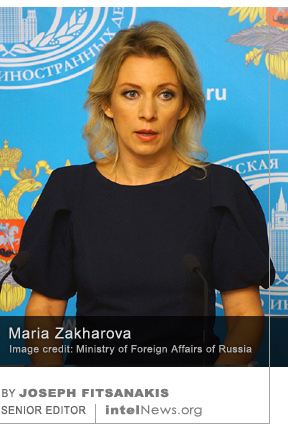 A senior Russian official has accused the United States Federal Bureau of Investigation of trying to blackmail a Russian diplomat who was attempting to purchase anti-cancer drugs in an American pharmacy. The allegation was made Sunday on live Russian television by Maria Zakharova, spokeswoman for Russia’s Ministry of Foreign Affairs. She was being interviewed on Sunday Night with Vladimir Solovey, a popular politics roundtable show on Russia’s state-owned Rossiya 1 television channel. Zakharova told Solovey that, a few years ago, the Russian government authorized one of its diplomats in the United States to purchase several thousand dollars’ worth of anti-cancer drugs. The drugs were to be used by Yevgeny Primakov, Russia’s prime minister in the late 1990s, who was battling liver cancer.
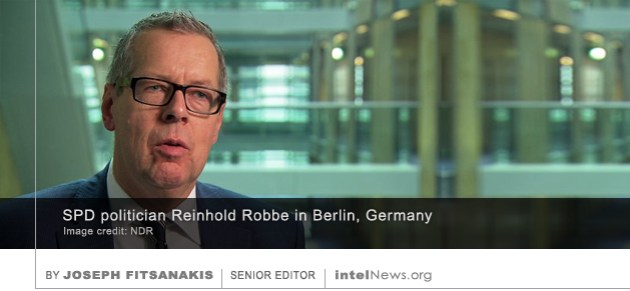 Authorities in Germany have pressed espionage charges against a Pakistani man who allegedly spied for Iran and even compiled lists of potential targets for assassination. The man, who has been identified in media reports only as “Syed Mustafa H.”, is a 31-year-old worker at the German Aerospace Center in the northern German city of Bremen. He is also reportedly a graduate of the Materials Science and Production Engineering department of the Universität Bremen. According to court documents, he is believed to have been spying for Iranian intelligence since the summer of 2015. It appears that the Federal Office for the Protection of the Constitution (BfV), Germany’s domestic intelligence agency, had been aware of the man’s espionage activities for at least a year prior to his arrest.
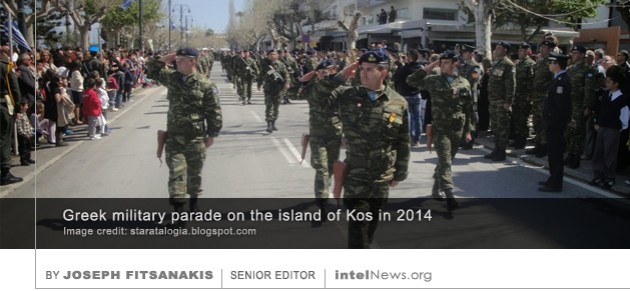 A German retiree living in Greece, who admitted in court that he was part of a network of German and other Western European residents of Greece recruited as spies by Turkish intelligence, has been jailed for 14 years. The 65-year-old man, who has not been named, was arrested two years ago in the southeastern Aegean island of Kos. He was born in Cold-War-era East Germany and worked as a locksmith before serving for 15 years in the East German National People’s Army. From 2009 to 2012, he lived in Turkey before moving permanently to Greece.
 The intelligence agency of the Czech Republic has accused Russian spy services of waging a “war of information” aimed at destabilizing the eastern European country. The agency has also warned that Russia continues to maintain a large intelligence presence in the Czech Republic, 25 years after the country, which was formerly known as Czechoslovakia, exited the Soviet sphere of influence and joined the European Union (EU) and the North Atlantic Treaty Organization (NATO).
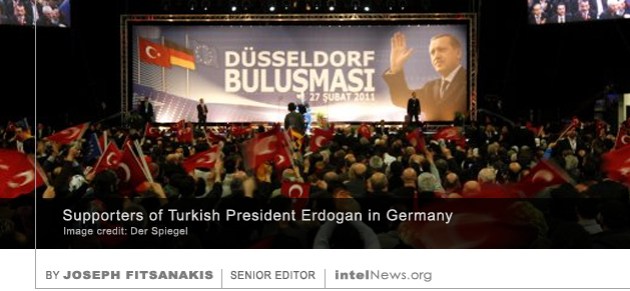 The Turkish intelligence service currently employs more operatives in Germany than the East German spy agency did at the height of the Cold War, according to a German expert on espionage. The comment was made following the disclosure that Turkey maintains close to 6,000 informants and other intelligence operatives in Germany. An unnamed German security official told German newspaper Die Welt on Monday that the informants are operational throughout Germany and are handled by Turkey’s National Intelligence Organization, known as MİT.
 A Russian former senior intelligence officer, who reportedly defected to the United States after helping the Federal Bureau of Investigation arrest 10 Russian spies in 2010, is believed to have died. The arrests, which revealed the so-called “Russian illegals program” in the US, were part of a counterintelligence operation codenamed GHOST STORIES by the FBI. The operation culminated in June 2010 with the
 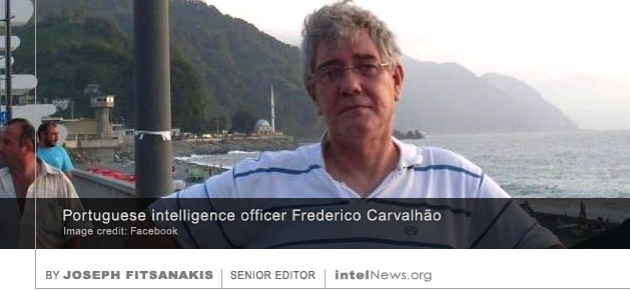 A Portuguese intelligence officer arrested a week ago in Rome, allegedly while passing classified documents to his Russian handler, may have accomplices with access to North Atlantic Treaty Organization (NATO) secrets. IntelNews
  A Russian intelligence officer, who posed as a banker in the United States, has been handed a prison sentence by a court in New York. Evgeny Buryakov, 41, posed as an employee of the New York branch of Vnesheconombank, a Russian state-owned bank headquartered in Moscow. However, in January 2015, the Federal Bureau of Investigation
 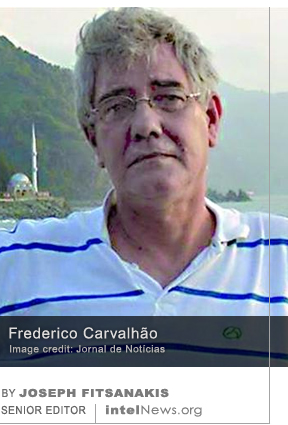 Two intelligence officers, one Russian and one Portuguese, have been arrested by Italian authorities on charges of espionage. The arrests took place in Rome on Monday by Italian police, who were reportedly accompanied by Portuguese counterintelligence officers. It is suggested in Portuguese media that the two men were arrested in the act of exchanging classified documents and money. The Portuguese intelligence officer has been identified in
 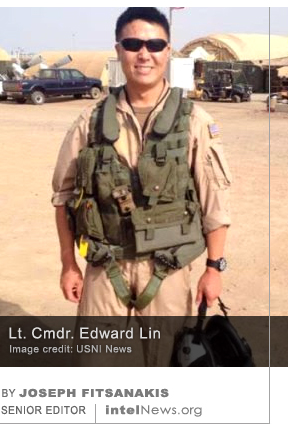 An American official has told Newsweek magazine that the possibility of further arrests in the espionage case of United States Navy flight officer Edward Lin should not be ruled out. Last Sunday, the US Navy reported the arrest Lt. Cmdr. Lin, who faces two counts of espionage and three counts of attempted espionage, among other charges. Aside from a three-page, heavily redacted charge sheet released by the Navy, almost nothing is known about this case. However, as intelNews








FBI accuses US State Department official of contacts with Chinese spies
March 31, 2017 by Ian Allen 3 Comments
However, federal prosecutors said earlier this week that Claiborne interacted on a regular basis with Chinese intelligence personnel without informing her employer. According to court documents, her contacts with the Chinese were extensive and occurred from 2011 until earlier this year. The Chinese gave Claiborne gifts, including computers and smartphones, tuition-free studies in a Chinese technical school, and an all-expenses-paid holiday to Thailand. They also gave her a regular stipend and provided her with a furnished apartment abroad, according to prosecutors. In return, Claiborne allegedly gave the Chinese information relating to American economic policy on China, among other topics.
It appears that the FBI monitored the State Department employee for a while, after securing a Foreign Intelligence Surveillance Act court warrant. When it confronted Claiborne, she apparently denied the accusations and lied to FBI agents. She is now charged with obstruction of justice and providing false statements to the FBI. Claiborne is currently under house arrest and will remain there until April 18, when she will appear at a preliminary hearing in Washington. She is reportedly facing a maximum of 25 years in prison.
► Author: Ian Allen | Date: 31 March 2017 | Permalink
Filed under Expert news and commentary on intelligence, espionage, spies and spying Tagged with Candace Claiborne, China, counterintelligence, espionage, FBI, News, United States, US Department of State