Germany extradites spy to Croatia to serve 30-year sentence for role in assassination
July 12, 2019 Leave a comment
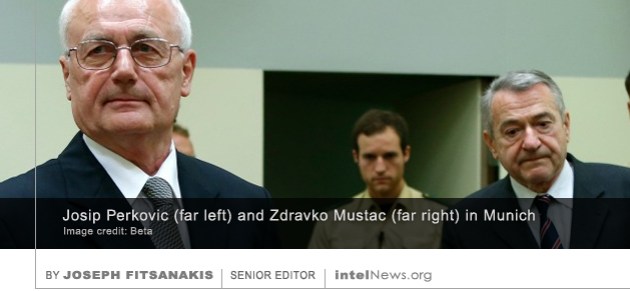 Germany has extradited a former senior official of the Yugoslav intelligence service to Croatia, where he is expected to serve a 30-year prison sentence for organizing the assassination of a dissident in Munich in 1983. Josip Perković is a former senior official in the Yugoslav State Security Service, known as UDBA. In 2014, he was extradited to Germany from Croatia alongside another former UDBA officer Zdravko Mustać. The two men were tried in a German court in the Bavarian capital Munich for organizing the assassination of Stjepan Đureković on July 28, 1983. Đureković’s killing was carried out by UDBA operatives in Wolfratshausen, Bavaria as part of a UDBA operation codenamed DUNAV. Đureković, who was of Croatian nationality, was director of Yugoslavia’s state-owned INA oil company until 1982, when he suddenly defected to West Germany. Upon his arrival in Germany, he was granted political asylum and began associating with Croatian nationalist émigré groups that were active in the country. It was the reason why he was killed by the government of Yugoslavia.
In 2016, both men were found guilty of organizing Đureković’s murder and were sentenced to life imprisonment, a sentence that was upheld by Germany’s Supreme Court in May. Last year, a court in the Croatian capital Zagreb commuted Perković’s prison sentence to 30 years so that he could be extradited there, since the Croatian justice system does not recognize life prison sentences. A statement from the German Interior Ministry said on Thursday that Perković had been transported to Zagreb on a regular flight from Munich “without incident”. Perković’s extradition to Croatia also concluded a long-standing bureaucratic battle between the former Yugoslav Republic and the European Union. In 2013, shortly before joining the EU, Croatia made it illegal to extradite individuals abroad for crimes committed before 2002. It is believed that Croatian officials changed the law in an attempt to protect armed Croatian nationalists who engaged in criminal activity during the Yugoslav Wars of the 1990s from being tried in European courts. Following systematic pressure from the EU, Croatia scrapped the extradition restriction and sent Perković and Mustać to Germany.
Legal proceedings to extradite Mustać to Croatia to serve his sentence there are continuing. Meanwhile, the two former spies have sued the German state at the European Court of Human Rights, arguing that they were not given a fair trial in Munich. Anto Nobilo, who represented Perković in court, said that the European Court of Human Rights is likely to rule in favor of his client and that he will be “released in a year or two”. If this happens, Croatia will have to re-extradite Perković to Germany to face a new trial.
► Author: Joseph Fitsanakis | Date: 12 July 2019 | Permalink
 Authorities in Bosnia and Herzegovina have accused the government of Croatia of deliberately arming militant Islamists in order to damage Bosnia’s reputation and sabotage its campaign to join the European Union. The claims were aired by a Bosnian government minister on Thursday, a day after allegations of a weapons-smuggling plot by Croatia were made in the Bosnian media. On Wednesday, Zurnal, a Bosnian investigative website, alleged that the Croatian intelligence services had recruited a Bosnian national and used him to smuggle weapons and explosives into the majority Muslim country.
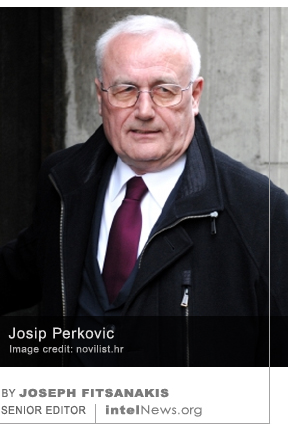 A German court has given life sentences to two senior intelligence officers in Cold-War-era Yugoslavia, who masterminded the murder of a Croat dissident in 1983. Josip Perković and Zdravko Mustać, both former senior officials in the Yugoslav State Security Service, known as UDBA, were









 intelNews.org
Croatia to extradite whistleblower who alleged Dutch oil firm spent millions in bribes
September 21, 2021 by Joseph Fitsanakis 2 Comments
A WHISTLEBLOWER WHO CLAIMS that a major Dutch oil firm paid millions in bribes to officials in return for lucrative contracts, is to be extradited to Monaco, following his arrest in Croatia last summer. Jonathan Taylor, of Southampton, United Kingdom, was a lawyer working for SBM Offshore, a Netherlands-based group of companies that provide services to the global offshore oil and gas industry. In 2012, he leaked documents allegedly showing that SBM Offshore “paid €185 million [$217 million] in bribes in several countries between 2005 and 2011”, in return for being awarded service contracts.
But SBM Offshore accused him of extortion and claimed that he stole proprietary documents and then tried to blackmail his employer, asking for $3 million in exchange for staying silent about the alleged bribes. Following this accusation, authorities in Monaco, which hosts an SBM Offshore regional facility, issued an Interpol “red notice” for Taylor’s detention. A red notice is essentially a request to law enforcement worldwide to locate and provisionally detain a person of interest, pending a possible extradition.
In July of this year, Taylor was arrested in Dubrovnik, Croatia, where he was holidaying with his family, by local police acting on the Interpol’s red notice. Immediately following his arrest, the government of Monaco sought to have him extradited there “for questioning”, even though he had not been charged with a crime. According to Monegasque police, Taylor was wanted “for questioning to determine whether or he should be charged” with a crime.
Taylor and his lawyers deny the claims against him, which they describe as acts of retaliation for him having blown the whistle on SBM Offshore. Now, however, authorities in Monaco have summoned Taylor to appear before a magistrate, after the Supreme Court of Croatia upheld an extradition ruling that was issued by a lower court earlier this year. This means that Croatian authorities should soon be extraditing Taylor to Monaco, as per the principality’s request. However, Taylor currently remains in Croatia and he and his supporters have urged the Croatian authorities to not comply with Monaco’s extradition request.
► Author: Joseph Fitsanakis | Date: 21 September 2021 | Permalink
Filed under Expert news and commentary on intelligence, espionage, spies and spying Tagged with Croatia, energy networks, extraditions, Jonathan Taylor, Monaco, News, SBM Offshore, whistleblowing