France sentences former intelligence officers to prison for spying for China

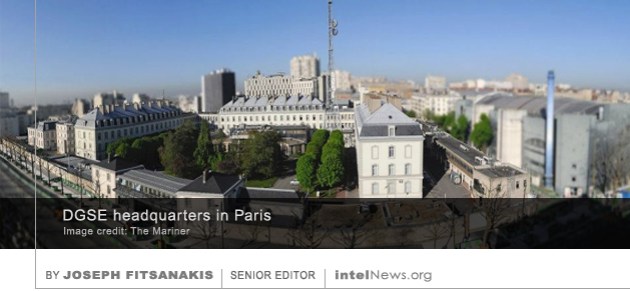
DGSE FranceA court in Paris has sentenced to prison two former employees of France’s external intelligence agency, who were accused of spying for the government of China. A third person, the wife of one of the accused, was also handed a jail sentence.

The two men have been identified in media reports only as “Henri M.”, 73, and “Pierre-Marie H.”, 69. They are both reportedly former employees of France’s Directorate-General for External Security, known as DGSE. The service operates as France’s equivalent of the United States Central Intelligence Agency. Additionally, “Laurence H.”, reportedly the wife of Pierre-Marie H., stood accused of “concealing property derived from espionage on behalf of a foreign power, which is likely to harm the fundamental interests of the nation”.

Pierre-Marie H. was arrested in late 2017 while transiting between flights at Zurich airport. He was found to be carrying on him a large amount of undeclared cash, which was reportedly given to him by his Chinese handler, following a meeting on “an island in the Indian Ocean”. Henri M. served as DGSE station chief in Beijing, where he was officially listed as the second secretary at the French embassy there. However, he was recalled to Paris less than a year after his arrival in China, for having an affair with the ambassador’s Chinese interpreter. After his retirement in 2003, Henri M. reportedly moved to China, where he married the interpreter and settled in the southern Chinese island of Hainan. He was arrested by French authorities in 2017.

Both men stood accused of “delivering information to a foreign power” and by doing so “damaging the fundamental interests of the French nation”. French officials described the cases of the two men as “extremely grave”. Their trial took place behind closed doors. On Monday, the court sentenced Pierre-Marie H. to 12 years in prison. Henri M. was given an 8-year prison sentence. Laurence H. was sentenced to 4 years in prison, with a 2-year suspension.

Author: Joseph Fitsanakis | Date: 13 July 2020 | Permalink

Russia arrests space agency employee for giving secrets to NATO country

Ivan SafronovRussia’s security service has arrested the media advisor to the director of the country’s space agency, accusing him of supplying military secrets to a spy agency of an unnamed Western country. The Russian Federal Security Service (FSB) announced on Tuesday the arrest of Ivan Safronov, a former journalist specializing in military affairs.
Safronov was the military correspondent for the Russian newspaper Kommersant, which is described by some as the Russian equivalent of Britain’s Financial Times. He then worked as a military affairs reporter for Vedomosti, a Moscow-based financial daily, which has a reputation for independence from the Kremlin. He briefly represented the paper in the Kremlin pool of journalists, who accompany the Russian President Vladimir Putin on official trips.

Safronov resigned from Vedomosti last spring, along with several of his colleagues, following a dispute with the newspaper’s management over editorial freedom. In May he was hired by the Russian space agency, the Roscosmos State Corporation for Space Activities, where he now works as a media advisor for Dmitry Rogozin, the agency’s director-general.

On Tuesday, the FSB issued a statement to the press saying it had arrested Safronov for carrying out espionage for a foreign country. The statement said Safronov had “collected and surrendered to [the foreign nation’s] representative state secrets and information about military-technical cooperation and about the defense and security of the Russian Federation”. According to the FSB, the person that Safronov is alleged to have shared state secrets with is an intelligence officer of a North Atlantic Treaty Organization member state. However, the Russian security agency did not name the country in its statement to the media.

Also on Tuesday, the FSB published video footage showing Safronov being arrested by a group of plainclothes FSB agents outside his Moscow apartment. The agents are seen approaching Safronov and searching him before putting him inside an unmarked van and driving away. He has not been seen in public since, and some have suggested that Russian authorities have not permitted lawyers to contact him.

Following the statement by the FSB, reports in the Russian media claimed that Safronov had been approached repeatedly by security officers in the past and questioned about his work as a journalist. Some of Safronov’s colleagues have said on social media that he was arrested due to his political views, rather than alleged espionage activities. Meanwhile, Roscosmos director Rogozin told Russian media that Safronov did not have access to classified information, so it was unlikely that his arrest was related to his work at the space agency.

Safronov’s trial is expected to take place behind closed doors, due to the nature of the charges he is facing. If found guilty, he could face up to 20 years in prison.

Author: Joseph Fitsanakis | Date: 08 July 2020 | Permalink

France charges two former intelligence officers with spying for China

dgse franceThe trial of two French former intelligence officers begins today in Paris, with the two men accused by French authorities of having spied for China in the 1990s and 2000s. French officials have remained largely silent on the two cases, but media reports have suggested that the two former intelligence officers were found to have carried out espionage tasks for the Chinese government.
The two men have been identified in media reports only as “Henri M.” and “Pierre-Marie H.”. They are both reportedly former employees of France’s Directorate-General for External Security, known as DGSE. The service operates as France’s equivalent of the United States Central Intelligence Agency. A third suspect, “Laurence H.” is reportedly the wife of Pierre-Marie H., and stands accused of “concealing property derived from espionage on behalf of a foreign power, which is likely to harm the fundamental interests of the nation”.

According to reports in the French media, Pierre-Marie H. was arrested in late 2017 while transiting between flights at Zurich airport. He was found to be carrying on him a large amount of undeclared cash, which was reportedly given to him by his Chinese handler, following a meeting on “an island in the Indian Ocean”. He is currently free on bail.

The DGSE appointed Henri M. in the Chinese capital Beijing as its station chief. He was allegedly listed as the second secretary at the French embassy there. However, he was recalled to Paris less than a year following the start of his foreign assignment, after he was found to have an affair with the female interpreter of the ambassador. The interpreter was reportedly a Chinese citizen. In 2003, following his retirement, Henri M. reportedly relocated to China, where he married the interpreter and settled in the southern Chinese island of Hainan.

Like Pierre-Marie H., Henri M. was arrested in late 2017, reportedly after a lengthy surveillance operation by French counterintelligence, which lasted several months. Both men are accused of “delivering information to a foreign power” and by doing so “damaging the fundamental interests of the French nation”. French officials have described the cases of the two men as “extremely grave”. The trial will take place in a special court that will convene behind closed doors. The verdict is due to be announced on July 10. If convicted of all charges against them, the two men face 15 years behind bars.

Author: Joseph Fitsanakis | Date: 06 July 2020 | Permalink

Turkey arrests four members of alleged French spy ring in Istanbul

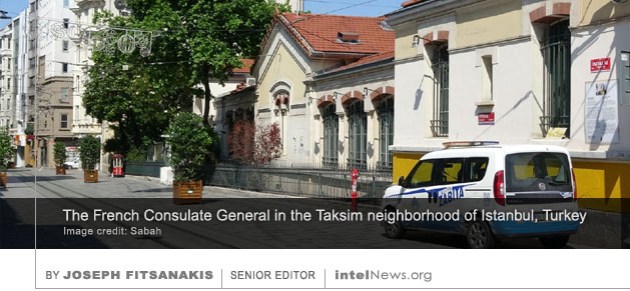
French consulate in Istanbul TurkeyFour men have been arrested by Turkish authorities in Istanbul, allegedly for being members of a spy ring operated by an agent who collected information on extremist groups for France’s external spy agency. The arrests were reported on Tuesday by a newspaper with close links to the Turkish government. It is worth noting, however, that the reports have not been confirmed by Turkish officials. If true, the incident points to further deterioration in the relations between the two nations, which are members of the North Atlantic Treaty Organization.
The Turkish daily newspaper Sabah said on Tuesday that the leader of the French-handled spy ring is named Metin Özdemir. He is reportedly a Turkish citizen who worked in the security department of the French consulate in Istanbul. According to the paper, Özdemir admitted to Turkish police that he was sent to France where he took an eight-month-long surveillance and counter-surveillance training course. He was then sent to Georgia by France’s General Directorate for External Security (DGSE), where he gathered intelligence for his French handlers. In exchange for his services, the DGSE allegedly gave Özdemir regular cash payments and offered him a job in the French Foreign Legion.

Özdemir eventually returned to Turkey and was allegedly handled by two DGSE officials that he named as “Virginia” and “Sebastian”. He recruited three more Turkish citizens, including two utility workers, who formed a spy ring. The spy ring members were supplied by the DGSE with forged credentials, identifying them as employees of Turkey’s National Intelligence Organization (MİT). According to Sabah, the spy ring supplied the DGSE with information on 120 individuals, most of whom were members of ultra-conservative religious organizations with alleged links to the Islamic State. The spy ring also allegedly spied on the Directorate of Religious Affairs, Turkey’s state-funded religious authority. Recently, however, Özdemir reportedly fell out with his French handlers and approached Turkish authorities, who promptly arrested him and the rest of the members of his spy ring.

The Sabah report comes just days after France filed a formal complaint with NATO, alleging that one of its warships was threatened in the open seas by a Turkish Navy vessel on June 10. According to French officials, the warship Courbet attempted to approach a Turkish Navy ship named Cirkin, which was believed to be smuggling weapons to Libya. The Turkish vessel refused to identify itself to the Courbet, which was inquiring on behalf of the NATO alliance. It also flashed its radar lights at the French ship, which is usually seen as a sign of impending confrontation, while its crew members were seen wearing bullet-proof vests and standing behind the ship’s mounted weapons. Turkey has denied the French allegations, but NATO said it will launch an investigation into the incident.

Author: Joseph Fitsanakis | Date: 24 June 2020 | Permalink

Russia accuses its top Arctic scientist of giving China submarine secrets

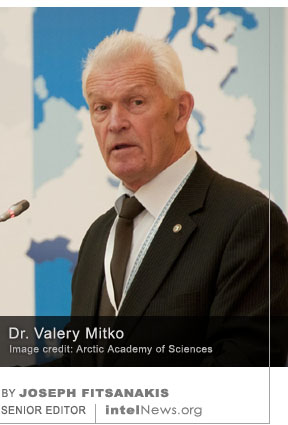
Valery MitkoRussian prosecutors have accused one of the country’s most respected hydroacoustics specialists, and globally recognized expert on the Arctic region, of spying for Chinese intelligence. This development highlights the competitive relationship between the two neighboring countries, who in recent years have tended to work together against what they perceive as a common threat coming from the United States.
The scientist in question is Dr. Valery Mitko, a St. Petersburgh-based hydroacoustics researcher, who is also president of Russia’s Arctic Academy of Sciences. Investigators with the Federal Security Service (FSB), Russia’s domestic security and counterintelligence agency, are accusing Dr. Mitko, 78, of having provided classified documents to Chinese intelligence.

The FSB first detained Dr. Mitko in February, when he returned from a stint as a visiting professor at Dalian Maritime University. Located in China’s northeastern Liaoning province, near the North Korean border, Dalian Maritime University is considered China’s foremost higher-education institution on maritime subjects, with many of its research projects funded directly by the Chinese Ministry of Transport. According to sources, Dr. Mitko gave a series of lectures at Dalian University in early 2018.

Upon arriving back to Russia from China, Dr. Mitko was detained and placed under house arrest. The FSB now claims that the Russian scientist gave the Chinese classified information relating to the underwater detection of submarines. The agency alleges that Dr. Mitko received payments in return for sharing this information with Chinese spies. However, Dr. Mitko’s lawyers argue that the information he shared with the Chinese “came from open sources”, and that he never knowingly came in contact with Chinese intelligence operatives.

There have been several arrests of Russian academics in recent years, who have been accused by the FSB of providing China with classified information. Last week saw the release from prison of Vladimir Lapygin, a 79-year-old avionics researchers, who was jailed in 2016 for allegedly giving China classified information on Russian hypersonic aircraft designs. In 2018, Russian authorities charged Viktor Kudryavtsev, a researcher at a Russian institute specializing in rocket- and spacecraft design, with passing secret information on spacecraft to researchers at the Von Karman Institute for Fluid Dynamics in Belgium. The FSB claimed that some of that information ended up in Chinese hands.

If convicted of the crime of espionage against the Russian state, Dr. Mitko faces a prison sentence of up to 20 years. He denies the charges against him.

Author: Joseph Fitsanakis | Date: 16 June 2020 | Permalink

Austrian court finds unnamed retired Army colonel guilty of spying for Russia

Igor Egorovich ZaytsevA court in Austria has found a retired Army colonel guilty of providing classified military information to Russia, following a closed-door trial. Interestingly, the alleged spy’s name has not been made public. Some Austrian media have been referring to him as “Martin M.”.
The retired colonel was arrested in November of 2018, reportedly after having recently retired following a long military career. Austria’s Defense Ministry said at the time that the arrest came after a tip given to the Austrian government by an unnamed European intelligence agency from a “friendly country”. Martin M. reportedly served in peacekeeping missions in the Golan Heights and Cyprus before being posted at one of the Austrian Armed Forces’ two headquarters, located in the western city of Salzburg. It was around that time, say prosecutors, that the unnamed man began spying for Russia. Starting in 1992, he was in regular contact with his Russian handler, who was known to him only as “Yuri”.

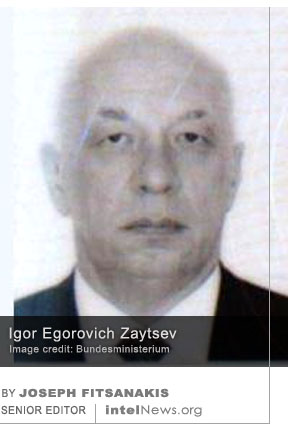
“Yuri” was later identified by Austrian authorities as Igor Egorovich Zaytsev, who is allegedly an intelligence officer for the Main Directorate of the General Staff of the Russian Armed Forces. Known as GRU, the organization is Russia’s primary military-intelligence agency. The Austrian government has issued an international arrest warrant for a Zaytsev.

Zaytsev reportedly trained Martin M. in the use of “sophisticated equipment”, according to the Austrian prosecutor, which he used to communicate classified information to Moscow. He is thought to have given Russia information on a range of weapons systems used by the Austrian Army and Air Force, as well as the personal details of high-ranking officers in the Austrian Armed Forces. Austrian media initially reported that the alleged spy was paid nearly $350,000 for his services to Moscow.

During his trial, Martin M. reportedly admitted that he had received payments form the Russians to provide information. But he claimed that the information he gave them was already publicly available. His legal team compared his role to that of a “foreign correspondent” for a news service. The court, however, did not accept that argument and on Tuesday sentenced Martin M. to three years in prison.

Soon after his sentencing, the defendant was released on parole, after the court counted the 18 months he has served behind bars since his arrest as part of his prison sentence. His legal team said they plan to appeal the sentence.

Author: Joseph Fitsanakis | Date: 11 May 2020 | Permalink

News you may have missed #903

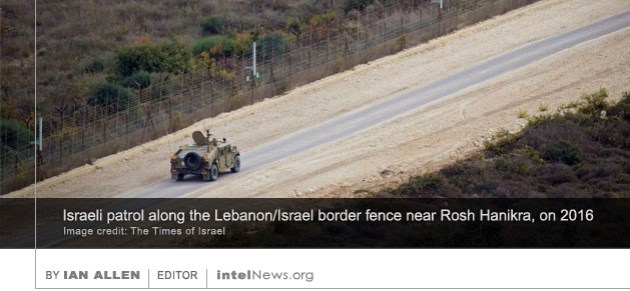
Israel Lebanon borderState-level espionage on EU a ‘very high threat’ says report. The most successful attempts of espionage at a top EU institution are state sponsored, according to an internal document produced by a subcommittee of the European Council, which is composed of heads of state or government of all European Union member-states. The restricted document presents an analysis of threats to the security of information at the General Secretariat of the Council.
Man shot after crossing into Israel, apparently to spy, returned to Lebanon. A Syrian national who was shot after he crossed the border into Israel from Lebanon last month, apparently to perform reconnaissance for Hezbollah, was sent back to Lebanon on Tuesday, the Israel Defense Forces said. According to the IDF, the International Red Cross transported him back to Lebanon through the rarely used Rosh Hanikra border crossing.
As virus toll preoccupies US, rivals test limits of American power. The coronavirus may have changed almost everything, but it did not change this: global challenges to the United States spin ahead, with America’s adversaries testing the limits and seeing what gains they can make with minimal pushback. A New York Times analysis claims that COVID-19 has not created a new reality as much as it has widened divisions that existed before the pandemic. And with the United States looking inward, preoccupied by the fear of more viral waves, unemployment soaring over 20% and nationwide protests ignited by deadly police brutality, its competitors are moving to fill the vacuum, and quickly.

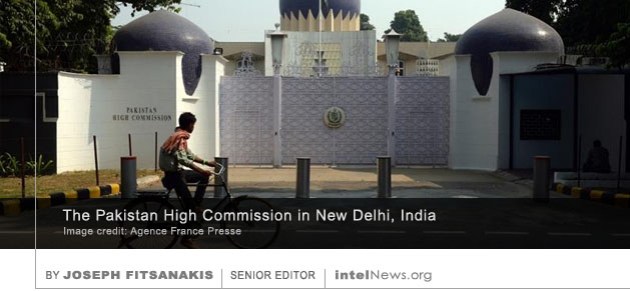
India expels Pakistan embassy officials for allegedly carrying out espionage

Pakistan embassy IndiaIndia has expelled two officials at the High Commission of Pakistan in New Delhi, after they were allegedly caught with fake Indian identity papers while trying to acquire classified documents. But the Pakistani government has rejected the allegations and subsequent expulsions as “a part of persistent anti-Pakistan propaganda” from India, and said the two officials were tortured while under detention by Indian authorities.
The expulsion orders followed the arrest of three Pakistani citizens, who were identified as Abid Hussain, 42, Tahir Khan, 44, and Javed Hussain. The Times of India said Abid Hussain had been working at the Pakistani embassy’s visa issuance department since late 2018. Khan was “an upper division clerk” at the embassy and arrived in India at around the same time Abid Hussain did, said the paper. Javed Hussain has been working as a driver at the embassy since 2015, and was reportedly released by the Indian authorities after he was found not to have been implicated in the alleged espionage.

The Times cited unnamed sources in New Delhi in claiming that the three Pakistanis had been arrested by Indian police at an undisclosed location in the Indian capital’s centrally located Karol Bagh neighborhood. The men were reportedly there to receive “highly sensitive information” by unnamed Indian “defense personnel”. Javed Hussain and Khan were reportedly found to be carrying Indian identification cards bearing fake names. They also had in their possession what the newspaper called “incriminating documents”, two smartphones and 15,000 rupees, which equal to around $200.

On Sunday, India’s Ministry of Foreign Affairs said that Javed Hussain and Khan had been declared “persona non grata” and had been ordered to leave the country within 24 hours. The reason for their expulsion was “indulging in activities incompatible with their status as members of a diplomatic mission”. The phrase is used in the international legal vernacular to describe an accredited diplomat engaging in intelligence operations abroad without the consent of his or her host nation. The Ministry also said that it had summoned the Pakistani ambassador and issued him with a “strong protest” about the incident.

The Indian government said late on Sunday that it was investigating whether other Pakistani embassy officials had been engaging in espionage. Diplomatic observers expressed certainty last night that Islamabad would expel at least two Indian diplomats from the country in a tit-for-tat response to India’s move.

Author: Joseph Fitsanakis | Date: 01 June 2020 | Permalink

Malta protests French media claims that its Brussels embassy is bugged by China

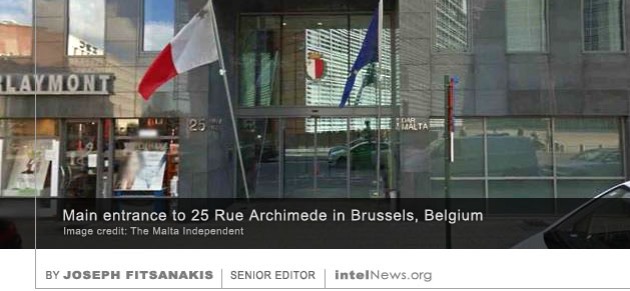
25 Rue ArchimedeThe Maltese government has strongly denied allegations, made by a leading French newspaper, that the island nation’s embassy in Brussels is being used by China to spy on European Union institutions. The allegations concern a nine-story building located at 25 Rue Archimede, in one of downtown Brussels’ most desirable areas. The building houses the Embassy of Malta in Belgium, as well as Malta’s Permanent Representation to the European Union. It is conveniently located across the street from Le Berlaymont —the headquarters of the European Commission, which is the European Union’s executive branch. It is also around the corner from the headquarters of the European Council, which operates as the collective presidency of the European Union.


Last Friday, leading French newspaper Le Monde, alleged that China had installed concealed surveillance equipment throughout the building at 25 Rue Archimede. The paper claimed that the Chinese had supplied the funds to buy and refurbish the building as a gift to Malta, a country with which Beijing has had traditionally warm relations since 1972, when Malta became the world’s first nation to formally recognize the People’s Republic of China. The paper also alleged that Belgium’s state security services had long suspected that the building “harbored technical [surveillance] equipment” planted by Chinese intelligence with the aim of spying on nearby European Union facilities located nearby. The report added that the Belgians had previously been initially alerted by British intelligence about the use of 25 Rue Archimede as a “spy tower” by the Chinese.

According to Le Monde, this information had been relayed to the Belgian Ministry of Foreign Affairs by Alain Winants, when he served as Director of Belgium’s State Security Service (SV/SE). However, both Winants and his successor, Jaak Raes, declined to comment when asked by Le Monde. The paper said that the Belgian Ministry of Foreign Affairs also declined an opportunity to comment, saying that “such affairs relate to the state affairs of Belgium”.

Over the weekend, the Maltese government issued a formal statement denying the clams by Le Monde, and protesting the “incorrect allegations” in the paper’s report. Additionally, Maltese officials told local media that the building in question had undergone successive “internal and external audits” by the Maltese Security Service and the European Council, and had been found to be clear of bugs every time. Another Maltese government source said that 80% of the building’s furniture had been “disposed of” in the past two years and replaced with “new furniture procured from Malta”.

Other sources told Maltese media that the allegations in Le Monde could be a form of retaliation against the government of Malta for seeking to withdraw from Operation IRINI, a European Union naval operation aimed at enforcing an international weapons embargo imposed on Libya. According to these claims, the embargo is preventing weapons from Turkey from reaching the United Nations-recognized Libyan Government of National Accord. If the embargo were to be lifted, or not thoroughly implemented, it could potentially strengthen the Libyan government, and thus hamper the efforts of Libyan warlord General Khalifa Haftar. Haftar is backed by France, among other Western powers.

Author: Joseph Fitsanakis | Date: 18 May 2020 | Permalink

Spy agencies target biomedical secrets in worldwide race to find COVID-19 vaccine

COVID-19 coronavirusSpy agencies from every country are participating in a worldwide competition to develop a vaccine for the COVID-19 pandemic, by protecting their own biomedical secrets while trying to steal other nations’ research. Much like frantic efforts to secure personal protective equipment like masks and gloves, ongoing research to develop a vaccine against COVID-19 appears to be taking the form of a competition between nations. The country that first develops a successful vaccine to combat the epidemic is likely to emerge as a major power-player in a post-coronavirus world.

The government of the United States, whose race to develop a vaccine for COVID-19 is reportedly codenamed Operation WARPSPEED, has warned its biomedical experts that foreign intelligence agencies may be trying to spy on their research. This warning was relayed to the BBC’s security correspondent Gordon Corera on April 1 by Bill Evanina, director of the US National Counterintelligence and Security Center (NCSC). The NCSC is part of the Office of the Director of National Intelligence (ODNI), the US agency created after the attacks of September 11, 2001, to coordinate the activities of American spy agencies. The mission of the NCSC is to manage the US government’s counterintelligence activities.

Evanina told the BBC that the NCSC has “every expectation that foreign intelligence services, to include the Chinese Communist Party, will attempt to obtain what we are making here”. He added that his organization had contacted “every medical research organization” carrying out COVID-19-related research and warned them that they should be “very, very vigilant”. However, Evanina would not tell the BBC whether scientific data had actually been stolen by foreign intelligence agencies.

According to the BBC, other Western governments, including those of the United Kingdom and Canada, have warned that foreign spies have become active in the field of biomedical intelligence, with attempts to steal scientific data related to COVID-19. In March, Canada’s Centre for Cyber Security warned that research and development data related to the pandemic may be targeted by “sophisticated threat actors” operating online.

The BBC notes, however, that Western intelligence agencies are also likely to be interested in biomedical data from China and other countries. Their interest may be two-fold: on the one hand trying to determine the precise origins of the SARS-CoV-2 pandemic and the precise case load of the virus in these countries, while on the other seeking to steal information about “research on vaccines and treatments”.

Author: Joseph Fitsanakis | Date: 05 May 2020 | Permalink

US arrests Mexican man for spying for Russia in mystery case involving informant

FBI MiamiThe United States Federal Bureau of Investigation has arrested a Mexican man, who is accused of spying in the city of Miami on behalf of the Russian government. Local media reports suggest that the target of the man’s spying was a Russian defector who gave American authorities information about Russian espionage activities on US soil.

In a news release issued on Tuesday, the US Department of Justice identified the man as Hector Alejandro Cabrera Fuentes, a Mexican citizen residing in Singapore. The statement said that Fuentes was arrested on Monday and was charged with “conspiracy” and “acting within the United States on behalf of a foreign government”.

According to the statement, Fuentes was recruited in April of 2019 by an unnamed Russian government official. His first assignment was to rent an apartment in Miami-Dade County using fake identification. One he carried out the assignment, Fuentes allegedly traveled to Russia, where he briefed his handler. He was then asked to return to Miami and drive to an apartment complex, where he was to observe a vehicle belonging to an individual that the Department of Justice statement describes as a “US government source”. Fuentes was tasked with providing his Russian handler with the vehicle’s license plate number.

Having been given a detailed physical description of the vehicle by his Russian handler, Fuentes drove to the apartment complex in Miami, but was stopped at the entrance to the complex by a security guard. While Fuentes was speaking with the security guard, Fuentes’ wife allegedly exited the car and took a photograph of the vehicle in question. According to the FBI, she later shared the photograph with Fuentes’ Russian handler on the mobile phone application WhatsApp. The photograph was discovered by US Customs and Border Protection agents on the smartphone of Fuentes’ wife on Sunday, as the pair tried to board a flight to Mexico City.

The US Department of Justice news release does not identify Fuentes’ alleged espionage target. But an article in The Miami Herald claims that the target is an FBI informant who has provided the Bureau’s counterintelligence division with critical information about Russian espionage operations in the Miami area. Fuentes is scheduled to appear in court for a pretrial detention hearing this coming Friday. His arraignment has been scheduled for March 3. The press release does not explain why Fuentes’ wife was not arrested.

Author: Joseph Fitsanakis | Date: 20 February 2020 | Permalink

Russia expelled Japanese reporter accusing him of espionage, say sources

VladivostokRussian authorities detained a Japanese journalist last month, and eventually expelled him after accusing him of espionage, according to sources. Even though it occurred last month, the incident was reported only on Monday by Russia’s RIA Novosty news agency.

According to the news agency the Japanese journalist was detained by the Russian Federal Security Service (FSB) on December 25, 2019. At the time of his detention, the journalist was working in Vladivostok for Kyodo, Japan’s largest news agency. Vladivostok, a city of 600,000, features the largest Russian port on the Pacific coast and hosts the main base of Russia’s Pacific Fleet.

The Russian Ministry of Foreign Affairs told RIA Novosty that the Japanese journalist was detained because he was “trying to acquire secret materials about Russia’s military capabilities in the Far East”. He was eventually released following an interrogation session that lasted for over five hours. Upon his release he was given 72 hours to leave the country. Later that day, the Russian Ministry of Foreign Affairs summoned an official from the embassy of Japan in Moscow to file an “official diplomatic protest” about the incident, according to RIA Novosty.

The Reuters news agency said on Monday that officials from Japan’s Kyodo News confirmed that one of their reporters —which it did not name— had been detained in Russia. The Japanese news agency also confirmed that the reporter had been expelled from Russia, but denied that he had been involved in espionage, saying instead that he was “engaged in standard reporting activities”. Kyodo News officials added that the reporter had left Russia as instructed, “for safety reasons”.

The Japanese Ministry of Foreign Affairs told Reuters that it “could not comment” on the matter.

Author: Joseph Fitsanakis | Date: 28 January 2020 | Permalink

Britain warns its citizens following detention of alleged Russian spies in Switzerland

Davos SwitzerlandA Swiss newspaper has revealed a previously unreported detention of two Russian diplomats in the luxury Swiss Alpine resort of Davos, which is currently hosting the annual meeting of the World Economic Forum (WEF). The development prompted British authorities to warn some British citizens participating in the WEF meeting that they may be in physical danger.

The brief detention of the two Russians allegedly occurred in August of last year in Davos, a mountain resort in the canton of Graubünden, which is located in Switzerland’s eastern Alps region. According to the Swiss newspaper Tages-Anzeiger, local police detained two Russians during the period between August 8 and 28 of last year. Citing anonymous sources from the police and security services, the paper said that the authorities were alerted about the two Russians by employees at a local resort. The employees reportedly found it strange that the Russians had booked hotel rooms for over three weeks, which is unusually long for Davos’ ultra-luxury resort setting.

When police officers approached the two men and inquired about their background, one of them said he worked as a plumber. However, when asked to provide identification papers, both men reportedly produced Russian diplomatic passports. However, none had received accreditation by the Swiss government, which means they had not been formally registered as diplomats in the Alpine nation. When Swiss police officials contacted the Russian embassy in Bern to inquire about the two men, Russian officials “threatened diplomatic consequences if the men were arrested” said Tages-Anzeiger.

The two Russians were eventually released, as Swiss police “could not ascertain any reason to detain them”, said the paper. However, Swiss officials said that the two Russians “obviously […] had their sights on the WEF” and were probably planning to install surveillance equipment around the Swiss resort town. Soon after the Tages-Anzeiger report was published, British counterterrorism police reportedly warned a number of British citizens attending the WEF meeting that they might be in physical danger.

But the Russian embassy in Switzerland dismissed the Tages-Anzeiger report as “one more attempt to undermine Swiss-Russian relations”. Russian officials at the embassy accused Western countries of trying to “whip out a scandal out of nothing”, adding that Russian authorities had not been officially notified of the incident and that there was “no evidence of espionage” by the two men.

Author: Joseph Fitsanakis | Date: 22 January 2020 | Permalink

Russian security services honor members of the Cambridge spy ring with plaque

Guy BurgessThe intelligence service of Russia has openly honored two British members of the so-called Cambridge Five spy ring, who caused great controversy during the Cold War by defecting to Moscow. The intelligence services of the Soviet Union recruited five Enlishmen, H.A.R. ‘Kim’ Philby, John Cairncross, Donald Maclean, Anthony Blunt, as well as an unnamed fifth person, to spy for them in the 1930s. All five were recruited while they were promising young students at Britain’s elite Cambridge University, and entered the diplomatic and security services in order to supply Moscow with classified information about Britain and its allies.

In 1951, shortly before they were detained by British authorities on suspicion of espionage, Burgess and Maclean defected to the Soviet Union. They both lived there under new identities and, according to official histories, as staunch supporters of Soviet communism. Some biographers, however, have suggested that the two Englishmen grew disillusioned with communism while living in the Soviet Union, and were never truly trusted by the authorities Moscow. When they died, however, in 1963 (Burgess) and 1983 (Maclean), the Soviet intelligence services celebrated them as heroes.

On Friday, the Soviet state recognized the two defectors in an official ceremony in the Siberian city of Samara, where they lived for a number of years, until the authorities relocated them to Moscow. Kuibyshev, as the city was known during Soviet times, was technically a vast classified facility where much of the research for the country’s space program took place. While in Kuibyshev, Burgess and Maclean stayed at a Soviet intelligence ‘safe house’, where they were debriefed and frequently interrogated, until their handlers were convinced that they were indeed genuine defectors.

At Friday’s ceremony, officials unveiled a memorial plaque at the entrance to the building where Burgess and Maclean lived. According to the Reuters news agency, the plaque reads: “In this building, from 1952-1955, lived Soviet intelligence officers, members of the ‘Cambridge Five’, Guy Francis Burgess and Donald Maclean”. On the same day, a letter written by Sergei Naryshkin, head of Russia’s Foreign Intelligence Service (SVR), one of the institutional descendants of the Soviet-era KGB, appeared online. In the letter, Naryshkin said that Burgess and Maclean had made “a significant contribution to the victory over fascism [during World War II], the protection of [the USSR’s] strategic interests, and ensuring the safety” of the Soviet Union and Russia.

Last year, Russian officials named a busy intersection in Moscow after Harold Adrian Russell Philby. Known as ‘Kim’ to his friends, Philby was a leading member of the Cambridge spies. He followed Burgess and Maclean to the USSR in 1963, where he defected after a long career with the British Secret Intelligence Service (MI6).

Author: Joseph Fitsanakis | Date: 22 December 2019 | Permalink

Germany convicts married couple of spying for Indian intelligence service

Manmohan S. Kanwal Jit K.A court in Frankfurt has found a married couple guilty of spying in Germany on behalf of India’s external intelligence service. Due to Germany’s strict privacy laws, the couple have been identified only as 50-year-old Manmohan S. and his wife, Kanwal Jit K., who is 51.

According to the prosecution, Manmohan S. was recruited by India’s Research and Analysis Wing (RAW) in January of 2015. His wife joined his intelligence-collection activities in July 2017. Following their arrest, the couple told German authorities that they held regular meetings with a RAW case officer who was serving as a diplomat in the Indian consulate in Frankfurt. They also said they were paid nearly $8,000 for their services.

The two convicted spies said at their trial that they were tasked to spy on adherents of the Sikh religion and members of the Kashmiri expatriate community in Germany. The central European country is believed to host as many as 20,000 Indian Sikhs, many of whom openly proclaim secessionist aspirations. Many Sikhs in India and abroad campaign for the creation of a Sikh state in parts of northwestern India and Pakistan, which they call Khalistan. India is also concerned about the secessionist aspirations of Kashmiris, a predominantly Muslim population of 10 million that lives in the region of Jammu and Kashmir. Delhi has long claimed that expatriate groups living in Europe and the United States provide funding for secessionist groups that operate in the region.

On Thursday, Frankfurt’s Higher Regional Court found the couple guilty of conducting illegal espionage activities on German soil. It handed Manmohan S. a one-and-a-half-year suspended jail sentence, while Kanwal Jit K. was given a fine that equates to 180 days of income.

Author: Joseph Fitsanakis | Date: 13 December 2019 | Permalink