Venezuelan intelligence spied on Citgo executives on US soil, spy alleges
March 4, 2021 Leave a comment
 VENEZUELAN INTELLIGENCE SERVICES SPIED on executives of the Citgo Petroleum Corporation in the United States for at least a year, according to court testimony by a Venezuelan former counterintelligence official. The espionage targeted six executives of Citgo, a Texas-headquartered oil company owned by the Venezuelan government. The executives have been named as Gustavo Cardenas, Jose Luis Zambrano, Jose Pereira, Alirio Jose Zambrano, Tomeu Vadell and Jorge Toledo. Five of them are reportedly American citizens.
In 2017 the Venezuelan government accused the six executives of knowingly involving Citgo in a corrupt refinancing agreement, thus damaging the company’s financial wellbeing. They were arrested in Caracas and last year were given prison sentences ranging from eight to 13 years. The United States government condemned the court proceedings for lack of impartiality, and late last year imposed sanctions on the judge and leading prosecutors in the case.
On Wednesday the Reuters news agency said it had reviewed court documents from the appeal of the so-called “Citgo Six”. The documents include testimony from Ramon Balza, who in 2017 was director of operations for the Directorate General of Military Counterintelligence (DGCIM). The DGCIM is the military counterintelligence agency of Venezuela. According to Reuters, Balza told the appeals court on August 11 that the DGCIM and other Venezuelan intelligence agencies have been monitoring senior Citgo officials “ever since [Citgo] became Venezuelan”. He added that the monitoring includes physical surveillance, as well as wiretaps.
Balza’s testimony suggests that DGCIM and other Venezuelan intelligence personnel spied on the six (and possibly other) Citgo executives on American soil prior to their arrest in 2017. It is also possible, says Reuters, that the espionage against the executives was carried out by non-diplomatic foreign agents of Venezuela.
► Author: Ian Allen | Date: 04 March 2021 | Permalink
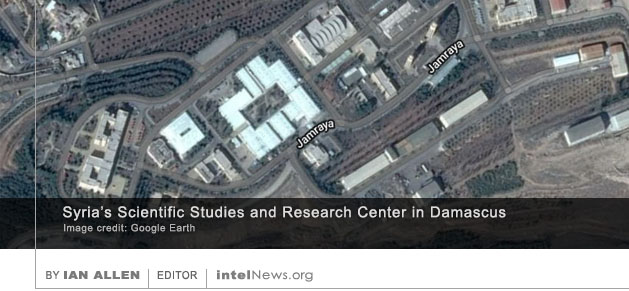 THE TOP SCIENTIST IN Syria’s chemical weapons program, reputed to be among the world’s deadliest, spied for the United States Central Intelligence Agency for 14 years, according to a new book by Pulitzer Prize-winning reporter Toby Warrick. The claim is included in Warrick’s
 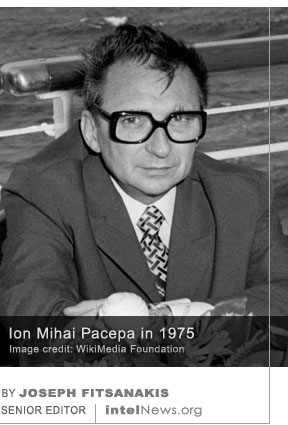 ION MIHAI PACEPA, WHO defected to the West as acting head of the Romanian intelligence service, making him the Cold War’s highest-ranking defector from the Soviet Bloc , has reportedly died in the United States of COVID-19. There has been no official announcement of Pacepa’s passing. However, a number of American and Romanian news outlets have
 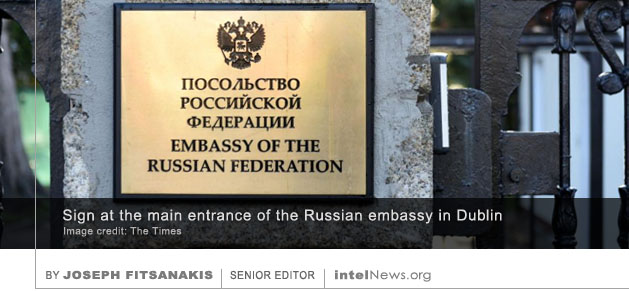 IRELAND’S COUNTERINTELLIGENCE SERVICE HAS launched an investigation into an expansion project at the embassy of Russia in Dublin. According to sources cited by The Times newspaper, the Irish government is concerned that the expansion project is part of a secret plan by Moscow to turn its embassy in Dublin into a major espionage hub in Europe.
 DURING HIS LAST DAY in office, United States President Donald Trump issued a federal pardon for Aviem Sella, an Israeli former intelligence officer, who allegedly recruited Jonathan Pollard, an American who sold secrets to Israel. Pollard was
  THE INSURGENTS WHO STORMED the United States Capitol Building Complex on January 6 may have unwittingly provided cover for teams of foreign spies, who could have stolen or compromised sensitive electronic equipment. This largely neglected security-related aspect of the attack is discussed in an
  The Afghan government reportedly expelled from the country 10 Chinese intelligence officers on Saturday, after they were found to have contacts with pro-Taliban groups. Meanwhile the White House was recently briefed about claims that Beijing offered Afghan militants bounties for killing American soldiers.
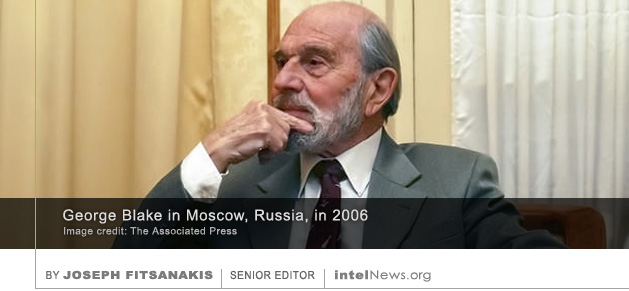 GEORGE BLAKE, A DUTCH-born British intelligence officer, whose espionage for the Soviet Union gained him notoriety in the West and hero status in Moscow, has died aged 98. His death was
  COLOMBIA EXPELLED TWO RUSSIAN diplomats earlier this month, without publicly explaining why, according to news reports. Several Colombian news outlets reported on Tuesday that the two Russians were expelled after they were found engaging in espionage. Also on Tuesday, Colombian officials confirmed earlier reports that Moscow had expelled two Colombian diplomats in a tit-for-tat response.
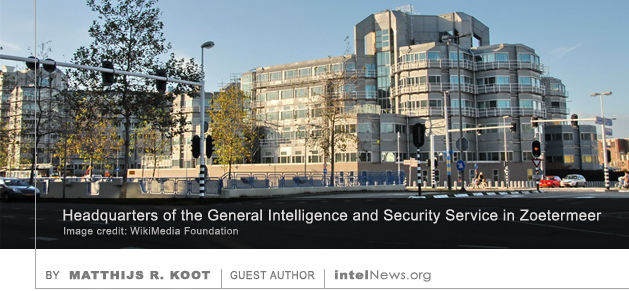 On 10 December 2020, the Dutch Minister of the Interior and Kingdom Relations, Kajsa Ollongren, sent a
  A UNITED STATES NAVY analyst who spent 30 years in prison after being convicted of spying on the United States for Israel, is expected to receive a hero’s welcome in Israel in the coming days, after the administration of President Donald Trump lifted his parole restrictions that prevented him from leaving the country. Jonathan Pollard, a former intelligence analyst for the United States Navy, was
 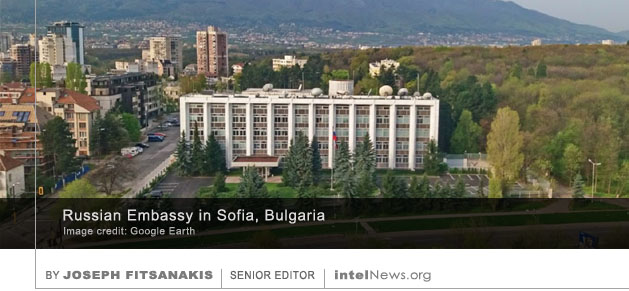 Bulgaria, a once close Soviet ally, which is now a member of the European Union and the North Atlantic Treaty Organization, has expelled two Russian diplomats whom it accuses of conducting military espionage. This raises to five the number of Russian diplomats who have been expelled from Bulgaria for espionage in the past year.
 The President of Venezuela, Nicolás Maduro, announced on Friday the arrest of an alleged “American spy”, who was reportedly arrested near the largest oil refinery complex in the country. The alleged spy, who has not been named, was reportedly in the vicinity of the Paraguaná Refinery Complex, which is known as the third largest refinery complex in the world. It combines the Amuay, Bajo Grande and Cardón refineries, which together produce nearly a third of Venezuela’s daily oil output.
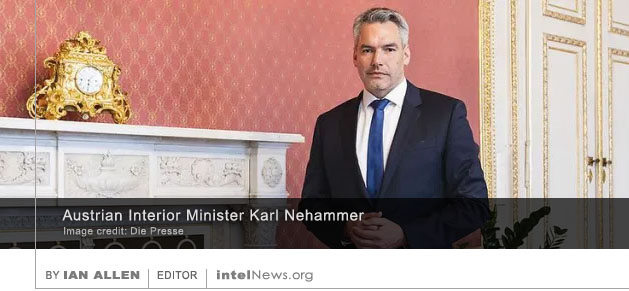 There were angry exchanges between Austrian and Turkish officials on Tuesday, after the Austrian government announced it would press charges against an individual allegedly caught spying for Turkish intelligence. The charges were








Bulgaria confirms arrest of six-member spy-ring allegedly working for Russia
March 22, 2021 by Joseph Fitsanakis Leave a comment
AUTHORITIES IN BULGARIA HAVE confirmed media reports aired last week, which alleged that at least six members of a spy-ring working for the government of Russia had been arrested in the capital Sofia. News of the arrests was first reported by the Bulgarian National Television, or BNT, late on Thursday, March 18. Citing “government sources”, BNT said that “several” Bulgarian citizens had been arrested in simultaneous raids by the country’s counterintelligence service.
On Friday, March 19, the Bulgarian government confirmed the BNT report, saying that six Bulgarian citizens had been charged with espionage on behalf of the Main Directorate of the General Staff of the Russian Armed Forces, known commonly as GRU. The GRU is Russia’s foremost military intelligence agency. The six alleged spies reportedly gave Moscow secrets about Bulgarian military affairs, as well as information concerning the North Atlantic Treaty Organization (NATO) and the European Union (EU). Bulgaria, a former ally of the Soviet Union, joined NATO in 2004 and the EU in 2007.
Some reports claim that the spy ring members also gave information to the Russians about the presence and operations of United States intelligence personnel in Bulgaria. The American intelligence agencies that were allegedly affected by these disclosures include the Central Intelligence Agency and the National Security Agency. The United States has not officially commented on these reports. On Friday, US Department of State spokesperson Ned Price tweeted that “Bulgaria is a friend, NATO ally, and partner”, adding that Washington was “attentively watching the Bulgarian investigation into an alleged Russian spy ring”.
The head of the alleged spy ring is reportedly a retired senior official in the Bulgarian Ministry of Defense, who was allegedly recruited by the GRU and received training in clandestine tradecraft from his Russian handlers. Another member is a retired military counterintelligence officer, who is currently serving in a counterintelligence capacity in the Bulgarian parliament. Three other members of the spy ring are active or retired officers in the Bulgarian armed forces. According to the BNT report, the wife of the head of the spy ring, who is a citizen of both Bulgaria and Russia, operated as a courier for the spy ring. She allegedly made regular visits to the Russian embassy in Sofia, where she delivered stolen secrets in return for cash payments.
The Office of the Bulgarian State Prosecutor published a 20-minute video on Friday, which contains intercepted audio recordings of alleged conversations between members of the spy group and their Russian handlers. The video also contains surreptitiously filmed footage of alleged meetings between the members of the spy ring and their Russian handlers in public places. Some of the footage shows the exchange of documents with cash payments between assets and handlers.
► Author: Joseph Fitsanakis | Date: 22 March 2021 | Permalink
Filed under Expert news and commentary on intelligence, espionage, spies and spying Tagged with Bulgaria, espionage, GRU, News, Russia, Russian embassy in Bulgaria