US arrests Mexican man for spying for Russia in mystery case involving informant
February 20, 2020 2 Comments
 The United States Federal Bureau of Investigation has arrested a Mexican man, who is accused of spying in the city of Miami on behalf of the Russian government. Local media reports suggest that the target of the man’s spying was a Russian defector who gave American authorities information about Russian espionage activities on US soil.
In a news release issued on Tuesday, the US Department of Justice identified the man as Hector Alejandro Cabrera Fuentes, a Mexican citizen residing in Singapore. The statement said that Fuentes was arrested on Monday and was charged with “conspiracy” and “acting within the United States on behalf of a foreign government”.
According to the statement, Fuentes was recruited in April of 2019 by an unnamed Russian government official. His first assignment was to rent an apartment in Miami-Dade County using fake identification. One he carried out the assignment, Fuentes allegedly traveled to Russia, where he briefed his handler. He was then asked to return to Miami and drive to an apartment complex, where he was to observe a vehicle belonging to an individual that the Department of Justice statement describes as a “US government source”. Fuentes was tasked with providing his Russian handler with the vehicle’s license plate number.
Having been given a detailed physical description of the vehicle by his Russian handler, Fuentes drove to the apartment complex in Miami, but was stopped at the entrance to the complex by a security guard. While Fuentes was speaking with the security guard, Fuentes’ wife allegedly exited the car and took a photograph of the vehicle in question. According to the FBI, she later shared the photograph with Fuentes’ Russian handler on the mobile phone application WhatsApp. The photograph was discovered by US Customs and Border Protection agents on the smartphone of Fuentes’ wife on Sunday, as the pair tried to board a flight to Mexico City.
The US Department of Justice news release does not identify Fuentes’ alleged espionage target. But an article in The Miami Herald claims that the target is an FBI informant who has provided the Bureau’s counterintelligence division with critical information about Russian espionage operations in the Miami area. Fuentes is scheduled to appear in court for a pretrial detention hearing this coming Friday. His arraignment has been scheduled for March 3. The press release does not explain why Fuentes’ wife was not arrested.
► Author: Joseph Fitsanakis | Date: 20 February 2020 | Permalink
 Russian authorities detained a Japanese journalist last month, and eventually expelled him after accusing him of espionage, according to sources. Even though it occurred last month, the incident was reported only on Monday by Russia’s RIA Novosty news agency.
 A Swiss newspaper has revealed a previously unreported detention of two Russian diplomats in the luxury Swiss Alpine resort of Davos, which is currently hosting the annual meeting of the World Economic Forum (WEF). The development prompted British authorities to warn some British citizens participating in the WEF meeting that they may be in physical danger.
 The intelligence service of Russia has openly honored two British members of the so-called Cambridge Five spy ring, who caused great controversy during the Cold War by defecting to Moscow. The intelligence services of the Soviet Union recruited five Enlishmen, H.A.R. ‘Kim’ Philby, John Cairncross, Donald Maclean, Anthony Blunt, as well as an unnamed fifth person, to spy for them in the 1930s. All five were recruited while they were promising young students at Britain’s elite Cambridge University, and entered the diplomatic and security services in order to supply Moscow with classified information about Britain and its allies.
 A court in Frankfurt has found a married couple guilty of spying in Germany on behalf of India’s external intelligence service. Due to Germany’s strict privacy laws, the couple have been identified only as 50-year-old Manmohan S. and his wife, Kanwal Jit K., who is 51.
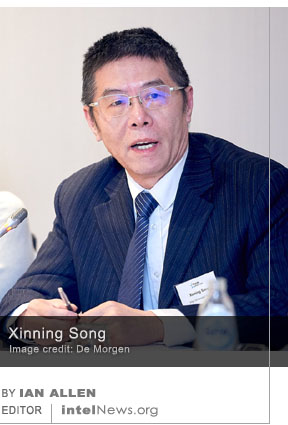 One of Belgium’s leading universities has decided to shut down a research institute funded by the Chinese government, after the Belgian intelligence service accused its director of spying on behalf of Beijing. The news was
 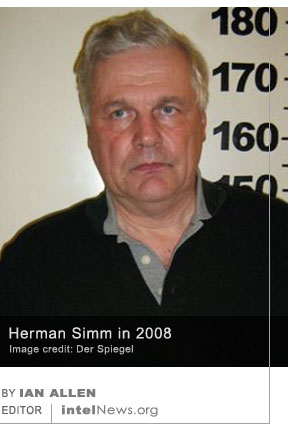 A court in Estonia has ordered the release of a former senior defense official who spied on the North Atlantic Treaty Organization for Russia, causing what experts
  An elite group Russian military intelligence officers, who have participated in assassinations across Europe, have been using resorts in the French Alps as logistical and supply bases, according to a new report. The report concerns Unit 29155 of the Main Directorate of the General Staff of the Russian Armed Forces, commonly known as GRU.
  As the Australian government has launched an official investigation into the claims made by a self-styled Chinese intelligence defector, some skeptics have begun to cast doubts about his revelations. The claims of Wang “William” Liqiang have dominated news headlines in Australia for over a week. The 26-year-old from China’s eastern Fujian province reportedly defected to Australia in October, while visiting his wife and newborn son in Sydney. He is currently reported to be in a safe house belonging to the Australian Security Intelligence Organization (ASIO).
 A Chinese intelligence defector has reportedly given the Australian government information about entire networks of Chinese undercover spies in Hong Kong, Taiwan and Australia, according to reports. The story of Wang “William” Liqiang, made headlines all over Australia during the weekend, culminating in an entire
 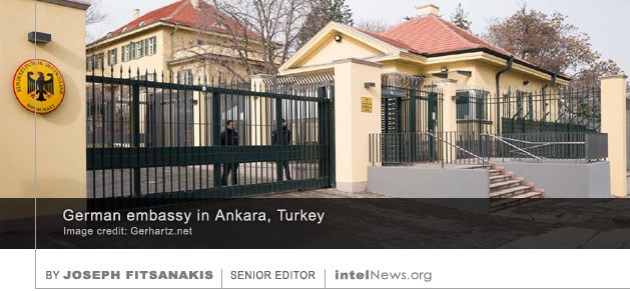 Turkish authorities have charged a lawyer working for the German embassy in Ankara with espionage, further-straining the already tense relationship between the two North Atlantic Treaty Organization allies. German newsmagazine Der Spiegel, which
 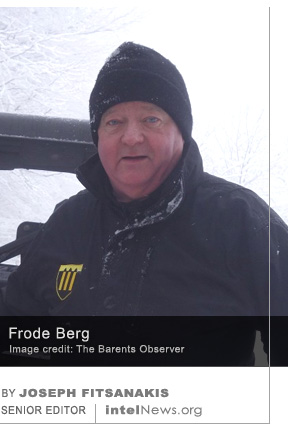 A rare three-way spy-swap has reportedly taken place between Russia and two North Atlantic Treaty Organization (NATO) members, Lithuania and Norway. Rumors of a possible exchange of imprisoned spies between the three countries first
  United States authorities have charged two employees of the social media firm Twitter and a member of staff of Saudi Arabia’s royal family with spying for Riyadh. The Federal Bureau of Investigation filed a complaint on Wednesday in San Francisco, accusing the three men of “acting as unregistered agents” for Saudi Arabia. The phrase is used in legal settings to refer to espionage.
 The Russian government is preparing to swap a number of imprisoned spies with at least two member states of the North Atlantic Treaty Organization (NATO), according to reports. The Estonia-based news agency BNS, which is the largest news agency in the Baltics,








Spy agencies target biomedical secrets in worldwide race to find COVID-19 vaccine
May 5, 2020 by Joseph Fitsanakis 2 Comments
The government of the United States, whose race to develop a vaccine for COVID-19 is reportedly codenamed Operation WARPSPEED, has warned its biomedical experts that foreign intelligence agencies may be trying to spy on their research. This warning was relayed to the BBC’s security correspondent Gordon Corera on April 1 by Bill Evanina, director of the US National Counterintelligence and Security Center (NCSC). The NCSC is part of the Office of the Director of National Intelligence (ODNI), the US agency created after the attacks of September 11, 2001, to coordinate the activities of American spy agencies. The mission of the NCSC is to manage the US government’s counterintelligence activities.
Evanina told the BBC that the NCSC has “every expectation that foreign intelligence services, to include the Chinese Communist Party, will attempt to obtain what we are making here”. He added that his organization had contacted “every medical research organization” carrying out COVID-19-related research and warned them that they should be “very, very vigilant”. However, Evanina would not tell the BBC whether scientific data had actually been stolen by foreign intelligence agencies.
According to the BBC, other Western governments, including those of the United Kingdom and Canada, have warned that foreign spies have become active in the field of biomedical intelligence, with attempts to steal scientific data related to COVID-19. In March, Canada’s Centre for Cyber Security warned that research and development data related to the pandemic may be targeted by “sophisticated threat actors” operating online.
The BBC notes, however, that Western intelligence agencies are also likely to be interested in biomedical data from China and other countries. Their interest may be two-fold: on the one hand trying to determine the precise origins of the SARS-CoV-2 pandemic and the precise case load of the virus in these countries, while on the other seeking to steal information about “research on vaccines and treatments”.
► Author: Joseph Fitsanakis | Date: 05 May 2020 | Permalink
Filed under Expert news and commentary on intelligence, espionage, spies and spying Tagged with Bill Evanina, biomedical intelligence, Coronavirus, COVID-19, espionage, Gordon Corera, News, US National Counterintelligence and Security Center