KGB spy shares details of his escape to Britain in 1985
July 6, 2015 Leave a comment
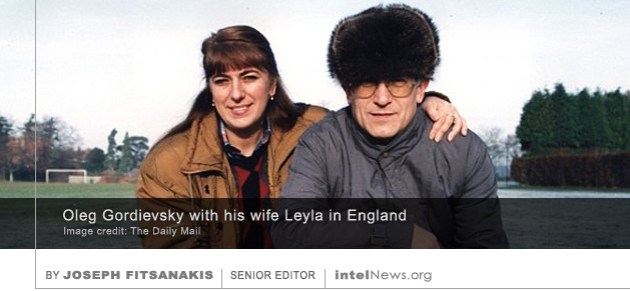 A Soviet double spy, who secretly defected to Britain 30 years ago this month, has revealed for the first time the details of his exfiltration by British intelligence in 1985. Oleg Gordievsky was one of the highest Soviet intelligence defectors to the West in the closing stages of the Cold War. He joined the Soviet KGB in 1963, eventually reaching the rank of colonel. But in the 1960s, while serving in the Soviet embassy in Copenhagen, Denmark, Gordievsky began feeling disillusioned about the Soviet system. His doubts were reinforced by the Soviet invasion of Czechoslovakia in 1968. It was soon afterwards that he made the decision to contact British intelligence.
Cautiously, Britain’s Secret Intelligence Service (known as MI6) communicated with Gordievsky, and in 1974 he secretly became an agent-in-place for the United Kingdom. Eight years later, in 1982, Gordievsky was promoted to KGB rezident (chief of station) in London. While there, he frequently made contact with his MI6 handlers, giving them highly coveted information on Soviet nuclear strategy, among other things. He is credited with informing London of Mikhail Gorbachev’s imminent ascendency to the premiership of the Soviet Union, long before he was seen by Western intelligence as a viable candidate to lead the country.
But in May of 1985, Gordievsky was suddenly recalled to Moscow, where he was detained by the KGB. He was promptly taken to a KGB safe house in the outskirts of Moscow and interrogated for five hours, before being temporarily released pending further questioning. Remarkably, however, Gordievsky managed to escape his KGB surveillance and reappear in Britain less than a week later. How did this happen? On Sunday, the former double spy gave a rare rare interview to The Times, in which he revealed for the first time the details of his escape to London. He told The Times’ Ben Macintyre that he was smuggled out of the USSR by MI6 as part of Operation PIMLICO. PIMLICO was an emergency exfiltration operation that had been put in place by MI6 long before Gordievsky requested its activation in May of 1985.
Every Tuesday, shortly after 7:00, a British MI6 officer would take a morning stroll at the Kutuzovsky Prospekt in Moscow. He would pass outside a designated bakery at exactly 7:24 a.m. local time. If he saw Gordievsky standing outside the bakery holding a grocery bag, it meant that the double agent was requesting to be exfiltrated as a matter of urgency. Gordievsky would then have to wait outside the bakery until a second MI6 officer appeared, carrying a bag from the Harrods luxury department store in London. The man would also be carrying a Mars bar (a popular British candy bar) and would bite into it while passing right in front of Gordievsky. That would be a message to him that his request to be exfiltrated had been received.
Four days later, Gordievsky used his skills in evading surveillance and shook off (or dry-cleaned, in espionage tradecraft lingo) the KGB officers trailing him. He was then picked up by MI6 officers and smuggled out of the country in the trunk of a British diplomatic car that drove to the Finnish border. Gordievsky told The Times that Soviet customs officers stopped the car at the Finnish border and surrounded it with sniffer dogs. At that moment, a British diplomat’s wife, who was aware that Gordievsky was hiding in the car, came out of the vehicle and proceeded to change her baby’s diaper on the trunk, thus safeguarding Gordievsky’s hiding place and masking his scent with her baby’s used diaper. If it hadn’t been for the diplomat’s wife, Gordievsky told The Times that he might have been caught.
After crossing the Soviet-Finnish border, Gordievsky traveled to Norway and from there he boarded a plane for England. Soviet authorities promptly sentenced him to death, but allowed his wife and children to join him in Britain six years later, after British Prime Minister Margaret Thatcher personally lobbied the Soviet government. Gordievsky’s death penalty still stands in Russia. In 2007, the Queen made Gordievsky a Companion of the Most Distinguished Order of St. Michael and St. George for services rendered to the security of the British state.
► Author: Joseph Fitsanakis | Date: 6 July 2015 | Permalink: https://intelnews.org/2015/07/06/01-1729/








 intelNews.org
CIA denies Trump’s mishandling led to alleged exfiltration of senior Russian asset
September 10, 2019 by Joseph Fitsanakis 8 Comments
According to CNN, the CIA asset was so highly placed inside the Kremlin that the US had “no equal alternative” inside the Russian government. The asset was in a position to provide “both insight and information” on Russia’s secretive President, Vladimir Putin. But by 2016, the sheer length of the asset’s cooperation with the CIA had caused some intelligence officials at Langley to consider exfiltrating him from Russia. Typically agents-in-place have short careers; they are either captured by their adversaries or are exfiltrated once their handlers start to believe that they are burned out or that their life may be in danger. But exfiltration operations in so-called “denied areas” —regions or countries with formidable counterintelligence resources that make it difficult for the CIA to operate there— are rare.
The CNN report claims that the decision to exfiltrate the high-level source was taken after a May 2017 meeting between Trump and Putin, with the participation of senior American and Russian officials. The latter included Foreign Minister Sergei Lavrov and then-Ambassador to Washington Sergey Kislyak. Citing an American “former senior intelligence official”, CNN alleges that Trump “repeatedly mishandled classified intelligence” at that meeting, which could have led to the exposure of the CIA’s asset. At that time, the CIA decided that it was time to exfiltrate the asset and proceeded to do so successfully.
But the CIA disputed the accuracy of CNN’s story. The agency’s Director of Public Affairs, Brittany Bramell, dismissed what she called “CNN’s narrative” as “inaccurate”. She added that the agency’s judgements about exfiltrations of agents are “life-or-death decisions” that are based solely on “objective analysis and sound collection”, not on “misguided speculation that the President [mishandled] our nation’s most sensitive intelligence —which he has access to each and every day”. CNN said on Monday that Trump and “a small number of senior officials” were told about the exfiltration in advance. The news network also said that it was not privy to details about the extraction operation or about the current whereabouts of the exfiltrated asset.
► Author: Joseph Fitsanakis | Date: 10 September 2019 | Permalink
Filed under Expert news and commentary on intelligence, espionage, spies and spying Tagged with CIA, Donald Trump, espionage, exfiltration operations, News, Russia, United States