News you may have missed #345

Bookmark and Share

News you may have missed #342

Bookmark and Share

News you may have missed #339 (arrest edition!)

  • US couple arrested for spying for Cuba cooperating, say authorities. Admitted spies Walter and Gwendolyn Myers have met with US federal officials “50 to 60 times” to divulge details of their three decades of spying for Cuba, Justice Department officials said Tuesday. The couple pleaded guilty in November to working for the government of Caribbean island.
  • Indian diplomat arrested for spying for Pakistan. Madhuri Gupta, a second secretary at the Indian high commission in Islamabad, Pakistan, has been arrested and accused of passing on secrets to Pakistan’s ISI spy agency. Indian officials believe she may be part of a wider spy ring.
  • Former CIA station chief arrested in Virginia. Andrew M. Warren, the CIA’s Algiers station chief, who is accused of having drugged and raped two Algerian women at his official residence, has been arrested at a Norfolk, Virginia motel, after he failed to show up for a court hearing last week. It is unclear why he skipped the hearing and why he was staying at the motel in his hometown.

Bookmark and Share

Political wiretap scandal erupts in India

Outlook magazine

Outlook magazine

By IAN ALEN | intelNews.org |
A major scandal has erupted in India, with the revelation last weekend that government intelligence services have monitored the telecommunications of senior political figures since at least 2006. Indian newsmagazine Outlook, which is published nationwide, reported on Sunday that the left leaning government of the United Progressive Alliance and the Indian National Congress ordered intelligence officers to tap the telephone communications of several politicians. The list allegedly included Bihar state chief minister Nitish Kumar, Communist Party of India (Marxist) general secretary Prakash Karat, and minister for agriculture Sharad Pawar. According to Outlook, the government also used powerful communications interception hardware to “listen in on the conversations of opposition leaders during the July 2008 no-confidence motion on the Indo-US nuclear deal”. Read more of this post

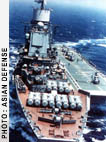
Russian honey-trap may have affected aircraft carrier deal with India

Admiral Gorshkov

Admiral Gorshkov

By JOSEPH FITSANAKIS | intelNews.org |
The recent court disclosure of an Indian engineer’s affair with a Russian woman has added fresh controversy in a multi-billion dollar deal gone sour between Russia and India, over the purchase of an aircraft carrier. In 2004, India purchased Admiral Gorshkov, a Soviet-built, 45,000-ton warship, for $974 million. But the negotiations between the two countries over the refit and repair project quickly deteriorated, with Sevmash Enterprise, the Russian shipyard in charge of the project, hiking the price twice in less than three years. At the end of fierce negotiations that scarred the bilateral defense relationship between the two countries, the Indian Navy was forced to pay in excess of $2.3 billion for the 30-year-old warship. In recent weeks, however, a series of explicit photographs were circulated, showing an unidentified Russian woman with Commodore Sukhjinder Singh, an Indian engineer whom the Indian Navy stationed in Russia and tasked him with overseeing Admiral Gorshkov’s refit from 2005 to 2007.   Read more of this post

News you may have missed #329

  • Iran insists US hikers had intelligence links. Iran’s intelligence minister, Heydar Moslehi, has said that Americans Shane Bauer, Joshua Fattal and Sarah Shourd, who were arrested on Iranian soil last July, “were in contact with intelligence services”. The evidence would “soon be made public”, he said.
  • Gerdes case shows difficulty of CIA jobs. The case of CIA employee Kerry Gerdes, who was recently convicted for falsifying interview reports while performing background checks on CIA employees and potential employees, reveals how difficult the job is for young CIA recruits, who expect it to be exciting or glamorous, according to seasoned investigators.
  • US still denying India access to Headley. There has been intense speculation in India and Pakistan that David Coleman Headley, a former US Drug Enforcement Administration informant, who was arrested by the FBI in October for plotting an attack on a Danish newspaper, is in fact a renegade CIA agent. Could this be why the US is denying India access to Headley?

Bookmark and Share

News you may have missed #327

  • Cyberspies eyed Canadian visa applications. Personal information about Canadians applying for visas was swiped by cyberspies who hacked into Indian embassy computers in Afghanistan. The data theft was part of a wider cyberespionage operation launched by the underground hacking community in China and aimed primarily at political targets, according to academic researchers.
  • Israeli Arab jailed for spying on top general. Rawi Sultani, who is accused of informing Hezbollah of his membership in the same fitness club as Lieutenant-General Gabi Ashkenazi, as well as of methods of accessing the club, has been sentenced to nearly six years’ imprisonment.
  • CIA places American on assassination list. US-born al-Qaeda recruiter Anwar al-Aulaqi, who now lives in Yemen, has become the first US citizen to be placed on a CIA “targeted killing” list, which requires “special approval from the White House”.

Bookmark and Share

News you may have missed #319

  • CIA asks Gulf countries to monitor terrorist funding. The CIA has reportedly asked Arab/Persian Gulf countries “to tighten surveillance and look for any suspicious movement of funds” in regional banks.
  • Questions remain in Headley terrorism case. The New York Times has aired an update on the court case of Pakistani-American David Coleman Headley, a former US Drug Enforcement Administration informant, who was arrested by the FBI in October for plotting an attack on a Danish newspaper. The paper points out that Headley “moved effortlessly between the United States, Pakistan and India for nearly seven years, training at a militant camp in Pakistan on five occasions”. There has been intense speculation in India and Pakistan that Headley is in fact a renegade CIA agent.

Bookmark and Share

News you may have missed #305

Bookmark and Share

Pune attack tests India-Pakistan intelligence collaboration

The German Bakery, Pune, India

The attack target

By IAN ALLEN | intelNews.org |
There is intense speculation about a possible breakdown in Indian-Pakistani intelligence relations, following last week’s bomb attack in the Indian city of Pune, which killed at least nine and seriously injured close to 60 people.  The attack, which presents operational similarities with the 2002 Bali bombing in Indonesia, targeted The German Bakery, a popular restaurant in the town, on a Saturday night. It is perhaps worth noting that the bomb, which was concealed in a backpack under a restaurant table, exploded almost next door to the Osho Meditation Resort, which US authorities say was scouted as a potential Lashkar e-Taiba (LeT) soft target by David Headley. The American-born Headley was arrested by the FBI in October for having links to LeT. Read more of this post

News you may have missed #0287

  • India still trying to get access to Headley. Congratulations to The New York Times, for managing to publish a feature-length article about the constant requests by Indian intelligence officials to interrogate David C. Headley, currently held in a US prison, without probing why the US is refusing to facilitate these requests. The American-born Headley was arrested in October for having links to Islamic extremist group Lashkar-e-Taiba. There are rumors in India and Pakistan that Headley is in fact a renegade CIA informant.
  • Spanish double agent sentenced to 12 years. Roberto Flórez García, a former employee of Spain’s National Intelligence Center (CNI), was arrested in September for giving classified documents to Russian intelligence, via Petr Melnikov, political attaché at the Russian Embassy in Madrid. This was Spain’s first treason conviction since returning to democracy in 1978 after decades of military dictatorship.

Bookmark and Share

News you may have missed #0269

  • LeT planning paraglide attacks in India? Indian intelligence officials suspect that the Pakistan-based Lashkar-e-Taiba, the group behind the 2008 Mumbai attacks, is planning another audacious strike on the country, this time from the air, using suicide bombers flying paragliders. The group is thought to have purchased 50 paragliding kits from Europe for this purpose.
  • Trial of double agent begins in Spain. The trial has begun in Spain of Roberto Flórez García, a former employee of Spain’s National Intelligence Center (CNI), who was arrested in September for giving classified documents to Russian intelligence, via Petr Melnikov, political attaché at the Russian Embassy in Madrid.

Bookmark and Share

News you may have missed #0264

  • India jails two Pakistanis on spying charges. India has jailed Adil Anjum Nazir Ahmed and Abdul Shakur Hafiz, claiming they spied on behalf of Pakistan’s Inter-Services Intelligence. The two were arrested in Lucknow in 2006.
  • US Pentagon re-examines PsyOp doctrine. The field of Psychological Operations (PsyOps) is among the oldest of military disciplines, but a new US Department of Defense report on the subject shows that the DoD continues to wrestle with basic definitional issues.

Bookmark and Share

News you may have missed #0255 (espionage edition)

  • South Korea jails alleged spy for 10 years. A 37-year-old college professor, identified only as Lee, has been handed a 10-year prison sentence for allegedly spying undercover on behalf of North Korea for 17 years. South Korean authorities said Lee, who was charged in November, was recruited by the North in 1992, while studying in New Delhi, India.
  • New details in Nozette spy case. Maryland scientist Stewart Nozette, who is accused of giving classified defense information to an FBI agent posing as an Israeli intelligence officer, may have impersonated a naval research official in order to acquire classified information, according to new court documents.
  • I didn’t kill Islamic Jihad members because I was busy spying for Israel“. Mahmoud Qassem Rafeh, a retired Lebanese Internal Security Forces official, has already confessed to having “collaborated with Israeli intelligence agents” between 1993 and 2006. But he denies having participated in the 2006 assassinations of two Islamic Jihad leaders in Lebanon, because on the night of the assassinations he was conducting a reconnaissance mission in Lebanon on behalf of Israeli spy agency Mossad.

Bookmark and Share

News you may have missed #0228

  • Irish nationalists planting honey traps on British troops? The Belfast Telegraph reports that British Army personnel have been “warned about the recruitment by dissidents of attractive females to identify soldiers at popular nightspots and lure them into ambushes” in Northern Ireland. This is highly unnecessary. Usually British troops in the North are easily identifiable by their haircuts, accents, even by their choice of beer!
  • Egyptian spy chief meets Israeli defense minister. Ehud Barak and Omar Suleiman, director of the Egyptian General Intelligence Services, met in Jerusalem on Sunday. The meeting included a “private 30-minute session” between the two men (and the eavesdroppers on either side, presumably –ed.).
  • Terror suspect David Headley was ‘rogue US secret agent’. The London Times has woken up to the rumors circulating about David Headley, a full month after Indian media began reporting them, and nearly three weeks after intelNews alerted its readers. Nice of them to catch up.

Bookmark and Share