Turkey says Canadian spy helped British schoolgirls travel to Syria

CCTV footage of UK girls heading to SyriaBy JOSEPH FITSANAKIS | intelNews.org
In a development described by observers as “highly unusual”, a Turkish government minister has claimed that a Canadian spy helped three British schoolgirls travel to territory controlled by the Islamic State of Iraq and Syria. The three girls, Kadiza Sultana, 16, Shamima Begum, 15, and Amira Abase, also 15, crossed into ISIS-controlled territory on February 17, after having traveled by plane from London to Istanbul. The incident prompted renewed international criticism of the Turkish government’s hands-off attitude toward the growing influx of Western Islamists who cross into Syria from Turkey, intent on joining ISIS.

But Turkey’s Minister of Foreign Affairs, Mevlut Cavusoglu said on Thursday that the girls had been assisted during their trip by an intelligence agent working for a foreign country. In responding to criticism against Turkey, the minister claimed during a television interview that Turkish security forces had arrested a foreign intelligence operative who had enabled the three British citizens to cross into Syria. The man, said Cavusoglu, was a spy from a member-state of the military coalition fighting ISIS. “It is not a member-state of the European Union”, he added, “nor is he from the United States. But he is working for the intelligence [agency] of a country within the [anti-ISIS] coalition”. Later on Thursday, an unnamed Turkish government source told local media that the agent was not a Turkish citizen and that he had been arrested earlier in March.

Several press agencies, including Reuters and Agence France Presse reported on Thursday that the individual in question was “connected” with the Canadian Security Intelligence Service, but stopped short of saying that he was working for the government of Canada. A statement from the office of Steven Blaney, Canada’s Minister for Public Safety, who is responsible for overseeing the work of CSIS, said simply that the Ministry was “aware of these reports” but would “not comment on operational matters of national security”. An anonymous government source in Ottawa denied that the individual arrested in Turkey was a Canadian citizen or that he ever worked for CSIS.

Islamic State shuts down phones in Mosul to stop informants

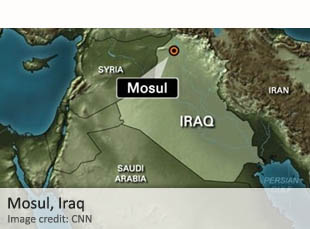
Mosul, IraqBy JOSEPH FITSANAKIS | intelNews.org
The Islamic State has cut off all telephone service provision in the largest city under its control, reportedly in an effort to stop spies from passing information to Syrian, Iraqi and American intelligence services. Militants from the Islamic State, also known as the Islamic State of Iraq and al-Sham (ISIS), conquered the northern Iraqi city of Mosul in June. They encountered almost no resistance upon entering the Sunni city of over a million inhabitants, as the crumbling Iraqi military kept hastily retreating south. Today Mosul is the most populous urban center under direct Islamic State rule. In July, the group’s seldom-seen leader, Abu Bakr al-Baghdadi, used Mosul as the backdrop of his propaganda video, in which he announced the official establishment of the Islamic State, a militant Sunni caliphate that is administered strictly through sharia law. Just weeks later, on August 8, the United States military began conducting airstrikes in Mosul, targeting senior Islamic State personnel there. The precise effects of these airstrikes are under debate in strategy circles in Washington, Baghdad and elsewhere. Last Thursday, however, residents of Mosul told the Associated Press news agency that Islamic State authorities had decreed the temporary termination of all telephone provision in the city. The measure was allegedly taken in order to prevent informants in and around Mosul from tipping off adversary intelligence agencies as to the physical whereabouts of senior Islamic State commanders. The measure was reportedly announced in the evening of Wednesday, November 26, through a radio station in Mosul that acts as the official news organ of the Islamic State in the Iraqi city. The Associated Press reported scenes of “chaos” and “paralysis” in the streets of Mosul on Thursday, as businesses came to a virtual standstill following the decision by the Islamic State to terminate telephone provision throughout the city. Some observers note that this move by the Islamic State constitutes a drastic change from the group’s standard tactic so far, which has centered in the efficient provision of basic services to the Sunni populations under its control, in an effort to win over their ideological support and political allegiance. Moreover, Mosul, whose population is almost uniformly Sunni, and is viscerally opposed to the Shiite-dominated government in Baghdad, is generally believed to be an Islamic State stronghold. If the militant group is finding it difficult to ensure the allegiance of Mosul’s population, then this could be a sign of fragmentation within the ranks of its supporters in all of northern Iraq. The Associated Press said some residents of Mosul are reportedly still able to access the Internet, which operates through a network that is separate from that of the telephone system.

Are militant groups interested in weaponizing Ebola?

Ebola suffererBy IAN ALLEN | intelNews.org
Does the Ebola epidemic present militant groups, such as the Islamic State or al-Qaeda, with the opportunity to weaponize viruses and direct them against Western targets? Earlier this month, United States Homeland Security Secretary Jeh Johnson dismissed in strong terms the possibility that Ebola would be used by Islamic State militants to attack American targets. Speaking to the Association of the United States Army, Johnson acknowledged that the Islamic State is a “very, very dangerous terrorist organization”, but added that his Department had seen “no specific credible evidence that [the Islamic State] is attempting to use any sort of disease or virus to attack” the US. A few days earlier, however, Forbes magazine had quoted Al Shimkus, Professor of National Security Affairs at the US Naval War College, as saying that the Ebola outbreak presented Islamist groups with the opportunity to use a low-tech bioterrorist weapon “to attempt to wreak strategic global infection”. Shimkus added that a group like the Islamic State wouldn’t even have to weaponize the virus’ it could “simply use human carriers to intentionally infect themselves in West Africa, then disseminate the deadly virus via the world’s air transportation system”, he said. On Wednesday, a senior Spanish official told a parliamentary committee in Madrid that the government of Spain was “taking seriously” discussions in Internet forums linked to the Islamic State about using biological weapons against the West. Francisco Martínez, who is Spain’s State Secretary for Security, told the Committee of the Interior in the Spanish Congress that online commentators connected to the Islamic State have been discussing the possibility of using Ebola as a weapon against America and its Western allies. He told Committee members that the discussions had been taking place on Internet forums as recently as mid-September. He also cited “a series of tweets” from last July, in which another Islamist group, Ansar al-Islam, with roots in Iraqi Kurdistan, proposed using “deadly chemical products from laboratories” as means of launching attacks against the West. Martínez did not provide further details on the allegations.

Analysis: Well-trained spy agency adds to strength of Islamic State

ISIS parade in SyriaBy IAN ALLEN | intelNews.org
The militants of the Islamic State, who now control large parts of Syria and Iraq, boast a well-trained and agile intelligence apparatus that is partly responsible for the group’s continuing expansion and strength. Sources on the ground in Iraq report that many of the intelligence officers that staff the Islamic State’s spy agency are former employees of the Syrian and Iraqi governments. They were trained by either Russian or American spies during their government service, and are now lending their advanced intelligence skills to the Islamic State. Al-Monitor’s Ali Mamouri, who is based in Iraq, writes that the Islamic State’s intelligence agency is similar to other government intelligence apparatuses around the world in both structure and operational tactics. Principal among its tasks is political protection of the militant regime’s senior commanders, several of whom have already been killed in Mosul and other cities of northwestern Iraq. Islamic State intelligence officers have tightened security precautions in recent weeks, advising Islamic State leaders to limit their public appearances and arresting individuals suspected of acting as informants for Kurdish or other opposition groups linked to the Iraqi or Syrian governments. Another task of the Islamic State’s intelligence apparatus, Mamouri reports, is counterintelligence —i.e. detecting and preventing attempts by Iraqi and Syrian government spies to infiltrate Islamic State governing structures or military outfits. The intelligence agency also works closely with armed groups reminiscent of the German Nazi Party’s Sturmtruppen (Stormtroopers), namely uniformed street thugs whose task is to identify, monitor and physically eliminate opponents of the regime. The list of undesirables includes Shiites, moderate Sunnis, as well as leaders of tribes who cooperated with the Syrian or Iraqi governments in the recent past.

Are US spy agencies sharing weapons, intelligence with Hezbollah?

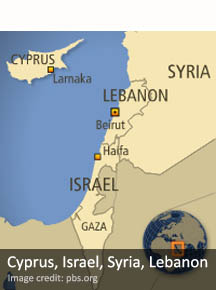
Cyprus, Israel, Syria, LebanonBy JOSEPH FITSANAKIS | intelNews.org
In its effort to amass regional support for its war against the Islamic State, the United States is reaching out to militant Shiites in Lebanon, including Hezbollah, according to some sources. In a report for New York-based magazine Newsweek, veteran intelligence correspondent Jeff Stein said on Wednesday that the meteoric rise of Sunni radicalism, in the form of the Islamic State, may have prompted the creation of a “de facto US-Saudi-Lebanese-Hezbollah-Iranian” alliance in the Middle East. Although no partner in this informal coalition is willing to admit its role in the collaborative effort, the common goal of eradicating Sunni extremism has brought about an “unwritten, unacknowledged cease fire” between these former adversaries, says Stein, quoting “authoritative sources”. Washington and Hezbollah, the militant Shiite group that controls large swathes of Lebanese territory, have a common interest in combating the Islamic State and preventing its rule from spreading beyond Syria. So the Americans began reaching out to Hezbollah in 2012, says Stein, and have helped bring about a “regional consensus […] to contain the conflict away from Lebanon and in Syria”. Remarkably, bitter adversaries such as Saudi Arabia and Iran are said to actively subscribe to the Washington-led consensus against the Islamic State. Washington’s decision to reach out to Hezbollah appears to have been prompted by the realization that the militant Shiite group, along with the official Lebanese Armed Forces (LAF), were the only actors on the ground capable of fighting and defeating the Islamic State. Last August, says Stein, the US Pentagon unloaded $20 million worth of weapons in Lebanon for use by the LAF. The weapons were reportedly shipped through the Beirut International Airport, which his under the control of Hezbollah. The group promptly transferred the weapons to the LAF, which is traditionally dominated by Christians, but has recently developed an “arm’s length alliance with Hezbollah” due to their mutual concern over the rise of the Islamic State. Stein suggests that the US-Hezbollah relationship may now also include intelligence-sharing. He quotes a number of sources who claim that some Sunni militants have been apprehended thanks to intelligence-sharing between America, Iran and Saudi Arabia. Some claim that Iran acts as a mediator between Washington and Hezbollah, and that British diplomats also mediate between the two sides. Read more of this post

US intelligence official says ISIS still below al-Qaeda’s strength

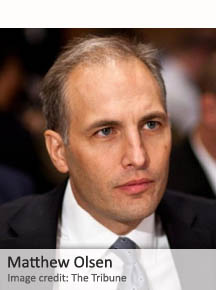
Matthew OlsenBy JOSEPH FITSANAKIS | intelNews.org
Despite the rapid rise of the Islamic State in the Middle East, the strength of the young organization is still not comparable to that of al-Qaeda, which remains the world’s dominant Islamist group, according to the United States’ most senior counterterrorism official. This was the view expressed on Wednesday by Matthew Olsen, Director of the US National Counterterrorism Center (NCTC), who is preparing to step down later this year. Based in McLean, Virginia, the NCTC is the part of the Office of the Director of National Intelligence that advises the US government about terrorism. Olsen said there is no doubt that the Islamic State —also known as the Islamic State of Iraq and al-Sham, or ISIS— has made “dramatic territorial gains in Syria and Iraq” and is displaying unmatched abilities in utilizing online social networking platforms to spread propaganda. Additionally, an increasing number of Muslim extremists view the Islamic State as “the new leader in the global jihadist movement”, said Olsen. But he added that NCTC experts have come to the conclusion that the Islamic State does not currently pose a direct threat to America or Western Europe, and said that the risk of a “spectacular, al-Qaeda-style attack” on American or European targets is negligible. America’s senior terrorism advisor went on to claim that al-Qaeda remains a more serious adversary for American interests than the Islamic State, and that the new organization is “significantly more limited than al-Qaeda was in the run-up to 9/11”, at which time it maintained underground cells across Europe and the US. Olsen continued by saying that there was “simply no credible information” that the Islamic State was planning to attack US targets anywhere outside the immediate surroundings of its territorial stronghold in Iraq and Syria. Read more of this post

US sharing intelligence with Syrian government, say sources

ISIS parade in SyriaBy JOSEPH FITSANAKIS | intelNews.org
The United States is secretly sharing intelligence about the Islamic State with the government of Syria, according to sources. On Monday, American officials told the Associated Press that US President Barack Obama had authorized reconnaissance flights over Syrian airspace with the aim of gathering intelligence on the Islamic State —known previously as the Islamic State of Iraq and al-Sham, or ISIS. Pentagon officials said the reconnaissance flights are intended to collect “additional intelligence” on the Islamic State’s troop movements in Syria. Their ultimate goal is reportedly to assist the president and his advisors as they contemplate whether the US should launch airstrikes against Islamic State targets on Syrian soil. One American official told the news agency that the reconnaissance flights constituted “an important avenue for obtaining data” and said they would satisfy the “need for reliable intelligence from Syria”. But another source told French news agency Agence France Presse on Tuesday that the intelligence gathered from US reconnaissance flights was being shared with the Syrian government “through Iraqi and Russian channels”. Quoting “a regional source”, the Paris-based news agency said Damascus has been receiving lists of Islamic State targets on Syrian territory “from a Western country” since before mid-August. If these reports turn out to be accurate, it would mean that Washington is essentially collaborating for the first time with one of its arch-enemies in the Middle East, a regime which, in the past, it has come close to bombing. It would also bring American policy in the region closer to that of Russia, which has supported the regime of Syrian President Bashar al-Assad since the start of the civil war, arguing that it is preferable to the instability represented by opposition forces. Read more of this post

ISIS views spread in Balkans as Kosovo police nab 40 militants

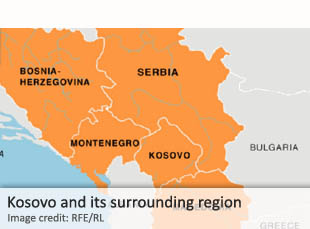
Kosovo and its surrounding regionBy IAN ALLEN | intelNews.org
Over 40 people have been arrested in Kosovo on strong suspicion of maintaining close links with the Islamic State in Syria and Iraq. Authorities in the small Balkan nation said the Monday arrests were part of “a major police operation” aimed at preventing Kosovar citizens from joining the violent Islamist group. Kosovo gained independence from Serbia in 2008, following several revolts and uprisings in the 1990s. The vast majority of its citizens are ethnic Albanians, most of whom practice Islam. However the lifestyle of its largely pro-American population remains markedly secular. Observers have thus been startled by reports that an estimated 100 to 200 Kosovars have so far traveled to Syria and Iraq to join the Islamic State, known previously as the State of Iraq and al-Sham, or ISIS. Last week, an 18-year-old Islamic State volunteer from Kosovo was reported killed in Syria; he was the 16th Kosovar member of the Islamist group to have been killed in the field of battle. There is allegedly footage on YouTube showing Lavdrim Muhaxheri, the commander of the Kosovar Islamic State members decapitating an Iraqi teenager. Aside from the detention of 40 suspects, the Monday crackdown is believed to have netted significant numbers of weapons and ammunition discovered in more than 60 locations around the country. Police said that the dates of birth of the arrestees range from 1962 to 1994. Authorities are looking for more suspects who were “not found at their homes” during the countrywide crackdown, while many Muslim clerics are also being investigated for links to radical Islamist groups. The 40 that are in custody are now being questioned under procedures recently established by the Kosovo Penal Code, designed to protect “constitutional order and security in the Republic” of Kosovo. Reports from the tiny Balkan nation suggest that its parliament is preparing to pass national legislation forbidding citizens form joining foreign armed movements. A prison sentence of up to 15 years is being considered for those who do so. It is worth noting that Albanian is among the primary languages into which the Islamic State’s Arabic-language proclamations are usually translated by the militants —the others being Russian, Turkish, English and French.

Destroying Hamas won’t solve conflict, says top US Pentagon official

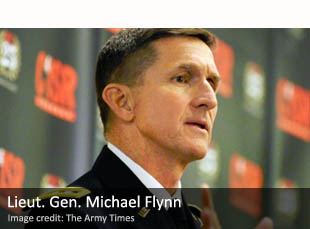
Lieutenant General Michael FlynnBy JOSEPH FITSANAKIS | intelNews.org
The most senior military intelligence official of the United States has warned that the destruction of Palestinian militant group Hamas will not solve, and might even intensify, the Palestinian-Israeli conflict. Hamas, otherwise known by its full name, Islamic Resistance Movement, was founded with Israeli help in 1987 to combat the power of its secular rival, Fatah. Since 2007, Hamas has ruled the Gaza Strip, after winning most of the votes in the 2006 Palestinian parliamentary election. Fatah, which refused to hand over power to Hamas, now governs the West Bank. Israel has for many years accused Hamas for leading what it describes as the “rejectionist” camp of the Palestinian nationalist movement, by refusing to accept the legitimacy of the Jewish state. The US is in broad agreement with its close ally Israel, and has designated Hamas as a foreign terrorist organization. On Saturday, however, the outgoing director of the US Defense Intelligence Agency, Lieutenant General Michael Flynn, warned Israeli officials that wiping out Hamas will not mean the end of the Palestinian-Israeli dispute, and that the group’s demise will probably lead to a far more radical group taking its place. Lieut. Gen. Flynn was speaking at the Aspen Security Forum, an annual gathering of senior defense leaders in Aspen, Colorado. The top US military intelligence official told his audience that “if Hamas were destroyed and gone, we would probably end up with something much worse”. He went on to add that the militant group’s place in Gaza would probably be replaced by “something like ISIS”. Lieut. Gen. Flynn was referring to the Islamic State of Iraq and al-Sham, known as ISIS, which has emerged from the Syrian Civil War as the most powerful non-state actor in the region. The group has already announced the creation of an Islamic State in territory under its control in the borderlands of Iraq and Syria. Lieut. Gen. Flynn was echoing similar views expressed earlier this month by former Israeli intelligence official Efraim Halevy, who directed Israel’s covert-action agency, Mossad, from 1998 to 2002. Speaking to American television network CNN, Halevy said that numerous radical groups in the Gaza Strip would be far more threatening to Israel’s security than Hamas. Read more of this post

Israel should negotiate with Hamas, says former Mossad chief

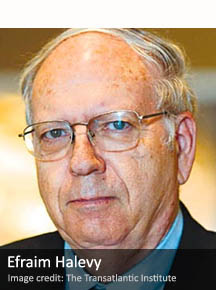
Efraim HalevyBy JOSEPH FITSANAKIS | intelNews.org
A former director of the Israeli covert-action agency Mossad, who helped forge a historic peace treaty between Israel and Jordan in the 1990s, has called for the Jewish state to negotiate with Palestinian group Hamas. Efraim Halevy, who directed the Mossad from 1998 to 2002, told American television network CNN on Tuesday that numerous radical groups in the Gaza Strip would be far more threatening to Israel’s security than Hamas. Speaking to CNN’s chief international correspondent Christiane Amanpour, Halevy said that Hamas, which controls the Gaza Strip, “is a very bad option” for Israel, but that the militant Sunni Islamist groups coming out of Syria and Iraq are “a lot worse” and posed a much more pertinent challenge to regional stability. He specifically mentioned the Islamic State of Iraq and al-Sham, known as ISIS, which has emerged as the most powerful non-state actor in the region, saying that “ISIS has its tentacles in the Gaza Strip too”. Amanpour retorted that, by negotiating with Hamas, Israel would effectively legitimize the militant group. But Halevy said that, while it would be “politically inconvenient” for Israel to reach out to Hamas, the fact is that Tel Aviv has been negotiating with the Palestinian group “for years”. Even though Israel and Hamas insist on refusing to publicly acknowledge each other’s existence, in reality they have been negotiating with each other for a long time, he said. “We [presumably the Mossad] have had several rounds with Hamas in recent years, and the previous rounds ended up in agreements —arrangements, as it was called”, said the former Mossad chief. “But in effect”, he went on, “it was a negotiation between us and Hamas”. As an example, Halevy mentioned the release of Israel Defense Forces soldier Gilad Shalit, who was captured in 2006 in a cross-border raid by Hamas forces. He was released in 2011 as part of a prisoner exchange agreement between the Palestinian group and Israel. In 2012, Halevy issued a public call for dialogue between Israel and Iran, saying that “the Iranians, in their heart of hearts, would like to get out of their conundrum”, referring to Tehran’s nuclear program. Read more of this post

CIA ‘stripped of spies’ in embattled Iraq, say sources

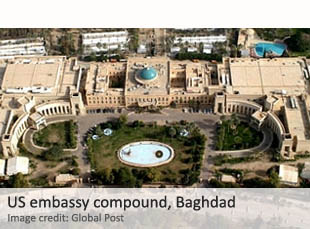
US embassy compound, IraqBy JOSEPH FITSANAKIS | intelNews.org
The Sunni uprising in Iraq, in combination with the Shiite domination of the government in Baghdad, has drastically limited the ability of the United States Central Intelligence Agency to collect dependable intelligence, according to sources. Newsweek’s veteran intelligence correspondent, Jeff Stein, said on Friday that the Agency had been “stripped of its spies” in the embattled country and was struggling to rebuild its network of assets. Stein cited “knowledgeable intelligence sources” as saying that the CIA had lost many of its sources inside the government in Baghdad, which is now firmly in Shiite hands. Since assuming power in 2006, Iraq’s Shiite Prime Minister, Nouri al-Maliki, gradually purged most Sunnis from senior government positions, thus shutting down the CIA’s eyes and ears in Baghdad. The intelligence-collection problem for the Agency has worsened since the breakout of the Sunni uprising in the west of the country, which has prompted mass defections of senior tribal leaders to al-Qaeda-inspired rebel groups. Many of these leaders were previously valuable sources of information for the CIA, which has traditionally had far more contacts with Iraqi Sunnis than Shiites. To make things worse, says Stein, CIA operatives in Iraq are unable to travel outside of Baghdad due to the worsening security situation in the country. Instead, they remain “holed up” in the American embassy compound and rely almost exclusively on “technical means” of intelligence collection (and, one presumes, a variety of open sources). Inevitably, the Agency is now much more reliant than usual on information provided by regional intelligence services, such as Turkey’s and Jordan’s, who still have agents on the ground in Iraq. Read more of this post

News you may have missed #878 (ISIS edition)

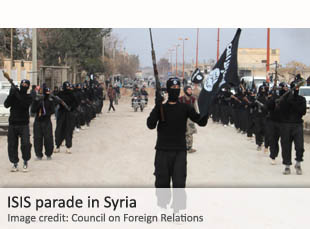
ISIS parade in SyriaBy IAN ALLEN | intelNews.org
►►Backgrounder on Islamic State in Iraq and Greater Syria. The Islamic State in Iraq and Greater Syria (ISIS), a predominantly Sunni jihadist group, seeks to sow civil unrest in Iraq and the Levant with the aim of establishing a caliphate —a single, transnational Islamic state based on sharia. The group emerged in the ashes of the US-led invasion to oust Saddam Hussein as al-Qaeda in Iraq, and the insurgency that followed provided it with fertile ground to wage a guerrilla war against coalition forces and their domestic allies.
►►ISIS stole $425m and became world’s richest terrorist group. The most stunning revelation to emerge out of the wreckage of Mosul this week is that ISIS just got extremely rich. Several ISIS insurgents stopped at Mosul’s central bank, where an incredible amount of cash was reportedly on hand, and the group made off with 500 billion Iraqi dinars —approximately US$425 million.
►►The Battle for Iraq Is a Saudi War on Iran. Currently on vacation in Morocco, Saudi Arabia’s King Abdullah has so far been silent on the developments in Iraq. But the situation there could well prompt him to cut short his stay and return home. This is because the ISIS advance represents a setback for Iraqi Prime Minister Nouri al-Maliki, which has been the dream of Saudi Arabia’s King Abdullah for years. He has regarded Maliki as little more than an Iranian stooge, refusing to send an ambassador to Baghdad and instead encouraging his fellow rulers of the Gulf Cooperation Council to take a similar standoff-ish approach.
►►Iran deploys Revolutionary Guard forces to fight Iraq militants. The threat of Sunni extremists eclipsing the power of its Shiite-dominated Arab ally presents Iran with the biggest security and strategic challenge it has faced since the US-led invasion of Iraq in 2003. With ISIS, an offshoot of al Qaeda, rapidly gaining territory, Iran deployed Revolutionary Guards units to Iraq, according to Iranian security officials.
►►Jihadist gains in Iraq blindside American spies. United States intelligence agencies were caught by surprise when fighters from ISIS seized two major Iraqi cities this week and sent Iraqi defense forces fleeing, current and former US officials said Thursday. With US troops long gone from the country, Washington didn’t have the spies on the ground or the surveillance gear in the skies necessary to predict when and where the jihadist group would strike.

US ‘quietly expanding’ intelligence presence in war-torn Iraq

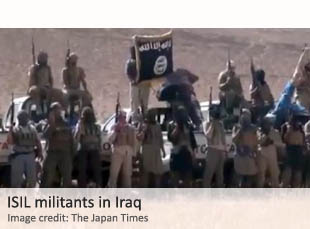
ISIL militants in IraqBy JOSEPH FITSANAKIS | intelNews.org
The United States is “quietly expanding” its intelligence operations in Iraq in response to the worsening security situation in the country, according to American government sources. The Reuters news agency reports that US officials have been holding a series of “urgent meetings” in Washington and Iraqi capital Baghdad. The meetings center on finding ways to contain the growing destabilization in the Middle Easter country, which the US occupied from 2003 to 2011. The news agency cited one former and two current US government officials in claiming that a “high-level Pentagon team” is already in Iraq holding successive consultations with Iraqi military and intelligence figures. Many of the conversations in these meetings are believed to center on the activities of the Islamic State of Iraq and the Levant (ISIL), a Sunni militant group that has been ideologically aligned with al-Qaeda for most of its existence. Founded in response to the US invasion of Iraq, ISIL became informally known as “al-Qaeda in Iraq” until 2014, when al-Qaeda officially severed all ties to the group, following a bitter power struggle. According to Reuters’ sources, the pressure for the US to respond to the worsening situation in Iraq comes mostly from the Pentagon. But it is unclear whether the White House will continue to intensify American involvement in the country, said the source, adding that Washington’s intelligence presence in Iraq is now “more than before, but not really a lot”. The news agency cited another US government source, who said that a second group of “senior US policy officials”, known as the “Deputies Committee”, has been meeting in Washington to discuss possible responses to the deteriorating security situation in Iraq. Read more of this post

News you may have missed #867 (Syrian uprising edition)

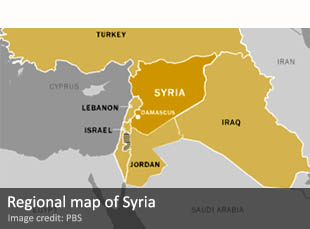
Regional map of SyriaBy IAN ALLEN | intelNews.org
►►Al-Qaeda breaks link with Syrian militant group. Al-Qaeda’s general command said on Monday it had no links with the Islamic State in Iraq and the Levant (ISIL), in an apparent attempt to reassert its authority over fragmented Islamist fighters in Syria’s civil war. The move is likely to bolster a rival Islamist group, the al-Nusra Front, as al Qaeda’s official proxy in Syria. The switch is seen as an attempt to redirect the Islamist effort towards unseating President Bashar al-Assad rather than waste resources in fighting other rebels.
►►Is Israel secretly working to target al-Qaeda in Syria? Reports already indicate that Israel is providing humanitarian aid for Syrians, but do these contacts also include intelligence and military cooperation against radical groups linked with al-Qaeda? And, if so, does this mean that Israel is assisting troops loyal to Syrian President Bashar al-Assad?
►►Australians ‘flocking to Syrian front line’. Some experts say there are more Australians journeying to Syria to participate in the ongoing conflict than any other Western nation. The number of Australians killed in Syria’s civil war is at least 15 —double the number previously reported. The claim comes from a prominent member of the country’s Syrian community. He says there is no shortage of Australian support for the Syrian rebels —and that that support is being grossly under-reported.

News you may have missed #865

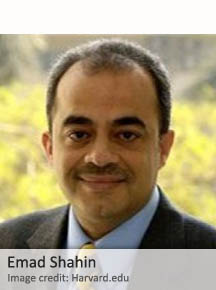
Emad ShahinBy IAN ALLEN | intelNews.org
►►Renowned Egyptian scholar charged with espionage. Emad Shahin, a scholar of political Islam who has taught at Harvard, Notre Dame and the American University in Cairo and edited the Oxford Encyclopedia of Islam and Politics, has been charged along with several senior leaders of the Muslim Brotherhood with conspiring with foreign organizations to undermine Egypt’s national security. He is listed as ‘Defendant 33’ in a lengthy criminal complaint that also names former President Mohamed Morsi, who was deposed in last summer’s military takeover.
►►Al-Qaeda training Western Islamists in Syria to set up cells abroad. British newspaper The Telegraph reports that, according to security sources, Westerners fighting for the Islamist opposition in Syria are being trained and then encouraged to return to the UK to launch attacks on home soil. The paper quotes an “al-Qaeda defector” from the Islamic State of Iraq and al-Sham (ISIS), who says that “recruits from Britain, Europe and the US were being indoctrinated in extremist anti-Western ideology, trained in how to make and detonate car bombs and suicide vests and sent home to start new terror cells”.
►►Snowden has “no plans” to return to the United States. Former National Security Agency (NSA) contractor Edward Snowden has said he has “no chance” of a fair trial in the US and has no plans to return there. “There’s no no way I can come home and make my case to a jury”, he told the Free Snowden website. “Returning to the US, I think, is the best resolution for the government, the public, and myself, but it’s unfortunately not possible in the face of current whistleblower protection laws, which, through a failure in law, did not cover national security contractors like myself”, he said.