November 25, 2015
by Joseph Fitsanakis
 There are many unpredictable aspects of the Syrian conflict, but the downing of the Russian bomber by Turkish jets on Tuesday was not one of them. Indeed, given the simultaneous military campaigns taking place in a relatively small swath of territory by Russian, American, French, Syrian, Iranian, and other forces, it is surprising that such an incident did not happen earlier. Nevertheless, the downing of a Russian Sukhoi Su-24 by Turkish jets marked the first attack on a Russian fighter aircraft by a North Atlantic Treaty Organization (NATO) member state since 1953. Although this incident is not by itself sufficient to provoke an armed conflict between Turkey and Russia, it illustrates the main danger confronting the world in Syria: namely a conflagration between regional powers, many of which are armed with nuclear weapons.
In response to earlier incidents, Turkey had warned the Russian Air Force that it would not tolerate further violations of its air space by Russian jets conducting an air campaign in support of Syrian President Bashar al-Assad. The message delivered to the Russian ambassador in Ankara was that Turkish pilots would be ordered to open fire next time. That was precisely what happened on Tuesday, when a Turkish F-16 jet brought down a Russian bomber aircraft with a single missile strike. By most accounts, the Russian airplane was barely two miles inside Turkish airspace, presented no immediate threat to Turkey’s national security, and would probably have returned to Syrian airspace within seconds. But that did not stop the Turkish F-16 from shooting down the Russian plane. Adding injury to insult, Turkish-backed rebels on the Syrian side of the border shot dead one of the plane’s two Russian pilots and opened fire on a Russian rescue team that tried to save the crew, killing at least one marine.
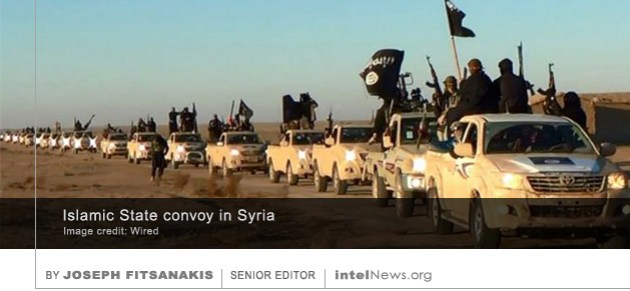
Rather expectedly, a visibly furious Russian President Vladimir Putin, who is not used to being challenged militarily, described the incident as “a stab in the back” by “accomplices to terrorists”, and warned Ankara of “serious consequences”. But why would Turkey provoke Russia in such a direct way? Like every other country involved directly or indirectly in the Syrian Civil War, Turkey and Russia wish to see the Islamic State of Iraq and Syria (ISIS)  destroyed. But they differ drastically on what should follow. The Kremlin is adamant that President al-Assad, whom it considers its strongest ally in the Middle East, should remain in power. The Turks, on the other hand, view the Syrian president as an existential threat, due to his support for Kurdish militancy throughout the region.
The roots of the animosity between the Turkish state and the al-Assad regime go back to 1978, when the Kurdistan Workers Party (PKK) was established in Lebanon’s Beqaa Valley, which was at the time occupied by Syria. The PKK is a Marxist militant organization that seeks to establish a Kurdish homeland in eastern Turkey and northern Iraq. The group was actively trained, funded, armed and protected by Syria and the Soviet Union. The latter was actively interested in destabilizing Turkey, a NATO member, while Syria used the PKK to exercise pressure on its northern neighbor, with whom it was embroiled in a series of complex land- and water-rights disputes. In 1998, the al-Assad regime was forced to expel PKK leader Abdullah Öcalan, who was living in Damascus under Syrian protection, after Turkey threatened an all-out war if the Syrian intelligence services continued to shelter the PKK leadership.
Ankara saw the outbreak of the Syrian Civil War in 2011 as an opportunity to get rid of the al-Assad regime, which it sees as a primary threat to regional stability. Along with the United States, Turkey has been funding, arming and training a host of Syrian rebel groups, while at the same time hosting over 2 million refugees from Syria. The subsequent rise of ISIS alarmed America and its Western allies; but in the eyes of Ankara, ISIS pales into insignificance in comparison to the resurgence of Kurdish nationalism, which has been fueled by the demise of Ba’ath in Iraq and the fragmentation of Syria. For Turkey, Kurdish separatism poses an existential threat to the survival of the Turkish Republic, and is the primary reason for its involvement in the Syrian conflict.
It follows that Russia’s entry in the Syrian Civil War strengthens President al-Assad and the PKK, and is thus regarded by Turkey as a direct threat to its national security. Ankara is also concerned about France’s efforts to build a broad anti-ISIS alliance that includes Russia, and fears that the West is now openly flirting with the possibility of allowing al-Assad to stay in power in Damascus. The deliberate downing of the Russian airplane, which was undoubtedly authorized by the most senior levels of government in Ankara, was aimed at disrupting France’s efforts to build an anti-ISIS coalition, while at the same time pushing back against Russia’s regional ambitions.
What will happen next? Theoretically, Turkey could invoke Article 5 of the NATO charter, which would compel member-states to rush to its assistance. In reality, however, such an eventuality is remote, especially given the expressed willingness of Western leaders to help deescalate the Turkish-Russian row. Following their closed-door meeting on Tuesday, French President Francois Hollande and his American counterpart Barack Obama went out of their way to avoid mentioning the Russian plane incident, and briefly commented on it only after they were asked to do so by reporters. This does not mean that Russia will not respond; but it will most likely do so behind the scenes, probably by increasing its support for the PKK and other Kurdish separatist groups.
The downing of the Russian bomber highlights the immense contradictions and complica- tions that plague the anti-ISIS forces involved in the Syrian Civil War. It is clear that ISIS is now in a position to attack targets that are located far from its territory in Syria and Iraq, or in its wilayah (provinces) in Libya, Somalia, and elsewhere. However, the threat that ISIS currently poses to international peace and stability is at most marginal and symbolic. Of far more importance to the security of the world is the possibility of an armed conflagration between regional powers, which are being drawn into Syria by the vacuum created by the civil war. All of these regional powers, including Turkey, Russia, Iran, Saudi Arabia, Lebanon, Israel, and the US, are heavily armed, many with nuclear weapons. Moreover, they radically disagree on what a post-ISIS Middle East should look like.
The possibility of a serious conflagration between heavily armed regional actors will be removed only if and when the Syrian Civil War ends, even if that results in the loss of land to the so-called Islamic State. That must be the immediate goal of the Combined Joint Task Force and every other regional actor that wishes to see the end of ISIS. It is only after peace has been achieved in Syria that ISIS can be dealt with effectively.
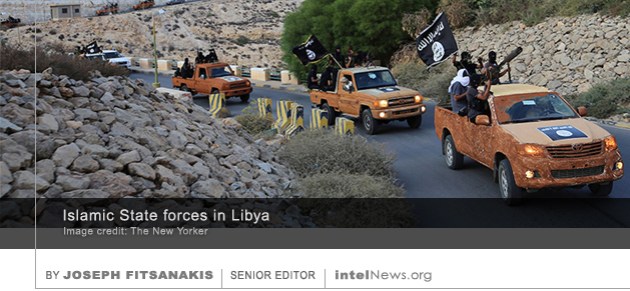 Senior members of the Islamic State are moving from Syria and Iraq to Libya, according to a Libyan intelligence official who spoke to the BBC. Since 2014 and the outbreak of the Second Libyan Civil War, the North African country has been engulfed in a multipolar struggle for dominance between rival armed groups and alliances. Among them is Libya Dawn, a loose coalition of former al-Qaeda-linked militants, ethnic Berbers, members of the pro-Egypt Muslim Brotherhood, as well as the al-Shorooq Force, an Islamist militia from Libya’s northwestern coastal city of Misrata. Libya Dawn troops have been engaged in ground-combat against Islamic State forces, which currently control Libya’s north-central coastal region.
 Russia’s official envoy to Afghanistan has said that Moscow is now working with the Afghan Taliban in order to stop the growth of the Islamic State in the region. Many Taliban fighters are direct descendants of the Afghan and Pakistani Pashtuns who fought the Soviet Red Army in the 1980s, when the USSR invaded Afghanistan and fought a bloody decade-long war there. But the militant group, which today continues to control much of Afghanistan, despite a prolonged American-led military effort to defeat it, is now being challenged by the Islamic State. Known also as the Islamic State in Iraq and Syria (ISIS), the group enjoys growing popularity in Afghanistan, and some tribal warlords have already declared their allegiance to it. In contrast, the leadership of the Taliban has rejected the legitimacy of ISIS and refused to recognize its leader, Abu Bakr al-Baghdadi, as the caliph of all Sunni Muslims. According to Sunni doctrine, a caliph is the recognized political and religious successor to Muhammad, Islam’s prophet, and thus commands the Muslim ummah, or community.
 Much emphasis has been given to the Islamic State’s Western recruits, but there is almost nothing known about Westerners fighting against the Islamic State in Iraq and Syria. Last week, an investigative website published the first substantial study on the subject, focusing on volunteers who are citizens of the United States. Entitled “The Other Foreign Fighters”, the study focuses on those Americans who have voluntarily traveled to the Middle East to take up arms against the group, which is also known as the Islamic State in Iraq and Syria (ISIS). It was authored by Nathan Patin, an independent researcher who often publishes his work through Bellingcat, a website specializing in open-source investigations.
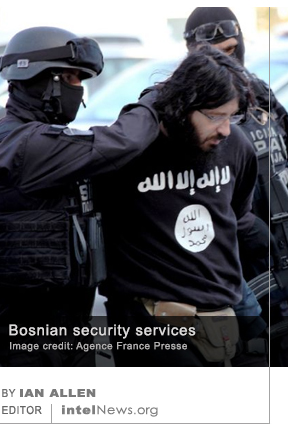 Authorities in Bosnia and Herzegovina have announced the arrest of several people on suspicion of having direct links with the Islamic State and other militant groups fighting in Iraq and Syria. At least 11 people were arrested by police in simultaneous raids at a number of locations on Tuesday, including businesses and private homes, across the Bosnian capital Sarajevo. A police spokeswoman said the eleven men had been charged with having links to terrorist groups, financing terrorist groups, or inciting and helping organize criminal acts. A number of them were also charged with recruiting young men and women to join militant groups in Syria and Iraq, she said.
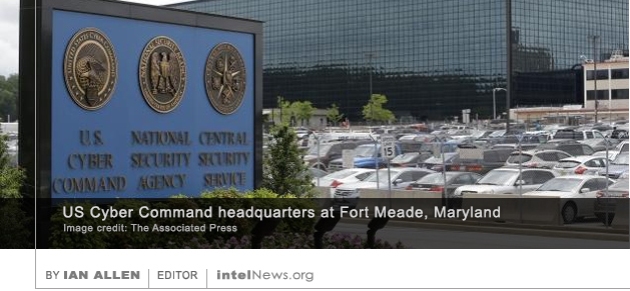 Following a request from the White House, the United States Department of Defense is putting together options to launch offensive cyber operations of an unprecedented scale against the Islamic State. The White House
 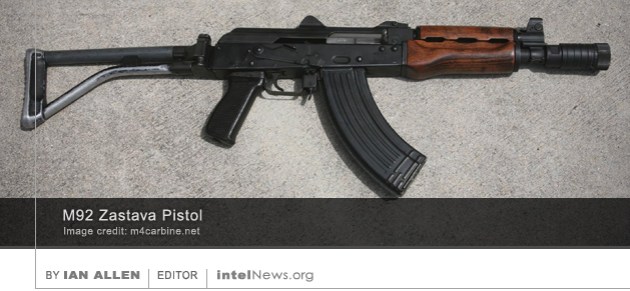 One of the guns used by Islamist militants to attack locations in downtown Paris on November 13 was purchased legally through a dealer in the United States, according to a report by the Associated Press. Investigators have confirmed that several of the weapons used in the attack, which killed 130 and injured hundreds more, were manufactured in Serbia. Most are slightly modified versions of the Soviet-era AK-47, known in the West as “shortened Kalashnikov”. All were produced in a weapons factory called Zastava, which is located in the city of Kragujevac, in central Serbia. They were made in the 1980s and sold within the former Yugoslavia.
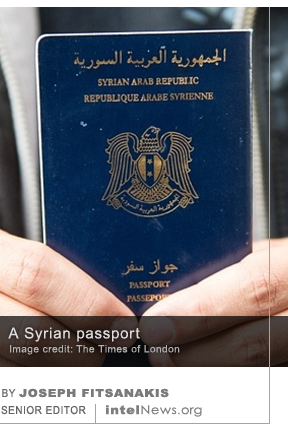 The Islamic State in Iraq and Syria (ISIS) is now able to produce authentic-looking Syrian passports using machines that are typically available only to governments, according to an American intelligence report. The report was accessed by the New York-based station ABC News, which
  The man who masterminded November’s Islamist attacks in Paris was based in Athens, and last January managed to escape arrest during a joint Greek-Belgian police operation aimed at capturing him. Moroccan-born Abdelhamid Abaaoud, who had lived in Brussels for years, died in a gun battle with French police on November 18, just days after the multiple attacks in Paris that killed 130 people and injured hundreds. It is believed that the perpetrators of the attacks, who were based in Belgium, were guided and directed by Abaaoud. He, however, was not based in Belgium, but in Athens, Greece. It was from there that he directed the Islamist cells, mostly by phone, according to the BBC.
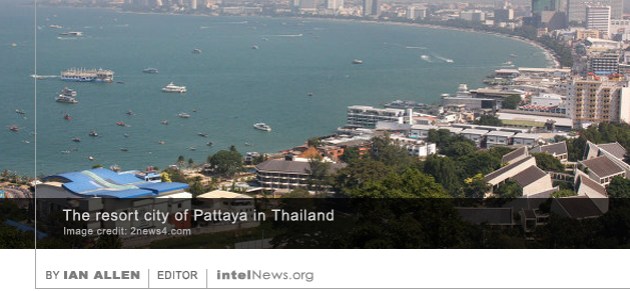 Russian intelligence officials have warned authorities in Thailand that the Islamic State is planning to strike at Russian targets in the Southeast Asian country. Thai authorities received the warning in a memorandum dated November 27, 2015, which came from the Russian Federal Security Service (FSB). The document, marked ‘urgent’, warned of a series of coordinated attacks against Russian-related businesses and facilities in several cities across Thailand. Several Thai news sites, as well as CNN in the United States,
 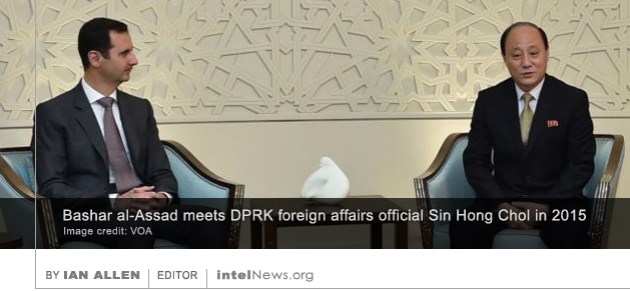 A powerful South Korean parliamentary committee has accused the North Korean government of ties to the Islamic State, an allegation that is vehemently denied by Pyongyang. On November 18, members of the Intelligence Committee of the National Assembly of Korea stated in a press conference that they believed North Korea had “possible ties to ISIS”. They were referring to the Islamic State of Iraq and Syria, which calls itself Islamic State. On Monday, North Korea’s state-run media blasted the South Korean allegations as “slander and fabrications”, and said they threatened to derail collaboration efforts between Seoul and Pyongyang.
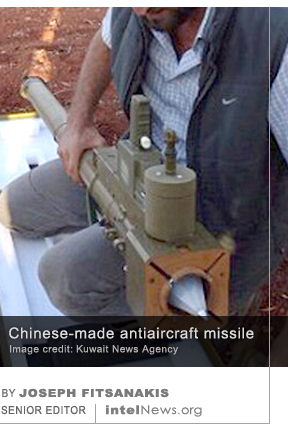 Significant amounts of Ukrainian-manufactured weapons are ending up in the hands of the Islamic State, prompting accusations that Kiev may be arming the militant group in an effort to impair its regional foe Russia. Persisting rumors that Ukraine may be secretly arming the Islamic State —also known as the Islamic State of Iraq and Syria, or ISIS— resurfaced last week, when authorities in Kuwait
 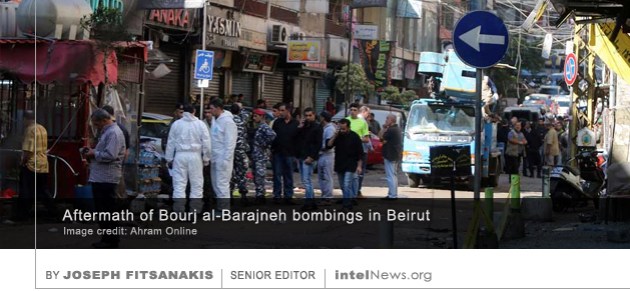 The recent attacks by Islamic State militants in Paris continue to dominate the world’s headlines. But the double suicide blasts that struck Beirut three days earlier are far more significant for the future of the Syrian Civil War. The outpouring of grief that followed the attacks of November 15 in the French capital prompted
  there, and even the Mossad, Israel’s feared spy service, rarely ventures in the Hezbollah-controlled neighborhoods.






 intelNews.org
Are Russian engineers working at an ISIS-controlled gas facility?
February 11, 2016 by Joseph Fitsanakis Leave a comment
The plant was built by Russian construction company Stroytransgaz, which was awarded the contract in 2007 by the government of Syrian president Bashar al-Assad. It is important to note that Stroytransgaz is owned by Gennady Timchenko, a Russian oligarch who is believed to have close ties to President Putin. Following Russia’s involvement in Ukraine, the United States Department of the Treasury imposed sanctions on the construction company, accusing it of having “direct links” with the inner circle of the Russian government. Since that time, a subcontractor of Stroytransgaz, known as Hesco, which is owned by George Haswani, a Russian national of Syrian descent, has been employed by the parent company to help in the completion of the Tuweinan plant. Haswani, who holds dual Russian and Syrian nationality, was recently singled out by the US Tresury for allegedly “brokering the transfer of oil” between the Assad regime in Damascus and the Islamic State.
In October 2014, the anti-Islamic State website Raqqa Is Being Slaughtered Silently reported that a group of Russian engineers employed by Stroytransgaz subcontractor Hesco had been given permission by the Islamic State to continue working at the plant. On Tuesday, US-based review Foreign Policy said it had spoken to “Turkish officials and Syrian rebels”, who claimed that the Russian engineers were still at the Tuweinan plant. The sources told Foreign Policy that the Russian engineers had been tasked with completing the construction of the facility, as promised in 2007, but this time with the permission of the Islamic State. The latter needs the plant to remain operational. Both Stroytransgaz and Hesco have denied the allegations. The Russian government has not commented on the case.
► Author: Joseph Fitsanakis | Date: 11 February 2016 | Permalink
Filed under Expert news and commentary on intelligence, espionage, spies and spying Tagged with energy resources, Gennady Timchenko, George Haswani, Hesco, Islamic State, News, Russia, Stroytransgaz, Syria, Syrian Civil War, Tuweinan (Syria)