Serbia recalls all staff from embassy in Macedonia, alleges espionage
August 22, 2017 1 Comment
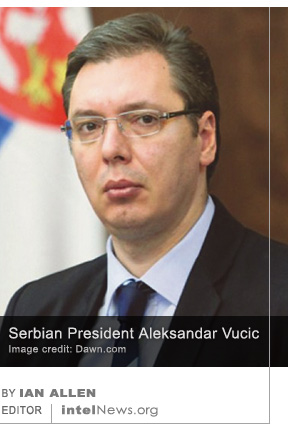 Serbia recalled its entire diplomatic staff from its embassy in the Former Yugoslav Republic of Macedonia on Monday, claiming that it wanted to protect its diplomats from “offensive intelligence activities” directed against them. The move came without warning and surprised journalists in the two former Yugoslav republics. No official reason was given for the recall on Monday morning. Later, however, Serbian President Aleksandar Vučić said that he had decided to recall the diplomats back to Belgrade due to “sufficient evidence of highly offensive intelligence activities against certain bodies and institutions in Serbia”. He did not specify what he meant, but added that the duty of the government of Serbia was to ensure that “our people be prepared and ready”.
Some reports in Macedonia media suggested that Serbia’s move was related to rumors in Skopje that the Macedonian government plans to support an expected attempt by the Republic of Kosovo to join the United Nations Educational, Scientific and Cultural Organization (UNESCO). Kosovo was a province of Serbia until 2008, when it proclaimed its independence, a move that was backed by many Western powers, including the United States. However, Serbia has not recognized Kosovo’s independence and has actively opposed Kosovo’s attempts to become a full member of international bodies. Belgrade successfully blocked Kosovo’s entry into UNESCO in 2015. At that time, the former Serbian province country did not receive enough votes to join the organization. But there are concerns in Serbia that, Kosovo might apply again this year and that this time it may be successful.
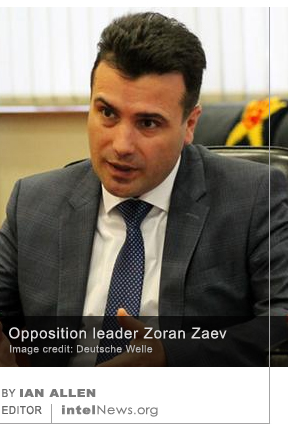
Serbia has kept a cautionary stance on the current political crisis in Macedonia, which began in 2015 when thousands of people took to the streets in Macedonian capital Skopje to protest against the conservative government of Prime Minister Nikola Gruevski. The crisis deepened in late 2016, when many intelligence officers, including a former director of the national spy service, were accused of illegally wiretapping thousands of people on orders of the government. Under growing pressure, Gruevski stepped down and was eventually replaced by the leader of the center-left opposition, Zoran Zaev, who is now prime minister. During his election campaign last spring, Zaev was critical of Serbia, which he accused of behaving nationalistically against other former Yugoslav republics.
Speaking to reporters in Belgrade on Monday, Serbia’s Minister of Foreign Affairs, Ivica Dačić, said he believed Serbian diplomatic staff would be back in Skopje by the end of August. Mr. Vucic simply commented that there was a “different, new atmosphere” in the Macedonian capital and said he hoped that the situation would become clearer in the coming days.
► Author: Ian Allen | Date: 22 August 2017 | Permalink
 Several former and current intelligence officers, including a former director of the national spy service, have appeared in court in Macedonia, accused of illegally wiretapping thousands of people on orders of the government. The wiretap scandal has sparked the deepest political crisis in the impoverished Balkan country, which has existed since declaring independence from Yugoslavia in 1991.
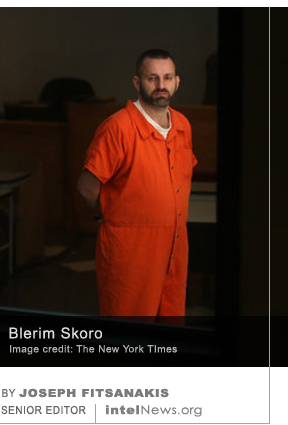 An ethnic Albanian man facing deportation from the United States says he was trained by the Central Intelligence Agency to spy on “the most ruthless, dangerous terrorists in the Balkans and the Middle East”. Blerim Skoro, 45, from the former Yugoslav Republic of Kosovo, was arrested last February in Brooklyn, New York, for illegally using a discounted student MetroCard. He was then found to have entered the US illegally and is currently in prison in New Jersey, facing possible deportation back to Kosovo. But Skoro told The New York Times in an









 intelNews.org
Greece expels Russian diplomats who ‘tried to bribe Greek officials’
July 12, 2018 by Joseph Fitsanakis Leave a comment
Things changed swiftly on Wednesday, however, when Athens announced the surprise expulsion of two Russian diplomats from the Greek capital. One of the two diplomats has been named as Victor Yakovlev, third secretary of the Russian embassy in Athens, who some say is in fact an intelligence officer. Two more Russian diplomats, who have not been publicly named, were barred from entering Greece —a move that effectively amounts to a refusal by the Greek government to accredit them. According to an official statement from the Greek Ministry of Foreign Affairs, the expulsions were meant to prevent the “undermining of [Greek] national security”. However, a report in the Greek daily Kathimerini said that the move was taken in response to attempts by Russian spies to bribe Greek state officials. Other reports claim that the Russians were caught trying to blackmail Greek lawmakers over the possible expansion of the North Atlantic Treaty Organization (NATO), of which Greece is a member.
Some of the allegations in the Greek press refer to the country’s three-decade long dispute with the Former Yugoslav Republic of Macedonia, which Athens accuses of harboring territorial ambitions against its neighbors. Greece —the wealthiest and most powerful state in the Balkans— has barred the entry of its northern neighbor into the European Union and NATO until it complies with a list of Greek demands. Chief among those is the drawing of a clear distinction between Greek Macedonia —once an ancient Greek kingdom ruled by Alexander the Great— and the Former Yugoslav Republic of Macedonia, which encompasses a small portion of Alexander’s former empire. Last month, the decades-long dispute between the two neighboring countries appeared to draw to a close with the proposed adoption of “Northern Macedonia” as the official name of the former Yugoslav republic. The agreement would open the way for the tiny landlocked country to enter into negotiations for eventual entry into NATO. However, nationalists in both countries have staged public rallies to protest against the proposed agreement.
It appears that Russian diplomats may have tried to convince Greek lawmakers —through extortion, bribing or both— to vote against the proposed agreement. There are also reports that Russian diplomats assisted in the organization of nationwide rallies against the proposed agreement in Greece, possibly by funding them or by spreading information about them on social media. The Russian government said on Wednesday that it would protest the expulsion of its diplomats from Athens. It also said that it reserved the right to respond to Greece’s move in kind, possibly by expelling an equal number of Greek diplomats from Moscow.
► Author: Joseph Fitsanakis | Date: 12 July 2018 | Research credit: SF | Permalink
Filed under Expert news and commentary on intelligence, espionage, spies and spying Tagged with diplomatic expulsions, Greece, Macedonia, NATO, News, Russia, Russian embassy in Greece, Victor Yakovlev