News you may have missed #561
August 7, 2011 Leave a comment
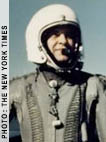
Francis G. Powers
►►US to phase out U-2 spy plane after 50 years. After more than 50 years gathering intelligence 13 miles above the ground, the United States’ U-2 spy planes will be phased out and replaced by unmanned drones by 2015, according to reports this past week. The classified U-2 program came to light in 1960, when a Soviet surface-to-air missile brought down a U-2 flown by CIA pilot Gary Powers, who parachuted to safety but was soon captured.
►►Security company unearths ‘massive’ cyberespionage operation. A widespread cyberespionage campaign stole government secrets, sensitive corporate documents, and other intellectual property for five years from more than 70 public and private organizations in 14 countries. This is according to Dmitri Alperovitch, vice president of threat research at the cyber-security firm McAfee, who uncovered the alleged plot. The operation, dubbed SHADY RAT, targeted the United Nations and the United States, among other national and international entities.
►►South Korea expands spy ring investigation. South Korean authorities have expanded the controversial investigation into the alleged Wangjaesan spy ring, to include Read more of this post








 intelNews.org
Most government hackers now target cell phones, not computers, experts say
June 8, 2018 by Ian Allen Leave a comment
According to Lookout, the increase in hacking operations targeting mobile phones reflects the proliferation of smartphone usage around the world, as well as the increase in consumption of cell phone software. Government-sponsored hackers usually compromise their targets’ cell phones through malicious software disguised as cell phone applications. The Wall Street Journal also reports that the software needed to build malicious software for cell phones has become cheaper and more readily available. Compromising a target’s cell phone provides hackers with information that is far more personal and sensitive than what can be found on a personal computer. The paper quotes Mike Murray, Lookout’s vice president of security research, who says: “It is one thing to compromise someone’s computer. It’s another thing to have a listening device that they carry around with them 24 hours a day”. Compromised phones become immensely powerful espionage tools, explains Murray.
Many of the individuals whose cell phones are targeted by governments are activists or dissidents who campaign for political or economic reforms in their countries. Their cell phones are targeted in systematic hacking campaigns by countries like Ethiopia, the United Arab Emirates, Cambodia, and Mexico, said Lookout. The Wall Street Journal cites Raj Samani, chief scientist for the antivirus firm McAfee, who claims that nearly 11 percent of cell phones worldwide were infected with some kind of malware in 2017. That statistic is likely to rise significantly by the end of 2018, says Samani.
► Author: Ian Allen | Date: 08 June 2018 | Permalink
Filed under Expert news and commentary on intelligence, espionage, spies and spying Tagged with cellular telephony, Lookout Mobile Security, McAffee, Mike Murray, News, Raj Samani, telephone hacking