S. Korea arrests two for spying for US defense contractor

Northrop Grumman

NorthropGrumman

By IAN ALLEN | intelNews.org |
The government of South Korea announced the arrest on Tuesday of two former South Korean army colonels for allegedly leaking defense secrets to US defense contractor giant Northrop Grumman. South Korean authorities identified the individuals simply as “Hwang” and “Ryu”, and said they both worked for the Security Management Institute, a Seoul-based intelligence think-tank with strong connections to South Korea’s armed forces. Details are still sketchy, but it appears the two former army colonels used their military contacts to gain access to classified information on hardware purchase plans and operations of South Korea’s navy and coast guard. They then allegedly passed on this information to employees of Northrop Grumman, the world’s largest builder of military vessels and fourth largest defense contractor in 2008. Read more of this post

Russia jails man for passing military secrets to US Pentagon

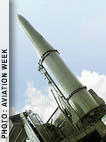
Iskander missile

Iskander missile

By IAN ALLEN | intelNews.org |
A Serb national was given an eight-year sentence by a Russian court earlier today, for allegedly passing classified information on Russian defense projects to an agent of the US Defense Intelligence Agency (DIA). Agents with Russia’s Federal Security Service (FSB), the main successor to the Soviet-era KGB, arrested the 61-year-old man, named Aleksandar Georgijevic, at a Moscow airport in 2007, as he was reportedly trying to leave Russia. They accused him of giving secret documents to Farid Rafi, whom the Russians claim was “working in the interests of the intelligence agency of the US defense ministry”. Georgijevic’s trial took place behind closed doors. But Russian media report that he began collecting classified information in as early as 1998, focusing primarily on the Russian military’s R-500 supersonic cruise missile, as well as the Iskander, Blokada and Khrizantema-C  tactical missiles. Read more of this post

News you may have missed #0118

  • Second spy operation against media revealed in Bulgaria. A few months ago, Bulgarian public opinion was shocked by revelations about Operation GALLERY (a.k.a. Operation GALERIA), a project by Bulgarian State Agency for National Security (DANS) aimed to intimidate the country’s press. Now a second domestic spying program has been discovered by the appropriately named Bulgarian Parliamentary Committee for Controlling DANS.
  • US military cannot analyze surveillance footage influx. The heaps of intelligence footage gathered by US military spy drones and surveillance cameras are already more than analysts can handle. So DARPA, the US military’s research arm, is looking for a software program that will automate the analysis process.

Bookmark and Share

Does Norway engage in international espionage?

NIS HQ

NIS HQ

By IAN ALLEN | intelNews.org |
The death sentences handed down earlier this week by a Congolese military court to two alleged Norwegian spies, prompted Brian Palmer, of Slate magazine, to ask: do small countries like Norway engage in international espionage? The answer, of course, is yes. Palmer explains that intelligence agencies of smaller countries tend to be extremely focused on bordering nations. As a result, when it comes to their immediate geographical neighborhood, their intelligence knowledge and capabilities often surpass those of larger intelligence powers. Norway is a good example of this. Read more of this post

Analysis: How vital was spying during the Cold War?

Gordon Corera

Gordon Corera

By IAN ALLEN | intelNews.org |
The BBC’s security correspondent, Gordon Corera, asks a very basic yet very intriguing question about the history of the Cold War: did espionage actually make a difference in ts outcome? This question stems out of BBC Radio 4’s three-part documentary series examining the 100-year history and operations of MI6, Britain’s foremost external intelligence agency. Corera’s article on the BBC website provides conflicting answers by intelligence defenders and intelligence skeptics, including Rodric Braithwaite, former British ambassador to the USSR, and David Owen, Britain’s former Foreign Secretary, who says that, barring a few important exceptions, UK policy makers “didn’t really […]  know exactly what was going on” in the Communist Bloc. Other commentators include former MI6 deputy director Sir Gerry Warner, and Sir David Omand, who argues that most of the intelligence collected during the Cold War was of a military or tactical nature and would therefore have proven effective only “if the Cold War had gone hot”.

Bookmark and Share

News you may have missed #0041

Bookmark and Share

Belarus puts on trial members of alleged Polish military spy ring

By JOSEPH FITSANAKIS | intelNews.org |
Very little information has appeared in Western news outlets of an ongoing trial in Belarus of four army officers accused of spying for Poland. The four, all of whom are Belarusian, are accused by Belarus security officials of collaborating with Polish intelligence agents by providing them with classified data on Belarusian military technologies, as well as with information on Russia’s air defense system, of which Belarus is a partner. A fifth alleged member of the spy ring, who is a Russian military officer, is facing similar charges in Moscow. The four Belarusians were reportedly arrested several months ago by the KGB, Belarus’ intelligence service. The discovery of the alleged spy ring led to a major political scandal in Minsk, prompting the dismissal of KGB’s director, Stepan Sukhorenko, by Belarus’ longtime President, Alexander Lukashenko. If convicted of treason and espionage, the army officers could technically face the death penalty under Belarusian law.

South Korea military intelligence caught spying on citizens

Yongsan

Yongsan

By IAN ALLEN | intelNews.org |
Since last December, a residential building scheduled for redevelopment in the Yongsan district of South Korean capital Seoul had been the site of a mass occupation campaign. Dozens of protesters, all building residents, were refusing to leave unless they were offered improved compensation and relocation packages. On January 20, however, Seoul’s riot police and SWAT units stormed the building using tear gas and water cannons. During the operation, parts of the building were engulfed in a huge blaze, which caused the deaths of five protestors and one police officer, and injured 23 people, one of whom is reportedly in a coma. On the evening of Saturday, January 31, protestors who had gathered in and around Seoul’s Myeongdong Cathedral for a candlelight memorial service for the victims of the fire spotted a group of plainclothes military intelligence officers with South Korea’s Capital Defense Command (CDC) clandestinely observing the vigil. The six-member group appeared to be directed by a number of commanding officers who were also in the proximity of the vigil, though detached from the crowd. Organizers of the vigil isolated the six intelligence officers and proceeded to search them, but discovered no surveillance equipment. Witnesses said, however, that one of the intelligence officers appeared to be reporting on the movements of vigil participants on his cell phone. Read more of this post