Ex-Mossad chief calls on Israel to speak with Hamas

Efraim HalevyA former director of Israel’s Mossad intelligence agency has called on the Israeli government to reach out to Hamas, arguing that the Palestinian group is now ready to accept a peace settlement. Efraim Halevy directed the Mossad, Israel’s primary external intelligence agency, for five years before retiring in 2002. He is best known for helping forge a historic peace treaty between Israel and Jordan in 1994, which made the Hashemite Kingdom the second Arab country, after Egypt, to sing a peace accord with the Jewish state.

Halevy was speaking last week at an annual conference hosted in New York by the Israel-based newspaper The Jerusalem Post. During a panel entitled “Does the World Have an Answer to Islamic Terror?”, Halevy said it was time for Israel to speak to Hamas about the possibility of a peace treaty. The former Mossad director said he knew that “senior figures in the United States” had already established contacts with the Palestinian militant group, which controls the Gaza Strip. He also said that he knew “with certainty” that the leadership of Hamas was prepared to consider some kind of a “temporary settlement” based on the promise of the establishment of a Palestinian state along the pre-1967 Six-Day War borders. “The leadership of Hamas knows that they have no chance of destroying Israel”, said Halevy, adding that “now is the time to talk to Hamas”. According to the retired spy, a temporary settlement between Israel and Hamas that seeks to establish a Palestinian state would amount to a start in negotiations for a recognition of the state of Israel by Hamas. Halevy criticized Israel for refusing to speak with Hamas, saying that “as long as Israel refuses to talk with Hamas, and in the absence of any other alternative, [Hamas] has no option but to do what it does now”.

Last week was not the first time that Halevy has called for Israel to negotiate with Hamas. In July 2014, he told the American television network CNN that there were numerous radical groups in the Gaza Strip that were more threatening to Israel’s security than Hamas, not to mention Sunni Islamist groups like the Islamic State, which posed a much more pertinent challenge to regional stability. Two years earlier, n 2012, Halevy had issued a public call for dialogue between Israel and Iran, saying that “the Iranians, in their heart of hearts, would like to get out of their conundrum”, referring to Tehran’s nuclear program.

Author: Joseph Fitsanakis | Date: 01 June 2016 | Permalink

Revealed: Decorated Nazi commander became Mossad assassin

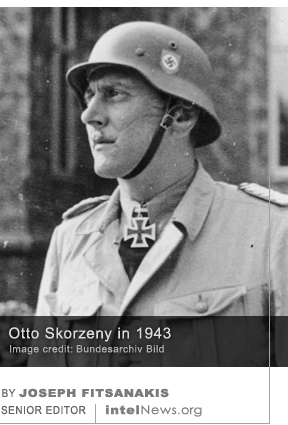
Otto SkorzenyA notorious lieutenant colonel in the Waffen SS, who served in Adolf Hitler’s personal bodyguard unit, worked as a hitman for the Israeli intelligence agency Mossad after World War II, it has been revealed. Austrian-born Otto Skorzeny became known as the most ruthless special-forces commander in the Third Reich. Having joined the Austrian branch of the National Socialist German Workers’ Party at 19, at age 23 Skorzeny began serving in the Waffen SS, Nazi Germany’s conscript army that consisted largely of foreign-born fighters. In 1943, Hitler himself decorated Skorzeny with the Knight’s Cross of the Iron Cross, in recognition of his leadership in Operation EICHE, the rescue by German commandos of Italian fascist dictator Benito Mussolini, who had been imprisoned at a ski resort in the Apennine Mountains following a coup against his government.

Skorzeny survived the war and ended up living in Spain under the protection of the country’s far-right dictator, Francisco Franco. The Mossad, Israel’s covert-action agency, which had made it a priority to arrest or kill senior Nazis who had survived the war, intended to kill Skorzeny. However, two veteran Israeli intelligence observers, Dan Raviv and Yossi Melman, revealed on Sunday that, instead of killing Skorzeny, the Mossad decided to recruit him. Based on “interviews with former Mossad officers and with Israelis who have access to the Mossad’s archived secrets”, Raviv and Melman allege that Isser Harel, who directed the Mossad from 1952 to 1963, decided that the former Waffen SS commander would be a useful asset against other Nazis operating in Europe and the Middle East. Specifically, Harel planned to use Skorzeny as a trap to lure a number of Nazi scientists who were secretly working for Egypt’s missile program.

According to Raviv and Melman, a Mossad team was sent to Spain to meet Skorzeny. After a tense incident that involved Skorzeny pointing a loaded weapon at two Mossad operatives, the former Nazi soldier agreed to cooperate with Israel in return for assurances that his name would be removed from the Mossad’s assassination list. Raviv and Melman claim that one of Skorzeny’s most high-profile operations as an agent of the Mossad culminated in the assassination of Heinz Krug in Munich in 1962. Krug was a German rocket scientist who was working for the Egyptian government under the tutelage of Dr Wolfgang Pilz, another rocketry expert who had put together a top-secret missile program for Cairo. Krug was targeted for assassination by Yitzhak Shamir, Israel’s future prime minister, who was then commander of the Mossad’s clandestine operations service.

Krug, who was worried for his life after receiving threatening messages from individuals he believed were connected with the Mossad, reached out to Skorzeny in hopes that the former Waffen SS commander could give him advice on enhancing his personal security. But Skorzeny, operating on orders of the Mossad, shot dead the German scientist in a remote wooded area outside Munich. A Mossad team then poured acid on Krug’s body before burying it in a grave that had been dug in preparation for his killing. According to Raviv and Melman, Skorzeny also sent German scientists in Egypt a number of mail bombs designed by the Mossad, which killed a number of people. Raviv and Melman also state that they received oral confirmation from Rafi Eitan, a legendary Mossad operations officer, that he “met and ran Skorzeny” on behalf of the Israeli intelligence agency.

Skorzeny died of cancer in Spain in 1975. He was 67. It is believed that the Mossad never tried to kill or kidnap him.

Author: Joseph Fitsanakis | Date: 29 March 2016 | Permalink
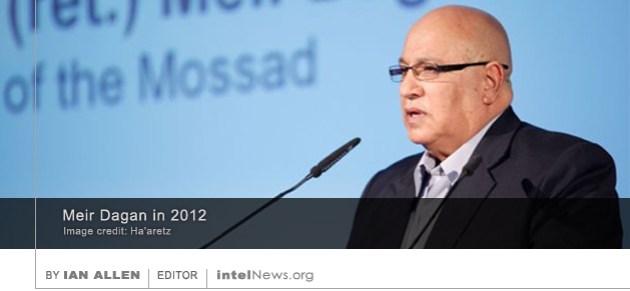
Controversial ex-Mossad director Meir Dagan dies in Tel Aviv

Meir DaganMeir Dagan, who directed the Israeli intelligence agency Mossad for a decade and emerged as a vocal critic of the Israeli government after his retirement, has died. A statement from his family said he died of liver cancer, a disease that prompted him to undergo a complex liver transplant operation in Belarus in 2012. But he suffered constant complications following his return to Israel, which led to his death on Thursday in Tel Aviv. Dagan was born Meir Hubermann in 1945 in Soviet Ukraine, and arrived with his family to Israeli in 1950. At age 18, he enlisted in the Israel Defense Forces and saw action in the 1967 Arab-Israeli war. In 2002, a few years after his retirement from the military with the rank of major general, Israeli Prime Minister Ariel Sharon appointed him to direct the Mossad, Israel’s primary intelligence agency.
During Dagan’s tenure, which spanned the rule of three Israeli prime ministers, the Mossad focused intensely on combating the Iranian nuclear program, using a variety of means ranging from alleged assassinations of Iranian scientists to cyber sabotage of Iranian nuclear facilities. However, like many other senior Israeli intelligence commanders, Dagan was strongly opposed to plans by the government of Benjamin Netanyahu to launch military strikes on Iran. Shortly after his retirement in 2011, Dagan spoke publicly against Netanyahu and senior members of his cabinet, including Minister of Defense Ehud Barak, who openly advocated the use of military force against Iran. In May 2011, Dagan condemned a possible Israeli attack on Iran as an act that would be “patently illegal under international law” and “the stupidest thing [he had] ever heard”. In June, hawkish Israeli Prime Minister Benjamin Netanyahu effectively stripped Dagan of his diplomatic passport, after the longtime Mossad Director called Israel’s leaders “reckless and irresponsible” people, who will not hesitate to engage in military adventurism in Iran to ensure their political primacy at home.

But Dagan continued to openly criticize the Israeli government, refusing to describe the Iranian nuclear program as an existential threat to Israel and calling instead for the establishment of a peace treaty with the Palestinians. He said in an interview in 2012 that, when he directed the Mossad, he could “block any perilous adventurism” in the Middle East; but after his retirement from the senior ranks of the agency, he feared that there was “no one to stop Barak and Bibi”, referring to Prime Minister Netanyahu by his nickname.

Dagan was 71. His burial took place on Sunday with full military honors in the town of Rosh Pina, in Israel’s northern district.

Author: Ian Allen | Date: 21 March 2016 | Permalink

Germans bill Israeli embassy after Mossad car gets stuck in mud

Mossad sealAuthorities in a northern German town have called on the Israeli embassy in Berlin to pay for the cost of extricating a car belonging to two Israeli spies, which was stuck in a mud pit in a restricted area. According to the Hamburg-based television station NDR, the incident occurred last December in Quarnbek, a coastal town in Germany’s Schleswig-Holstein state with a population of under 2,000. Two men were reportedly spotted late one afternoon driving a Ford Focus near a restricted area that is surrounded by a fence by the banks of the Kiel Canal. The men came across a locked gate to the restricted area, which, according to NDR, is clearly marked with “no trespassing” signs. However, they reportedly picked the lock and drove through the gate into the restricted area. Shortly afterwards, however, the Ford Focus got stuck in a mud pit inside the Kiel Canal restricted area.
As the two men unsuccessfully tried to get their car unstuck, night began to fall. An elderly resident spotted them and asked them if they were government employees. The men responded that they were there to survey the area in preparation for a sailing contest that was to take place in the Kiel Canal in the summer. But the resident became suspicious and called Quarnbek’s Mayor, Klaus Langer. In turn, the mayor called the police, which sent a team of officers to the restricted site. According to NDR, as soon as the two men spotted the police vehicle, they came out of their car and identified themselves as Israeli consular personnel with diplomatic immunity. They presented their credentials and informed the police officers that they were armed; indeed, two handguns were found in the Ford Focus.

German media reports said the police soon confirmed that the two men were officers of the Mossad, Israel’s primary external intelligence agency, and were in the region to accompany the transfer of the ThyssenKrupp submarine to Israeli hands. Known in Israel as the INS Rahav, the submarine was built in the Kiel shipyard on orders of the Israeli government. According to Mayor Langer, a team of local firefighters was dispatched to help extricate the Mossad officers’ car from the mud. Earlier attempts by a local farmer to extricate the car using a forklift had apparently failed. The Ford Focus was eventually extricated and the two Mossad agents were allowed to leave. Shortly afterwards, Mayor Langer, who was elected as a member of the Green Party, sent the Israeli embassy in Berlin a bill for $1392.28 to cover the cost of the extrication. According to recent reports, the Israelis said they intend to pay up.

Author: Joseph Fitsanakis | Date: 09 March 2015 | Permalink

Speculation ends as Israeli prime minister appoints new Mossad chief

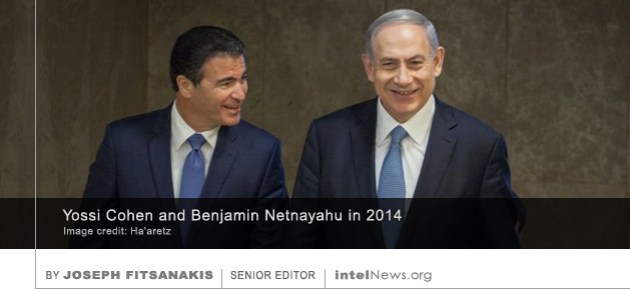
Yossi Cohen and Benjamin NetnayahuMonday brought an end to weeks of speculation in Israel, as Prime Minister Benjamin Netanyahu appointed the new director of the Mossad, the Jewish state’s national intelligence agency. At a hastily announced press conference in Jerusalem, Netanyahu said he had chosen Yossi Cohen for the post. A 30-year veteran of the Mossad, Cohen left the intelligence agency in 2013 to chair Israel’s National Security Council and advise the prime minister. Cohen, 54, who has four children, grew up in Jerusalem and became a fighter pilot before joining the Mossad. He gradually rose through the ranks to become deputy director at the agency. Prior to that, he led for several years the Mossad’s Department of Collections, which handles operations officers around the world.
More recently, Cohen led the agency’s Political Action and Liaison Department, which is tasked with facilitating cooperation between the Mossad and foreign intelligence agencies. From that position, he witnessed the worsening relations between Israel and the United States, as Washington struck closer relations with Iran despite Tel Aviv’s strong objections. That unprecedented development sparked a fierce internal debate between the Israeli intelligence community and the executive. The debate culminated when the Mossad’s outgoing Director, Tamir Pardo, objected to Prime Minister Netanyahu’s hardline stance on Iran. In 2011, Pardo, who will be stepping down from his post in January after 5 years at the helm, opined that the Iranian nuclear program was not an existential threat to Israel and that the Jewish state should concentrate instead on its dispute with the Palestinians.

Cohen, who is one of Netanyahu’s most trusted advisers, is expected to bring the Mossad closer to the prime minister’s office. He was reputedly one several candidates for the post, and was chosen from a list that included the Mossad’s former Deputy Director Rami Ben-Barak —currently at the helm of Israel’s Ministry of Intelligence Affairs— and the agency’s second-in-command, who is known publicly only as “N”. Following Monday’s announcement by Netanyahu, which came after an unexplained hour-long delay, there were rumors of last-minute complications with Cohen’s appointment. But The Times of Israel quoted an unnamed “senior diplomatic official” as saying that there had been “no last minute drama [or] pressures” prior to Netanyahu’s announcement.

Author: Joseph Fitsanakis | Date: 08 December 2015 | Permalink

Israeli nuclear whistleblower recalls his 1986 capture by the Mossad

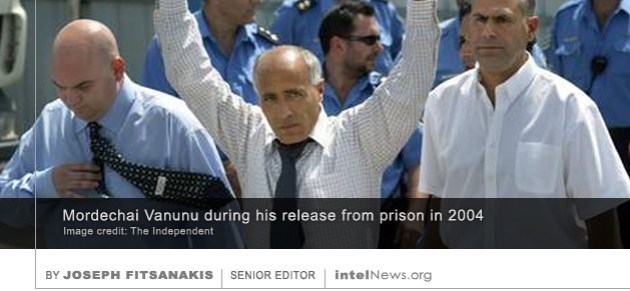
Mordechai VanunuIsraeli nuclear whistleblower Mordechai Vanunu, who spent 18 years in prison for revealing the existence of Israel’s nuclear program, has spoken for the first time about his 1986abduction by the Mossad in Rome. Vanunu was an employee at Israel’s top-secret Negev Nuclear Research Center, located in the desert city of Dimona, which was used to develop the country’s nuclear arsenal. But he became a fervent opponent of nuclear proliferation and in 1986 fled to the United Kingdom, where he revealed the existence of the Israeli nuclear weapons program to the The Times of London. His action was in direct violation of the non-disclosure agreement he had signed with the government of Israel; moreover, it went against Israel’s official policy of ‘nuclear ambiguity’, which means that the country refuses to confirm or deny that it maintains a nuclear weapons program.
Soon after Vanunu settled in London, the Israeli intelligence agency Mossad began making plans to capture him. The spy agency sent one of its American-born female officers, Cheryl Bentov, to befriend Vanunu. The decision was taken after Mossad psychologists determined that Vanunu was lonely and longed for female companionship. Masquerading as an American tourist by the name of ‘Cindy’, Bentov convinced Vanunu to go with her on Vacation to Rome, Italy. Soon after the couple arrived in the Italian capital, Vanunu was abducted by a Mossad team who injected him with a paralyzing drug before taking him away in a van. Vanunu was then transferred onboard the INS Noga, an Israeli signals-intelligence ship masquerading as a merchant vessel, which transported him to Israel. He was convicted to 18 years in prison and was released in 2004, after having spent 11 years in solitary confinement.

On Wednesday, Israel’s Channel 2 television showed excerpts of Vanunu’s first-ever interview to an Israeli media outlet. The interview, which is to be aired in full on Friday, includes Vanunu’s personal account of his capture by the Mossad. He told the interviewer that ‘Cindy’ first spoke to him as she walked alongside him while the two of them were crossing a London street. But he said that it was he who “initiated the relationship” with the woman posing as an American tourist. That was a critical moment in the whole process, said Vanunu, because “if she initiates you’ll suspect her”. The nuclear whistleblower insisted, however, that he did not “fall in love with her”, as some accounts of the Mossad operation have suggested, though he was “definitely attracted” to her, he said.

Vanunu added that the thought of ‘Cindy’ being a Mossad officer had initially crossed his mind; but he disregarded it and did not realize he was being tricked “until the very last moment”. He told Channel 2 that even after several days after his capture, he still believed that ‘Cindy’ had also been abducted. It was only later that he “reached the conclusion that she was part of the plan”, he said. At another point in the interview, Vanunu said that ‘Cindy’ was not the only Mossad officer who had tried to befriend him while he was in London, but that he was able to detect every other attempt by Israeli intelligence operatives.

Author: Joseph Fitsanakis | Date: 03 September 2015 | Permalink

New book by ex-Mossad officer examines Israel’s intelligence doctrine

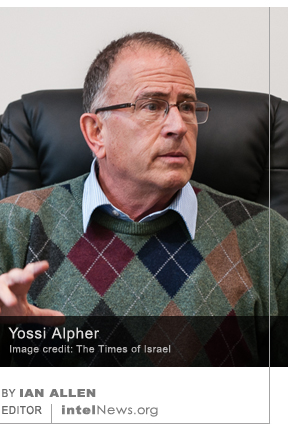
Yossi AlpherYossi Alpher, a former Israeli intelligence officer, who was directly involved in numerous top-secret operations during his spy career, has published a new book that analyzes the overarching strategy behind Israel’s spy operations. Alpher served in Israeli Military Intelligence before joining the Mossad, where he served until 1980. Upon retiring from the Mossad, he joined Tel Aviv University’s Jaffee Center for Strategic Studies, which he eventually directed. Throughout his career in intelligence, Alpher worked or liaised with every Israeli spy agency, including the Shin Bet –the country’s internal security service.
In Periphery: Israel’s Search for Middle East Allies, published this week by Rowman & Littlefield, Alpher examines Israel’s so-called ‘periphery doctrine’. This strategy was devised by Israel’s founder and first Prime Minister, David Ben-Gurion, and formed the basic operational doctrine of the Mossad since the organization’s inception, in 1949. The strategy was based on forging deep operational ties between Israeli and non-Arab intelligence services in the Middle East and Africa, and then presenting these alliances as assets to the United States, so as to win Washington’s support. In pursuit of the periphery doctrine, Israel focused on strengthening ties with religious or ethnic minorities in the Middle East, including the Kurds in Iraq and Syria, and signed intelligence cooperation agreements with countries such as Iran, Turkey, Ethiopia, Kenya and Uganda.

According to Alpher, the most ambitious part of the periphery doctrine was the secret intelligence pact signed between Israel, Turkey and Iran. Known as C’lil in Israel, and as Trident in the United States, the agreement was struck in Ankara in 1958. Almost immediately after signing the treaty, senior Israeli officials contacted Washington and presented the secret pact between three American allies as a barrier against Soviet influence in the Middle East. Alpher says the Americans’ response was so enthusiastic, that the Central Intelligence Agency even agreed to fund the construction of a two-story building in a remote region of Israel, which served as C’lil/Trident’s headquarters. The building still exists today, says Alpher.

In another aspect of the periphery doctrine, the Mossad trained the bodyguards of senior Moroccan government officials and funded the science and technology division of the Moroccan intelligence services, almost in its entirety. In the book, Alpher reveals that Yitzhak Rabin visited Morocco incognito when he was prime minister, wearing a blond wig, in order to avoid being noticed by the press, diplomats or foreign spies. Alpher also discusses in unprecedented detail Operation ROTEV, a secret program implemented by the Mossad in the 1960s to arm the Yemeni royalists involved in the North Yemen Civil War. He told Israeli newspaper Yedioth Ahronoth that he was personally tasked with inspecting Israeli weapons and ammunition destined for the Yemeni royalists, in order to ensure that they could not be traced back to Israel.

A number of Israeli authors, notably Shimon Shamir, professor emeritus of Middle East history at Tel Aviv University, have authored highly critical appraisals of the Mossad’s periphery doctrine, arguing that it prevented Israel from seeking peace with its Arab neighbors. Additionally, the periphery strategy prompted the Mossad to collaborate with several governments that Yedioth Ahronoth calls “dark regimes and terrible dictatorships, by actively supporting them and sometimes tipping the scales in their favor”. Alpher recognizes the ethical problems of the periphery doctrine; however, he remains supportive. The periphery doctrine allowed Israel to survive by giving it funds to develop weapons programs, which in turn allowed it to win two wars against Arab armies, he says.

Author: Ian Allen | Date: 23 June 2015 | Permalink: https://intelnews.org/2015/06/23/01-1720/

CIA chief paid secret visit to Israel ahead of Iran nuclear deal

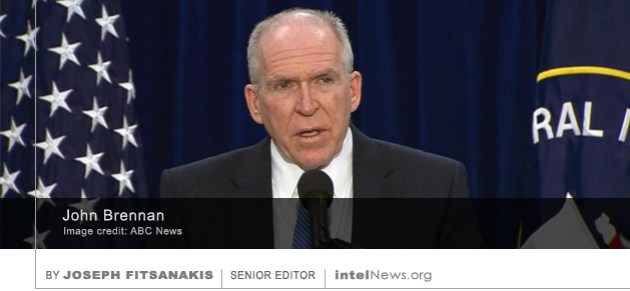
John BrennanThe director of the United States Central Intelligence Agency visited Israel in secret last week to discuss the Jewish state’s refusal to endorse an emerging deal with Iran over its nuclear program. Citing “two senior Israeli officials”, the Tel Aviv-based Israeli newspaper Haaretz said on Tuesday that CIA Director John Brennan arrived in Israel last Thursday. Although he was officially hosted by Tamir Pardo, director of Israeli intelligence agency Mossad, Brennan used the opportunity to hold secret meetings with several senior Israeli officials, said Haaretz. Among them were Prime Minister Benjamin Netanyahu, National Security Adviser Yossi Cohen, as well as Major General Hartzl Halevi, who heads Israel’s Military Intelligence Directorate.

According to Haaretz, Brennan’s visit to Israel had been planned “long ahead of time”, and should not be interpreted as a sudden diplomatic move from Washington. However, it came just weeks ahead of a deadline for a far-reaching settlement next month between Iran and six world powers over the Islamic Republic’s nuclear program. If successful, the much-heralded deal will mark the conclusion of ongoing negotiations between the Islamic Republic and a group of nations that have come to be known as P5+1, representing the five permanent members of the United Nations Security Council plus Germany. Israel, however, has strongly criticized the negotiations, referred to as ‘the Geneva pact’. Last year, the Israeli Prime Minister called the pact a “historic mistake” that would enable “the most dangerous regime in the world” to get closer to “attaining the most dangerous weapon in the world”.

It is not known whether Brennan brought with him a message from US President Barack Obama addressed to the Israeli Prime Minister, said Haaretz. On Monday, just 72 hours after Brennan’s departure, another senior American official landed in Tel Aviv —openly this time. It was General Martin Dempsey, Chairman of the US Joint Chiefs of Staff, who was hosted by his Israeli counterpart, General Gadi Eisenkot. Like Brennan before him, General Dempsey met with Prime Minister Netanyahu and Minister of Defense Moshe Yaalon. Haaretz contacted the CIA about Brennan’s secret visit to Israel, but an Agency spokesperson refused to comment.

Author: Joseph Fitsanakis | Date: 10 June 2015 | Permalink: https://intelnews.org/2015/06/10/01-1712/

Mossad allegedly behind arrest of ‘Hezbollah bomber’ in Cyprus

Larnaca police stationA team of officers from Israel’s Mossad intelligence agency were heading to Cyprus late yesterday to be briefed on the arrest of a dual Lebanese-Canadian citizen, who was found to be in possession of 67 thousand packages of ammonium nitrate. It is not yet clear whether the passports held by the 26-year-old man are genuine. Cypriot police said he used his Canadian passport to enter the Mediterranean island about a week ago. But he was arrested on Wednesday, after police found 420 boxes of ammonium nitrate in the house where he was staying. The boxes amount to nearly 2 tons of the highly flammable fertilizer. They were discovered in the basement of a house in a residential neighborhood of the city of Larnaca, on the southern coast of Cyprus.

On Monday, Kuwaiti daily Al-Jarida said the Lebanese-Canadian man was arrested after Cypriot police were tipped off by the Mossad. The Kuwaiti newspaper, cited “exclusive sources from Israel” in saying that the 26-year-old is thought to be an operative of the Lebanese Shiite militant group Hezbollah. Al-Jarida added that the man is thought to have contacted several Hezbollah operatives in recent months, and that he has even met Hezbollah’s reclusive leader, Sheikh Hassan Nasrallah. Cypriot police are working on the assumption that the ammonium nitrate was going to be used to blow up the Israeli embassy on the island, or to attack Israeli tourists holidaying there. But he was stopped because the Israelis were able to monitor his phone calls to other Hezbollah operatives, said Al-Jarida.

The Kuwaiti newspaper’s claims appeared to be confirmed on Monday morning, as the alleged Hezbollah operative was brought under heavy police protection to the Larnaka District Court. The authorities then promptly admitted a request by the prosecutor to conduct the proceedings behind closed doors, due to “concerns pertaining to the national security of the state”. Meanwhile, a local Cypriot newspaper, the Famagusta Gazette, said a team of Mossad officers were on their way to the island to be briefed by the police and possibly speak to the detainee. Speaking to reporters on Monday, Israel’s Minister of Defense, Moshe Yaalon, said the house in Larnaka was a “Hezbollah hideout” that served as a safe house for the Shiite group’s “international terrorism network”.

Author: Ian Allen | Date: 02 June 2015 | Permalink: https://intelnews.org/2015/06/02/01-1707/

Ex-Mossad chief calls for ouster of Israeli prime minister

Meir DaganBy JOSEPH FITSANAKIS | intelNews.org
A longtime former director of the intelligence agency Mossad has called for the ousting of the country’s Prime Minister Benjamin Netanyahu, dismissing him as dangerous for Israel’s security. Meir Dagan stepped down from his post as head of the Mossad in November of 2010, after leading the agency for over eight years —the longest tenure of any Mossad director in history. Soon after his retirement, Dagan emerged as a leading critic of the government of Prime Minister Netanyahu, whom he accuses of endangering Israel’s security by wrecking its international reputation and isolating the country from its friends and allies around the world. In 2011, Dagan gave a lengthy interview in which he admonished calls by Netanyahu to bomb Iran’s nuclear facilities as “the stupidest idea” he had ever heard. In a subsequent interview to Reuters news agency, Dagan insisted that the military option should be last on the table and said that the Iranian nuclear issue should be “left in the hands of the international community”.

Responding to the Israeli Prime Minister’s controversial trip to the United States last week, Dagan said last week it had been destructive to Israel’s interests. Speaking on Israel’s Channel 2 television, the former spy chief did not deny that Iran’s nuclear program was a potential threat to Israel’s security, “but going to war with the US [over Iran] is not the way to stop it”, he said. Dagan’s supporters, who come mostly from the center-left of the Israeli political scene, accuse the government of Prime Minister Netanyahu of focusing almost exclusively on the Iranian nuclear program and neglecting the increasingly volatile relationship between Israel and the Palestinians. Many Israeli left-of-center voters blame the Prime Minister for the 2014 war in the Gaza Strip, which they say damaged Israel’s reputation and failed to provide a long-term solution to the lingering Palestinian issue.

Last weekend, the former Mossad chief was the keynote speaker at a rally against the Netanyahu administration that brought together nearly 40,000 people in Tel Aviv. He told the crowd that the prime minister’s policies were leading to an apartheid state in the Occupied Territories and was making Israel less safe. “For 45 years I have served this country, all of them dedicated to safeguarding its security”, said Dagan. “I don’t want that dream to disappear”, he added, at one point breaking down in tears. Many of the speakers at the rally also called on the Israeli government to refocus its policy priorities away from Iran and toward domestic social issues, including education, housing, healthcare, income levels in relation to the rising cost of living, and services for the elderly.

Israeli ex-military, intelligence leaders, join forces against Netanyahu

Sunday's press conference in IsraelBy JOSEPH FITSANAKIS | intelNews.org
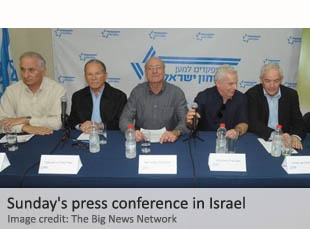
Nearly 200 former senior officials in Israel’s intelligence and security services called a public press conference on Sunday and denounced the foreign policy of Israeli Prime Minister Benjamin Netanyahu. The Israeli leader, who has been in office since 2009, has spoken out repeatedly against attempts by the United States and other Western countries to improve relations with Iran. As his critics held the press conference, the Israeli prime minister was leaving Tel Aviv for a controversial trip to the US, where he is scheduled to speak before a joint session of Congress. He was invited by senior Republicans in Washington, who, like Netanyahu, are sharply critical of US President Barack Obama’s policy on Iran. Netanyahu is also expected to address the annual conference of the American Israel Public Affairs Committee, which is widely considered the most powerful arm of the pro-Israel lobby in the US. But President Obama has refused to meet with the Israeli Prime Minister, whose trip to DC is seen as an attempt by the Republican Party to subvert the US leader’s foreign-policy agenda on Iran.

On Sunday, notable figures from Israel’s military and intelligence establishment gathered at a press conference to deliver sharp criticism against Netanyahu’s controversial trip to Washington and to blast the Israeli leader for allegedly injuring the Jewish state’s relationship with America. Among the numerous speakers at the press conference was the decorated veteran of Israel’s 1973 war, Major General Amnon Reshef. He appealed to Netanyahu to scarp his trip to the US and stop criticizing the Obama Administration “before it is too late”. The rift between Washington and Tel Aviv “cannot be accepted”, said Reshef, as it poses “clear and present dangers to the very security of Israel”.

Another speaker at the event, former deputy director of the Mossad, Major General Amiram Levin, told reporters that it was not easy for him to criticize Netanyahu, who had served under him in the Israel Defense Forces. But the Israeli prime minister’s actions left him with no choice, he said. Instead of working with President Obama to resolve the dispute with Iran, Netanyahu had chosen to “go there and stick his thumb in his eye”, said Levin. Such actions, aside from offending Obama, damage Israel’s image in the US among Americans. The latter, even when they are friends of Israel, said Levin, “are Americans first and foremost”. The former Mossad official concluded by saying that, without the strong support of Washington, Israel would be “far weaker strategically” and would allow Iran to get closer to building a nuclear arsenal.

A spokesman for the Likud party, which backs Prime Minister Netanyahu, dismissed the press conference as “a propaganda vehicle of the left”, whose campaign “is funded with millions of American dollars originating from left-wing circles abroad”.

Mossad saw pause in Iran nuke program in 2012, leaked file shows

Benjamin NetanyahuBy JOSEPH FITSANAKIS | intelNews.org
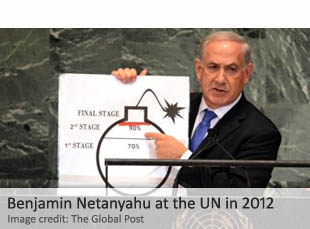
A file leaked to the media on Monday shows that the Israeli intelligence agency Mossad differed from the Israeli leadership’s position that Iran was advancing its nuclear weapons program in 2012. In September of that year, Israeli Prime Minister Benjamin Netanyahu addressed the United Nations in New York with a dramatic plea to help stop the Iranian nuclear program before it was too late. Holding a diagram showing a bomb about to explode, the Israeli leader urged UN member states to “draw a clear red line” forbidding the Islamic Republic from acquiring nuclear weapons in less than two years’ time, as it was poised to do, he said.

But a report drafted by the Mossad just weeks after Netanyahu’s UN address, said that Iran appeared to have stopped pursuing activities that were necessary to building a nuclear arsenal. The report was produced by the Mossad and distributed to a number of allied intelligence agencies around the world, including those of South Africa, from where it was presumably leaked to the media. British quality broadsheet The Guardian, which published the report, said it was able to “independently authenticate” the report, and added that it clearly went against Prime Minister Netanyahu’s assessment about the Iranian nuclear program. The top-secret document, which was communicated to the South Africans by the Mossad in late October of 2012, was also published by Qatar-based news agency Al Jazeera. It states that Iran did “not appear to be ready to enrich [uranium] to higher levels” and was thus “not performing the activity necessary to produce [nuclear] weapons”. According to The Guardian, the content of the Mossad communique is “in stark contrast to the alarmist tone set by Netanyahu” in his September 2012 address before the UN.

If the leaked document is genuine, it would appear to confirm previous indications of a difference of opinion on the matter of Iran’s nuclear program between Israel’s political leadership and its intelligence community. In January of this year, the Bloomberg news agency reported that the Mossad had been discreetly approaching US officials and politicians in order to raise support for a pending agreement between Iran, the United States and other countries, which would ease economic sanctions on the Islamic Republic in exchange for a short-term suspension of core aspects of its nuclear program. According to Bloomberg, the Mossad appeared to be acting behind the back of the Israeli prime minister, who has blasted the agreement as a “historic mistake” that enabled “the most dangerous regime in the world” to get closer to “attaining the most dangerous weapon in the world”. But in contrast to the Israeli leader, the Mossad appears to have urged American officials to support the agreement, saying that any move “that triggers [further] sanctions [against Iran] would collapse the talks” between Tehran and Washington, something which Israeli intelligence officials do not wish to see.

Israelis dispute CIA was behind Hezbollah strongman’s killing

Imad MughniyahBy JOSEPH FITSANAKIS | intelNews.org
Sources in Israel are disputing reports from January that the United States’ Central Intelligence Agency was behind the assassination of one of Hezbollah’s most senior officials. On January 31 of this year, two US-based publications, The Washington Post and Newsweek, claimed that it was the CIA, not Israel’s Mossad intelligence agency as previously thought, who led the 2008 assassination of Imad Mughniyah. Mughniyah, who was among the founders of Hezbollah, the Shiite militant group that today controls large parts of Lebanon, was killed when a car laden with explosives blew up at a central parking lot in Syrian capital Damascus, where he had been living in secret.

According to the reports, the Mossad alerted the CIA after uncovering Mughniyah’s whereabouts in 2007, and suggested a joint operation to kill the Hezbollah strongman. The American covert-action agency proceeded to have a bomb designed by technicians from its Science & Technology Directorate, who carried out dozens of tests at a CIA facility in North Carolina. It was, according to the Post and Newsweek reports, the very bomb that killed Mughniyah on the evening of February 12 near his home in the Syrian capital.

But Dan Raviv, the Washington-based national correspondent for CBS News, said on Sunday that Israeli intelligence insiders are disputing claims that the CIA was the leading force in the operation. In a report published on Sunday, Raviv cited “Israelis close to their country’s services” as saying that the operation against Mughniyah was “almost all blue-and-white, and just a little bit red-white-and-blue” —a direct reference to the colors in the Israeli and American flags. The CBS correspondent said Israelis had been “miffed that the Americans were taking too much credit” for the strike against Mughniyah, and were actively “speaking with Western officials and diplomats to offer corrections”.

According to Raviv, it was the Mossad and Aman (Israel’s primary military-intelligence agency) that discovered Mughniyah’s whereabouts in 2007, and proceeded to design a bomb after the US declined Israel’s invitation to help organize a joint strike. Eventually, claims Raviv, Israel’s then-Prime Minister, Ehud Olmert, convinced then-US President George W. Bush to approve a strike against Mughniyah, by showing him videos of the custom-made car bomb being tested in Israel. An impressed President Bush then authorized the CIA to participate in the operation. But by that time, says Raviv, the Israelis were firmly in command of the project and remained so until its final execution. Neither the CIA nor the Mossad have commented on the allegations regarding Mughniyah’s assassination.

CIA had central role in Hezbollah official’s killing, say sources

Imad MughniyahBy JOSEPH FITSANAKIS | intelNews.org
The United States, not Israel, as previously thought, led an assassination operation that targeted a senior member of Lebanese militant group Hezbollah in 2008, according to two separate reports that came out last week. Imad Mughniyah was among the founders of Hezbollah, the Shiite militant group that today controls large parts of Lebanon. At the time of his assassination, Mughniyah headed the Hezbollah’s security apparatus and some claim he was the organization’s second-in-command. He was killed on the evening of February 12, 2008, when a car laden with explosives blew up at a central parking lot in Syrian capital Damascus, where he had been living in secret. The Shiite group blamed Israel for his killing. But two reports that aired this week, one in The Washington Post and the other in Newsweek, cited unnamed former government officials in the US in claiming that the operation was in fact led by the Central Intelligence Agency. The Washington Post’s Adam Goldman and Ellen Nakashima said the CIA was assisted in the operation by its Israeli counterpart, the Mossad, while Newsweek’s Jeff Stein wrote that the effort was personally approved by then-US President George Bush and was closely supervised by then-CIA Director Michael Hayden.

According to the reports, the Mossad uncovered Mughniyah’s whereabouts in 2007 and alerted the CIA, suggesting a joint operation to kill the Hezbollah strongman. Soon after President Bush approved the strike, officers in the CIA’s Near East Division planned the logistics of the operation, which involved building a complex bomb, smuggling it into Syria and placing it inside the spare tire of a locally-purchased vehicle. The bomb was allegedly designed by technicians from the CIA’s Directorate of Science & Technology, who carried out dozens of tests at a CIA facility in Harvey Point, North Carolina.

The operation was allegedly coordinated from a CIA safe house located near Mughniyah’s apartment in the Syrian capital. On the evening February 12, a team of Mossad and CIA operatives employed facial-recognition technology to identify their target as he was walking out of a local restaurant. When Mughniyah approached the explosives-laden SUV, the bomb was remotely detonated, decapitating him and blasting his torso through a nearby window (note: Goldman and Nakashima claim that the bomb was remotely detonated by Mossad officers located in Tel Aviv; Stein suggests the blast was triggered by a CIA officer who had been placed in charge of the remote-control mechanism).

The reports describe the operation as “one of the most high-risk covert actions” undertaken by the CIA in recent years, because it targeted a high-profile individual in a country with which the US was not officially at war. Additionally, the method used —a car bomb— is particularly controversial, as it is typically a method of operation preferred by organized criminals and terrorist organizations.

The US has not acknowledged participation in Mughniyah’s assassination, and the CIA declined to comment when contacted by The Washington Post on Friday. Mark Regev, spokesman for the office of the Israeli prime minister, said simply that Tel Aviv had “nothing to add at this time”.

Mossad breaks with Israeli PM, cautions against new Iran sanctions

Benjamin Netanyahu and Barack ObamaBy JOSEPH FITSANAKIS | intelNews.org
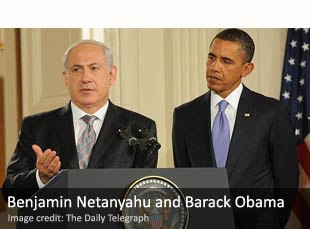
The Israeli intelligence agency Mossad has broken ranks with the Israeli government of Prime Minister Benjamin Netanyahu, cautioning American members of Congress against imposing new sanctions on Iran. In November of 2013, Iran signed a Joint Plan of Action with six world powers in Geneva, Switzerland. Known as the Geneva interim agreement, the pact eases economic sanctions on the Islamic Republic in exchange for a short-term suspension of core aspects of the Iranian nuclear program. But two members of the Republican-controlled Senate in the United States, Robert Menendez and Mark Kirk, have voiced strong displeasure with what they see as the slow pace of progress in the talks. The two senators are co-sponsors of a proposed bill that would impose new sanctions on Iran if the Islamic Republic fails to make substantial progress toward the Geneva agreement by next June. US President Barack Obama opposes the bill, arguing that it would actually prompt Iran to accelerate its nuclear program, and has publicly said he would veto it. Meanwhile, his Secretary of State, John Kerry, quoted this week an Israeli intelligence official who allegedly told him that, if enacted, the Menendez-Kirk bill would “throw a grenade into the process”. It is no secret that the bill enjoys strong support from Netanyahu’s government. Last year, the Israeli Prime Minister called the Geneva pact a “historic mistake”, which enabled “the most dangerous regime in the world” to get closer to “attaining the most dangerous weapon in the world”. Late on Wednesday, however, the Bloomberg news agency reported that the Mossad has been discreetly approaching US officials and politicians and cautioning them that the Menendez-Kirk bill would indeed torpedo the Geneva agreement. The news agency said that the Israeli intelligence agency has been warning American officials abroad and it recently contacted a US Congressional delegation visiting Israel. The Bloomberg report cited two unnamed “senior US officials”, one of whom told the news agency that “any bill that triggers sanctions [against Iran] would collapse the talks”. If confirmed, the Bloomberg allegations would mean that the Mossad, Israel’s principal intelligence agency, is sharply breaking ranks with the government of Prime Minister Netanyahu on Iran. The Bloomberg article further states that Senator Menendez has contacted Ron Dermer, Israel’s Ambassador to the US, to complain about the actions of the Mossad, which, say critics, break diplomatic protocol.