Mossad agent in Dubai assassination also wanted in New Zealand

Zev William Barkan

Barkan

By JOSEPH FITSANAKIS | intelNews.org |
An Israeli Mossad officer wanted by New Zealand authorities is among five suspects recently identified and named by Dubai police in connection with the assassination of a Hamas official. The officer, Zev William Barkan, has been identified as a major suspect in last January’s assassination of Hamas weapons procurer Mahmoud al-Mabhouh, in a luxury Dubai hotel. In 2004, Barkan was one of three Mossad agents who engaged in an aborted attempt to acquire a New Zealand passport, using the birth certificate of Auckland resident Tony Resnick. New Zealand authorities managed to arrest Barkan’s two associates, Uriel Zoshe Kelman and Eli Cara, both from Israel; but Barkan and Resnick managed to escape arrest by flying to Sydney, Australia, before fleeing to Israel. The case caused a major –albeit temporary– rift in New Zealand-Israel relations. Read more of this post

News you may have missed #330

  • Pakistan released captured Taliban behind CIA’s back. IntelNews has not joined the chorus of commentators who have been claiming that the relationship between Pakistan’s Inter-Services Intelligence (ISI) directorate and the CIA has warmed up. It now appears that even as the ISI was collaborating with the CIA, it quietly freed at least two captured senior Afghan Taliban figures.
  • Kiwi activists accuse police of spying. New Zealand’s Peace Action Wellington has submitted an Official Information Act (OIA) request relating to domestic police surveillance, after accusing the police of “heavily spying on and running operations on protest groups”. It is not the first time that similar accusations have been directed against the country’s police force.
  • CIA suspected existence of Israeli nukes in 1974. Israel will neither confirm nor deny the rumored existence of its nuclear arsenal. But the CIA, which has kept an eye on Israel’s nuclear weapons project since at least the early 1960s, was convinced of its existence by 1974, according to a declassified report.

Bookmark and Share

News you may have missed #312

Bookmark and Share

Israeli agents tried to obtain Australian passports in 2004

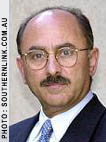
Ali Kazak

Ali Kazak

By IAN ALLEN | intelNews.org |
Yesterday’s revelation, that three members of the Mossad hit squad that assassinated Mahmoud al-Mabhouh in Dubai last January, used Australian passports, has shocked Australian public opinion. In reality, however, the Australian government had been warned in as early as 2004 that Israeli agents were trying to obtain Australian passports for use in international espionage operations. In March of that year, Ali Kazak, who was the Head of the General Palestinian Delegation to Australia and New Zealand, publicly revealed that Israeli Mossad agents had approached members of the Middle Eastern community in both countries, seeking to purchase usable passports. He even said that one Mossad agent active in Sydney had managed to acquire as many as 25 Australian passports before returning to Israel. Read more of this post

News you may have missed #0244

  • Former S. African spy chief dies. Mike Louw former head of South Africa’s apartheid-era National Intelligence Service (NIS) and later the South African Secret Service (SASS), has died. As deputy director general at NIS, Louw helped facilitate some of the very first meetings between the government of F.W. De Klerk and Nelson Mandela, the then imprisoned leader of the African National Congress.
  • Kiwi spies get augmented cyber-surveillance powers. Reports from New Zealand indicate that new “cyber-monitoring measures have been quietly introduced”, giving the country’s law enforcement and intelligence services increased online surveillance powers. Veteran intelligence observer Nicky Hager describes the changes as “the largest expansion of police and [intelligence] surveillance capabilities [in New Zealand] for decades”.

Bookmark and Share

Clinton’s mysterious comment raises eyebrows in New Zealand

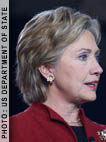
Hillary Clinton

Hillary Clinton

By JOSEPH FITSANAKIS | intelNews.org |
A comment by US secretary of state Hillary Clinton following a meeting with a senior New Zealand government official has raised questions by intelligence observers in the pacific nation. Speaking last Friday after an official meeting in Washington with her New Zealand counterpart, minister of foreign affairs Murray McCully, Clinton said the US “very much” values its diplomatic partnership with New Zealand. She then proceeded to say “[w]e are resuming our intelligence-sharing cooperation, which we think is very significant”. This latter comment struck many intelligence observers in Wellington as odd, and for a good reason: nobody was under the impression that the US-NZ intelligence cooperation had been disrupted. The mystery deepened when New Zealand prime minister John Key refused to explain Hillary Clinton’s remark when asked, saying simply “I just don’t comment on issues of national security”. Read more of this post

Lost notebook reveals plans for New Zealand spy agency reshuffle

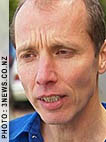
Nicky Hager

Nicky Hager

By JOSEPH FITSANAKIS | intelNews.org |
Plans for a possible radical reshuffling of New Zealand’s intelligence infrastructure were revealed yesterday, with the discovery of a notebook belonging to a government official. The notebook was dropped on a busy Wellington street by an employee of New Zealand’s Treasury Department, who was returning from a classified presentation on the future of the country’s intelligence agencies. It was recovered by Julian Robins, a political correspondent for Radio New Zealand, who proceeded to reveal the notebook’s contents. According to Robins, the government appears to be seriously considering merging the three separate intelligence agencies, which currently operate on different missions, in order to improve synergy and save money. Read more of this post

New Zealand union says intelligence services spying on academics

Dr. Jane Kelsey

Dr. Jane Kelsey

By IAN ALLEN | intelNews.org |
Back in February, intelNews reported on allegations, subsequently confirmed through declassification, that the New Zealand Security Intelligence Service (NZSIS) has been keeping files on several members of the country’s Parliament, some of them since they were children. Now the Wellington-based Tertiary Education Union (TEU) has alleged that NZSIS also spies on academics. The allegations follow a request by Dr. Jane Kelsey for the release of her NZSIS files. Professor Kelsey, a prominent scholarly critic of free trade policies, made the request after NZSIS agreed to release the files of several parliamentarians it had been monitoring for a many decades. Interestingly, NZSIS refused to confirm whether it possessed information on Dr. Kelsey. Read more of this post

News you may have missed #0038

Bookmark and Share

News you may have missed #0025

  • BREAKING NEWS: Several news outlets are reporting this morning that it was former US vice-President Dick Cheney who ordered the CIA to conceal from Congress key information about a covert action intelligence program of an undisclosed nature. See here for more.
  • New book claims Ernest Hemingway was KGB agent. The new book Spies: The Rise and Fall of the KGB in America (Yale University Press), co-written by John Earl Haynes, Harvey Klehr and Alexander Vassiliev, alleges that the Nobel prize-winning novelist was on the KGB’s list of agents in America from 1941, when he was given the codename “Argo” by the Soviets.
  • Thousands of former Stasi spies still working in German civil service. A report in the German edition of The Financial Times claims that over 17,000 former members of East Germany’s Stasi remain employed as civil servants in reunified Germany. Stasi is the name commonly used for the Ministry for State Security, communist East Germany’s secret police.
  • NSA director’s secret visit to New Zealand revealed. A reporter accidentally spotted Lieutenant-General Keith Alexander, director of the US National Security Agency, entering a Wellington building accompanied by security personnel. The revelation prompted a spokesperson at the US embassy in Wellington to admit that Alexander was indeed in New Zealand “for consultations with government officials”. The close signals intelligence relationship between the US and New Zealand have been known since 1996.
  • Chinese national caught trying to purchase crypto hardware. Chi Tong Kuok was arrested by the FBI at the Atlanta International Airport en route from Paris to Panama, where he allegedly planned to purchase US military radios. The US government claims Kuok has admitted he was “acting at the direction of officials for the People’s Republic of China”.
  • Taliban say cell phone SIM cards guide US drone strikes. A Taliban circular says SIM cards planted by informants in cell phones used by militants are used to signal American drones in Afghanistan and Pakistan. As IntelNews recently explained, there are suspicions that this and similar discoveries are gradually prompting the Taliban and al-Qaeda to stop using cell phones altogether.

Bookmark and Share

News you may have missed #0008

  • Moderate Virginia Republican is Obama’s leading cybersecurity czar. Time magazine identifies Tom Davis as a leading candidate for the newly created position, citing “sources familiar with the White House’s deliberations on the subject”. Davis served in the House of Representatives for seven terms before retiring last fall. But Ryan Singel, of Wired, points out that Davis is “no friend of privacy”. While in the House of Representatives, “Davis voted repeatedly to expand the government’s internet wiretapping powers, and helped author the now-troubled national identification law known as REAL ID”, reminds Singel.
  • New Zealand spooks spied on high school students. Last February, intelNews reported on revelations that the New Zealand Security Intelligence Service (NZSIS) has been keeping a file on an elected Green Party parliament Member, Keith Locke, since he was 11 years old. New information shows that NZSIS has been monitoring two other Green parliamentarians, Sue Bradford and Catherine Delahunty, since they were in high school. Moreover, their files remained active until 1999 and 2002, respectively. 
  • US Supreme Court refuses Plame CIA case. The Court declined to take up the case of Valerie Plame, a former CIA agent, who sought compensation after she was publicly revealed to be a secret operative. Plame and her husband, former ambassador Joseph Wilson, wanted to sue several Bush administration officials, including former vice president Dick Cheney, over the 2003 revelation. 
  • US Homeland Security said to kill domestic spy satellite plan. A senior Homeland Security official has said that Homeland Security Secretary Janet Napolitano has decided to kill a controversial Bush administration plan to use satellites for domestic surveillance in the US. The plan first surfaced in 2007, but it has been delayed due to concerns by privacy and civil liberties advocates that it would intrude on the lives of Americans. 
  • US National Security Advisor to visit India. Jim Jones will visit New Delhi at the request of President Obama, in order “to further deepen and strengthen our key bilateral partnership with India” says the White House. He will also be visiting Pakistan and Afghanistan. 
  • Researcher unearths declassified documents on NSA’s history. The documents, obtained by Matthew M. Aid for his new book, The Secret Sentry, confirm that prior to the launch of the first spy satellites into orbit by the National Reconnaissance Office (NRO) in the early 1960s, the Signals Intelligence collected by the National Security Agency and its predecessor organizations was virtually the only viable means of gathering intelligence information about what was going on inside the Soviet Union, China, North Korea, North Vietnam, and other communist nations.  However, the NSA and its foreign partners could collect bits and pieces of huge numbers of low-level, unencoded, plaintext messages.

Groundbreaking book on international spying now online

By IAN ALLEN | intelNews.org |
Nicky Hager’s groundbreaking book Secret Power: New Zealand’s Role in the International Spy Network, is now freely available as an eBook on the writer’s personal website. The book, originally published in 1996, first revealed the existence of the UK-USA Security Agreement (reportedly also known as AUSCANZUKUS) a peculiar intelligence-sharing arrangement between the United States, the United Kingdom, Australia, Canada and New Zealand, which has existed since World War II. Secret Power focused on New Zealand’s role in the agreement and also documented the US-managed ECHELON, a signals intelligence (SIGINT) collection and analysis network that serves as an intelligence-sharing platform between the UK-USA signatories. Hager, who is widely considered to be New Zealand’s leading investigative journalist, has written several books since Secret Power, including Secrets and Lies and The Hollow Men. His personal website is available here.

Are New Zealand secret services spying on elected parliamentarians?

Keith Locke

Keith Locke

By IAN ALLEN | intelNews.org |
The Green Party of New Zealand is a sizeable political coalition representing around 150,000 voters in the country’s parliament. A few days ago, it was revealed that the New Zealand Security Intelligence Service (NZSIS) has been keeping a file on an elected Green Party Parliament Member since he was 11 years old. The Parliamentarian, Keith Locke, first entered Parliament on the Green Party ticket in 1999. The reported reason for the spying is that Mr. Locke’s parents, Elsie and Jack Locke, both prominent environmentalists, were members of the Communist Party of New Zealand in the 1950s and 1960s. Interestingly, NZSIS continued to spy on Mr. Locke even after he was elected to Parliament, even as recently as 2006. His NZSIS file reportedly contains covert photographs of him and notes on “his private work with constituents”. Read more of this post

Comment: Israel Intensifies Information War

By IAN ALLEN | intelNews.org |
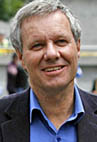
John Minto is well known in New Zealand’s political circles. In 2005, a documentary on the country’s most influential public figures positioned him firmly within the top 100. Earlier today, Minto accused Israeli military and security agencies of orchestrating cyber-attacks on New Zealand websites, including his own, that are critical of Israel’s ongoing incursion in Gaza. He also said that websites in Britain and elsewhere have had “similar experiences”, which he blamed on “a dedicated unit within the Israeli military which monitors and does its best to close down sites which are effective in organizing opposition to Israeli policies”. Read more of this post

Police spying revelation rocks New Zealand

IntelNews has paid particular attention to domestic intelligence operations conducted against law-abiding protest activity in the so-called “war on terrorism”. The US is hardly the only Western country where intensification of government spying on protest activity has been noted in recent years. During the past few days, political life in New Zealand has been stirred by revelations that the country’s police force has for years used “paid informants to infiltrate protest groups”, including “groups such as Greenpeace, animal rights and climate change campaigners and Iraq war protesters”. Read more of this post