News you may have missed #881 (Cold War history edition)
August 14, 2014 Leave a comment
 By IAN ALLEN | intelNews.org
►►McCarthy-era prisoner tries to overturn espionage conviction. In 1950, Miriam Moskowitz was secretary to Abraham Brothman, an American chemical engineer who was convicted for providing secret industrial information to communist spy Elizabeth Bentley. Moskowitz, who was having an affair with Brothman at the time of his arrest, was convicted of obstructing justice and served two years in prison. Now at age 98, she claims she has discovered evidence that key witness testimony about her role in Soviet espionage was falsified, and wants her conviction thrown out. In 2010, Moskowitz authored the book Phantom Spies, Phantom Justice, about her case.
►►Files show USSR spied on Czechoslovak communist leaders after 1968. The Soviet KGB spied aggressively on senior members of the Czechoslovak Communist Party (KSČ) for two decades following the Prague Spring of 1968, because it mistrusted them. The information on Soviet intelligence activities against the KSČ comes from files in to the so-called Mitrokhin Archive. Vasili Mitrokhin was a KGB archivist, who painstakingly copied tens of thousands of pages of the spy agency’s files prior to defecting to Britain following the dissolution of the USSR.
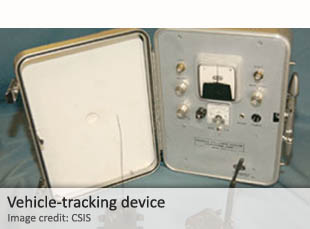
►►Canada’s spy agency reveals Cold War-era spying equipment. As part of its celebrations for its 30-year anniversary, the Canadian Security and Intelligence Service has released photographs of what it calls “tools of the trade” –gadgets designed to hide or transport secret communication, acquire surreptitious photographs, listen in on private conversations, etc., without detection. The gadgets include Soviet defector Igor Gouzenko‘s gun, a toy truck with a concealment compartment for hiding a microdot reader, a hollowed-out battery used to contain clandestine messages or microfilm, and many others.







 By JOSEPH FITSANAKIS | intelNews.org







 intelNews.org
Malware targeting ex-Soviet states has Russian hallmarks
August 15, 2014 by Ian Allen Leave a comment
A malicious software that has infiltrated the computer systems of dozens of embassies belonging to former Eastern Bloc nations “has all the hallmarks of a nation-state” cyberespionage operation, according to researchers. Security firm Symantec said last week that the malware appears to be specifically targeting embassies of former communist nations located in China, Jordan, as well as in locations across Western Europe. In a report published on its website, Symantec said “only a nation state” was likely to have the funds and technical resources to create a malware of such complexity. Additionally, the malware seems to be designed “to go after explicit government networks that are not easy to find”, according to Symantec senior security researcher Vikram Thakur. The infiltration appears to occur in two stages. In the first stage, a computer is infected with a reconnaissance program, known as Wipbot. The initial infection usually occurs through a directed phishing attack or via a compromised website. The Wipbot then conducts an initial exploration of the infected system, collecting vital information about its identity, structure and contents. It then proceeds to compromise it only if it matches a specific Internet address that it is looking for. If a match is confirmed, the Wipbot then invites a second program into the compromised system, whose task is to expropriate data and exfiltrate it in batches that are camouflaged as Internet browser requests. Symantec researchers say that the technical similarities between the two programs are sufficient to justify the view that they were designed and developed by programmers working for the same government agency. Thakur said the structure of the malware is particularly creative; it uses Wipbot as an initial reconnaissance tool before delivering the exfiltration program if it judges that the compromised system is of high enough interest. The Symantec report adds that the malware in question is part of a four-year-long series of cyberespionage attacks that have systematically targeted government facilities belonging to former Communist Bloc states. In May of 2012, a similar malware was found to have infiltrated over 60 different computer systems belonging to a former Soviet Republic, including the office of the Prime Minister. A closely linked attack targeted another former communist state’s embassy in Paris, France, as well as its foreign and internal affairs ministries. The Symantec research points out that many of the malicious program’s core components were compiled in the UTC+4 time zone, which includes Russian cities such as Moscow and St. Petersburg.
Filed under Expert news and commentary on intelligence, espionage, spies and spying Tagged with cyberespionage, News, Russia, Symantec Corporation, Vikram Thakur