Austrian financier dubbed ‘world’s most wanted man’ worked for several agencies
November 2, 2020 Leave a comment
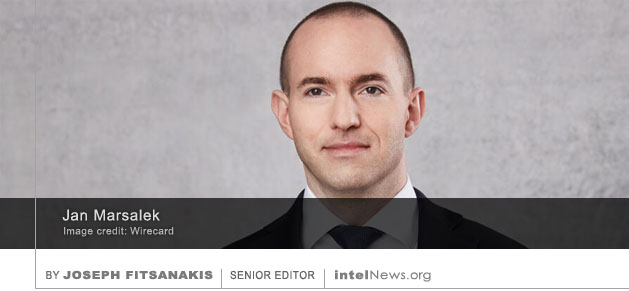
AN AUSTRIAN FINANCIER, WHO disappeared and is wanted by Western spy agencies in connection with a massive financial scandal in Germany, may have worked for several spy agencies simultaneously, according to reports. Jan Marsalek, dubbed by some as “the world’s most wanted man”, is connected with the sudden collapse of Wirecard AG in Germany last month.
Wirecard (est. 1999) was a German provider of financial services, such as mobile phone payment processing and other electronic payment transaction systems. The company also issued physical and virtual credit and pre-paid cards. But on June 25 of this year the company declared insolvency, after an audit revealed that nearly €2 billion ($2.3 billion) in cash deposits were missing from its accounts. Soon afterwards the company’s shares lost over 70 percent of their value and its management team, including its chief executive officer, Markus Braun, stepped down. Braun was eventually arrested. But Marsalek, who had worked as Wirecard’s chief operating officer since 2010, was nowhere to be found.
Marsalek, 40, was also in charge of Winecard’s operations in Asia and specifically the Philippines, where the fictitious €2 billion had reportedly been deposited. On June 18, after getting fired from his job, Marsalek told colleagues that he was leaving immediately for Manilla, in order to track down the missing funds and clear his name. However, he never arrived there, as he seemed to disappear into thin air on the way. An investigative report by The Financial Times revealed that Marsalek never made use of his airline ticket to the Philippine capital, and that the immigration records that showed him entering the country and then flying from there to China had been forged. This was later confirmed by the Philippines government.
Last Thursday, the German newspaper Süddeutsche Zeitung reported that, according to some German lawmakers, Marsalek may have operated as an informant for the Austrian Office for the Protection of the Constitution and Counterterrorism (BVT). The paper cited a number of German lawmakers, who said they were told during a briefing of the German Parliament’s Committee on Intelligence Oversight that Marsalek probably worked “for several intelligence agencies at the same time” prior to his disappearance. The lawmakers did not provide details of these allegations. Meanwhile, Marsalek’s whereabouts remain unknown.
► Author: Joseph Fitsanakis | Date: 02 November 2020 | Permalink
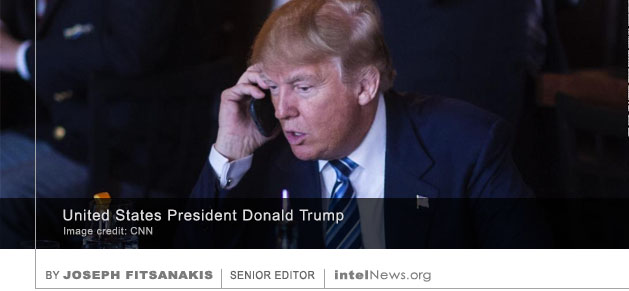 IF RE-ELECTED IN NOVEMBER, United States President Donald Trump has laid out plans to replace the secretary of defense, as well as the directors of the Federal Bureau of Investigation (FBI) and the Central Intelligence Agency (CIA), according to a new report. The website Axios, which


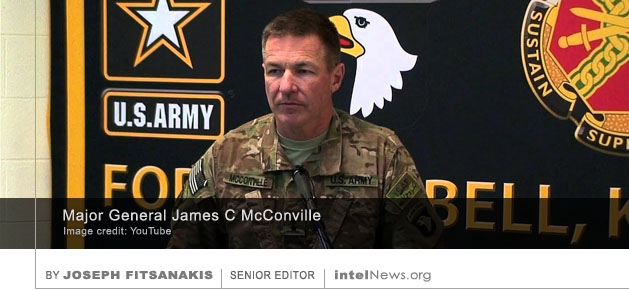 Senior United States military officials, including the chief of staff of the Army, have said no plans are currently in place for the country’s armed forces to have a domestic security role in next month’s elections. America is preparing for one of the most contentious and tense elections in its recent history, in which Republican President Donald Trump is facing a challenge by Democratic contender Joe Biden. Many observers have








US forces are secretly helping the Taliban fight the Islamic State in Afghanistan
November 3, 2020 by Joseph Fitsanakis Leave a comment
UNITED STATES TROOPS ARE secretly re-purposing weapons that were initially used to fight the Taliban, in order to help the Taliban defeat the Islamic State in northeastern Afghanistan, according to a new report. The American military’s newfound role in Afghanistan reportedly reflects the view of the White House that the Taliban have no aspirations outside of Afghanistan, while the Islamic State seeks to challenge America’s interests worldwide.
The rumors that the US Department of Defense has been providing assistance to the Taliban as they battle the Islamic State in Afghanistan are not new. In March of this year, General Frank McKenzie, Commander of US Central Command, admitted as much during Congressional testimony. He told the US House Armed Services Committee that the Taliban had received “very limited support from us”, but declined to elaborate during open-door testimony.
What did General McKenzie imply? According to veteran military affairs reporter Wesley Morgan, US Joint Special Operations Command (JSOC) forces in Afghanistan have been instructed to provide air cover to Taliban forces as they fight the Islamic State. Morgan said he spoke to members of a JSOC Task Force in Afghanistan’s northeastern Kunar Province, who confirmed General McKenzie’s comments from back in March.
Importantly, the JSOC’s air support to the Taliban is reportedly provided without direct communication between the US forces and the Taliban. Instead, the Americans simply “observe battle conditions” and “listen in on the [communications of the] group” in order to determine what kind of air support it needs. The resources used in that capacity consist of weaponry that was initially deployed against the Taliban, but is now being secretly repurposed to assist the Taliban in their fight against the Islamic State. According to Morgan, the JSOC team in Kunar, which provides air cover to the Taliban, jokingly refers to itself as the “Taliban air force”.
Miller adds it is unclear whether the Afghan government in Kabul is aware that US forces are providing assistance to the Taliban. It is also unclear whether al-Qaeda, which is a close ally of the Taliban, is benefiting from that assistance. Recently a United Nations report warned that al-Qaeda remains “heavily embedded” with the Taliban in Afghanistan, despite assurances by officials in the administration of US President Donald Trump that the two groups are in the process of parting ways.
► Author: Joseph Fitsanakis | Date: 03 November 2020 | Permalink
Filed under Expert news and commentary on intelligence, espionage, spies and spying Tagged with Afghanistan, Frank McKenzie, Islamic State, JSOC, News, Taliban, United States